Spare Parts and Service Terms for a Capsule Herbal Tea Machine
In one line: Downtime has a price even when it never reaches an invoice; service terms are how that price gets paid or avoided. Reading order follows the work order.
Key facts: Response terms are written into the contract precisely because faults are rare but not never.
From Quote to First Cup
Once the capsule herbal tea machine is installed, the interesting part begins: the ledger either settles or it does not. If a line looks obvious, it is probably the one that gets skipped and then paid for twice.
Spare Parts Kits Worth Keeping
- One full seal and nozzle kit per ten machines
- A spare payment terminal for the fleet
- Fuses and a testing cable for site-side fixes
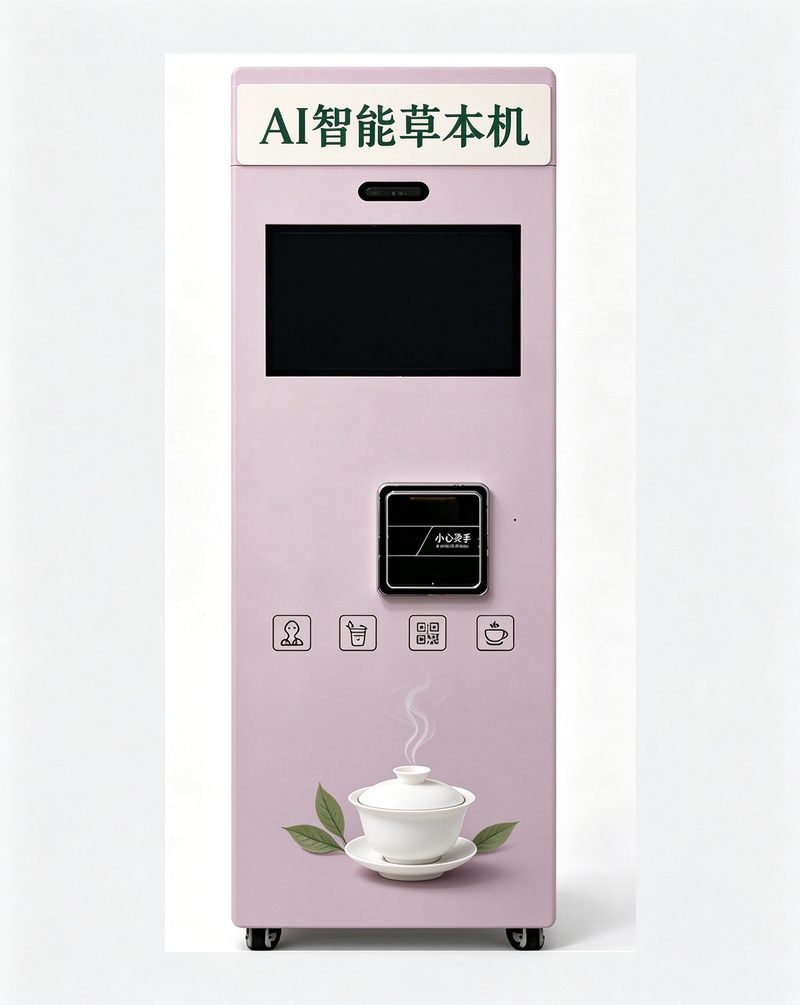
Faults, Causes, Fix Levels
| Fault | Likely cause | Fix level |
|---|---|---|
| No vend | Clogged nozzle or empty line | Site-side, minutes |
| Payment dead | Terminal or SIM | Swap from the parts kit |
| No power | Site breaker or cable | Host electrician |
| Brew issue | Rare; module swap | Depot or engineer |
Two Floors Down, Another Machine
The same face, four weeks running. A visiting auditor with a folder under one arm stops at an office park lobby by the mail shelves, holds the cup with both hands and says nothing, which is its own review, and the pattern has stopped being a coincidence.
No promotion produced that habit. A machine that is always there, always stocked and always the same cup did it, which is a quieter kind of marketing than anything with a budget.
A site is not won on the first cup; it is won on the fifteenth. The dashboard records it as one line; the day's curve bends up almost imperceptibly.
The Invoice That Arrives Late
Payment terms decide how many sites a small operator can carry. A thirty-day term on a site that pays in sixty is not a paperwork problem; it is a loan the operator is making without interest.
Agree the date, the method and the penalty before the machine is installed, and put all three in the placement terms. Chasing an invoice is the most expensive hour in the month because it produces nothing.
Two Prices, One Machine
Subsidised pricing for staff and full pricing for visitors is common and quietly complicated: it needs two payment paths, two sets of reporting and a rule for who counts as which.
Decide the rule before the hardware. A machine configured for one price and operated at two produces a ledger nobody can reconcile, and the host will notice before the operator does.
The Second Vandalism Incident
One incident is bad luck; two in the same place is information. The second tells you whether the site is exposed by location, by lighting, or by the fact that nobody is around after ten.
Before spending on cameras, change what is cheap to change: move the cabinet into sight of a window, add light, shorten the unattended hours. Hardware deters the casual attempt; placement deters the determined one.
Support Terms Worth Reading Twice
Write the service ladder before the first fault: what you fix from the dashboard, what a site contact fixes from the card, what waits for the van, and what goes back to the supplier.
A capsule herbal tea machine with a ladder rarely reaches a panic. Faults enter at the step they belong to, and most never climb past the first one.
What an Empty Chute Means
An empty cup chute at nine in the morning is either a site that sells faster than its restock interval or a machine that has stopped vending. The two look identical from outside and require opposite responses.
The event log settles it in a minute: failed vends in a row mean a mechanism problem, a clean gap means demand. Guessing wrong sends a technician to a site that needed a bigger cup stack.
The Handover Note That Saves a Week
Every site accumulates small knowledge: the socket that trips, the door that sticks, the manager who wants a call before a visit. None of it is in the contract and all of it is in somebody's head.
One page per site, updated on each visit, turns that knowledge into an asset. The test of a good handover note is whether a stranger could restock the site without calling anyone.
The Vend That Did Not Happen
The same face, four weeks running. An intern rehearsing a presentation stops at a hotel lobby beside the lift bank, waits the forty seconds scrolling a phone, pockets the receipt without looking at it, and the pattern has stopped being a coincidence.
No promotion produced that habit. A machine that is always there, always stocked and always the same cup did it, which is a quieter kind of marketing than anything with a budget.
A site is not won on the first cup; it is won on the fifteenth. The restock note writes itself: the popular line is down one row.
Waste, Cups and the Bins Beside the Cabinet
Cups leave the machine and land somewhere. Confirm with the host where they go and who empties that bin, because a full bin beside a cabinet is the fastest way to lose a placement that is working.
Where the site separates waste, put a second bin within arm's reach. The cost is one bin; the benefit is a host who stops mentioning the machine in meetings.
Signage That Answers the First Question
The first question is never about the machine; it is about whether this thing takes the payment in your pocket. Say the payment method, the price range and the drink categories in one glance, and the queue forms faster.
Keep the sign to a single line of text and a single line of pictures. Anything longer is read by nobody and photographed by even fewer.
Service Terms to Negotiate
Response time, parts availability and who travels - written into the contract, these three lines decide how long a fault lasts.
Electricity per Cup
Power is a small line per cup and a visible line per invoice. A machine idling at full heat overnight can double the monthly figure without selling a single drink.
Ask for the standby draw, then set a schedule that matches the venue's hours. A lobby that empties at eight does not need a heated cabinet at midnight.
Reading a Slow Month
A slow month has four usual causes: holidays, weather, a fault nobody reported, or a host who changed something. Only one of them is about the machine.
Check the fault log first, then the venue calendar, then the menu. Blaming the location before checking the log is how operators talk themselves out of a good site.
Complaints Logged, Complaints Answered
Write every complaint down with a date and a cause, even the trivial ones. The list becomes a fault profile within a quarter, and a fault profile is what turns an apology into a fix.
Answer within the day even when the answer is that someone is looking into it. A capsule herbal tea machine that replies quickly is forgiven more often than one that is simply reliable.
The Gap Between Installation and the First Regular
Installation day produces a spike that means nothing: colleagues trying the new thing, a queue at eleven, a photograph for the host's newsletter. The number that matters arrives in week three, when the curious have gone and the habit has or has not formed.
Operators who read the spike as demand order too much stock and plan a second unit; operators who read week three correctly either fix the menu or accept the site for what it is. The difference between the two readings is about ten days of patience.
A useful habit: mark the day the spike ends on the ledger, and treat everything after it as the real business. The capsule herbal tea machine on a site that survives that line is a placement; the one that does not is an experiment that has already paid for its lesson.
What the First Month Actually Looks Like
Week one is noise: curious cups, staff trials, a payment hiccup on Tuesday. Week two is when the curve starts meaning something - the regulars appear, and the dashboard begins to draw a shape.
By week four a placement has usually told you one of three truths: the site holds a daily rhythm worth feeding, the site is slower than the walkthrough suggested and the menu needs widening, or the spot is simply wrong and the trial clause earns its keep.
None of these outcomes is failure. The expensive version of this learning is a twelve-month lease signed without a trial; the cheap version is four weeks and a written move-out term.
The Hour Nobody Staffs
By ten at night a library reading-room vestibule has emptied out, and the capsule herbal tea machine is the only lit thing in the corridor. The site closes at six; the traffic does not.
A night porter on his round is the customer now - the one who cannot buy a chrysanthemum herbal tea anywhere else at this hour, and who will remember that tomorrow.
Anyone pricing a placement on daytime footfall alone is pricing half a site. The restock note writes itself: the popular line is down one row.
A Placement, Three Months In
The pilot at a coach station waiting row began as a favour to the site host and turned into the easiest arithmetic in the fleet: departures-board waves, each delayed departure buys another round of cups. When the second machine conversation started, the first month's ledger did most of the talking.
Two decisions carried the quarter: the menu was cut from nine lines to six, and the restock moved from Friday to Wednesday. Neither was clever. Both came straight off the dashboard, and both showed up in the ledger within three weeks.
What a Working Site Looks Like
The pilot at a logistics warehouse rest area began as a favour to the site host and turned into the easiest arithmetic in the fleet: shift-change traffic, the morning peak carries the day. When the second machine conversation started, the first month's ledger did most of the talking.
The first month argued with the second and lost. What looked like a slow start was a queue forming in the wrong half hour - once the route moved the restock earlier, the same site sold the same cups with half the empty rows.
The Ledger Tells the Story
The pilot at a wholesale market office row began as a favour to the site host and turned into the easiest arithmetic in the fleet: early-morning trade, the first two hours outsell the afternoon. When the second machine conversation started, the first month's ledger did most of the talking.
The interesting number is not the peak day; it is the worst weekday, because that is the one the rent has to survive. In this case the floor held, and a floor that holds is what lets an operator plan a second site.
One Minute at the Machine
Just before the mid-shift whistle, a warehouse office mezzanine. A saleswoman between two showroom appointments walks up to the capsule herbal tea machine and waits the forty seconds scrolling a phone, pockets the receipt without looking at it. The cup arrives capped, a chrysanthemum herbal tea still warm enough to notice on the walk back.
The restock note writes itself: the popular line is down one row.
Multiply that minute by the hours the site is actually awake, and the placement argument writes itself: the machine is not competing with the cafe down the street - it is serving the traffic that never walks there.
Straight Answers to the Hard Questions
"Sounds like a headache to restock."
The restock route runs every two to three weeks per machine on normal demand, sized by the dashboard rather than by guesswork. One van, one morning, ten sites.
"Doesn't it need plumbing and rewiring?"
A household power line and two square metres cover it. Most placements are standing and selling the same week the site agreement is signed.
"Is the tea or coffee actually any good?"
Good enough that the repeat rate, not the first sale, pays for the placement. The capsule range covers espresso, milk tea, fruit and herbal lines, so the regulars settle in and the curious keep sampling.
"What if it gets vandalised or someone walks off with the cash?"
There is no cash box to walk off with - every sale is a logged QR payment, and the cabinet is bolted steel with an alarm on the door. Insurance conversations get easier when the till is a database.
A Week on the Route, Logged
- Monday - Route planned from the weekend's dashboard; the week's capsule order confirmed.
- Tuesday - Route day proper. A payment terminal at the second stop needed a restart; the log records the minute it happened.
- Wednesday - Midweek is the quiet read: office sites cool off, clinic and gym sites pick up the slack.
- Thursday - Reconciliation morning - cups sold against capsules issued, and the one discrepancy traced to a demo cup.
- Friday - Peak-site visit before the evening rush; contact card replaced at one unit.
- Saturday - Weekend shift: fewer sites, more cleaning. Two drip trays, one filter, and a machine that looks new again.
- Sunday - Nothing scheduled. Alerts forwarded to the phone, one dashboard glance at noon, no wheels turned.
Twelve Months, Two Columns
| Month | Traffic pattern | Route decision |
|---|---|---|
| Jan | New-year footfall is slow to wake; keep the hot lines deep and the route tight. | Budget season: the annual consumables figure gets signed this month. |
| Feb | The post-holiday dip is real; use it for deep cleans and filter changes. | Valentine week bends the coffee and milk-tea lines upward for ten days. |
| Mar | Spring footfall returns with the weather; fruit lines start their climb. | Exam season starts on campuses; the library site stops being a quiet placement. |
| Apr | Rain weeks teach you which sites have indoor dwell; note them for the record. | The first warm spell moves demand later in the day; watch the four o clock hour. |
| May | Mid-year route review: cut the weakest ten percent if the ledger says so. | Holiday Mondays distort the weekly curve; compare like with like before judging a site. |
| Jun | Exam and event season bends public-hall sites; stock ahead of the dates. | The first genuinely hot week tells you whether the chilled lines were sized right. |
| Jul | Holiday travel lifts transit and hotel sites for roughly three weeks. | Office sites go quiet and tourist corridors take over; move the route, not the menu. |
| Aug | Use the lull for operator training and contract renewals. | The slowest office month; the tourist corridors carry the fleet instead. |
| Sep | Order winter capsule volumes early - the ramp catches late buyers. | Back-to-routine week is the second new year; footfall snaps back fast. |
| Oct | The hot-drink golden window opens; the curve steepens week on week. | The first cold snap is worth a route note: it usually front-loads the month by a week. |
| Nov | Year-end host meetings: renewals, shares, next-year placements. | Cold-weather peak builds; popular lines deserve a double buffer. |
| Dec | Festive peaks everywhere except the empty offices; plan the route around both. | The last week is dead in offices and frantic in transit; stock for one and rest for the other. |
Notes I Keep Rewriting
The dashboard is honest, the host is honest, and both are approximate. the cleaning sheet is what turns two approximations into a decision.
My first site taught me the arithmetic; my fourth taught me the first-month readings, which is the part that scales.
If I could send one paragraph back to my first order, it would be this - the route order is not a purchase, it is a schedule, and the schedule is written in the ledger whether you look at it or not.
How It Stacks Up
| The old way | What it costs | Where it fails | What the machine changes |
|---|---|---|---|
| Staffed counter | A rota to fill, holidays to cover, overtime at the edges | Shuts when the last person leaves | A capsule herbal tea machine covers the closed hours without a rota |
| Traditional coin vending | Cash handling, change runs, slot jams | No telemetry; faults found by complaint | Every sale logged, every fault alerted |
| Corner cafe | A lease, a build-out, a barista roster | Menu changes mean reprinting and retraining | The menu changes when the capsule order does |
| Model line | Core drinks | Best-fit venues | Service rhythm |
|---|---|---|---|
| Coffee machine | Espresso, americano, latte | Offices, hotels, waiting areas | Restock every 2-3 weeks |
| Milk tea machine | Milk tea and tea lines | High streets, campuses, food courts | Restock every 2-3 weeks |
| Juice machine | Fruit lines, chilled options | Gyms, cinemas, family venues | Restock every 2-3 weeks |
| Herbal tea machine | Herbal and traditional teas | Clinics, wellness floors, night sites | Restock every 2-3 weeks |
A Checklist Worth Printing
- Confirm the delivery lift's depth before the van leaves
- Set the filter calendar by measured water hardness
- Agree a trial period with a written move-out term
- Review alerts quarterly and remove the noisy ones
- Verify the capsule order lead time in weeks, not promises
- Check signage faces the waiting area, not the wall
- Ask what else shares the socket the machine will use
- Agree the refund rule before the first complaint, not after
- Note the host's shift pattern so restocks miss the rush
- Record the host's renewal date where the route can see it
- Ask the host where hot drinks are usually bought nearby
- Keep one seal and nozzle kit per ten machines
The Takeaway
Keep the worksheet alive after installation - it costs nothing to maintain and answers most debates.
Common questions
Who prepares the site?
The host clears the spot and power; the operator brings levelling, testing and the first capsule load.
How often do filters change?
By litres, not by date: the interval is set from measured hardness and logged on the sheet.
What happens during a power cut?
The machine resumes when power returns; in-flight vends are voided and refunded per the posted rule.
What if payment fails mid-vend?
The vend is voided, the ledger records it, and the posted refund rule handles the customer the same day.
What spare parts should I stock?
Seals and nozzles first, a spare payment terminal, and the fuses that solve site-side faults.
Is there a contract lock-in?
Placement terms vary by venue; trial periods with clear move-out terms are common and sensible.
Can the menu change without a technician?
Yes - capsule menus change at the restock visit; nothing on the machine needs touching.
What does a cup actually cost?
Capsule plus cup plus a share of parts, power and cleaning - the per-cup figure is fixed with the supplier and held against invoices.
The machines behind this article
Related reading
- Installing a Commercial Herbal Drink Dispenser: Timeline and Checklist
- Negotiating the Spot for a Traditional Tea Vending Machine
- Hard Water, Soft Costs: Filtration for the Traditional Tea Vending Machine
- Dashboards and Alerts for the Smart Herbal Tea Machine
Summary
Downtime has a price even when it never reaches an invoice; service terms are how that price gets paid or avoided. Reading order follows the work order.
Send the site's foot-traffic notes and the capsule shortlist will follow.