Keeping a Self-Service Juice Vending Machine in Service
In one line: After-sales for a self-service juice vending machine is written before the fault: a parts kit, response terms and a diagnosis habit that starts on the dashboard.
Key facts: Response terms are written into the contract precisely because faults are rare but not never.
The Routine Decides the Numbers
Everything below is written for the person who will actually service the machine, not only the one who signs the order.
Spare Parts Kits Worth Keeping
- One full seal and nozzle kit per ten machines
- A spare payment terminal for the fleet
- Fuses and a testing cable for site-side fixes
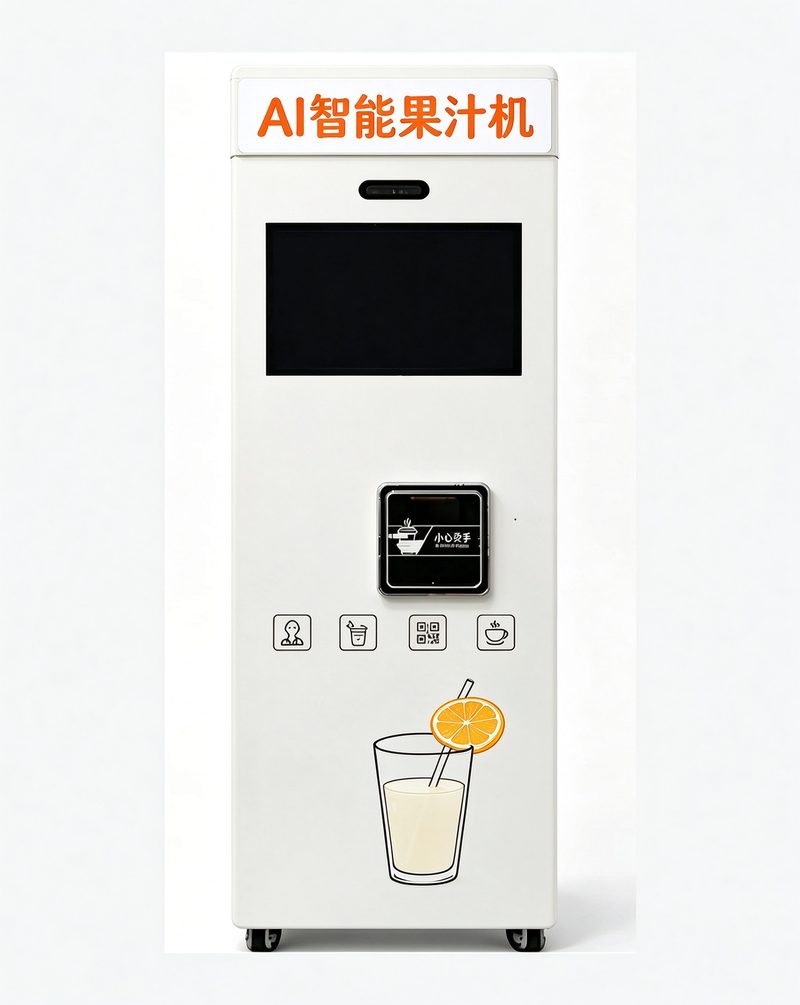
Faults, Causes, Fix Levels
| Fault | Likely cause | Fix level |
|---|---|---|
| No vend | Clogged nozzle or empty line | Site-side, minutes |
| Payment dead | Terminal or SIM | Swap from the parts kit |
| No power | Site breaker or cable | Host electrician |
| Brew issue | Rare; module swap | Depot or engineer |
The Corner Before and After
Six months ago the waiting bench of a vehicle inspection lane was dead floor space - a bin, a poster, and the occasional sigh from two nurses sharing a ten-minute break who wanted an orange juice and had nowhere to get it.
Now there is a juice machine against that wall. The routine is unremarkable, which is the compliment: takes two - one now, one for the colleague minding the desk.
The sale lands in the ledger before the door swings shut.
The Corner Before and After
Six months ago the corridor outside a hospital waiting hall was dead floor space - a bin, a poster, and the occasional sigh from a gym regular towel over the shoulder who wanted an orange juice and had nowhere to get it.
Now there is a juice machine against that wall. The routine is unremarkable, which is the compliment: waits the forty seconds scrolling a phone, pockets the receipt without looking at it.
It is the fourth cup this corner has sold since the hour began.
From the Service Route
The operator's van stops at the ferry terminal waiting row on a route that will cover six more machines before noon. The dashboard has already ranked the visit: stock fine, no faults, one line running low.
While the drawers are topped, a delivery rider helmet in hand wanders up; the sale happens between two tasks, takes two - one now, one for the colleague minding the desk.
This is what unattended means in practice - not absence, but attention aimed exactly where the data says. By the time the queue reforms, the machine is already serving the next regular.
The Corner Before and After
Six months ago a co-working floor pantry was dead floor space - a bin, a poster, and the occasional sigh from an elderly regular who remembers coin machines who wanted an orange juice and had nowhere to get it.
Now there is a juice machine against that wall. The routine is unremarkable, which is the compliment: taps the screen twice, picks the same drink as always, and is walking away before the cup is full.
The restock note writes itself: the popular line is down one row.
From the Service Route
The operator's van stops at the corridor outside a hospital waiting hall on a route that will cover six more machines before noon. The dashboard has already ranked the visit: stock fine, no faults, one line running low.
While the drawers are topped, an intern rehearsing a presentation wanders up; the sale happens between two tasks, taps the screen twice, picks the same drink as always, and is walking away before the cup is full.
This is what unattended means in practice - not absence, but attention aimed exactly where the data says. The dashboard records it as one line; the day's curve bends up almost imperceptibly.
From the Service Route
The operator's van stops at the second-floor rest deck of a furniture expo on a route that will cover six more machines before noon. The dashboard has already ranked the visit: stock fine, no faults, one line running low.
While the drawers are topped, a security guard off the midnight shift wanders up; the sale happens between two tasks, taps the screen twice, picks the same drink as always, and is walking away before the cup is full.
This is what unattended means in practice - not absence, but attention aimed exactly where the data says. The restock note writes itself: the popular line is down one row.
Payment and Reconciliation Basics
Every sale is logged against a timestamp and a method, so the monthly settlement is a report rather than an argument.
- QR scan-to-pay covers the standard flow; each order carries its own reference
- Export the ledger monthly and match it against capsule consumption
- Agree in advance who refunds failed vends and how fast
Daily Routine in Ten Minutes
The routine around a self-service juice vending machine is short by design: a glance at the dashboard, a quick wipe of the cup table, and a stock note if the level looks off.
- Check sales and stock on the dashboard before leaving the depot
- Wipe cup area and touch panel during each visit
- Log any failed vend so patterns show up early
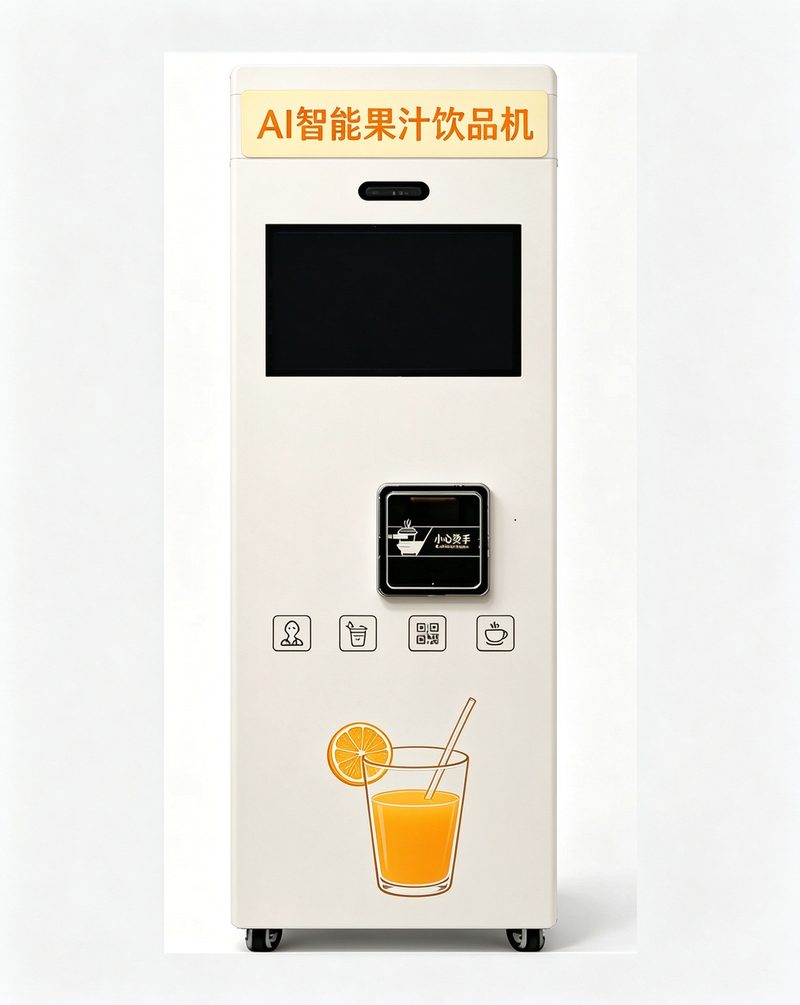
Remote Monitoring Keeps Rounds Short
With 4G/WiFi connectivity the fleet reports stock, sales and faults on its own, so depot runs replace guesswork with routes.
Alerts are worth tuning: stock thresholds, offline events and vend failures cover the bulk of what used to be discovered by surprise.
Where the Machine Earns Its Spot
A juice machine does not need the front door - it needs a dwell point: somewhere people stand, wait or pause for a few minutes with nothing to hold their attention.
- Lobby, staff room and lift-lobby corners outperform corridor walls
- 2 square metres of floor and a household power line cover the footprint
- Keep the frontage visible from the main flow; hidden units sell mainly to regulars
What the Data Tells You
The dashboard answers three questions: which drinks sell, which hours carry them, and which sites pay for a second machine.
Menu changes should come from those three answers, not from instinct alone.
Service Terms to Negotiate
Response time, parts availability and who travels - written into the contract, these three lines decide how long a fault lasts.
Cleaning Between Rounds
Capsule brewing keeps the wet parts few, which is why a juice machine stays serviceable with a wipe-down routine and a scheduled deep clean.
- Cup area, dispensing nozzle and touch panel on every visit
- Interior drawer and drip tray weekly
- Full deep clean when the filter calendar says so
Compliance and Site Etiquette
Quiet hours, tidy frontage and clear contact details keep hosts happy; none of it is complicated, all of it is noticed.
Keep the machine's paperwork - model, power, hygiene sheet - on file for venue audits.
Capsule Logistics in Practice
Capsules are the consumable backbone of a juice machine: light, stackable and dated, which makes them easy to batch and rotate.
Depot stock is sized on the restock cadence - every 2-3 weeks per machine under normal demand - and on a buffer for seasonal peaks.
A Checklist Worth Printing
- Confirm footprint and power before signing the placement
- Agree restock cadence and access hours in writing
- Set stock thresholds on the dashboard before day one
- Post the contact and refund rule at the machine
- Log the first month's cup curve against the plan
- Date capsule boxes and rotate first in, first out
- Keep one seal and nozzle kit per ten machines
- Test payment on site before the host's opening hour
- Export the ledger monthly and match it to consumption
- Walk the cleaning sheet on every visit, not from memory
- Set the filter calendar by measured water hardness
- Review alerts quarterly and remove the noisy ones
The Takeaway
The plan that survives contact with a busy site is the one written with the operator, not merely for them.
Documentation That Saves a Service Call
Most service calls are archaeology: what changed, when, and who noticed first. A machine folder that holds the commissioning sheet, the filter log, the cleaning history and the fault timeline turns a mystery into a diagnosis before the van door opens.
The habit costs a minute per visit and pays for itself the first time a technician asks 'has anything changed recently?' and gets an answer instead of a shrug.
It also changes the tone of warranty conversations. A documented machine gets the benefit of the doubt; an undocumented one gets a debate.
The Consumables Ledger
Capsules, cups, lids, cleaning supplies - the consumables line is where tidy operators and messy ones part company, because it is the one line that scales perfectly with sales and therefore audits itself.
The discipline is simple: fix the per-cup figure with the supplier, record deliveries against machine consumption monthly, and investigate any gap wider than normal wastage. The gap is rarely theft; it is usually unlogged demos, damaged goods, or a site pouring two lines nobody priced.
A clean consumables ledger also arms the next negotiation - volume committed in writing is the cheapest discount a supplier will ever give.
Training the Person Who Will Run the Route
The machine ships with documentation; the route ships with habits. The operator who lasts is the one trained on three things before the first van leaves: reading the dashboard without hope or fear, walking the cleaning sheet in the same order every time, and logging anomalies the same day they appear.
Everything else can be learned on the road. What cannot be retrofitted is the discipline of writing things down - because a fleet that runs on memory runs until the memory gets sick, takes a holiday, or quits.
The training day costs a few hours; the habits it installs are the difference between a route that scales and a route that quietly caps the business at whichever number the founder can personally supervise.
The Numbers Behind the Payback Window
The payback window of 3-8 months is not a promise - it is a band, and where a site lands inside it depends on three variables the buyer controls: the quality of the dwell point, the width of the capsule menu, and the discipline of the restock route.
Buyers who miss the band almost always miss it on the third variable. The machine sells on day one; the route decides whether it keeps selling. A missed visit does not show up as a line item - it shows up as a regular who tried twice and stopped trying.
The honest worksheet therefore has three columns: what the site could sell, what the route can serve, and what the ledger actually recorded. When those three converge, the payback maths stops being a forecast and becomes a reading.
The Handover Between Buyer and Operator
Importers who sell to operators, and operators who employ route staff, share one failure point: the handover. The machine arrives; the knowledge does not.
The fix is a one-page handover sheet: configuration, capsule lines and their order codes, the cleaning cadence, the filter calendar, the service contacts, and the three faults most likely to occur with their fixes. Written once, reused forever.
Buyers who receive this page report the same thing: onboarding stops being a week of phone calls and becomes an afternoon. The supplier who provides it unprompted is remembered at reorder time.
A Placement, Three Months In
The pilot at a coach station waiting row began as a favour to the site host and turned into the easiest arithmetic in the fleet: departures-board waves, each delayed departure buys another round of cups. When the second machine conversation started, the first month's ledger did most of the talking.
No single number makes the case; the shape does. Cups per week climb through the ramp, plateau where the site's rhythm settles, and the menu mix flattens the seasonal dips. When the host asks what it would take to add a second unit, the answer is a copy of the first one's ledger.
A Placement, Three Months In
Three months into a placement at a community clinic hallway, the pattern has settled: appointment-schedule traffic, and the queue before lunch is the whole story. The menu has been trimmed twice - the dashboard ranked the lines, the bottom three went, and nobody wrote in to mourn them.
No single number makes the case; the shape does. Cups per week climb through the ramp, plateau where the site's rhythm settles, and the menu mix flattens the seasonal dips. When the host asks what it would take to add a second unit, the answer is a copy of the first one's ledger.
What a Working Site Looks Like
Three months into a placement at a logistics warehouse rest area, the pattern has settled: shift-change traffic, and the morning peak carries the day. The menu has been trimmed twice - the dashboard ranked the lines, the bottom three went, and nobody wrote in to mourn them.
No single number makes the case; the shape does. Cups per week climb through the ramp, plateau where the site's rhythm settles, and the menu mix flattens the seasonal dips. When the host asks what it would take to add a second unit, the answer is a copy of the first one's ledger.
Straight Answers to the Hard Questions
"How do I know the numbers are real?"
Every order carries its own reference and exports monthly against capsule consumption. You reconcile a report, not a shoebox of receipts.
"Who fixes it when something goes wrong?"
The faults that actually happen - a clogged nozzle, a payment hiccup - are site-side fixes measured in minutes, which is why the parts kit lives in the service van. Anything rarer is a module swap under the service terms you negotiated.
"Can it really run unattended all day?"
That is the design brief: uptime, alerts and a route. The machine does the shift work; you do the arithmetic.
"Will people trust a drink made by a box?"
They trust the cup more than the counter when the cup is consistent. Capsule brewing means the tenth cup matches the first, and the cleaning sheet posted on the glass does more for confidence than any slogan.
A Week on the Route, Logged
- Monday - Route planned from the weekend's dashboard; the week's capsule order confirmed.
- Tuesday - Long route day - six machines, two top-ups flagged, one nozzle wiped twice.
- Wednesday - Midweek dip on the office sites; herbal line restocked at the clinic cluster.
- Thursday - Ledger exported and matched against capsule consumption; one gap investigated.
- Friday - Peak-site visit before the evening rush; contact card replaced at one unit.
- Saturday - Light route; the hotel machine's drawer rotated first in, first out.
- Sunday - Silent day by design - alerts on, phone on, van parked.
Twelve Months, Two Columns
| Month | What the traffic does | What the operator does |
|---|---|---|
| Jan | New-year footfall is slow to wake; keep the hot lines deep and the route tight. | Budget season: the annual consumables figure gets signed this month. |
| Feb | The post-holiday dip is real; use it for deep cleans and filter changes. | Valentine week bends the coffee and milk-tea lines upward for ten days. |
| Mar | Spring footfall returns with the weather; fruit lines start their climb. | Quarter close: reconcile the ledger and prune the menu bottom. |
| Apr | Rain weeks teach you which sites have indoor dwell; note them for the record. | A good month to trial one new capsule line per machine. |
| May | Warm evenings extend the outdoor sites; chilled options earn their drawer space. | Mid-year route review: cut the weakest ten percent if the ledger says so. |
| Jun | Exam and event season bends public-hall sites; stock ahead of the dates. | Half-year service check: seals, nozzles, payment terminals. |
| Jul | Peak heat shifts demand; the curve moves later into the evening. | Holiday travel lifts transit and hotel sites for roughly three weeks. |
| Aug | The slowest office month; the tourist corridors carry the fleet instead. | Use the lull for operator training and contract renewals. |
| Sep | Back-to-routine week is the second new year; footfall snaps back fast. | Order winter capsule volumes early - the ramp catches late buyers. |
| Oct | The hot-drink golden window opens; the curve steepens week on week. | Autumn fairs and exhibitions fill the trade-hall sites. |
| Nov | Cold-weather peak builds; popular lines deserve a double buffer. | Year-end host meetings: renewals, shares, next-year placements. |
| Dec | Festive peaks everywhere except the empty offices; plan the route around both. | Close the ledger, thank the hosts, and let the dashboard write next year's first order. |
Reading a Dashboard Like an Operator
Three views carry the week: hourly sales against the site's curve, stock depth per capsule line, and the fault log with timestamps. Everything else is decoration until one of those three moves.
The art is in the comparison. A site selling forty cups a day means nothing alone; against last week it is a trend, against the site next door it is a verdict, against the same week last season it is a menu decision.
Operators who annotate the dashboard - a festival, a roadwork, a host's renovation - build an asset no spreadsheet of raw numbers provides: a memory of why the curve bent, which is what next year's plan is made of.
From the Operator's Notebook
I used to think the machine was the business. Four hundred route stops later, the honest version: the machine is the storefront, and the business is the the site walkthrough around it.
If I could send one paragraph back to my first order, it would be this - the ledger discipline is not a purchase, it is a schedule, and the schedule is written in the ledger whether you look at it or not.
The best placement advice I ever got fit on a napkin: the site walkthrough decides the curve, and the curve decides everything else.
How It Stacks Up
| The old way | What it costs | Where it fails | What the machine changes |
|---|---|---|---|
| Staffed counter | Wages every month, plus training and turnover | Open only as long as someone stands there | A juice machine sells the hours the counter never could |
| Traditional coin vending | Cash handling, change runs, slot jams | No telemetry; faults found by complaint | Every sale logged, every fault alerted |
| Corner cafe | Rent, fit-out, staffed peaks | Fixed menu, fixed hours | Capsule range rotates at the restock visit, not by renovation |
| Model line | Core drinks | Best-fit venues | Service rhythm |
|---|---|---|---|
| Coffee machine | Espresso, americano, latte | Offices, hotels, waiting areas | Restock every 2-3 weeks |
| Milk tea machine | Milk tea and tea lines | Malls, adult-education campuses, staff rooms | Restock every 2-3 weeks |
| Juice machine | Fruit lines, chilled options | Gyms, leisure, transit | Restock every 2-3 weeks |
| Herbal tea machine | Herbal and traditional teas | Clinics, wellness floors, night sites | Restock every 2-3 weeks |
Common questions
What happens during a power cut?
The machine resumes when power returns; in-flight vends are voided and refunded per the posted rule.
What spare parts should I stock?
Seals and nozzles first, a spare payment terminal, and the fuses that solve site-side faults.
Does the machine need a water line?
Many units run without plumbing; confirm the water arrangement for the specific model during placement prep.
Is there a contract lock-in?
Placement terms vary by venue; trial periods with clear move-out terms are common and sensible.
What if payment fails mid-vend?
The vend is voided, the ledger records it, and the posted refund rule handles the customer the same day.
Can the menu change without a technician?
Yes - capsule menus change at the restock visit; nothing on the machine needs touching.
When does the second machine make sense?
When the first one's ledger shows a stable curve and the restock route has spare capacity.
Can I run twenty sites alone?
Up to a point - routes planned from live data are what make small fleets workable with one service person.
Related reading
- Payment Setup for a Capsule Juice Machine
- Installing a Gym Juice Vending Machine: Timeline and Checklist
- How to Choose An Unattended Juice Corner for High-Traffic Venues
- Keeping a Gym Juice Vending Machine Clean Between Rounds
Summary
After-sales for a self-service juice vending machine is written before the fault: a parts kit, response terms and a diagnosis habit that starts on the dashboard.
Send the site's foot-traffic notes and the capsule shortlist will follow.