After-Sales Planning for the Gym Juice Vending Machine
In one line: After-sales for a gym juice vending machine is written before the fault: a parts kit, response terms and a diagnosis habit that starts on the dashboard.
Key facts: Response terms are written into the contract precisely because faults are rare but not never.
What Separates a Busy Unit from a Quiet One
The gym juice vending machine spends most of its life between visits, which is where the design either helps or does not. Each section answers a question that tends to arrive at a specific point in the buying process.
Spare Parts Kits Worth Keeping
- One full seal and nozzle kit per ten machines
- A spare payment terminal for the fleet
- Fuses and a testing cable for site-side fixes
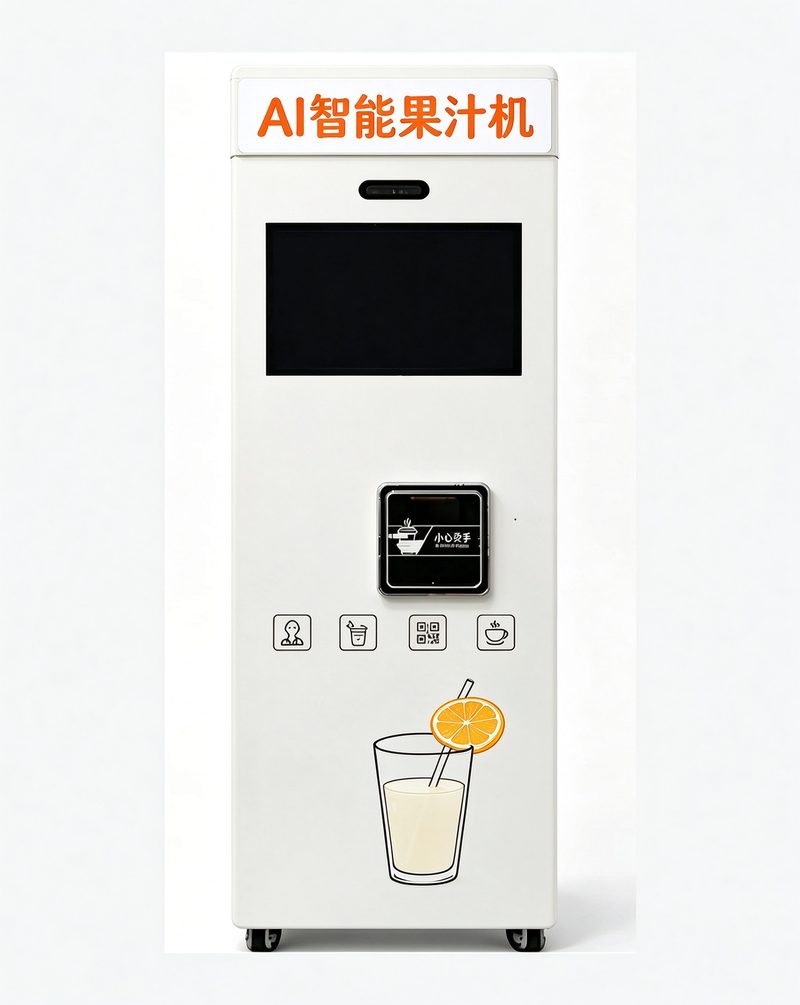
Faults, Causes, Fix Levels
| Fault | Likely cause | Fix level |
|---|---|---|
| No vend | Clogged nozzle or empty line | Site-side, minutes |
| Payment dead | Terminal or SIM | Swap from the parts kit |
| No power | Site breaker or cable | Host electrician |
| Brew issue | Rare; module swap | Depot or engineer |
A Cup in the Middle of a Workday
10:50, between meetings at a university staff building foyer. The queue at the coffee counter downstairs is eight deep; the gym juice vending machine has three cups' worth of waiting in it, and no queue.
A saleswoman between two showroom appointments takes two - one now, one for the colleague minding the desk, then goes back upstairs with the cup still in hand - a two-minute errand that a staffed counter would have turned into ten.
Speed is not a luxury feature here; it is the placement's whole economics. No one needed help, which is the entire point.
Warranty Scenarios Rehearsed
Read the warranty the way faults will actually arrive: freight direction on a swap, loaner policy during repair, and what voids coverage — including the well-meant repair attempt by a site contact.
Three sentences from the contract, written onto the site card in advance, prevent most of the arguments warranties exist to cause.
Support Terms Worth Reading Twice
Write the service ladder before the first fault: what you fix from the dashboard, what a site contact fixes from the card, what waits for the van, and what goes back to the supplier.
A gym juice vending machine with a ladder rarely reaches a panic. Faults enter at the step they belong to, and most never climb past the first one.
Route Math: How Many Sites per Morning
A route is arithmetic with traffic in it. Six to eight sites per morning is the working range for a single van when stops cluster, and the number falls fast once two sites sit on opposite sides of a city.
Cluster first, then count. Operators who plan by geography rather than by urgency serve more machines with the same hours and keep every 2-3 weeks windows honest across the whole fleet.
Payment and Reconciliation Basics
Every sale is logged against a timestamp and a method, so the monthly settlement is a report rather than an argument.
- QR scan-to-pay covers the standard flow; each order carries its own reference
- Export the ledger monthly and match it against capsule consumption
- Agree in advance who refunds failed vends and how fast
The Small Consumables Nobody Counts
Cups, lids, stirrers and napkins never appear in a payback model and always appear in a month-end surprise. They are cheap per unit and expensive per thousand, and they are the first thing to run out when a site gets busy.
Count them the way stock is counted: a fixed par level per site, checked at every restock, ordered with the capsules rather than separately. A site that runs out of lids has effectively run out of drinks.
Lessons From the First Quarter
A quiet machine is a trusted machine. Lights that work, a screen that answers, a pickup area wiped between rounds — these say more about the operation than any panel sticker.
Trust compounds quietly, in renewal conversations and in the passers-by who finally stop. It is the only marketing an unattended corner truly owns.
The Hour Nobody Staffs
By ten at night a 4S store customer lounge has emptied out, and the gym juice vending machine is the only lit thing in the corridor. The site closes at six; the traffic does not.
A night porter on his round is the customer now - the one who cannot buy an orange juice anywhere else at this hour, and who will remember that tomorrow.
Anyone pricing a placement on daytime footfall alone is pricing half a site. The dashboard records it as one line; the day's curve bends up almost imperceptibly.
Three Numbers Worth Reporting Monthly
Cups sold, faults per hundred cups, and stockouts. Three numbers, one page, sent to whoever owns the site - it takes ten minutes and it changes the tone of every renewal conversation.
Hosts rarely ask for data, and almost always read it when it arrives. A page like that turns a machine in a corner into a service with a name attached.
Service Terms to Negotiate
Response time, parts availability and who travels - written into the contract, these three lines decide how long a fault lasts.
Spare Parts and Response Windows
Spare parts are a budget line, not an emergency purchase. Keep the wear items — brew seals, cup sensors, the odd door latch — on the shelf in quantities the fleet's fault log justifies.
The log decides the shelf. Fleets that stock by memory end up with drawers of the wrong parts and weekends lost to waiting for the right one.
The Second Machine Decision
A second machine at the same site is a different decision from the first. The first was about whether the site works; the second is about what the first one cannot do - a second temperature, a second menu, a queue that forms at nine and disappears by ten.
The test is not revenue doubling. It is whether the existing machine is at its ceiling at the hour that matters: if it is idle at eleven and blocked at nine, the site needs capacity, not another product line. If it is idle all day, a second machine only doubles the rent share.
Waste, Cups and the Bins Beside the Cabinet
Cups leave the machine and land somewhere. Confirm with the host where they go and who empties that bin, because a full bin beside a cabinet is the fastest way to lose a placement that is working.
Where the site separates waste, put a second bin within arm's reach. The cost is one bin; the benefit is a host who stops mentioning the machine in meetings.
Small Habits, Compounding Results
Every site teaches one lesson per month, whether or not anyone writes it down. The one-page site card is where lessons go to survive staff changes and holiday seasons.
A fleet with written memory improves yearly. A fleet with verbal memory starts each January from scratch.
The Numbers Behind the Payback Window
The payback window of 3-8 months is not a promise - it is a band, and where a site lands inside it depends on three variables the buyer controls: the quality of the dwell point, the width of the capsule menu, and the discipline of the restock route.
Buyers who miss the band almost always miss it on the third variable. The machine sells on day one; the route decides whether it keeps selling. A missed visit does not show up as a line item - it shows up as a regular who tried twice and stopped trying.
The honest worksheet therefore has three columns: what the site could sell, what the route can serve, and what the ledger actually recorded. When those three converge, the payback maths stops being a forecast and becomes a reading.
When to Add the Second Machine
The second machine is justified by two curves crossing: the first unit's sales plateau at a level the site can sustain, and the restock route still has slack. When both hold for a quarter, the second placement is arithmetic, not courage.
The failure mode is doubling on a high - one good month is weather, not climate. The reliable trigger is a plateau: the site has told you its size, the menu has told you its ceiling, and the ledger has shown you the margin survived the plateau.
Fleets that grow this way inherit an accidental gift: every habit - cadence, cleaning, reconciliation - was built to be copied before it was needed twice.
What the Site Sells at 23:40
By ten at night the fitting-zone bench of a home improvement market has emptied out, and the gym juice vending machine is the only lit thing in the corridor. The site closes at six; the traffic does not.
A saleswoman between two showroom appointments is the customer now - the one who cannot buy an orange juice anywhere else at this hour, and who will remember that tomorrow.
Anyone pricing a placement on daytime footfall alone is pricing half a site. By the time the queue reforms, the machine is already serving the next regular.
A Placement, Three Months In
Three months into a placement at a furniture mall staff corridor, the pattern has settled: staff and contractor flow, and the steady base load comes from the fit-out crews. The menu has been trimmed twice - the dashboard ranked the lines, the bottom three went, and nobody wrote in to mourn them.
The first month argued with the second and lost. What looked like a slow start was a queue forming in the wrong half hour - once the route moved the restock earlier, the same site sold the same cups with half the empty rows.
What a Working Site Looks Like
Three months into a placement at a gym entrance corridor, the pattern has settled: class-timetable surges, and the evening class change is the golden window. The menu has been trimmed twice - the dashboard ranked the lines, the bottom three went, and nobody wrote in to mourn them.
The interesting number is not the peak day; it is the worst weekday, because that is the one the rent has to survive. In this case the floor held, and a floor that holds is what lets an operator plan a second site.
The Ledger Tells the Story
The pilot at a gym entrance corridor began as a favour to the site host and turned into the easiest arithmetic in the fleet: class-timetable surges, the evening class change is the golden window. When the second machine conversation started, the first month's ledger did most of the talking.
Nothing dramatic happened, which is the result worth reporting. The machine stayed stocked, the sheet got signed, the ledger matched the capsule invoices, and the host stopped mentioning it - the highest form of approval a placement gets.
From the Service Route
The operator's van stops at a wholesale market tea point on a route that will cover six more machines before noon. The dashboard has already ranked the visit: stock fine, no faults, one line running low.
While the drawers are topped, a gym regular towel over the shoulder wanders up; the sale happens between two tasks, takes two - one now, one for the colleague minding the desk.
This is what unattended means in practice - not absence, but attention aimed exactly where the data says. Nobody photographs it; the machine has simply become part of the floor plan.
Straight Answers to the Hard Questions
"Is the tea or coffee actually any good?"
Good enough that the repeat rate, not the first sale, pays for the placement. The capsule range covers espresso, milk tea, fruit and herbal lines, so the regulars settle in and the curious keep sampling.
"A machine like that must cost a fortune up front."
Less than the rent deposit for the counter it replaces. The machine is one of eight cost lines, and the payback window runs three to eight months at a site with real foot traffic - the worksheet in this series breaks all eight out.
"Doesn't it need plumbing and rewiring?"
A household power line and two square metres cover it. Most placements are standing and selling the same week the site agreement is signed.
"Who fixes it when something goes wrong?"
The faults that actually happen - a clogged nozzle, a payment hiccup - are site-side fixes measured in minutes, which is why the parts kit lives in the service van. Anything rarer is a module swap under the service terms you negotiated.
The Week's Route, Written Down
- Monday - Route planned from the weekend's dashboard; the week's capsule order confirmed.
- Tuesday - Long route day - six machines, two top-ups flagged, one nozzle wiped twice.
- Wednesday - Midweek is the quiet read: office sites cool off, clinic and gym sites pick up the slack.
- Thursday - Reconciliation morning - cups sold against capsules issued, and the one discrepancy traced to a demo cup.
- Friday - Contact card refreshed at the lobby unit, and the host's new shift supervisor walked through the basics.
- Saturday - Light route; the hotel machine's drawer rotated first in, first out.
- Sunday - Silent day by design - alerts on, phone on, van parked.
Twelve Months, Two Columns
| Month | What changes | What to do about it |
|---|---|---|
| Jan | New-year footfall is slow to wake; keep the hot lines deep and the route tight. | The quietest fortnight of the year - good for audits, bad for optimism. |
| Feb | The post-holiday dip is real; use it for deep cleans and filter changes. | Valentine week bends the coffee and milk-tea lines upward for ten days. |
| Mar | Exam season starts on campuses; the library site stops being a quiet placement. | Spring footfall returns with the weather; fruit lines start their climb. |
| Apr | A good month to trial one new capsule line per machine. | Rain weeks teach you which sites have indoor dwell; note them for the record. |
| May | Warm evenings extend the outdoor sites; chilled options earn their drawer space. | Mid-year route review: cut the weakest ten percent if the ledger says so. |
| Jun | Half-year service check: seals, nozzles, payment terminals. | Exam and event season bends public-hall sites; stock ahead of the dates. |
| Jul | Holiday travel lifts transit and hotel sites for roughly three weeks. | Office sites go quiet and tourist corridors take over; move the route, not the menu. |
| Aug | Capsule storage gets hot in August; check the stockroom before the shelf life does. | The slowest office month; the tourist corridors carry the fleet instead. |
| Sep | Back-to-routine week is the second new year; footfall snaps back fast. | Campus sites refill; the coffee line at eight in the morning comes back overnight. |
| Oct | The first cold snap is worth a route note: it usually front-loads the month by a week. | The hot-drink golden window opens; the curve steepens week on week. |
| Nov | Cold-weather peak builds; popular lines deserve a double buffer. | Darkness at five changes the traffic shape; the evening hour gains, the lunch hour thins. |
| Dec | Festive peaks everywhere except the empty offices; plan the route around both. | The last week is dead in offices and frantic in transit; stock for one and rest for the other. |
Notes I Keep Rewriting
I used to think the machine was the business. Four hundred route stops later, the honest version: the machine is the storefront, and the business is the restock cadence around it.
The dashboard is honest, the host is honest, and both are approximate. the restock cadence is what turns two approximations into a decision.
There is a version of this business that runs on charm, and it works until the charming person takes a holiday. the first-month readings is the version that survives the holiday.
How It Stacks Up
| The old way | What it costs | Where it fails | What the machine changes |
|---|---|---|---|
| Staffed counter | A rota to fill, holidays to cover, overtime at the edges | Shuts when the last person leaves | A gym juice vending machine covers the closed hours without a rota |
| Traditional coin vending | Coin floats, collection trips, notes that jam | Problems surface as complaints, weeks late | Payment and faults report themselves the same hour |
| Corner cafe | A lease, a build-out, a barista roster | Menu changes mean reprinting and retraining | The menu changes when the capsule order does |
| Model line | Core drinks | Best-fit venues | Service rhythm |
|---|---|---|---|
| Coffee machine | Espresso, americano, latte | Corporate floors, hotel corridors | Restock every 2-3 weeks |
| Milk tea machine | Milk tea and tea lines | Retail floors, schools, factory canteens | Restock every 2-3 weeks |
| Juice machine | Fruit lines, chilled options | Sports halls, stations, parks | Restock every 2-3 weeks |
| Herbal tea machine | Herbal and traditional teas | Wellness centres, community halls | Restock every 2-3 weeks |
A Checklist Worth Printing
- Test the payment terminal on the site's own network
- Confirm the delivery lift's depth before the van leaves
- Test payment on site before the host's opening hour
- Log the first repair with date, part and cause
- Agree a trial period with a written move-out term
- Set stock thresholds on the dashboard before day one
- Check signage faces the waiting area, not the wall
- Measure the walk from the door to the cabinet before delivery
- Photograph the installation for the machine folder
- Ask the host where hot drinks are usually bought nearby
- Verify the capsule order lead time in weeks, not promises
- Log the first month's cup curve against the plan
The Takeaway
Start narrow: one site, one menu, one restock rhythm - then widen on evidence.
Common questions
Rent or revenue share?
Flat rent suits steady sites, share suits unproven ones; hybrids split the difference.
When does the second machine make sense?
When the first one's ledger shows a stable curve and the restock route has spare capacity.
Can the menu change without a technician?
Yes - capsule menus change at the restock visit; nothing on the machine needs touching.
What spare parts should I stock?
Seals and nozzles first, a spare payment terminal, and the fuses that solve site-side faults.
What is the usual payback window?
The planning band is 3-8 months, set mainly by site quality and the local price of a cup.
How long does installation take?
On a prepared site, commissioning is typically finished in under an hour: position, power, network check and a run of test cups.
What happens during a power cut?
The machine resumes when power returns; in-flight vends are voided and refunded per the posted rule.
Is there a contract lock-in?
Placement terms vary by venue; trial periods with clear move-out terms are common and sensible.
Machines this article refers to
Related reading
- Unattended Juice Corner Buying Guide: Specs That Actually Matter
- The Business Case for a Commercial Juice Vending Machine
- Seasonal Menu Planning for a Smart Juice Machine
- Keeping a Gym Juice Vending Machine Clean Between Rounds
Summary
After-sales for a gym juice vending machine is written before the fault: a parts kit, response terms and a diagnosis habit that starts on the dashboard.
Request the spec sheet and the TCO worksheet together - they read as one document.