The Business Case for an Automatic Coffee Vending Machine
In one line: A business case for an automatic coffee vending machine survives on honest accounting - costs listed before month one, revenue read from the machine's own dashboard.
Key facts: The payback window of 3-8 months is an output of the ledger, not a promise on a brochure.
What Separates a Busy Unit from a Quiet One
Most automatic coffee vending machine decisions are made in a meeting room and tested at seven in the morning. If a line looks obvious, it is probably the one that gets skipped and then paid for twice.
Costs and Revenue Lines to List
The pilot lives or dies on honest accounting: list machine, placement, consumables, parts, power, site fee, cleaning and downtime on one sheet before month one.
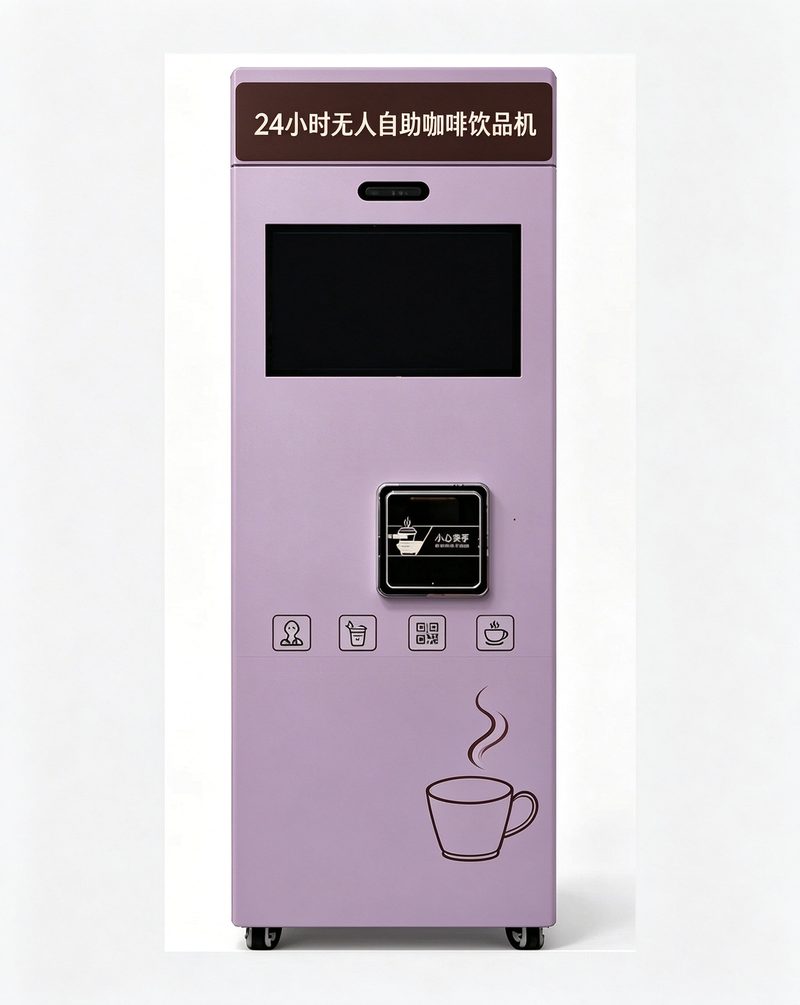
Lines on the Pilot Ledger
| Line | Cadence | Source of truth |
|---|---|---|
| Consumables | Monthly | Invoices against cups |
| Site fee or share | Monthly | The placement contract |
| Parts and filters | Quarterly average | Purchase log |
| Cleaning time | Weekly | Visit sheet |
| Revenue | Daily | Machine dashboard |
The Regular Nobody Recruited
The same face, four weeks running. A forklift driver with gloves tucked in his belt stops at the tool-room door of a machine shop, collects the cup, checks the cap out of habit, and folds back into the corridor traffic, and the pattern has stopped being a coincidence.
No promotion produced that habit. A machine that is always there, always stocked and always the same cup did it, which is a quieter kind of marketing than anything with a budget.
A site is not won on the first cup; it is won on the fifteenth. By the time the queue reforms, the machine is already serving the next regular.
The Numbers Behind the Case
Pilot one site per venue class before promising a fleet. Office, transit, retail, and campus each teach a different lesson about traffic, restock weight, and payment mix — lessons the second machine inherits cheaply.
An automatic coffee vending machine fleet grows well when each new cabinet copies a proven twin rather than a hopeful average. Class twins, not machine twins, are the unit of copying.
Payback, Told Honestly
Scale reveals operations, not demand. The binding constraint is rarely customers; it is restock hours per machine per week, and every route redesign buys back hours that go straight into new placements.
Model the next ten machines in restock hours first and revenue second. The order feels backwards until the van gets full, after which it feels obvious.
The Cup Itself: Rim, Heat, Foam
Customers judge a drink before tasting it: whether the rim is clean, whether the cup is warm to hold, whether the surface looks like something a person made. None of that is on the specification sheet and all of it decides the second purchase.
Temperature is the easiest to get wrong and the cheapest to fix. A cup that arrives drinkable rather than scalding suits a lobby; one that arrives hot suits a winter street. The setting is a menu decision, not a machine decision.
Reading the Ledger Monthly
The busiest week of the year is chosen by the venue, not by the operator. Exam seasons, holidays, and weather move traffic; the restock calendar should move with them rather than argue.
One flexible day per week in the route absorbs most of what a calendar can throw at a fleet.
Cleaning Contractors and Shared Space
In most buildings the floor around the cabinet is cleaned by someone who has never been told the machine exists. Their cloth stops at the cabinet's edge, and the edge is where the spills live.
Ten minutes with the cleaning supervisor solves more hygiene complaints than any specification. Write the machine into their round, and leave a contact for the day the bin overflows.
The Operator's Calendar
Complaints arrive as feelings and leave as data. Each one maps to a code — taste, queue, payment, cleanliness — and the codes, counted monthly, rank the next month's work better than any opinion.
Operators who thank complainants quietly build the cheapest early-warning network in the business.
From the Service Route
The operator's van stops at a night-school corridor on a route that will cover six more machines before noon. The dashboard has already ranked the visit: stock fine, no faults, one line running low.
While the drawers are topped, a night porter on his round wanders up; the sale happens between two tasks, scans, hesitates over the menu for a second, then picks the new flavour the dashboard has been quietly promoting.
This is what unattended means in practice - not absence, but attention aimed exactly where the data says. The dashboard records it as one line; the day's curve bends up almost imperceptibly.
Capsule Storage and Shelf Life
Capsules are food before they are inventory. Store them dry, dated, off the floor, and rotate first in first out; the shelf life printed on the box is a limit, not a target.
The practical buffer is one full cycle plus a week, held at the depot rather than in a hot back room. Operators who over-order to chase a discount usually pay it back in write-offs.
Scaling From One Machine to a Fleet
Fleet decisions copy the pilot's habits: same ledger, same cadence, same cleaning sheet - multiplied. The second machine is easier than the first precisely because the routine already exists.
Insurance and Liability in Plain Terms
Ask three questions before signing: whose policy covers the cabinet against damage, whose covers a customer who spills a hot drink, and what the host's own insurer requires in writing. Most answers arrive within a week if asked early.
Because an automatic coffee vending machine holds no cash, the theft conversation is shorter than it once was - the till is a database. The liability conversation stays, and it is settled by one page rather than by goodwill.
Presenting the Machine to Management
Track payback per machine from day one: revenue, capsule cost, terminal fees, rent share, and time. The 3-8 months range is real, but only the per-machine ledger shows which end of the range a site lives on.
Fleets that know their per-machine reality reinvest with confidence. Fleets that know only their average reinvest in hope.
Negotiating with a Site Host
Site hosts rarely object to the machine; they object to uncertainty. Power draw, floor load, water, cleaning duty, noise - five answers on one page close most conversations before they open.
The second question is always about money, and the honest framing helps: flat rent suits a site with proven traffic, revenue share suits one still being tested, and a small base plus a share splits the difference without either side betting the year.
Whatever the model, two clauses carry the value: access hours that fit the restock route, and a move-out term that lets both sides leave without a lawsuit. Everything else is negotiable furniture.
What a Facility Manager Checks First
A facility manager walks toward a new cabinet looking at four things, none of them the machine: the floor where it meets the wall, the cable route, the fire door it might block, and whether the bin beside it has a lid.
Answer those four before they are asked and the conversation moves to revenue. Let them find one of the four themselves and the conversation stays on compliance for a month.
The document that helps is one page: a photograph of the installed unit, the power rating, the maintenance contact, and the cleaning routine. Facility teams keep paper, and paper is what survives a change of staff.
The Consumables Ledger
Capsules, cups, lids, cleaning supplies - the consumables line is where tidy operators and messy ones part company, because it is the one line that scales perfectly with sales and therefore audits itself.
The discipline is simple: fix the per-cup figure with the supplier, record deliveries against machine consumption monthly, and investigate any gap wider than normal wastage. The gap is rarely theft; it is usually unlogged demos, damaged goods, or a site pouring two lines nobody priced.
A clean consumables ledger also arms the next negotiation - volume committed in writing is the cheapest discount a supplier will ever give.
What the Van Sees at Seven
The operator's van stops at the shelter by a suburban train platform on a route that will cover six more machines before noon. The dashboard has already ranked the visit: stock fine, no faults, one line running low.
While the drawers are topped, an elderly regular who remembers coin machines wander up; the sale happens between two tasks, scans, hesitates over the menu for a second, then picks the new flavour the dashboard has been quietly promoting.
This is what unattended means in practice - not absence, but attention aimed exactly where the data says. No one needed help, which is the entire point.
A Placement, Three Months In
Three months into a placement at a gym entrance corridor, the pattern has settled: class-timetable surges, and the evening class change is the golden window. The menu has been trimmed twice - the dashboard ranked the lines, the bottom three went, and nobody wrote in to mourn them.
Nothing dramatic happened, which is the result worth reporting. The machine stayed stocked, the sheet got signed, the ledger matched the capsule invoices, and the host stopped mentioning it - the highest form of approval a placement gets.
What a Working Site Looks Like
Three months into a placement at a logistics warehouse rest area, the pattern has settled: shift-change traffic, and the morning peak carries the day. The menu has been trimmed twice - the dashboard ranked the lines, the bottom three went, and nobody wrote in to mourn them.
What the site taught was patience with a shape. Weeks one to three looked like a verdict; weeks four to twelve were the actual answer, and the answer was better than the verdict.
The Ledger Tells the Story
Three months into a placement at an office park lobby, the pattern has settled: weekday morning peaks, and Fridays run light and Mondays run heavy, every week. The menu has been trimmed twice - the dashboard ranked the lines, the bottom three went, and nobody wrote in to mourn them.
What the site taught was patience with a shape. Weeks one to three looked like a verdict; weeks four to twelve were the actual answer, and the answer was better than the verdict.
The Hour Nobody Staffs
By ten at night a gym entrance, between the lockers and the studio door has emptied out, and the automatic coffee vending machine is the only lit thing in the corridor. The site closes at six; the traffic does not.
Two nurses sharing a ten-minute break is the customer now - the one who cannot buy a flat white anywhere else at this hour, and who will remember that tomorrow.
Anyone pricing a placement on daytime footfall alone is pricing half a site. The sale lands in the ledger before the door swings shut.
Straight Answers to the Hard Questions
"We tried a vending machine years ago and it was a disaster."
The difference is the telemetry. Stock, faults and sales report themselves now, so a machine that quietly fails gets noticed the same hour - not the following month.
"Can it really run unattended all day?"
That is the design brief: uptime, alerts and a route. The machine does the shift work; you do the arithmetic.
"Will people trust a drink made by a box?"
They trust the cup more than the counter when the cup is consistent. Capsule brewing means the tenth cup matches the first, and the cleaning sheet posted on the glass does more for confidence than any slogan.
"Is the tea or coffee actually any good?"
Good enough that the repeat rate, not the first sale, pays for the placement. The capsule range covers espresso, milk tea, fruit and herbal lines, so the regulars settle in and the curious keep sampling.
A Week on the Route, Logged
- Monday - Route planned from the weekend's dashboard; the week's capsule order confirmed.
- Tuesday - Long route day - six machines, two top-ups flagged, one nozzle wiped twice.
- Wednesday - Halfway check on capsule depth; one line is running ahead of plan and earns a second row next visit.
- Thursday - Ledger exported and matched against capsule consumption; one gap investigated.
- Friday - Contact card refreshed at the lobby unit, and the host's new shift supervisor walked through the basics.
- Saturday - Light route; the hotel machine's drawer rotated first in, first out.
- Sunday - Rest day, which is also a system: the alerts keep watch and the ledger keeps counting.
Twelve Months, Two Columns
| Month | What changes | What to do about it |
|---|---|---|
| Jan | New-year footfall is slow to wake; keep the hot lines deep and the route tight. | Budget season: the annual consumables figure gets signed this month. |
| Feb | The post-holiday dip is real; use it for deep cleans and filter changes. | Valentine week bends the coffee and milk-tea lines upward for ten days. |
| Mar | Quarter close: reconcile the ledger and prune the menu bottom. | Spring footfall returns with the weather; fruit lines start their climb. |
| Apr | The first warm spell moves demand later in the day; watch the four o clock hour. | Rain weeks teach you which sites have indoor dwell; note them for the record. |
| May | Mid-year route review: cut the weakest ten percent if the ledger says so. | Holiday Mondays distort the weekly curve; compare like with like before judging a site. |
| Jun | Half-year service check: seals, nozzles, payment terminals. | Exam and event season bends public-hall sites; stock ahead of the dates. |
| Jul | Holiday travel lifts transit and hotel sites for roughly three weeks. | Office sites go quiet and tourist corridors take over; move the route, not the menu. |
| Aug | Capsule storage gets hot in August; check the stockroom before the shelf life does. | Use the lull for operator training and contract renewals. |
| Sep | Order winter capsule volumes early - the ramp catches late buyers. | Back-to-routine week is the second new year; footfall snaps back fast. |
| Oct | The first cold snap is worth a route note: it usually front-loads the month by a week. | Autumn fairs and exhibitions fill the trade-hall sites. |
| Nov | Cold-weather peak builds; popular lines deserve a double buffer. | Year-end host meetings: renewals, shares, next-year placements. |
| Dec | The last week is dead in offices and frantic in transit; stock for one and rest for the other. | Close the ledger, thank the hosts, and let the dashboard write the next order. |
Notes I Keep Rewriting
My first site taught me the arithmetic; my fourth taught me the first-month readings, which is the part that scales.
I stopped chasing new sites for three months and fixed the restock cadence instead. Revenue went up without a single new placement.
Every operator I respect has the same boring habit: they write the week down. the first-month readings is where the writing pays for itself.
How It Stacks Up
| The old way | What it costs | Where it fails | What the machine changes |
|---|---|---|---|
| Staffed counter | A rota to fill, holidays to cover, overtime at the edges | Shuts when the last person leaves | A automatic coffee vending machine covers the closed hours without a rota |
| Traditional coin vending | Coin floats, collection trips, notes that jam | Problems surface as complaints, weeks late | Payment and faults report themselves the same hour |
| Corner cafe | A lease, a build-out, a barista roster | Menu changes mean reprinting and retraining | The menu changes when the capsule order does |
| Model line | Core drinks | Best-fit venues | Service rhythm |
|---|---|---|---|
| Coffee machine | Espresso, americano, latte | Office lobbies, clinics, showrooms | Restock every 2-3 weeks |
| Milk tea machine | Milk tea and tea lines | Malls, adult-education campuses, staff rooms | Restock every 2-3 weeks |
| Juice machine | Fruit lines, chilled options | Gyms, cinemas, family venues | Restock every 2-3 weeks |
| Herbal tea machine | Herbal and traditional teas | Hospitals, tea houses, late shifts | Restock every 2-3 weeks |
A Checklist Worth Printing
- Note the site's quiet hours before scheduling a service visit
- Note the host's shift pattern so restocks miss the rush
- Log the first month's cup curve against the plan
- Check the pickup slot height against the host's accessibility notes
- Set stock thresholds on the dashboard before day one
- Write the power draw and floor load into the site agreement
- Test the payment terminal on the site's own network
- Export the ledger monthly and match it to consumption
- Compare the monthly ledger to the site's own count once a quarter
- Measure the walk from the door to the cabinet before delivery
- Keep a laminated contact card inside the cabinet door
- Agree restock cadence and access hours in writing
The Takeaway
Every line above exists because somebody paid for learning it the hard way. Borrow it instead.
Common questions
What happens if a flavour runs out?
The dashboard flags the line before it empties; the next route carries the buffer.
How often do filters change?
By litres, not by date: the interval is set from measured hardness and logged on the sheet.
What is the usual payback window?
The planning band is 3-8 months, set mainly by site quality and the local price of a cup.
How are capsules shipped and stored?
Stackable dated boxes, dry storage off the floor, first-in-first-out rotation at the depot.
When does the second machine make sense?
When the first one's ledger shows a stable curve and the restock route has spare capacity.
Who prepares the site?
The host clears the spot and power; the operator brings levelling, testing and the first capsule load.
Is there a contract lock-in?
Placement terms vary by venue; trial periods with clear move-out terms are common and sensible.
What happens during a power cut?
The machine resumes when power returns; in-flight vends are voided and refunded per the posted rule.
Related reading
- Water Quality and the Hotel Pantry Coffee Machine
- Dashboards and Alerts for the Commercial Coffee Dispenser
- Revenue Share and Rent: Smart Coffee Kiosk Placement Contracts
- Keeping a Hotel Pantry Coffee Machine in Service
Summary
A business case for an automatic coffee vending machine survives on honest accounting - costs listed before month one, revenue read from the machine's own dashboard.
Book a commissioning slot only after the checklist above is signed off.