Capsule Supply Chains for the 24/7 Milk Tea Kiosk
In one line: Capsules are the consumable backbone of a 24/7 milk tea kiosk - light, dated and stackable, which makes the supply chain a scheduling exercise.
Key facts: Multi-site fleets split warehousing - a depot holds the reserve so no single site waits on a shipment.
What Separates a Busy Unit from a Quiet One
The 24/7 milk tea kiosk pilot is usually judged in month two, when novelty has worn off. This page keeps the routine in view, not only the hardware.
First Order Sizing
Size the first capsule order on the restock cadence, not on enthusiasm: every 2-3 weeks per machine under normal demand, plus one buffer cycle.
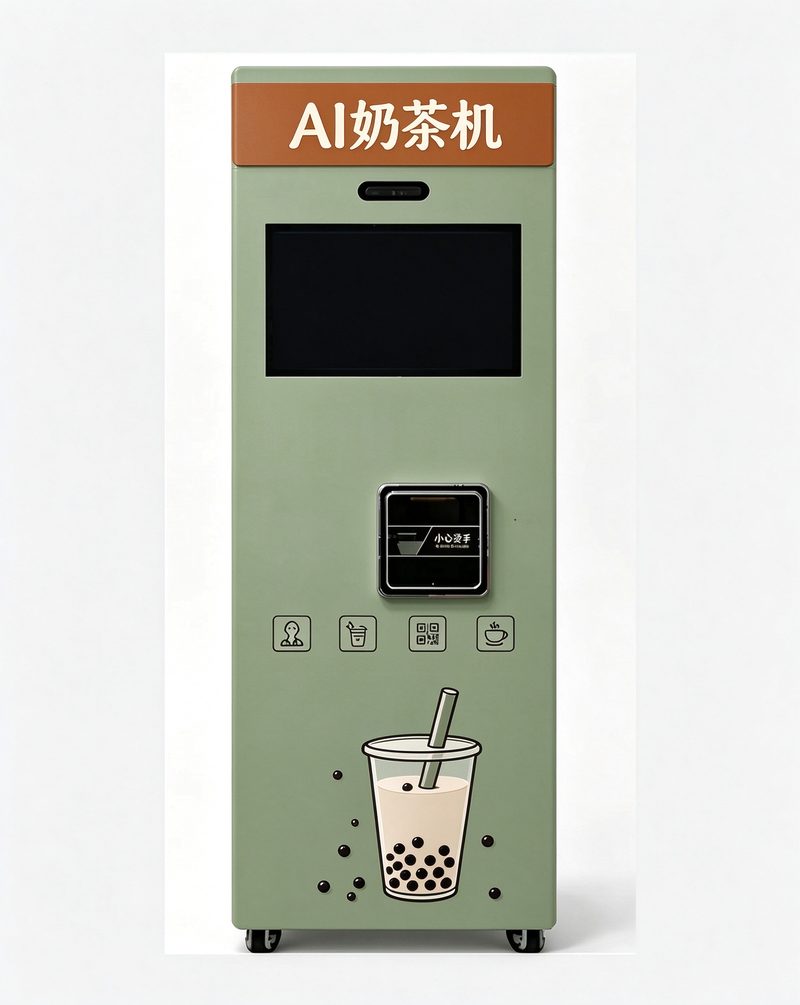
Supply Rules by Stage
| Stage | Rule | Buffer |
|---|---|---|
| First order | One full cycle plus buffer | One visit set |
| Storage | Dry, dated, off the floor | FIFO rotation |
| Peak season | Order earlier | Half a cycle extra |
| Multi-site | Split warehousing | Depot holds the reserve |
The Regular Nobody Recruited
The same face, four weeks running. An intern rehearsing a presentation stops at a badminton hall snack corner, waits the forty seconds scrolling a phone, pockets the receipt without looking at it, and the pattern has stopped being a coincidence.
No promotion produced that habit. A machine that is always there, always stocked and always the same cup did it, which is a quieter kind of marketing than anything with a budget.
A site is not won on the first cup; it is won on the fifteenth. Nobody photographs it; the machine has simply become part of the floor plan.
The Handover File
Every site should survive its operator. A single folder - placement terms, wiring and water notes, machine serial, capsule par levels, host contacts, and the last three service visits - turns a two-week handover into an afternoon.
Keep it in one place and update it on the day something changes, not at the end of the quarter. The file is also the fastest way to answer the question every new host asks first: who do I call.
Where the Machine Earns Its Spot
A 24/7 milk tea kiosk does not need the front door - it needs a dwell point: somewhere people stand, wait or pause for a few minutes with nothing to hold their attention.
- Lobby, staff room and lift-lobby corners outperform corridor walls
- 2 square metres of floor and a household power line cover the footprint
- Keep the frontage visible from the main flow; hidden units sell mainly to regulars
Repair or Replace, Out of Warranty
Out of warranty the question stops being what broke and becomes what the machine is worth per month. A repair that costs two months of net is a decision; one that costs six is a replacement wearing a repair's clothes.
Compare the repair quote against the site's steady net, not against the machine's purchase price. The purchase price is sunk, and comparing to it is how operators keep a losing unit alive for two extra years.
Waste, Cups and the Bins Beside the Cabinet
Cups leave the machine and land somewhere. Confirm with the host where they go and who empties that bin, because a full bin beside a cabinet is the fastest way to lose a placement that is working.
Where the site separates waste, put a second bin within arm's reach. The cost is one bin; the benefit is a host who stops mentioning the machine in meetings.
What a Host Asks After Three Months
At the first renewal conversation the host asks three things: how many cups, how many complaints, and whether anyone has asked about the machine. The third question is the one that decides renewal.
Bring the numbers, but bring the quotes too. One sentence from a tenant about the queue being gone is worth more than a page of revenue.
What an Empty Chute Means
An empty cup chute at nine in the morning is either a site that sells faster than its restock interval or a machine that has stopped vending. The two look identical from outside and require opposite responses.
The event log settles it in a minute: failed vends in a row mean a mechanism problem, a clean gap means demand. Guessing wrong sends a technician to a site that needed a bigger cup stack.
The Hour Nobody Staffs
By ten at night a community clinic corridor by the pharmacy window has emptied out, and the 24/7 milk tea kiosk is the only lit thing in the corridor. The site closes at six; the traffic does not.
An elderly regular who remembers coin machines is the customer now - the one who cannot buy a cup of milk tea anywhere else at this hour, and who will remember that tomorrow.
Anyone pricing a placement on daytime footfall alone is pricing half a site. No one needed help, which is the entire point.
Spares You Should Never Be Out Of
Every fleet has a short list of parts whose absence turns an hour into a week: cup sensors, outlet seals, a spare payment terminal, and the one fuse the site cannot source locally.
Stock them at the depot rather than at sites. The measure is not how many you hold but how many days a repair waits for a part - and that number should be zero for the four items above.
Range Choices That Sell
Taste consistency is a supply question before it is a machine question. Capsule lots vary, so date every case on arrival, and run the oldest lot first at every restock without exception.
Customers read consistency as quality. The rotation habit is what they are actually tasting, whatever the flavour label says.
Traffic Without Buyers
Some sites have thousands of people walk past and almost nobody buy. The reason is usually distance or decision cost: a machine behind a barrier, an unclear price, or a queue that makes stopping expensive.
Count how many people pass within three metres, not how many pass the building. The narrower number is the one that predicts cups, and it is usually a tenth of the figure the host quotes.
Accessibility Around a Standing Cabinet
A cabinet on a 2 square metres footprint still occupies a corridor. Leave the turning space, keep the screen at a reachable height, and make sure the pickup slot can be used from a seated position - three details that decide whether part of the audience can buy at all.
Ask the host about floor load and door widths before delivery, not after. The site that fits the tape measure on day one never becomes the expensive story later.
The Small Consumables Nobody Counts
Cups, lids, stirrers and napkins never appear in a payback model and always appear in a month-end surprise. They are cheap per unit and expensive per thousand, and they are the first thing to run out when a site gets busy.
Count them the way stock is counted: a fixed par level per site, checked at every restock, ordered with the capsules rather than separately. A site that runs out of lids has effectively run out of drinks.
When the Host Wants Their Own Branding
Hosts increasingly ask for their logo on the cabinet, their colours on the screen and their name on the cup. It is a reasonable request and a different product: brand work, not equipment.
Decide in advance what is included and what is charged: wrap, screen skin, cup print, and the minimum order those imply. Customisation promised verbally during a walkthrough becomes an unpaid project three weeks later.
The Quiet Cost of a Long Route
Route time is the cost that never appears on an invoice. A site forty minutes away from its nearest neighbour does not cost more to install; it costs more every single visit for as long as it lives.
Clustering is therefore a purchasing decision, not a scheduling one. Two sites on the same street are worth more than three spread across a city, even when the three look better on a map of pins.
The test is simple: if a site cannot be reached inside the same morning as another site, price it as if it were alone - because on the bad days, it will be.
Documentation That Saves a Service Call
Most service calls are archaeology: what changed, when, and who noticed first. A machine folder that holds the commissioning sheet, the filter log, the cleaning history and the fault timeline turns a mystery into a diagnosis before the van door opens.
The habit costs a minute per visit and pays for itself the first time a technician asks 'has anything changed recently?' and gets an answer instead of a shrug.
It also changes the tone of warranty conversations. A documented machine gets the benefit of the doubt; an undocumented one gets a debate.
From the Service Route
The operator's van stops at a hotel lobby beside the lift bank on a route that will cover six more machines before noon. The dashboard has already ranked the visit: stock fine, no faults, one line running low.
While the drawers are topped, a security guard off the midnight shift wanders up; the sale happens between two tasks, collects the cup, checks the cap out of habit, and folds back into the corridor traffic.
This is what unattended means in practice - not absence, but attention aimed exactly where the data says. It is the fourth cup this corner has sold since the hour began.
A Placement, Three Months In
The pilot at a gym entrance corridor began as a favour to the site host and turned into the easiest arithmetic in the fleet: class-timetable surges, the evening class change is the golden window. When the second machine conversation started, the first month's ledger did most of the talking.
The host's own staff ended up doing the small things - topping cups, wiping the tray - and that informal care showed up as fewer complaints than any service level agreement would have delivered.
What a Working Site Looks Like
The pilot at a logistics warehouse rest area began as a favour to the site host and turned into the easiest arithmetic in the fleet: shift-change traffic, the morning peak carries the day. When the second machine conversation started, the first month's ledger did most of the talking.
What the site taught was patience with a shape. Weeks one to three looked like a verdict; weeks four to twelve were the actual answer, and the answer was better than the verdict.
The Ledger Tells the Story
The pilot at a hotel corridor by the lifts began as a favour to the site host and turned into the easiest arithmetic in the fleet: late-evening demand, nights outperform the average once the tour groups check in. When the second machine conversation started, the first month's ledger did most of the talking.
Half the value came from what was removed: two slow lines, one noisy alert, and a promotion that discounted the only product everybody bought at full price anyway.
What the Van Sees at Seven
The operator's van stops at the back corner of a convenience store on a route that will cover six more machines before noon. The dashboard has already ranked the visit: stock fine, no faults, one line running low.
While the drawers are topped, a wholesaler tallying receipts on a crate wanders up; the sale happens between two tasks, waits the forty seconds scrolling a phone, pockets the receipt without looking at it.
This is what unattended means in practice - not absence, but attention aimed exactly where the data says. The restock note writes itself: the popular line is down one row.
Straight Answers to the Hard Questions
"We tried a vending machine years ago and it was a disaster."
The difference is the telemetry. Stock, faults and sales report themselves now, so a machine that quietly fails gets noticed the same hour - not the following month.
"Doesn't it need plumbing and rewiring?"
A household power line and two square metres cover it. Most placements are standing and selling the same week the site agreement is signed.
"A machine like that must cost a fortune up front."
Less than the rent deposit for the counter it replaces. The machine is one of eight cost lines, and the payback window runs three to eight months at a site with real foot traffic - the worksheet in this series breaks all eight out.
"What about hygiene inspections?"
A capsule system keeps the wet parts few and the routine short; the cleaning sheet and the service log are exactly what an inspector asks to see.
Seven Days, One Van, Seven Notes
- Monday - Route planned from the weekend's dashboard; the week's capsule order confirmed.
- Tuesday - The long run: four sites before ten, two after lunch, one drawer rotated while the kettle boiled.
- Wednesday - Midweek is the quiet read: office sites cool off, clinic and gym sites pick up the slack.
- Thursday - Books day. The monthly figure gets compared to the site's own count, and the two agree within normal wastage.
- Friday - Contact card refreshed at the lobby unit, and the host's new shift supervisor walked through the basics.
- Saturday - Weekend shift: fewer sites, more cleaning. Two drip trays, one filter, and a machine that looks new again.
- Sunday - Silent day by design - alerts on, phone on, van parked.
Twelve Months, Two Columns
| Month | What changes | What to do about it |
|---|---|---|
| Jan | Budget season: the annual consumables figure gets signed this month. | New-year footfall is slow to wake; keep the hot lines deep and the route tight. |
| Feb | Short month, long queues on the 14th; order the dessert-adjacent capsules early. | Valentine week bends the coffee and milk-tea lines upward for ten days. |
| Mar | Quarter close: reconcile the ledger and prune the menu bottom. | Spring footfall returns with the weather; fruit lines start their climb. |
| Apr | A good month to trial one new capsule line per machine. | The first warm spell moves demand later in the day; watch the four o clock hour. |
| May | Holiday Mondays distort the weekly curve; compare like with like before judging a site. | Warm evenings extend the outdoor sites; chilled options earn their drawer space. |
| Jun | Exam and event season bends public-hall sites; stock ahead of the dates. | Half-year service check: seals, nozzles, payment terminals. |
| Jul | Holiday travel lifts transit and hotel sites for roughly three weeks. | Peak heat shifts demand; the curve moves later into the evening. |
| Aug | The slowest office month; the tourist corridors carry the fleet instead. | Capsule storage gets hot in August; check the stockroom before the shelf life does. |
| Sep | Order winter capsule volumes early - the ramp catches late buyers. | Back-to-routine week is the second new year; footfall snaps back fast. |
| Oct | The first cold snap is worth a route note: it usually front-loads the month by a week. | Autumn fairs and exhibitions fill the trade-hall sites. |
| Nov | Cold-weather peak builds; popular lines deserve a double buffer. | Darkness at five changes the traffic shape; the evening hour gains, the lunch hour thins. |
| Dec | Close the ledger, thank the hosts, and let the dashboard write the next order. | The last week is dead in offices and frantic in transit; stock for one and rest for the other. |
Three Things the Route Taught Me
If I could send one paragraph back to my first order, it would be this - the first-month readings is not a purchase, it is a schedule, and the schedule is written in the ledger whether you look at it or not.
My first site taught me the arithmetic; my fourth taught me the route order, which is the part that scales.
Nobody warns you that the hard part is not buying the machine. It is the ledger discipline, done the same way in month nine as in month one.
How It Stacks Up
| The old way | What it costs | Where it fails | What the machine changes |
|---|---|---|---|
| Staffed counter | Wages every month, plus training and turnover | Open only as long as someone stands there | A 24/7 milk tea kiosk sells the hours the counter never could |
| Traditional coin vending | Coin floats, collection trips, notes that jam | Problems surface as complaints, weeks late | Payment and faults report themselves the same hour |
| Corner cafe | A lease, a build-out, a barista roster | Menu changes mean reprinting and retraining | The menu changes when the capsule order does |
| Line | What it pours | Where it fits best | Restock rhythm |
|---|---|---|---|
| Coffee machine | Espresso, americano, latte | Offices, hotels, waiting areas | Restock every 2-3 weeks |
| Milk tea machine | Milk tea and tea lines | Retail floors, schools, factory canteens | Restock every 2-3 weeks |
| Juice machine | Fruit lines, chilled options | Sports halls, stations, parks | Restock every 2-3 weeks |
| Herbal tea machine | Herbal and traditional teas | Wellness centres, community halls | Restock every 2-3 weeks |
A Checklist Worth Printing
- Agree the refund rule before the first complaint, not after
- Price one cycle of capsules before promising a payback figure
- Ask what else shares the socket the machine will use
- Confirm footprint and power before signing the placement
- Ask the host where hot drinks are usually bought nearby
- Photograph the installation for the machine folder
- Keep one experimental line per machine and review it monthly
- Decide who owns the cups before the first order
- Keep one seal and nozzle kit per ten machines
- Confirm the delivery lift's depth before the van leaves
- Confirm who empties the bin beside the cabinet
- Walk the route in the order the traffic allows, not the map
The Takeaway
Every line above exists because somebody paid for learning it the hard way. Borrow it instead.
Common questions
Can I run twenty sites alone?
Up to a point - routes planned from live data are what make small fleets workable with one service person.
Is there a contract lock-in?
Placement terms vary by venue; trial periods with clear move-out terms are common and sensible.
Who prepares the site?
The host clears the spot and power; the operator brings levelling, testing and the first capsule load.
Rent or revenue share?
Flat rent suits steady sites, share suits unproven ones; hybrids split the difference.
How are capsules shipped and stored?
Stackable dated boxes, dry storage off the floor, first-in-first-out rotation at the depot.
What if payment fails mid-vend?
The vend is voided, the ledger records it, and the posted refund rule handles the customer the same day.
When does the second machine make sense?
When the first one's ledger shows a stable curve and the restock route has spare capacity.
What happens during a power cut?
The machine resumes when power returns; in-flight vends are voided and refunded per the posted rule.
Related machines
Related reading
- Self-Service Milk Tea Machine FAQ: What Buyers Ask First
- Automatic Milk Tea Vending Machine Payments: Offline Cases and Reconciliation
- Keeping an Unmanned Milk Tea Machine in Service
- One Staff Canteen Milk Tea Machine, One Month: Lines to Track
Summary
Capsules are the consumable backbone of a 24/7 milk tea kiosk - light, dated and stackable, which makes the supply chain a scheduling exercise.
Ask for the placement shortlist template before choosing sites.