Keeping a Smart Milk Tea Machine Clean Between Rounds
In one line: Capsule brewing keeps the wet parts few, so a smart milk tea machine stays presentable with a visit sheet and a scheduled deep clean.
Key facts: Hygiene is what the host actually sees; the visible three minutes decide the renewal more than uptime does.
From Quote to First Cup
Two suppliers can quote the same smart milk tea machine and mean different things by delivery. The structure follows the questions buyers actually ask, in the order they ask them.
A Cleaning Sheet That Gets Used
- Cup area and nozzle - every visit
- Touch panel - every visit
- Drip tray and drawer - weekly
- Deep clean - on the filter calendar
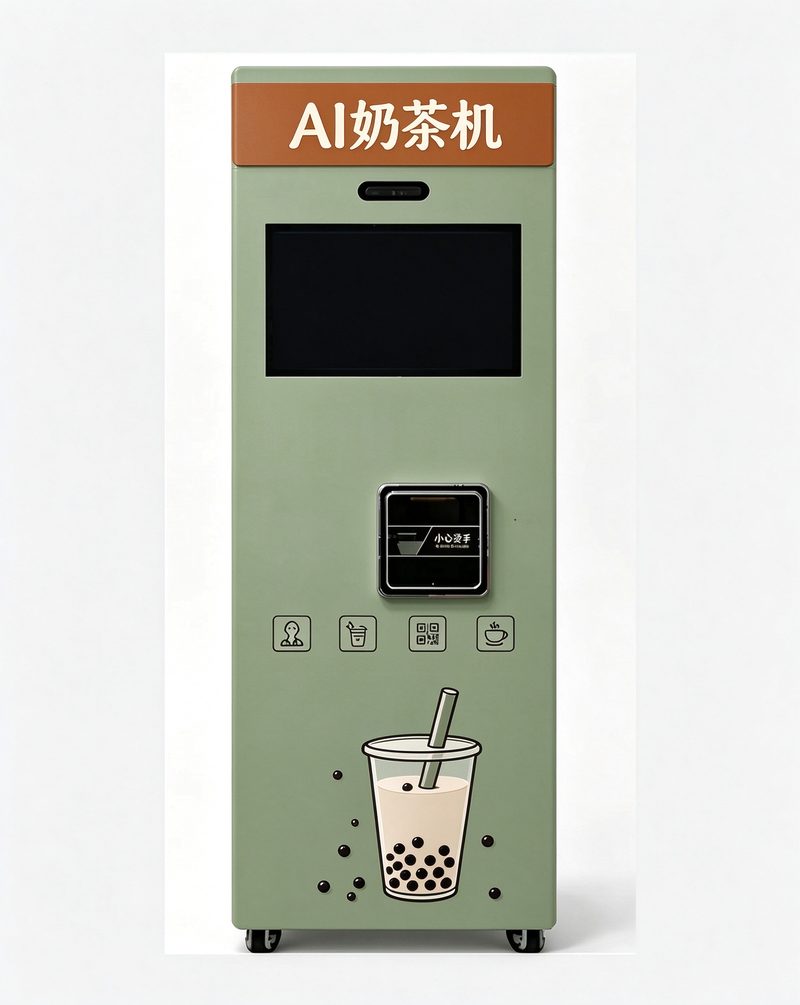
Cleaning Cadence by Part
| Part | Cadence | Tool |
|---|---|---|
| Cup area and nozzle | Every visit | Food-safe wipe |
| Touch panel | Every visit | Microfibre cloth |
| Drip tray, drawer | Weekly | Wash and dry |
| Lines and interior | Per calendar | Deep clean kit |
A Cup in the Middle of a Workday
11 pm at a 24-hour stop at a co-working floor pantry. The queue at the coffee counter downstairs is eight deep; the smart milk tea machine has three cups' worth of waiting in it, and no queue.
A saleswoman between two showroom appointments collects the cup, checks the cap out of habit, and folds back into the corridor traffic, then goes back upstairs with the cup still in hand - a two-minute errand that a staffed counter would have turned into ten.
Speed is not a luxury feature here; it is the placement's whole economics. The restock note writes itself: the popular line is down one row.
Hygiene Points Inspectors Look For
Visible cleanliness sells the next cup as much as the last one: a smudged panel or a stained tray reads as neglect long before it becomes a fault.
The Site That Is Merely Fine
Most sites are fine: they cover their costs, produce a modest margin, and generate no story. The temptation is to spend attention on them because they never complain.
Attention is the scarce input. A fine site needs a standard visit and nothing more; the hours saved belong at the site with a habit forming or a fault repeating. Treating every site as interesting is how routes get slow.
What a Stockout Teaches
A stockout is a measurement, not just a failure. It tells you which line sells faster than the ledger says, which restock interval is too long, and whether the regulars forgive a gap or quietly stop coming.
Write down what ran out, at what hour, and how many days the gap lasted. Two stockouts on the same line in a month means the order size is wrong; stockouts spread across lines means the interval is wrong. The two fixes have nothing in common.
The Site That Is Too Good
A site that outperforms its model is a risk disguised as a success. It usually means the host has not yet noticed how much money is moving through their lobby.
Expect the renegotiation and prepare for it: keep the ledger clean, report the numbers before they are asked for, and offer a revision tied to volume rather than waiting to be handed one. The operator who brings the spreadsheet keeps the site.
Hiring for the Route
Route work rewards a specific temperament: someone who notices a full bin, a leaning cup stack and a screen with a fingerprint on it without being told to look. It is not a skill that shows up on a CV.
Hire on a trial morning with two sites and watch what gets cleaned without prompting. The person who wipes the shelf before restocking it will save more money over a year than the one who restocks fastest.
The Screen Is a Noticeboard
Most operators use the screen for the menu and nothing else, which wastes the only surface the customer reads before deciding. A line about the next restock, a new flavour, or a price change belongs there.
Keep it to one message at a time and change it on a schedule. A screen showing five notices is a screen nobody reads, and a notice left up for a month becomes furniture.
The Hour Nobody Staffs
By ten at night the corridor outside a hospital waiting hall has emptied out, and the smart milk tea machine is the only lit thing in the corridor. The site closes at six; the traffic does not.
A warehouse clerk racing a timer is the customer now - the one who cannot buy a cup of milk tea anywhere else at this hour, and who will remember that tomorrow.
Anyone pricing a placement on daytime footfall alone is pricing half a site. No one needed help, which is the entire point.
The Second Vandalism Incident
One incident is bad luck; two in the same place is information. The second tells you whether the site is exposed by location, by lighting, or by the fact that nobody is around after ten.
Before spending on cameras, change what is cheap to change: move the cabinet into sight of a window, add light, shorten the unattended hours. Hardware deters the casual attempt; placement deters the determined one.
Failed Payments and the Refund Path
Every unattended machine produces failed payments, and the failure that damages trust is not the decline - it is the ambiguous one, where money leaves the account and no cup appears.
The fix is procedural: a visible number to call, a refund rule written down before the first complaint, and a weekly reconciliation that closes the loop. Operators who refund same-day keep customers; those who argue keep a complaint thread.
Two Prices, One Machine
Subsidised pricing for staff and full pricing for visitors is common and quietly complicated: it needs two payment paths, two sets of reporting and a rule for who counts as which.
Decide the rule before the hardware. A machine configured for one price and operated at two produces a ledger nobody can reconcile, and the host will notice before the operator does.
A Machine for a Mixed-Language Site
Sites with shift workers, international staff or mixed-age footfall need three things on screen: price, choice and what to do when it goes wrong. Everything else is optional and often in the way.
Use pictures for the menu and words only for the exception. A customer who cannot read the interface will still press a picture of a coffee, but will not read a paragraph explaining a fault code.
Waste, Cups and the Bins Beside the Cabinet
Cups leave the machine and land somewhere. Confirm with the host where they go and who empties that bin, because a full bin beside a cabinet is the fastest way to lose a placement that is working.
Where the site separates waste, put a second bin within arm's reach. The cost is one bin; the benefit is a host who stops mentioning the machine in meetings.
The Invoice That Arrives Late
Payment terms decide how many sites a small operator can carry. A thirty-day term on a site that pays in sixty is not a paperwork problem; it is a loan the operator is making without interest.
Agree the date, the method and the penalty before the machine is installed, and put all three in the placement terms. Chasing an invoice is the most expensive hour in the month because it produces nothing.
When the Host Changes Their Mind
Hosts change: a new manager, a new owner, a new policy from head office. The machine that was welcome in March is asked to move in September, and the reason given is rarely the real one.
The protection is not the contract clause; it is the monthly report. A host who has watched cups and complaints every month knows what the machine does, and a manager inheriting that file inherits the argument for keeping it.
When the request comes anyway, ask for thirty days and a chance to fix the specific complaint. Half the time the complaint is fixable - noise, light, a queue at nine - and the smart milk tea machine that survives is a site that will not raise it again.
The Quiet Cost of a Long Route
Route time is the cost that never appears on an invoice. A site forty minutes away from its nearest neighbour does not cost more to install; it costs more every single visit for as long as it lives.
Clustering is therefore a purchasing decision, not a scheduling one. Two sites on the same street are worth more than three spread across a city, even when the three look better on a map of pins.
The test is simple: if a site cannot be reached inside the same morning as another site, price it as if it were alone - because on the bad days, it will be.
From the Service Route
The operator's van stops at the morning queue inside a produce wholesale gate on a route that will cover six more machines before noon. The dashboard has already ranked the visit: stock fine, no faults, one line running low.
While the drawers are topped, a teacher marking papers between classes wander up; the sale happens between two tasks, takes two - one now, one for the colleague minding the desk.
This is what unattended means in practice - not absence, but attention aimed exactly where the data says. The dashboard records it as one line; the day's curve bends up almost imperceptibly.
A Placement, Three Months In
Three months into a placement at a gym entrance corridor, the pattern has settled: class-timetable surges, and the evening class change is the golden window. The menu has been trimmed twice - the dashboard ranked the lines, the bottom three went, and nobody wrote in to mourn them.
The host's own staff ended up doing the small things - topping cups, wiping the tray - and that informal care showed up as fewer complaints than any service level agreement would have delivered.
What a Working Site Looks Like
Three months into a placement at a gym entrance corridor, the pattern has settled: class-timetable surges, and the evening class change is the golden window. The menu has been trimmed twice - the dashboard ranked the lines, the bottom three went, and nobody wrote in to mourn them.
The first month argued with the second and lost. What looked like a slow start was a queue forming in the wrong half hour - once the route moved the restock earlier, the same site sold the same cups with half the empty rows.
The Ledger Tells the Story
Three months into a placement at an office park lobby, the pattern has settled: weekday morning peaks, and Fridays run light and Mondays run heavy, every week. The menu has been trimmed twice - the dashboard ranked the lines, the bottom three went, and nobody wrote in to mourn them.
Nothing dramatic happened, which is the result worth reporting. The machine stayed stocked, the sheet got signed, the ledger matched the capsule invoices, and the host stopped mentioning it - the highest form of approval a placement gets.
The Regular Nobody Recruited
The same face, four weeks running. A night porter on his round stops at the corridor outside a hospital waiting hall, taps the screen twice, picks the same drink as always, and is walking away before the cup is full, and the pattern has stopped being a coincidence.
No promotion produced that habit. A machine that is always there, always stocked and always the same cup did it, which is a quieter kind of marketing than anything with a budget.
A site is not won on the first cup; it is won on the fifteenth. The restock note writes itself: the popular line is down one row.
Straight Answers to the Hard Questions
"A machine like that must cost a fortune up front."
Less than the rent deposit for the counter it replaces. The machine is one of eight cost lines, and the payback window runs three to eight months at a site with real foot traffic - the worksheet in this series breaks all eight out.
"Who fixes it when something goes wrong?"
The faults that actually happen - a clogged nozzle, a payment hiccup - are site-side fixes measured in minutes, which is why the parts kit lives in the service van. Anything rarer is a module swap under the service terms you negotiated.
"Is the tea or coffee actually any good?"
Good enough that the repeat rate, not the first sale, pays for the placement. The capsule range covers espresso, milk tea, fruit and herbal lines, so the regulars settle in and the curious keep sampling.
"What about hygiene inspections?"
A capsule system keeps the wet parts few and the routine short; the cleaning sheet and the service log are exactly what an inspector asks to see.
Seven Days, One Van, Seven Notes
- Monday - Route planned from the weekend's dashboard; the week's capsule order confirmed.
- Tuesday - The long run: four sites before ten, two after lunch, one drawer rotated while the kettle boiled.
- Wednesday - Halfway check on capsule depth; one line is running ahead of plan and earns a second row next visit.
- Thursday - Reconciliation morning - cups sold against capsules issued, and the one discrepancy traced to a demo cup.
- Friday - Peak-site visit before the evening rush; contact card replaced at one unit.
- Saturday - Light route; the hotel machine's drawer rotated first in, first out.
- Sunday - Silent day by design - alerts on, phone on, van parked.
Twelve Months, Two Columns
| Month | What changes | What to do about it |
|---|---|---|
| Jan | The quietest fortnight of the year - good for audits, bad for optimism. | New-year footfall is slow to wake; keep the hot lines deep and the route tight. |
| Feb | Short month, long queues on the 14th; order the dessert-adjacent capsules early. | Valentine week bends the coffee and milk-tea lines upward for ten days. |
| Mar | Quarter close: reconcile the ledger and prune the menu bottom. | Exam season starts on campuses; the library site stops being a quiet placement. |
| Apr | Rain weeks teach you which sites have indoor dwell; note them for the record. | The first warm spell moves demand later in the day; watch the four o clock hour. |
| May | Holiday Mondays distort the weekly curve; compare like with like before judging a site. | Mid-year route review: cut the weakest ten percent if the ledger says so. |
| Jun | Half-year service check: seals, nozzles, payment terminals. | Exam and event season bends public-hall sites; stock ahead of the dates. |
| Jul | Holiday travel lifts transit and hotel sites for roughly three weeks. | Office sites go quiet and tourist corridors take over; move the route, not the menu. |
| Aug | The slowest office month; the tourist corridors carry the fleet instead. | Use the lull for operator training and contract renewals. |
| Sep | Campus sites refill; the coffee line at eight in the morning comes back overnight. | Order winter capsule volumes early - the ramp catches late buyers. |
| Oct | The hot-drink golden window opens; the curve steepens week on week. | Autumn fairs and exhibitions fill the trade-hall sites. |
| Nov | Cold-weather peak builds; popular lines deserve a double buffer. | Year-end host meetings: renewals, shares, next-year placements. |
| Dec | Festive peaks everywhere except the empty offices; plan the route around both. | Close the ledger, thank the hosts, and let the dashboard write the next order. |
Notes I Keep Rewriting
Nobody warns you that the hard part is not buying the machine. It is the cleaning sheet, done the same way in month nine as in month one.
There is a version of this business that runs on charm, and it works until the charming person takes a holiday. the host conversation is the version that survives the holiday.
The dashboard is honest, the host is honest, and both are approximate. the alert settings is what turns two approximations into a decision.
How It Stacks Up
| The old way | What it costs | Where it fails | What the machine changes |
|---|---|---|---|
| Staffed counter | Wages every month, plus training and turnover | Open only as long as someone stands there | A smart milk tea machine sells the hours the counter never could |
| Traditional coin vending | Coin floats, collection trips, notes that jam | Problems surface as complaints, weeks late | Payment and faults report themselves the same hour |
| Corner cafe | A lease, a build-out, a barista roster | Menu changes mean reprinting and retraining | The menu changes when the capsule order does |
| Line | What it pours | Where it fits best | Restock rhythm |
|---|---|---|---|
| Coffee machine | Espresso, americano, latte | Office lobbies, clinics, showrooms | Restock every 2-3 weeks |
| Milk tea machine | Milk tea and tea lines | Malls, adult-education campuses, staff rooms | Restock every 2-3 weeks |
| Juice machine | Fruit lines, chilled options | Gyms, cinemas, family venues | Restock every 2-3 weeks |
| Herbal tea machine | Herbal and traditional teas | Clinics, wellness floors, night sites | Restock every 2-3 weeks |
A Checklist Worth Printing
- Keep one seal and nozzle kit per ten machines
- Check the pickup slot height against the host's accessibility notes
- Confirm footprint and power before signing the placement
- Log the first repair with date, part and cause
- Measure the walk from the door to the cabinet before delivery
- Test payment on site before the host's opening hour
- Fix the price list at launch and review it quarterly
- Post the contact and refund rule at the machine
- Agree a trial period with a written move-out term
- Ask what else shares the socket the machine will use
- Date capsule boxes and rotate first in, first out
- Confirm the delivery lift's depth before the van leaves
The Takeaway
When in doubt, choose the configuration your service round can sustain, not the one the brochure flatters.
Common questions
What is the usual payback window?
The planning band is 3-8 months, set mainly by site quality and the local price of a cup.
Who prepares the site?
The host clears the spot and power; the operator brings levelling, testing and the first capsule load.
How long does installation take?
On a prepared site, commissioning is typically finished in under an hour: position, power, network check and a run of test cups.
Can I run twenty sites alone?
Up to a point - routes planned from live data are what make small fleets workable with one service person.
Does the machine need a water line?
Many units run without plumbing; confirm the water arrangement for the specific model during placement prep.
Who cleans the machine?
The operator, on the visit sheet - cup area and panel each visit, drawer and tray weekly.
What happens during a power cut?
The machine resumes when power returns; in-flight vends are voided and refunded per the posted rule.
Is there a contract lock-in?
Placement terms vary by venue; trial periods with clear move-out terms are common and sensible.
Machines this article refers to
Related reading
- Menu Rotation on the Self-Service Bubble Tea Machine
- Filter Planning for a Staff Canteen Milk Tea Machine
- Keeping a Commercial Milk Tea Dispenser in Service
- Keeping An Unmanned Milk Tea Machine in Service
Summary
Capsule brewing keeps the wet parts few, so a smart milk tea machine stays presentable with a visit sheet and a scheduled deep clean.
Book a commissioning slot only after the checklist above is signed off.