Keeping a Coin-Operated Milk Tea Machine Clean Between Rounds
In one line: Cleanliness sells the next cup as much as the last one; this page turns that idea into a one-page sheet. Skips the pitch and keeps the worksheet.
Key facts: Hygiene is what the host actually sees; the visible three minutes decide the renewal more than uptime does.
The Routine Decides the Numbers
Procurement for the coin-operated milk tea machine moves in steps, and each step commits a number that is hard to walk back. Practical detail comes first; the summary only appears once the detail is on the table.
A Cleaning Sheet That Gets Used
- Cup area and nozzle - every visit
- Touch panel - every visit
- Drip tray and drawer - weekly
- Deep clean - on the filter calendar
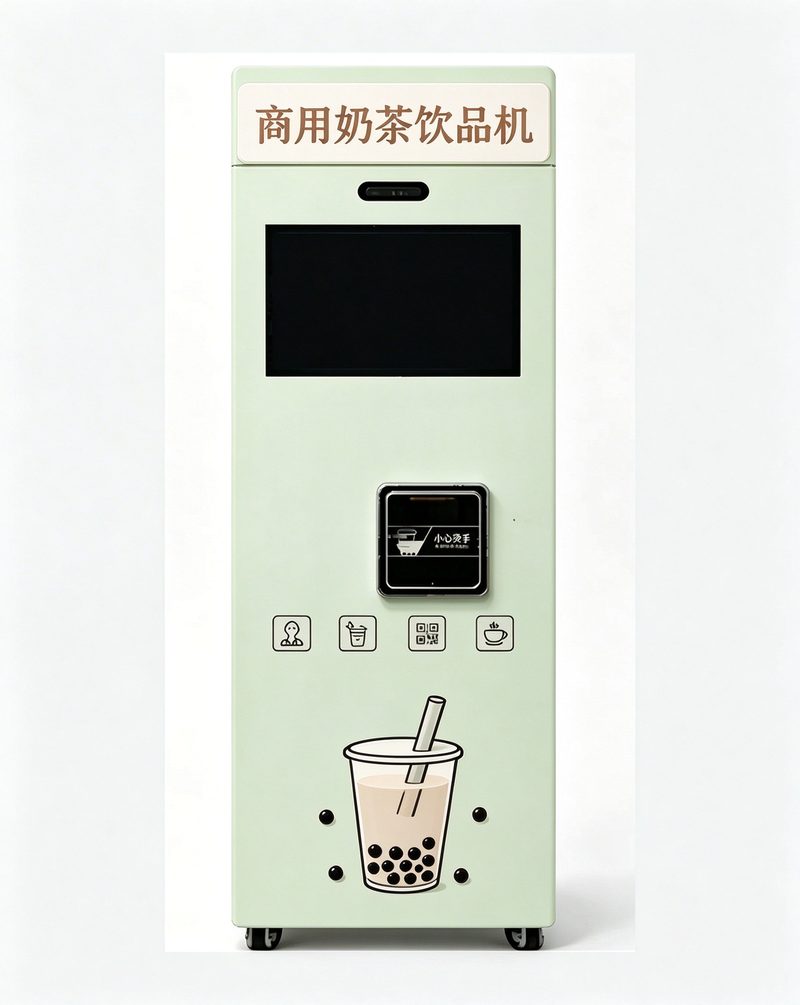
Cleaning Cadence by Part
| Part | Cadence | Tool |
|---|---|---|
| Cup area and nozzle | Every visit | Food-safe wipe |
| Touch panel | Every visit | Microfibre cloth |
| Drip tray, drawer | Weekly | Wash and dry |
| Lines and interior | Per calendar | Deep clean kit |
The Regular Nobody Recruited
The same face, four weeks running. A first-time visitor following the signs stops at the shelter by a suburban train platform, taps the screen twice, picks the same drink as always, and is walking away before the cup is full, and the pattern has stopped being a coincidence.
No promotion produced that habit. A machine that is always there, always stocked and always the same cup did it, which is a quieter kind of marketing than anything with a budget.
A site is not won on the first cup; it is won on the fifteenth. The sale lands in the ledger before the door swings shut.
When Something Feels Off
Numbers on a dashboard describe; numbers in a ledger decide. Copy the week's cups, faults, and stockouts into the ledger by hand once a week, and the hand that writes them starts noticing what the screen scrolls past.
The noticing is the margin. It is where routes get shorter, rows get re-ordered, and machines get their next corner.
Spare Parts and the First Repair
The first repair decides the relationship. Keep a small kit on the van - nozzle, seal set, payment module, fuse - and note which part failed, on which machine, at which hour.
A repair closed the same day is remembered as service. A repair that waits for a shipment becomes a story the host tells other hosts, and that story travels faster than any brochure.
Water That Changes in Summer
Water is not a constant. Summer supply, a different treatment plant, or a building's own softener can shift hardness enough to change how coffee tastes and how fast a filter clogs.
Test hardness when the season turns, not only at commissioning, and move the filter schedule to follow the reading. A taste complaint in July is often a water report from May.
What the Facility Manager Actually Worries About
The facility manager is not buying coffee. They are buying no complaints, no extra work for their team, and nothing that fails an inspection. Say those three things plainly and the meeting moves.
Bring the answers before the questions: who cleans, who is called, what happens to the waste, and how the machine behaves during a fire drill. Facility managers approve things that do not create work; they stall on anything ambiguous.
When the Power Bill Arrives
Power is the cost line most often estimated and least often checked. A cabinet with heating, chilling and a screen does not idle at zero, and standby load runs twenty-four hours whether anybody buys or not.
Read one real bill before modelling the second site. If the host pays, put the estimate in the placement terms anyway - a host who discovers an unexpected line in month two becomes a host who revisits the share.
Capsule Logistics in Practice
Capsules are the consumable backbone of a coin-operated milk tea machine: light, stackable and dated, which makes them easy to batch and rotate.
Depot stock is sized on the restock cadence - every 2-3 weeks per machine under normal demand - and on a buffer for seasonal peaks.
The Vend That Did Not Happen
The same face, four weeks running. A site foreman counting change he no longer needs stops at an office park lobby by the mail shelves, collects the cup, checks the cap out of habit, and folds back into the corridor traffic, and the pattern has stopped being a coincidence.
No promotion produced that habit. A machine that is always there, always stocked and always the same cup did it, which is a quieter kind of marketing than anything with a budget.
A site is not won on the first cup; it is won on the fifteenth. The site host walks past without looking up - the highest compliment a placement gets.
Two Machines, One Circuit
Two cabinets on one circuit look fine until both heat at once. The failure arrives as a tripped breaker at the busiest hour, and the site blames the machines rather than the wiring.
Add the rated draw of everything on the circuit, including the kettle and the microwave nobody counted, and compare it to the breaker. If the margin is thin, the fix is electrical and belongs before installation, not after the first outage.
Price Ladder and Cup Sizes
Two sizes and three prices cover most sites: a small cup that undercuts the nearby cafe, a large one that beats it on volume, and a middle line that exists to make the large look reasonable.
The ladder should be readable in one glance. If a customer needs to compare four prices to choose, the menu is doing the operator's work for them, badly.
The Sales Rep Who Knows the Route
A rep who has never restocked a machine will sell capacity that the route cannot serve. The result looks like a good deal and behaves like a permanent overtime bill.
Ask what a typical morning looks like, how many sites one person covers, and what happens when somebody is on leave. Answers that arrive without hesitation are worth more than any specification sheet.
Small Habits, Compounding Results
Every site teaches one lesson per month, whether or not anyone writes it down. The one-page site card is where lessons go to survive staff changes and holiday seasons.
A fleet with written memory improves yearly. A fleet with verbal memory starts each January from scratch.
Capsule Storage and Shelf Life
Capsules are food before they are inventory. Store them dry, dated, off the floor, and rotate first in first out; the shelf life printed on the box is a limit, not a target.
The practical buffer is one full cycle plus a week, held at the depot rather than in a hot back room. Operators who over-order to chase a discount usually pay it back in write-offs.
The Contract Review Nobody Does
Most placement contracts are signed once and read never. The clauses that matter six months later are access hours, the notice period, and who owns the cups.
A fifteen-minute review at signature, with the three clauses highlighted, prevents most of the arguments that end placements early.
Why Cheap Machines Cost More
A cheaper machine saves money once, at purchase. It costs money every month through the parts it needs, the visits it forces and the sales it loses while waiting for a part nobody stocks.
The comparison only becomes honest when the same three years are modelled for both options, with the same cup volume and the same service assumptions. Almost every machine described as cheaper loses that comparison on parts and downtime rather than on features.
There is a fair case for cheap machines: short trials, low-traffic sites, and markets where the site may not last a year. The mistake is buying cheap for a site expected to run five years and calling it capital discipline.
What a Site Buys Besides a Machine
A host signing a placement is not buying equipment. They are buying the removal of a small recurring problem: the eleven o'clock queue, the complaint about the coffee run, the gap in the amenities list. The machine is the packaging.
Ask what problem is being removed and the conversation changes shape. A host removing complaints cares about reliability and a phone number; a host adding income cares about the split and the report. Same cabinet, two different contracts.
Operators who cannot answer that question in the host's own words end up defending features. Operators who can end up discussing duration, which is where the money actually is.
One Customer, Four Weeks Straight
The same face, four weeks running. A first-time visitor following the signs stops at a gym entrance, between the lockers and the studio door, scans, hesitates over the menu for a second, then picks the new flavour the dashboard has been quietly promoting, and the pattern has stopped being a coincidence.
No promotion produced that habit. A machine that is always there, always stocked and always the same cup did it, which is a quieter kind of marketing than anything with a budget.
A site is not won on the first cup; it is won on the fifteenth. The site host walks past without looking up - the highest compliment a placement gets.
A Placement, Three Months In
The pilot at a furniture mall staff corridor began as a favour to the site host and turned into the easiest arithmetic in the fleet: staff and contractor flow, the steady base load comes from the fit-out crews. When the second machine conversation started, the first month's ledger did most of the talking.
What made the site work was unglamorous: a cabinet in sight of a window, a restock on the day the building was quiet, and a host who knew exactly who to call.
What a Working Site Looks Like
The pilot at a logistics warehouse rest area began as a favour to the site host and turned into the easiest arithmetic in the fleet: shift-change traffic, the morning peak carries the day. When the second machine conversation started, the first month's ledger did most of the talking.
Nothing dramatic happened, which is the result worth reporting. The machine stayed stocked, the sheet got signed, the ledger matched the capsule invoices, and the host stopped mentioning it - the highest form of approval a placement gets.
The Ledger Tells the Story
Three months into a placement at a logistics warehouse rest area, the pattern has settled: shift-change traffic, and the morning peak carries the day. The menu has been trimmed twice - the dashboard ranked the lines, the bottom three went, and nobody wrote in to mourn them.
The first month argued with the second and lost. What looked like a slow start was a queue forming in the wrong half hour - once the route moved the restock earlier, the same site sold the same cups with half the empty rows.
The Person Who Quietly Runs It
The same face, four weeks running. A site foreman counting change he no longer needs stops at a wholesale market tea point, collects the cup, checks the cap out of habit, and folds back into the corridor traffic, and the pattern has stopped being a coincidence.
No promotion produced that habit. A machine that is always there, always stocked and always the same cup did it, which is a quieter kind of marketing than anything with a budget.
A site is not won on the first cup; it is won on the fifteenth. The restock note writes itself: the popular line is down one row.
Straight Answers to the Hard Questions
"Doesn't it need plumbing and rewiring?"
A household power line and two square metres cover it. Most placements are standing and selling the same week the site agreement is signed.
"How do I know the numbers are real?"
Every order carries its own reference and exports monthly against capsule consumption. You reconcile a report, not a shoebox of receipts.
"Sounds like a headache to restock."
The restock route runs every two to three weeks per machine on normal demand, sized by the dashboard rather than by guesswork. One van, one morning, ten sites.
"Will people trust a drink made by a box?"
They trust the cup more than the counter when the cup is consistent. Capsule brewing means the tenth cup matches the first, and the cleaning sheet posted on the glass does more for confidence than any slogan.
A Week on the Route, Logged
- Monday - Route planned from the weekend's dashboard; the week's capsule order confirmed.
- Tuesday - Long route day - six machines, two top-ups flagged, one nozzle wiped twice.
- Wednesday - Halfway check on capsule depth; one line is running ahead of plan and earns a second row next visit.
- Thursday - Reconciliation morning - cups sold against capsules issued, and the one discrepancy traced to a demo cup.
- Friday - The Friday visit happens before four, because after four the site is a queue and a machine that needs nothing.
- Saturday - Light route; the hotel machine's drawer rotated first in, first out.
- Sunday - Silent day by design - alerts on, phone on, van parked.
Twelve Months, Two Columns
| Month | Traffic pattern | Route decision |
|---|---|---|
| Jan | Budget season: the annual consumables figure gets signed this month. | The quietest fortnight of the year - good for audits, bad for optimism. |
| Feb | Valentine week bends the coffee and milk-tea lines upward for ten days. | The post-holiday dip is real; use it for deep cleans and filter changes. |
| Mar | Exam season starts on campuses; the library site stops being a quiet placement. | Spring footfall returns with the weather; fruit lines start their climb. |
| Apr | Rain weeks teach you which sites have indoor dwell; note them for the record. | The first warm spell moves demand later in the day; watch the four o clock hour. |
| May | Mid-year route review: cut the weakest ten percent if the ledger says so. | Holiday Mondays distort the weekly curve; compare like with like before judging a site. |
| Jun | The first genuinely hot week tells you whether the chilled lines were sized right. | Half-year service check: seals, nozzles, payment terminals. |
| Jul | Holiday travel lifts transit and hotel sites for roughly three weeks. | Peak heat shifts demand; the curve moves later into the evening. |
| Aug | Use the lull for operator training and contract renewals. | The slowest office month; the tourist corridors carry the fleet instead. |
| Sep | Order winter capsule volumes early - the ramp catches late buyers. | Campus sites refill; the coffee line at eight in the morning comes back overnight. |
| Oct | The first cold snap is worth a route note: it usually front-loads the month by a week. | Autumn fairs and exhibitions fill the trade-hall sites. |
| Nov | Cold-weather peak builds; popular lines deserve a double buffer. | Year-end host meetings: renewals, shares, next-year placements. |
| Dec | Close the ledger, thank the hosts, and let the dashboard write the next order. | The last week is dead in offices and frantic in transit; stock for one and rest for the other. |
Three Things the Route Taught Me
I stopped chasing new sites for three months and fixed the ledger discipline instead. Revenue went up without a single new placement.
I used to think the machine was the business. Four hundred route stops later, the honest version: the machine is the storefront, and the business is the alert settings around it.
The dashboard is honest, the host is honest, and both are approximate. the route order is what turns two approximations into a decision.
How It Stacks Up
| The old way | What it costs | Where it fails | What the machine changes |
|---|---|---|---|
| Staffed counter | A rota to fill, holidays to cover, overtime at the edges | Shuts when the last person leaves | A coin-operated milk tea machine covers the closed hours without a rota |
| Traditional coin vending | Cash handling, change runs, slot jams | No telemetry; faults found by complaint | Every sale logged, every fault alerted |
| Corner cafe | Rent, fit-out, staffed peaks | Fixed menu, fixed hours | Capsule range rotates at the restock visit, not by renovation |
| Line | What it pours | Where it fits best | Restock rhythm |
|---|---|---|---|
| Coffee machine | Espresso, americano, latte | Offices, hotels, waiting areas | Restock every 2-3 weeks |
| Milk tea machine | Milk tea and tea lines | High streets, campuses, food courts | Restock every 2-3 weeks |
| Juice machine | Fruit lines, chilled options | Gyms, leisure, transit | Restock every 2-3 weeks |
| Herbal tea machine | Herbal and traditional teas | Wellness centres, community halls | Restock every 2-3 weeks |
A Checklist Worth Printing
- Photograph the installation for the machine folder
- Record the host's renewal date where the route can see it
- Confirm who empties the bin beside the cabinet
- Set stock thresholds on the dashboard before day one
- Compare the monthly ledger to the site's own count once a quarter
- Agree in writing who pays for power and consumables
- Write the power draw and floor load into the site agreement
- Check the pickup slot height against the host's accessibility notes
- Log the first repair with date, part and cause
- Set the filter calendar by measured water hardness
- Review alerts quarterly and remove the noisy ones
- Decide who owns the cups before the first order
The Takeaway
Keep the worksheet alive after installation - it costs nothing to maintain and answers most debates.
Common questions
Is there a contract lock-in?
Placement terms vary by venue; trial periods with clear move-out terms are common and sensible.
What if payment fails mid-vend?
The vend is voided, the ledger records it, and the posted refund rule handles the customer the same day.
Who cleans the machine?
The operator, on the visit sheet - cup area and panel each visit, drawer and tray weekly.
Who prepares the site?
The host clears the spot and power; the operator brings levelling, testing and the first capsule load.
How are capsules shipped and stored?
Stackable dated boxes, dry storage off the floor, first-in-first-out rotation at the depot.
Rent or revenue share?
Flat rent suits steady sites, share suits unproven ones; hybrids split the difference.
What happens during a power cut?
The machine resumes when power returns; in-flight vends are voided and refunded per the posted rule.
What is the usual payback window?
The planning band is 3-8 months, set mainly by site quality and the local price of a cup.
The machines behind this article
Related reading
- Shelf Life and Rotation for Self-Service Milk Tea Machine Stock
- The Business Case for An Unmanned Milk Tea Machine
- Capsule Supply Chains for the Unmanned Milk Tea Machine
- Keeping An Unmanned Milk Tea Machine in Service
Summary
Cleanliness sells the next cup as much as the last one; this page turns that idea into a one-page sheet. Skips the pitch and keeps the worksheet.
Ask for the placement shortlist template before choosing sites.