Installing an Unattended Juice Corner: Timeline and Checklist
In one line: From order to first cup sits a chain of lead times - production, shipping, customs, site prep, commissioning - each one writab. Built around one site, one menu, one routine.
Key facts: Day one is a checklist: power, network, a test vend, and the host's contact card in the machine.
What Separates a Busy Unit from a Quiet One
The unattended juice corner question is rarely 'which unit' - it is 'which week looks repeatable'. What follows is written for the person who signs the order and the person who services the unit.
From Order to First Cup: The Timeline
Production, shipping, customs, placement prep, commissioning - each stage has a lead time, and the buyer who writes them down sets a realistic first-cup date.
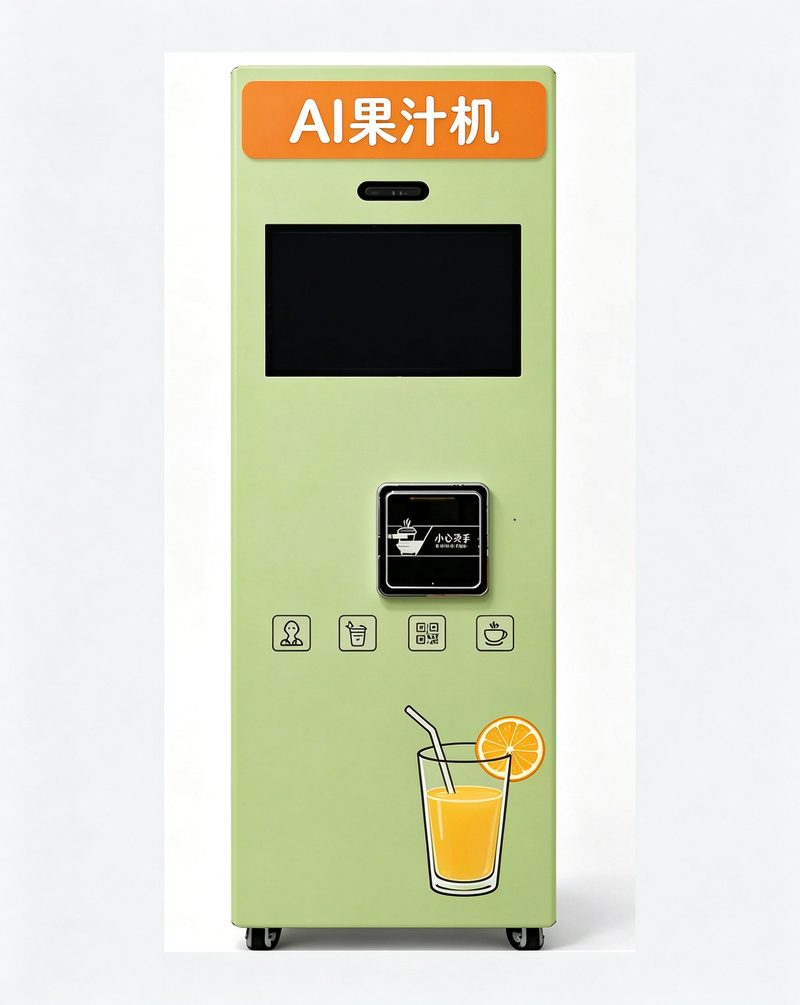
Lead Times by Stage
| Stage | Driver | Owner |
|---|---|---|
| Production | Configuration and queue | Supplier |
| Shipping | Port pair and season | Forwarder |
| Customs | Paperwork completeness | Broker |
| Site prep | Host readiness | Host |
| Commissioning | Checklist day | Operator |
The Regular Nobody Recruited
The same face, four weeks running. An intern rehearsing a presentation stops at the second-floor rest deck of a furniture expo, collects the cup, checks the cap out of habit, and folds back into the corridor traffic, and the pattern has stopped being a coincidence.
No promotion produced that habit. A machine that is always there, always stocked and always the same cup did it, which is a quieter kind of marketing than anything with a budget.
A site is not won on the first cup; it is won on the fifteenth. The sale lands in the ledger before the door swings shut.
First-Week Teething Fixes
Hand the site contact a card with three things on it: the plain-language error list, the capsule reorder number, and your response promise in hours. Cards given on commissioning day get used; cards promised later get remembered as debts.
The first month's faults arrive as phone calls to whoever handed over the friendliest card. Choose to be that card.
Menu Naming and What Sells
Menu names do more work than recipes. A line called 'house milk tea' sells on familiarity; the same powder called 'brown sugar premium' sells on curiosity. Both are the same capsule, and the site decides which one it needs.
Keep the list short enough to read in eight seconds and rotate one line at a time. Changing three at once makes the data unreadable and the regulars nervous.
Stock Counts and the Shrinkage Nobody Names
Sales data and capsule consumption drift apart, and the gap has three causes: a mis-scan, a wasted capsule during a fault, and theft that nobody wants to write down.
Counting one line every visit - always the same line - turns the drift into a number within a quarter. Counting everything occasionally produces a bigger number that explains nothing.
Security and Vandalism
Unattended does not mean unobserved. The sites that suffer least are the ones where someone's job includes looking at the machine - a receptionist, a security desk, a cleaner on a fixed round.
Physical measures are cheap: a bolted base, a camera pointed at the queue rather than the machine, and a light that keeps the corner from becoming private after dark.
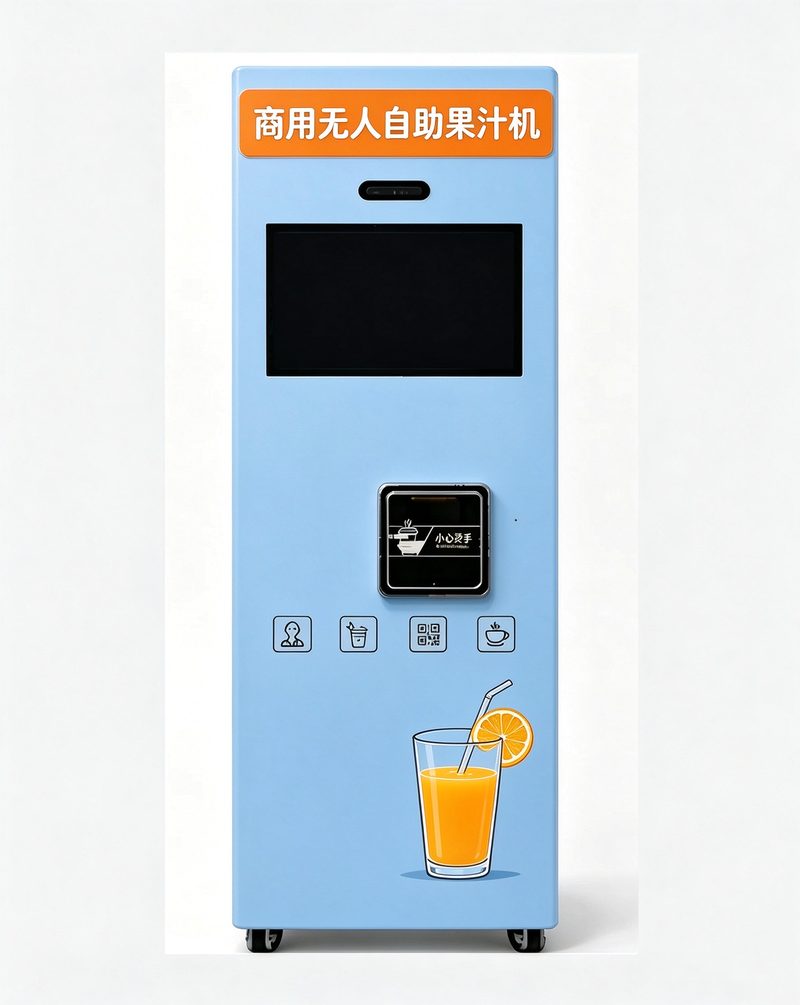
Site Preparation Checklist
- Two square metres of floor cleared
- Household power line within reach
- Access hours agreed with the host
- Level ground and frontage visibility confirmed
What Buyers Compare Before They Call
Buyers compare four things before they ever pick up the phone: footprint against the space they have, drink range against their audience, service terms against their own staff, and the all-in first-year number against their budget.
Answer those four on one page and the first call becomes a conversation about a site, not an interrogation about a brochure. An unattended juice corner that states 3-8 months payback without the assumptions behind it invites exactly the questions nobody wants.
The Hour Nobody Staffs
By ten at night the courier station counter line has emptied out, and the unattended juice corner is the only lit thing in the corridor. The site closes at six; the traffic does not.
A first-time visitor following the signs is the customer now - the one who cannot buy an orange juice anywhere else at this hour, and who will remember that tomorrow.
Anyone pricing a placement on daytime footfall alone is pricing half a site. No one needed help, which is the entire point.
From Depot to Corner
Commissioning day goes smoothly when it is rehearsed on paper first: delivery window, lift booking, socket check, first-water flush, first-cup test, and the photo for the handover file.
An unattended juice corner installed by checklist starts selling that afternoon. One installed by improvisation starts a relationship with the venue's maintenance team instead.
Commissioning Day Checklist
Test with the building's own water and power, not the installer's bottle and extension cord. The first week reveals what the demo never would — and the first week is when the venue is still watching kindly.
Five test cups across the day, logged with photos, close the installation file with evidence instead of optimism.
End of Life: Resale, Refurbish, Scrap
Every machine ends somewhere. The residual value question belongs in the purchase decision, because a unit that can be moved and resold carries a different risk from one that cannot.
Three destinations: resale to a smaller operator, refurbishment for a second life on a cheaper site, or scrap by weight. Knowing which is realistic changes what payback period is honest.
Price Ladder and Cup Sizes
Two sizes and three prices cover most sites: a small cup that undercuts the nearby cafe, a large one that beats it on volume, and a middle line that exists to make the large look reasonable.
The ladder should be readable in one glance. If a customer needs to compare four prices to choose, the menu is doing the operator's work for them, badly.
Documentation That Saves a Service Call
Most service calls are archaeology: what changed, when, and who noticed first. A machine folder that holds the commissioning sheet, the filter log, the cleaning history and the fault timeline turns a mystery into a diagnosis before the van door opens.
The habit costs a minute per visit and pays for itself the first time a technician asks 'has anything changed recently?' and gets an answer instead of a shrug.
It also changes the tone of warranty conversations. A documented machine gets the benefit of the doubt; an undocumented one gets a debate.
When to Add the Second Machine
The second machine is justified by two curves crossing: the first unit's sales plateau at a level the site can sustain, and the restock route still has slack. When both hold for a quarter, the second placement is arithmetic, not courage.
The failure mode is doubling on a high - one good month is weather, not climate. The reliable trigger is a plateau: the site has told you its size, the menu has told you its ceiling, and the ledger has shown you the margin survived the plateau.
Fleets that grow this way inherit an accidental gift: every habit - cadence, cleaning, reconciliation - was built to be copied before it was needed twice.
The Handover Between Buyer and Operator
Importers who sell to operators, and operators who employ route staff, share one failure point: the handover. The machine arrives; the knowledge does not.
The fix is a one-page handover sheet: configuration, capsule lines and their order codes, the cleaning cadence, the filter calendar, the service contacts, and the three faults most likely to occur with their fixes. Written once, reused forever.
Buyers who receive this page report the same thing: onboarding stops being a week of phone calls and becomes an afternoon. The supplier who provides it unprompted is remembered at reorder time.
What the Site Sells at 23:40
By ten at night the tea area of a light-industrial plant has emptied out, and the unattended juice corner is the only lit thing in the corridor. The site closes at six; the traffic does not.
An elderly regular who remembers coin machines is the customer now - the one who cannot buy an orange juice anywhere else at this hour, and who will remember that tomorrow.
Anyone pricing a placement on daytime footfall alone is pricing half a site. The site host walks past without looking up - the highest compliment a placement gets.
A Placement, Three Months In
Three months into a placement at a community clinic hallway, the pattern has settled: appointment-schedule traffic, and the queue before lunch is the whole story. The menu has been trimmed twice - the dashboard ranked the lines, the bottom three went, and nobody wrote in to mourn them.
The first month argued with the second and lost. What looked like a slow start was a queue forming in the wrong half hour - once the route moved the restock earlier, the same site sold the same cups with half the empty rows.
What a Working Site Looks Like
The pilot at a hotel corridor by the lifts began as a favour to the site host and turned into the easiest arithmetic in the fleet: late-evening demand, nights outperform the average once the tour groups check in. When the second machine conversation started, the first month's ledger did most of the talking.
Two decisions carried the quarter: the menu was cut from nine lines to six, and the restock moved from Friday to Wednesday. Neither was clever. Both came straight off the dashboard, and both showed up in the ledger within three weeks.
The Ledger Tells the Story
Three months into a placement at a gym entrance corridor, the pattern has settled: class-timetable surges, and the evening class change is the golden window. The menu has been trimmed twice - the dashboard ranked the lines, the bottom three went, and nobody wrote in to mourn them.
Nothing dramatic happened, which is the result worth reporting. The machine stayed stocked, the sheet got signed, the ledger matched the capsule invoices, and the host stopped mentioning it - the highest form of approval a placement gets.
One Customer, Four Weeks Straight
The same face, four weeks running. A wholesaler tallying receipts on a crate stops at an office park lobby by the mail shelves, holds the cup with both hands and says nothing, which is its own review, and the pattern has stopped being a coincidence.
No promotion produced that habit. A machine that is always there, always stocked and always the same cup did it, which is a quieter kind of marketing than anything with a budget.
A site is not won on the first cup; it is won on the fifteenth. The sale lands in the ledger before the door swings shut.
Straight Answers to the Hard Questions
"We tried a vending machine years ago and it was a disaster."
The difference is the telemetry. Stock, faults and sales report themselves now, so a machine that quietly fails gets noticed the same hour - not the following month.
"A machine like that must cost a fortune up front."
Less than the rent deposit for the counter it replaces. The machine is one of eight cost lines, and the payback window runs three to eight months at a site with real foot traffic - the worksheet in this series breaks all eight out.
"Can it really run unattended all day?"
That is the design brief: uptime, alerts and a route. The machine does the shift work; you do the arithmetic.
"Sounds like a headache to restock."
The restock route runs every two to three weeks per machine on normal demand, sized by the dashboard rather than by guesswork. One van, one morning, ten sites.
A Week on the Route, Logged
- Monday - Route planned from the weekend's dashboard; the week's capsule order confirmed.
- Tuesday - The long run: four sites before ten, two after lunch, one drawer rotated while the kettle boiled.
- Wednesday - Midweek dip on the office sites; herbal line restocked at the clinic cluster.
- Thursday - Reconciliation morning - cups sold against capsules issued, and the one discrepancy traced to a demo cup.
- Friday - Peak-site visit before the evening rush; contact card replaced at one unit.
- Saturday - Weekend shift: fewer sites, more cleaning. Two drip trays, one filter, and a machine that looks new again.
- Sunday - Rest day, which is also a system: the alerts keep watch and the ledger keeps counting.
Twelve Months, Two Columns
| Month | What the traffic does | What the operator does |
|---|---|---|
| Jan | Budget season: the annual consumables figure gets signed this month. | New-year footfall is slow to wake; keep the hot lines deep and the route tight. |
| Feb | The post-holiday dip is real; use it for deep cleans and filter changes. | Short month, long queues on the 14th; order the dessert-adjacent capsules early. |
| Mar | Spring footfall returns with the weather; fruit lines start their climb. | Exam season starts on campuses; the library site stops being a quiet placement. |
| Apr | Rain weeks teach you which sites have indoor dwell; note them for the record. | A good month to trial one new capsule line per machine. |
| May | Holiday Mondays distort the weekly curve; compare like with like before judging a site. | Warm evenings extend the outdoor sites; chilled options earn their drawer space. |
| Jun | Half-year service check: seals, nozzles, payment terminals. | The first genuinely hot week tells you whether the chilled lines were sized right. |
| Jul | Holiday travel lifts transit and hotel sites for roughly three weeks. | Office sites go quiet and tourist corridors take over; move the route, not the menu. |
| Aug | Capsule storage gets hot in August; check the stockroom before the shelf life does. | The slowest office month; the tourist corridors carry the fleet instead. |
| Sep | Back-to-routine week is the second new year; footfall snaps back fast. | Campus sites refill; the coffee line at eight in the morning comes back overnight. |
| Oct | The hot-drink golden window opens; the curve steepens week on week. | The first cold snap is worth a route note: it usually front-loads the month by a week. |
| Nov | Cold-weather peak builds; popular lines deserve a double buffer. | Darkness at five changes the traffic shape; the evening hour gains, the lunch hour thins. |
| Dec | The last week is dead in offices and frantic in transit; stock for one and rest for the other. | Festive peaks everywhere except the empty offices; plan the route around both. |
Notes I Keep Rewriting
There is a version of this business that runs on charm, and it works until the charming person takes a holiday. the capsule rotation is the version that survives the holiday.
My first site taught me the arithmetic; my fourth taught me the capsule rotation, which is the part that scales.
Every operator I respect has the same boring habit: they write the week down. the cleaning sheet is where the writing pays for itself.
How It Stacks Up
| The old way | What it costs | Where it fails | What the machine changes |
|---|---|---|---|
| Staffed counter | A rota to fill, holidays to cover, overtime at the edges | Shuts when the last person leaves | A unattended juice corner covers the closed hours without a rota |
| Traditional coin vending | Coin floats, collection trips, notes that jam | Problems surface as complaints, weeks late | Payment and faults report themselves the same hour |
| Corner cafe | Rent, fit-out, staffed peaks | Fixed menu, fixed hours | Capsule range rotates at the restock visit, not by renovation |
| Line | What it pours | Where it fits best | Restock rhythm |
|---|---|---|---|
| Coffee machine | Espresso, americano, latte | Offices, hotels, waiting areas | Restock every 2-3 weeks |
| Milk tea machine | Milk tea and tea lines | High streets, campuses, food courts | Restock every 2-3 weeks |
| Juice machine | Fruit lines, chilled options | Sports halls, stations, parks | Restock every 2-3 weeks |
| Herbal tea machine | Herbal and traditional teas | Clinics, wellness floors, night sites | Restock every 2-3 weeks |
A Checklist Worth Printing
- Confirm who empties the bin beside the cabinet
- Date capsule boxes and rotate first in, first out
- Agree the refund rule before the first complaint, not after
- Set stock thresholds on the dashboard before day one
- Keep one experimental line per machine and review it monthly
- Keep a laminated contact card inside the cabinet door
- Set the filter calendar by measured water hardness
- Note the site's quiet hours before scheduling a service visit
- Test the payment terminal on the site's own network
- Photograph the installation for the machine folder
- Confirm the delivery lift's depth before the van leaves
- Write the power draw and floor load into the site agreement
The Takeaway
Keep the worksheet alive after installation - it costs nothing to maintain and answers most debates.
Common questions
What happens during a power cut?
The machine resumes when power returns; in-flight vends are voided and refunded per the posted rule.
What happens if a flavour runs out?
The dashboard flags the line before it empties; the next route carries the buffer.
Is there a contract lock-in?
Placement terms vary by venue; trial periods with clear move-out terms are common and sensible.
When does the second machine make sense?
When the first one's ledger shows a stable curve and the restock route has spare capacity.
Who prepares the site?
The host clears the spot and power; the operator brings levelling, testing and the first capsule load.
How often do filters change?
By litres, not by date: the interval is set from measured hardness and logged on the sheet.
Who cleans the machine?
The operator, on the visit sheet - cup area and panel each visit, drawer and tray weekly.
What does a cup actually cost?
Capsule plus cup plus a share of parts, power and cleaning - the per-cup figure is fixed with the supplier and held against invoices.
Related reading
- Installing a 24/7 Juice Kiosk: Timeline and Checklist
- Installing An Automatic Juice Dispenser: Timeline and Checklist
- Unattended Juice Corner Operations: A Practical Routine
- Commercial Juice Vending Machine FAQ: What Buyers Ask First
Summary
From order to first cup sits a chain of lead times - production, shipping, customs, site prep, commissioning - each one writab. Built around one site, one menu, one routine.
Ask for the placement shortlist template before choosing sites.