Commissioning Day for the Capsule Juice Machine
In one line: Installing a capsule juice machine is a checklist day: level, power, network, test cups, and a host who knew the plan all along.
Key facts: Production, shipping, customs, site prep, commissioning - five stages, and only the paperwork delays two of them.
From Quote to First Cup
The capsule juice machine decision looks technical from outside and organisational from inside. If a line looks obvious, it is probably the one that gets skipped and then paid for twice.
From Order to First Cup: The Timeline
Production, shipping, customs, placement prep, commissioning - each stage has a lead time, and the buyer who writes them down sets a realistic first-cup date.
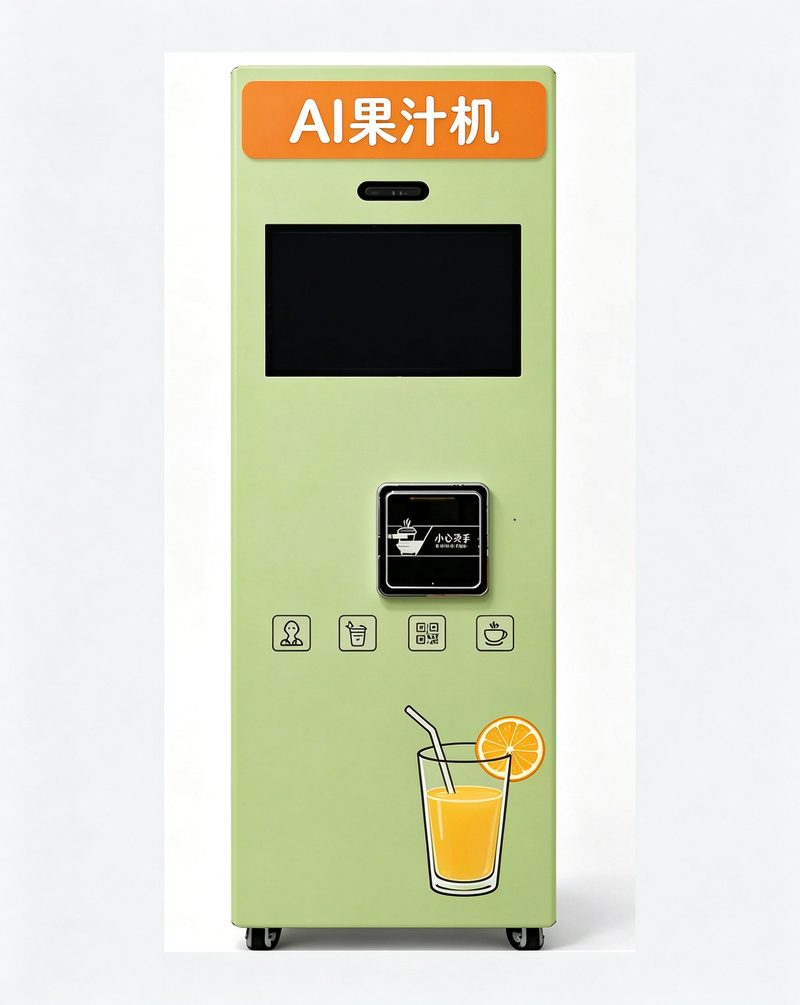
Lead Times by Stage
| Stage | Driver | Owner |
|---|---|---|
| Production | Configuration and queue | Supplier |
| Shipping | Port pair and season | Forwarder |
| Customs | Paperwork completeness | Broker |
| Site prep | Host readiness | Host |
| Commissioning | Checklist day | Operator |
The Corner Before and After
Six months ago the staff room of a furniture mall was dead floor space - a bin, a poster, and the occasional sigh from a site foreman counting change he no longer needs who wanted an orange juice and had nowhere to get it.
Now there is a capsule juice machine against that wall. The routine is unremarkable, which is the compliment: takes two - one now, one for the colleague minding the desk.
The restock note writes itself: the popular line is down one row.
Compliance and Site Etiquette
Quiet hours, tidy frontage and clear contact details keep hosts happy; none of it is complicated, all of it is noticed.
Keep the machine's paperwork - model, power, hygiene sheet - on file for venue audits.
When the Promotion Ends
A launch price teaches customers a number. When it ends, some of them leave, and the ones who stay are the actual market for the site - which is useful information bought at a discount.
Plan the exit before the launch: how long the price runs, what replaces it, and what a normal week looks like afterwards. A promotion without an end date is a price cut with extra paperwork.
Commissioning Day Checklist
Test with the building's own water and power, not the installer's bottle and extension cord. The first week reveals what the demo never would — and the first week is when the venue is still watching kindly.
Five test cups across the day, logged with photos, close the installation file with evidence instead of optimism.
From Depot to Corner
Commissioning day goes smoothly when it is rehearsed on paper first: delivery window, lift booking, socket check, first-water flush, first-cup test, and the photo for the handover file.
A capsule juice machine installed by checklist starts selling that afternoon. One installed by improvisation starts a relationship with the venue's maintenance team instead.
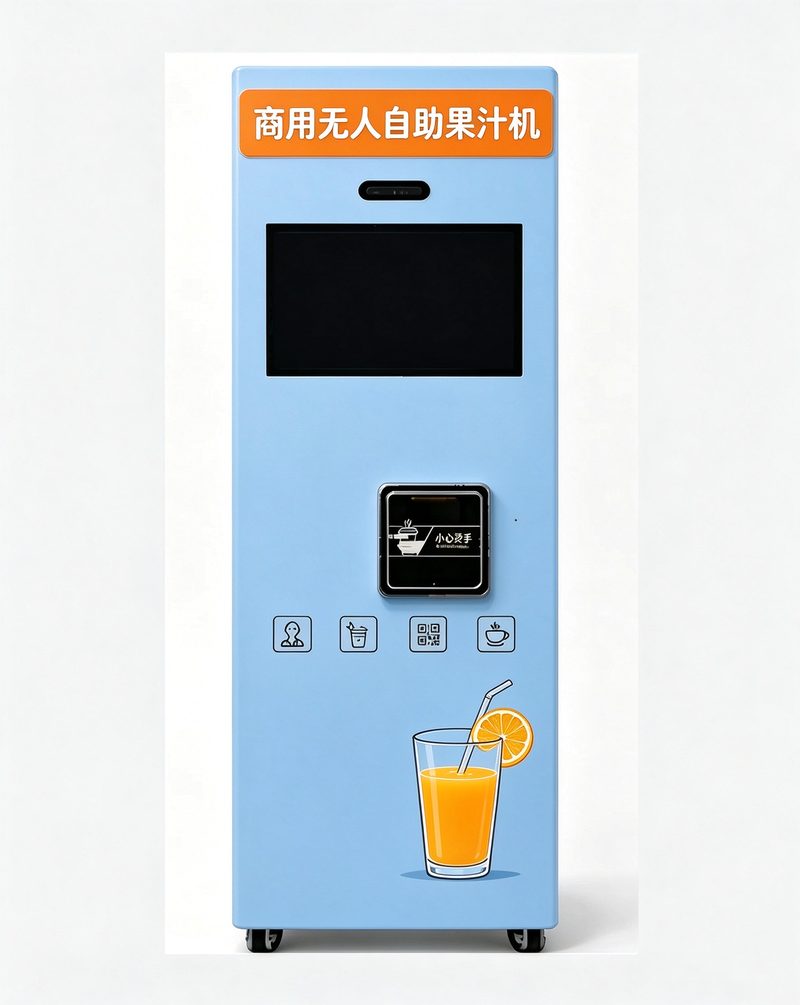
Signage That Answers the First Question
The first question is never about the machine; it is about whether this thing takes the payment in your pocket. Say the payment method, the price range and the drink categories in one glance, and the queue forms faster.
Keep the sign to a single line of text and a single line of pictures. Anything longer is read by nobody and photographed by even fewer.
The Second Machine Decision
A second machine at the same site is a different decision from the first. The first was about whether the site works; the second is about what the first one cannot do - a second temperature, a second menu, a queue that forms at nine and disappears by ten.
The test is not revenue doubling. It is whether the existing machine is at its ceiling at the hour that matters: if it is idle at eleven and blocked at nine, the site needs capacity, not another product line. If it is idle all day, a second machine only doubles the rent share.
The Person Who Quietly Runs It
The same face, four weeks running. A mother waiting out a clinic queue stops at the night queue area of a long-distance coach station, holds the cup with both hands and says nothing, which is its own review, and the pattern has stopped being a coincidence.
No promotion produced that habit. A machine that is always there, always stocked and always the same cup did it, which is a quieter kind of marketing than anything with a budget.
A site is not won on the first cup; it is won on the fifteenth. The restock note writes itself: the popular line is down one row.
Two Prices, One Machine
Subsidised pricing for staff and full pricing for visitors is common and quietly complicated: it needs two payment paths, two sets of reporting and a rule for who counts as which.
Decide the rule before the hardware. A machine configured for one price and operated at two produces a ledger nobody can reconcile, and the host will notice before the operator does.
Site Preparation Checklist
- Two square metres of floor cleared
- Household power line within reach
- Access hours agreed with the host
- Level ground and frontage visibility confirmed
First-Week Teething Fixes
Hand the site contact a card with three things on it: the plain-language error list, the capsule reorder number, and your response promise in hours. Cards given on commissioning day get used; cards promised later get remembered as debts.
The first month's faults arrive as phone calls to whoever handed over the friendliest card. Choose to be that card.
Loading Bays and Delivery Windows
The delivery is where a placement's real constraints appear: a bay booked for fifteen minutes, a lift that will not take a pallet, a corridor that narrows at the fire door.
Walk the route with a trolley before the first order, not on the day. Every operator has a story about a machine that arrived and could not enter the building it was bought for.
Spare Parts as a Policy
The spare-parts question is not what to stock but what to promise. A promise of four-hour repair with no local part is a promise the route cannot keep.
Decide the promise first, then stock to it: the part that fails most, the part that stops everything, and the consumable that runs out between visits.
When the Power Bill Arrives
Power is the cost line most often estimated and least often checked. A cabinet with heating, chilling and a screen does not idle at zero, and standby load runs twenty-four hours whether anybody buys or not.
Read one real bill before modelling the second site. If the host pays, put the estimate in the placement terms anyway - a host who discovers an unexpected line in month two becomes a host who revisits the share.
Pricing the Machine Against the Counter
The comparison buyers actually make is not machine against machine; it is machine against the counter they would otherwise staff. A counter carries wages, training, turnover and a rota that has to be filled on public holidays.
Put those four lines beside the machine's four - equipment, consumables, placement, service - and the comparison becomes honest quickly. The machine usually wins on hours and loses on menu breadth, which is exactly the trade a buyer should be choosing deliberately.
Written down, that comparison also protects the buyer from the wrong purchase: a site that needs a barista's range should hire one, and a site that needs round-the-clock consistency should not.
A Pilot Is Not a Small Site
A pilot exists to produce a decision, and a site exists to produce a margin. Confusing the two is how operators end up with six machines in six buildings and no idea which one works.
Run a pilot with an explicit question attached: does the traffic show up, does the host leave the machine alone, does the routine survive a normal week. Three questions, one month, one written answer.
A site, by contrast, is judged on the ledger: cups, net and complaints. Once the question is answered, the capsule juice machine either becomes a site or is removed - and the decision should be made on the day the month closes, not whenever somebody gets round to it.
What the Dead Floor Space Became
Six months ago a warehouse office mezzanine was dead floor space - a bin, a poster, and the occasional sigh from two nurses sharing a ten-minute break who wanted an orange juice and had nowhere to get it.
Now there is a capsule juice machine against that wall. The routine is unremarkable, which is the compliment: takes two - one now, one for the colleague minding the desk.
No one needed help, which is the entire point.
A Placement, Three Months In
The pilot at a gym entrance corridor began as a favour to the site host and turned into the easiest arithmetic in the fleet: class-timetable surges, the evening class change is the golden window. When the second machine conversation started, the first month's ledger did most of the talking.
What made the site work was unglamorous: a cabinet in sight of a window, a restock on the day the building was quiet, and a host who knew exactly who to call.
What a Working Site Looks Like
The pilot at a gym entrance corridor began as a favour to the site host and turned into the easiest arithmetic in the fleet: class-timetable surges, the evening class change is the golden window. When the second machine conversation started, the first month's ledger did most of the talking.
The host's own staff ended up doing the small things - topping cups, wiping the tray - and that informal care showed up as fewer complaints than any service level agreement would have delivered.
The Ledger Tells the Story
The pilot at a community clinic hallway began as a favour to the site host and turned into the easiest arithmetic in the fleet: appointment-schedule traffic, the queue before lunch is the whole story. When the second machine conversation started, the first month's ledger did most of the talking.
Half the value came from what was removed: two slow lines, one noisy alert, and a promotion that discounted the only product everybody bought at full price anyway.
One Minute at the Machine
The quiet hour after breakfast, the waiting bench of a vehicle inspection lane. A first-time visitor following the signs walks up to the capsule juice machine and takes two - one now, one for the colleague minding the desk. The cup arrives capped, an orange juice still warm enough to notice on the walk back.
It is the fourth cup this corner has sold since the hour began.
Multiply that minute by the hours the site is actually awake, and the placement argument writes itself: the machine is not competing with the cafe down the street - it is serving the traffic that never walks there.
Straight Answers to the Hard Questions
"How do I know the numbers are real?"
Every order carries its own reference and exports monthly against capsule consumption. You reconcile a report, not a shoebox of receipts.
"A machine like that must cost a fortune up front."
Less than the rent deposit for the counter it replaces. The machine is one of eight cost lines, and the payback window runs three to eight months at a site with real foot traffic - the worksheet in this series breaks all eight out.
"The shop next door already sells drinks."
A shop sells drinks when someone is behind the counter. The machine sells at seven in the morning, at eleven at night, and every minute the shutters are down - it is a different business, not a rival.
"We tried a vending machine years ago and it was a disaster."
The difference is the telemetry. Stock, faults and sales report themselves now, so a machine that quietly fails gets noticed the same hour - not the following month.
The Week's Route, Written Down
- Monday - Route planned from the weekend's dashboard; the week's capsule order confirmed.
- Tuesday - Long route day - six machines, two top-ups flagged, one nozzle wiped twice.
- Wednesday - Midweek dip on the office sites; herbal line restocked at the clinic cluster.
- Thursday - Books day. The monthly figure gets compared to the site's own count, and the two agree within normal wastage.
- Friday - The Friday visit happens before four, because after four the site is a queue and a machine that needs nothing.
- Saturday - Weekend shift: fewer sites, more cleaning. Two drip trays, one filter, and a machine that looks new again.
- Sunday - Silent day by design - alerts on, phone on, van parked.
Twelve Months, Two Columns
| Month | Traffic pattern | Route decision |
|---|---|---|
| Jan | The quietest fortnight of the year - good for audits, bad for optimism. | New-year footfall is slow to wake; keep the hot lines deep and the route tight. |
| Feb | The post-holiday dip is real; use it for deep cleans and filter changes. | Short month, long queues on the 14th; order the dessert-adjacent capsules early. |
| Mar | Exam season starts on campuses; the library site stops being a quiet placement. | Quarter close: reconcile the ledger and prune the menu bottom. |
| Apr | A good month to trial one new capsule line per machine. | Rain weeks teach you which sites have indoor dwell; note them for the record. |
| May | Warm evenings extend the outdoor sites; chilled options earn their drawer space. | Mid-year route review: cut the weakest ten percent if the ledger says so. |
| Jun | Half-year service check: seals, nozzles, payment terminals. | Exam and event season bends public-hall sites; stock ahead of the dates. |
| Jul | Holiday travel lifts transit and hotel sites for roughly three weeks. | Peak heat shifts demand; the curve moves later into the evening. |
| Aug | Use the lull for operator training and contract renewals. | Capsule storage gets hot in August; check the stockroom before the shelf life does. |
| Sep | Back-to-routine week is the second new year; footfall snaps back fast. | Campus sites refill; the coffee line at eight in the morning comes back overnight. |
| Oct | The first cold snap is worth a route note: it usually front-loads the month by a week. | The hot-drink golden window opens; the curve steepens week on week. |
| Nov | Cold-weather peak builds; popular lines deserve a double buffer. | Year-end host meetings: renewals, shares, next-year placements. |
| Dec | Close the ledger, thank the hosts, and let the dashboard write the next order. | The last week is dead in offices and frantic in transit; stock for one and rest for the other. |
Three Things the Route Taught Me
If I could send one paragraph back to my first order, it would be this - the host conversation is not a purchase, it is a schedule, and the schedule is written in the ledger whether you look at it or not.
Nobody warns you that the hard part is not buying the machine. It is the route order, done the same way in month nine as in month one.
The best placement advice I ever got fit on a napkin: the route order decides the curve, and the curve decides everything else.
How It Stacks Up
| The old way | What it costs | Where it fails | What the machine changes |
|---|---|---|---|
| Staffed counter | A rota to fill, holidays to cover, overtime at the edges | Shuts when the last person leaves | A capsule juice machine covers the closed hours without a rota |
| Traditional coin vending | Coin floats, collection trips, notes that jam | Problems surface as complaints, weeks late | Payment and faults report themselves the same hour |
| Corner cafe | Rent, fit-out, staffed peaks | Fixed menu, fixed hours | Capsule range rotates at the restock visit, not by renovation |
| Model line | Core drinks | Best-fit venues | Service rhythm |
|---|---|---|---|
| Coffee machine | Espresso, americano, latte | Offices, hotels, waiting areas | Restock every 2-3 weeks |
| Milk tea machine | Milk tea and tea lines | High streets, campuses, food courts | Restock every 2-3 weeks |
| Juice machine | Fruit lines, chilled options | Sports halls, stations, parks | Restock every 2-3 weeks |
| Herbal tea machine | Herbal and traditional teas | Hospitals, tea houses, late shifts | Restock every 2-3 weeks |
A Checklist Worth Printing
- Date capsule boxes and rotate first in, first out
- Compare the monthly ledger to the site's own count once a quarter
- Keep one experimental line per machine and review it monthly
- Keep a laminated contact card inside the cabinet door
- Confirm footprint and power before signing the placement
- Set stock thresholds on the dashboard before day one
- Agree restock cadence and access hours in writing
- Check the pickup slot height against the host's accessibility notes
- Write the power draw and floor load into the site agreement
- Test payment on site before the host's opening hour
- Note the host's shift pattern so restocks miss the rush
- Export the ledger monthly and match it to consumption
The Takeaway
Start narrow: one site, one menu, one restock rhythm - then widen on evidence.
Common questions
How are capsules shipped and stored?
Stackable dated boxes, dry storage off the floor, first-in-first-out rotation at the depot.
What happens during a power cut?
The machine resumes when power returns; in-flight vends are voided and refunded per the posted rule.
Is there a contract lock-in?
Placement terms vary by venue; trial periods with clear move-out terms are common and sensible.
What is the usual payback window?
The planning band is 3-8 months, set mainly by site quality and the local price of a cup.
Who cleans the machine?
The operator, on the visit sheet - cup area and panel each visit, drawer and tray weekly.
Does the machine need a water line?
Many units run without plumbing; confirm the water arrangement for the specific model during placement prep.
How long does installation take?
On a prepared site, commissioning is typically finished in under an hour: position, power, network check and a run of test cups.
Who prepares the site?
The host clears the spot and power; the operator brings levelling, testing and the first capsule load.
The machines behind this article
Related reading
- A Buyer's Checklist for the Unmanned Juice Machine
- Watching Many Sites from One Screen: the Gym Juice Vending Machine
- Automatic Juice Dispenser Buying Guide: Specs That Actually Matter
- Unattended Juice Corner Operations: A Practical Routine
Summary
Installing a capsule juice machine is a checklist day: level, power, network, test cups, and a host who knew the plan all along.
Book a commissioning slot only after the checklist above is signed off.