24/7 Herbal Tea Kiosk Buying Guide: Specs That Actually Matter
In one line: Choosing a 24/7 herbal tea kiosk comes down to five comparisons - menu range, footprint, payment, connectivity and service terms - made on the same sheet.
Key facts: 2 square metres footprint, household power, QR scan-to-pay with a per-order reference and 4G/WiFi reporting - four lines a spec sheet must state, not imply.
What Separates a Busy Unit from a Quiet One
Restocking the 24/7 herbal tea kiosk teaches a different lesson in week one than in week nine. The rest of the page is the version of this conversation that survives a site visit.
Five Specs Worth Comparing
- Menu breadth: how many drink types the capsule range covers
- Footprint: 2 square metres is the planning figure for a standard unit
- Payment: QR scan-to-pay plus a settlement ledger
- Connectivity: 4G/WiFi reporting for stock and faults
- Service: spare parts availability and response terms
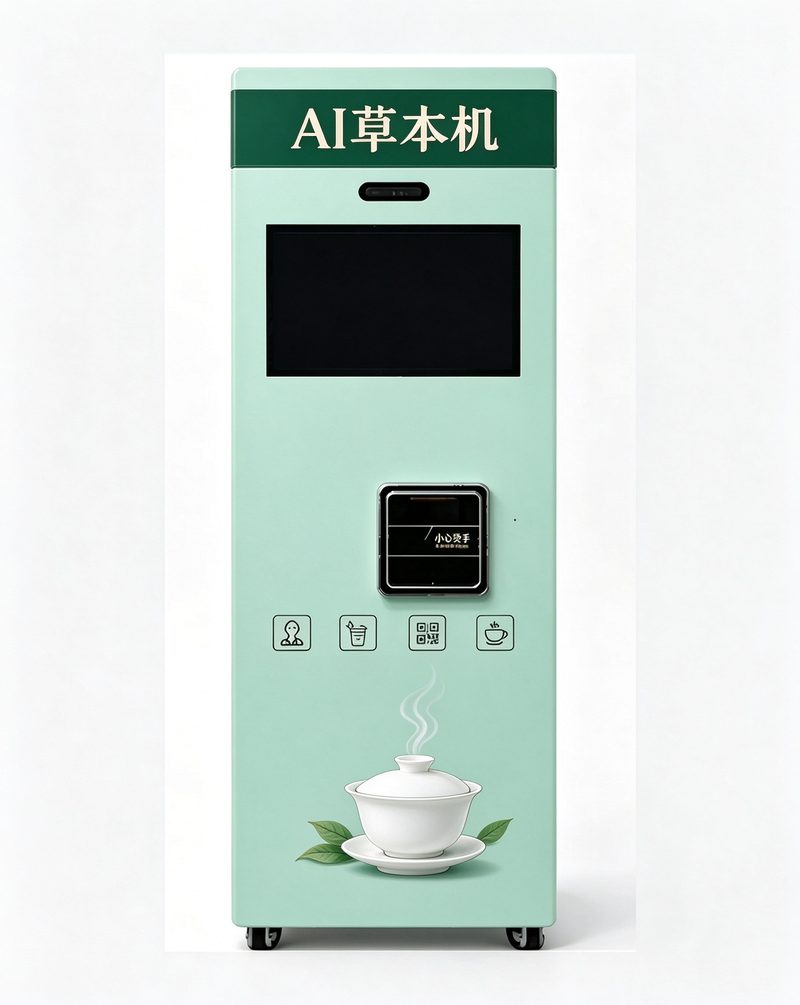
Comparison Sheet: Five Specs Side by Side
| Spec | What to confirm | Why it matters |
|---|---|---|
| Menu breadth | Drink types covered by the capsule range | Widens the buyer base per site |
| Footprint | 2 square metres and a household power line | Fits almost any dwell point |
| Payment | QR scan-to-pay with a per-order reference | Settlement without arguments |
| Connectivity | 4G/WiFi stock and fault reporting | Routes planned on data |
| Service terms | Response time and parts availability | Decides how long a fault lasts |
The Hour Nobody Staffs
By ten at night a badminton hall snack corner has emptied out, and the 24/7 herbal tea kiosk is the only lit thing in the corridor. The site closes at six; the traffic does not.
A first-time visitor following the signs is the customer now - the one who cannot buy a chrysanthemum herbal tea anywhere else at this hour, and who will remember that tomorrow.
Anyone pricing a placement on daytime footfall alone is pricing half a site. By the time the queue reforms, the machine is already serving the next regular.
Menu Rotation Without a Kitchen
A capsule menu rotates by the box, not by the recipe, which is why seasonal changes cost a restock decision instead of a renovation. Four lines out, four in, and the drawer tells you within a fortnight whether the read was right.
Keep one experimental row per machine. If it still sells after a month, it graduates; if it dies, the loss is a box, not a build.
Demo Conditions vs Deployment Conditions
Weight the demo against the deployment. A showroom unit runs on filtered water and a technician's attention; a corridor unit runs on whatever the building gives it and nobody's. Ask what changes when the demo conditions disappear.
If the answer is a longer cleaning cycle or a stricter capsule spec, put that in the cost model now. A 24/7 herbal tea kiosk that only behaves under showroom conditions is a rental in disguise.
Buildings With No Signal
Basements, factories and older buildings can have no usable mobile signal at the cabinet. A machine that depends on the network for payment will stand there looking healthy and selling nothing.
Test the actual spot with the actual SIM before delivery. If coverage is poor, the answers are a wired connection, an offline card mode with a stored limit, or a different corner - in that order of cost.
Five Questions for Every Supplier
Ask every supplier the same five questions and write the answers down verbatim: capsule sourcing lead time, cup-and-lid compatibility, firmware update policy, spare-part price list, and who pays freight on a warranty swap.
The differences show up in the commas. One vendor quotes capsule lead time in days, another in weeks; one treats lids as consumables on contract, another as an upsell. Three months in, those commas decide whether a 24/7 herbal tea kiosk runs or waits.
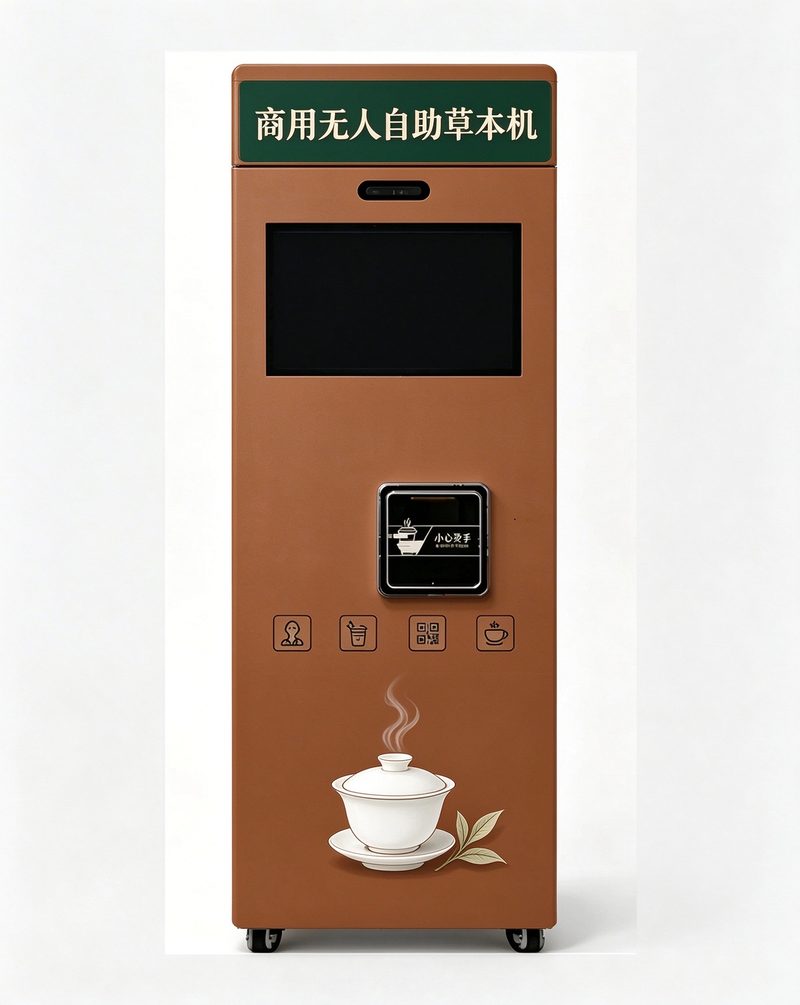
Three Numbers Worth Reporting Monthly
Cups sold, faults per hundred cups, and stockouts. Three numbers, one page, sent to whoever owns the site - it takes ten minutes and it changes the tone of every renewal conversation.
Hosts rarely ask for data, and almost always read it when it arrives. A page like that turns a machine in a corner into a service with a name attached.
Complaints Logged, Complaints Answered
Write every complaint down with a date and a cause, even the trivial ones. The list becomes a fault profile within a quarter, and a fault profile is what turns an apology into a fix.
Answer within the day even when the answer is that someone is looking into it. A 24/7 herbal tea kiosk that replies quickly is forgiven more often than one that is simply reliable.
A Cup in the Middle of a Workday
Half past nine, after the factory bus at the waiting bench of a vehicle inspection lane. The queue at the coffee counter downstairs is eight deep; the 24/7 herbal tea kiosk has three cups' worth of waiting in it, and no queue.
A visiting auditor with a folder under one arm collects the cup, checks the cap out of habit, and folds back into the corridor traffic, then goes back upstairs with the cup still in hand - a two-minute errand that a staffed counter would have turned into ten.
Speed is not a luxury feature here; it is the placement's whole economics. By the time the queue reforms, the machine is already serving the next regular.
Route Math: How Many Sites per Morning
A route is arithmetic with traffic in it. Six to eight sites per morning is the working range for a single van when stops cluster, and the number falls fast once two sites sit on opposite sides of a city.
Cluster first, then count. Operators who plan by geography rather than by urgency serve more machines with the same hours and keep every 2-3 weeks windows honest across the whole fleet.
When the Host Wants Their Own Branding
Hosts increasingly ask for their logo on the cabinet, their colours on the screen and their name on the cup. It is a reasonable request and a different product: brand work, not equipment.
Decide in advance what is included and what is charged: wrap, screen skin, cup print, and the minimum order those imply. Customisation promised verbally during a walkthrough becomes an unpaid project three weeks later.
Queues, Layout and the Second Cabinet
A single cabinet serves about three customers a minute at its best; beyond that the queue becomes the advertisement nobody wants. The second unit is justified by queue length, not by revenue alone.
Place the second cabinet beside the first rather than across the room. Two machines in one sightline share a queue, a restock trip and a fault log; two across a lobby share nothing but a landlord.
Contract Clauses Worth Reading Twice
Four clauses carry most of the risk in a placement: access hours for the restock van, who pays for power, what happens if the host changes use of the space, and how either side exits without penalty.
None of them needs a lawyer to draft, and all of them are cheaper to agree before the cabinet is bolted down. A 24/7 herbal tea kiosk that cannot be serviced inside the host's hours is a machine that will miss its every 2-3 weeks rhythm sooner or later.
Menu Breadth and Capsule Range
A wide capsule range widens the buyer base: coffee for the morning, tea and herbal options later in the day, fruit flavours where they fit the venue.
The Photo You Take on Day One
Photograph the installed unit, the socket, the water connection if there is one, the floor around it and the route in. Ten photographs taken on installation day answer a year of arguments about what was there before.
Store them with the site file, not on somebody's phone. When a host says the machine damaged the floor, the photo either settles it in a minute or proves the claim - both outcomes are useful.
The Economics of One Extra Machine
Adding a second unit to a site is not double the business. It is the same traffic split across two positions, plus the customers who never queued before, minus the fixed cost of another cabinet, another restock stop and another thing that can break.
The honest test is a queue measurement: if the morning peak regularly produces more than a few minutes of waiting, a second unit adds sales. If not, it adds cost and halves the utilisation of both.
There is a third case worth naming: two units in two positions in the same building, which is not one site with two machines but two sites sharing a route. That is usually the better version of the investment, and it is decided by the walkthrough rather than the spreadsheet.
What Operators Get Wrong About Quality
Quality in an unmanned site is not the peak cup; it is the worst cup of the week. A machine that produces one excellent drink and nine acceptable ones is judged by the nine, not the one.
That reframing changes what to measure: water hardness drift, capsule storage temperature, cleaning interval adherence, and the age of the oldest capsule in the drawer. All four are unglamorous and all four show up in the cup.
It also changes what to buy. A format with a narrower menu and a tighter process usually wins on the worst cup, which is the only cup the site remembers.
The Month the Building Emptied
The same face, four weeks running. A saleswoman between two showroom appointments stops at the driver room of a cold-chain depot, holds the cup with both hands and says nothing, which is its own review, and the pattern has stopped being a coincidence.
No promotion produced that habit. A machine that is always there, always stocked and always the same cup did it, which is a quieter kind of marketing than anything with a budget.
A site is not won on the first cup; it is won on the fifteenth. The dashboard records it as one line; the day's curve bends up almost imperceptibly.
A Placement, Three Months In
Three months into a placement at an office park lobby, the pattern has settled: weekday morning peaks, and Fridays run light and Mondays run heavy, every week. The menu has been trimmed twice - the dashboard ranked the lines, the bottom three went, and nobody wrote in to mourn them.
The first month argued with the second and lost. What looked like a slow start was a queue forming in the wrong half hour - once the route moved the restock earlier, the same site sold the same cups with half the empty rows.
What a Working Site Looks Like
Three months into a placement at a wholesale market office row, the pattern has settled: early-morning trade, and the first two hours outsell the afternoon. The menu has been trimmed twice - the dashboard ranked the lines, the bottom three went, and nobody wrote in to mourn them.
Two decisions carried the quarter: the menu was cut from nine lines to six, and the restock moved from Friday to Wednesday. Neither was clever. Both came straight off the dashboard, and both showed up in the ledger within three weeks.
The Ledger Tells the Story
Three months into a placement at a coach station waiting row, the pattern has settled: departures-board waves, and each delayed departure buys another round of cups. The menu has been trimmed twice - the dashboard ranked the lines, the bottom three went, and nobody wrote in to mourn them.
The ledger and the walkthrough told different stories for a month. The ledger said demand; the walkthrough said a queue at the wrong hour. The walkthrough was right, and the fix cost nothing.
One Minute at the Machine
7:40 on a weekday morning, a badminton hall snack corner. A security guard off the midnight shift walks up to the 24/7 herbal tea kiosk and takes two - one now, one for the colleague minding the desk. The cup arrives capped, a chrysanthemum herbal tea still warm enough to notice on the walk back.
The dashboard records it as one line; the day's curve bends up almost imperceptibly.
Multiply that minute by the hours the site is actually awake, and the placement argument writes itself: the machine is not competing with the cafe down the street - it is serving the traffic that never walks there.
Straight Answers to the Hard Questions
"Can it really run unattended all day?"
That is the design brief: uptime, alerts and a route. The machine does the shift work; you do the arithmetic.
"The shop next door already sells drinks."
A shop sells drinks when someone is behind the counter. The machine sells at seven in the morning, at eleven at night, and every minute the shutters are down - it is a different business, not a rival.
"Will people trust a drink made by a box?"
They trust the cup more than the counter when the cup is consistent. Capsule brewing means the tenth cup matches the first, and the cleaning sheet posted on the glass does more for confidence than any slogan.
"Who fixes it when something goes wrong?"
The faults that actually happen - a clogged nozzle, a payment hiccup - are site-side fixes measured in minutes, which is why the parts kit lives in the service van. Anything rarer is a module swap under the service terms you negotiated.
A Week on the Route, Logged
- Monday - Week opens with paperwork - capsule order signed off, one site's access hours re-confirmed by message.
- Tuesday - The long run: four sites before ten, two after lunch, one drawer rotated while the kettle boiled.
- Wednesday - Midweek is the quiet read: office sites cool off, clinic and gym sites pick up the slack.
- Thursday - Ledger exported and matched against capsule consumption; one gap investigated.
- Friday - Contact card refreshed at the lobby unit, and the host's new shift supervisor walked through the basics.
- Saturday - Half-day route. The transit site runs hot, the office sites sleep, and the van gets its filters swapped.
- Sunday - Rest day, which is also a system: the alerts keep watch and the ledger keeps counting.
Twelve Months, Two Columns
| Month | What changes | What to do about it |
|---|---|---|
| Jan | New-year footfall is slow to wake; keep the hot lines deep and the route tight. | Budget season: the annual consumables figure gets signed this month. |
| Feb | Valentine week bends the coffee and milk-tea lines upward for ten days. | Short month, long queues on the 14th; order the dessert-adjacent capsules early. |
| Mar | Quarter close: reconcile the ledger and prune the menu bottom. | Spring footfall returns with the weather; fruit lines start their climb. |
| Apr | Rain weeks teach you which sites have indoor dwell; note them for the record. | The first warm spell moves demand later in the day; watch the four o clock hour. |
| May | Holiday Mondays distort the weekly curve; compare like with like before judging a site. | Warm evenings extend the outdoor sites; chilled options earn their drawer space. |
| Jun | Exam and event season bends public-hall sites; stock ahead of the dates. | Half-year service check: seals, nozzles, payment terminals. |
| Jul | Peak heat shifts demand; the curve moves later into the evening. | Office sites go quiet and tourist corridors take over; move the route, not the menu. |
| Aug | The slowest office month; the tourist corridors carry the fleet instead. | Use the lull for operator training and contract renewals. |
| Sep | Order winter capsule volumes early - the ramp catches late buyers. | Campus sites refill; the coffee line at eight in the morning comes back overnight. |
| Oct | Autumn fairs and exhibitions fill the trade-hall sites. | The hot-drink golden window opens; the curve steepens week on week. |
| Nov | Darkness at five changes the traffic shape; the evening hour gains, the lunch hour thins. | Cold-weather peak builds; popular lines deserve a double buffer. |
| Dec | Festive peaks everywhere except the empty offices; plan the route around both. | Close the ledger, thank the hosts, and let the dashboard write the next order. |
From the Operator's Notebook
If I could send one paragraph back to my first order, it would be this - the move-out clause is not a purchase, it is a schedule, and the schedule is written in the ledger whether you look at it or not.
The machine never argues. It just records what you did about the site walkthrough, and hands the record back at the end of the quarter.
The dashboard is honest, the host is honest, and both are approximate. the ledger discipline is what turns two approximations into a decision.
How It Stacks Up
| The old way | What it costs | Where it fails | What the machine changes |
|---|---|---|---|
| Staffed counter | A rota to fill, holidays to cover, overtime at the edges | Shuts when the last person leaves | A 24/7 herbal tea kiosk covers the closed hours without a rota |
| Traditional coin vending | Cash handling, change runs, slot jams | No telemetry; faults found by complaint | Every sale logged, every fault alerted |
| Corner cafe | A lease, a build-out, a barista roster | Menu changes mean reprinting and retraining | The menu changes when the capsule order does |
| Line | What it pours | Where it fits best | Restock rhythm |
|---|---|---|---|
| Coffee machine | Espresso, americano, latte | Offices, hotels, waiting areas | Restock every 2-3 weeks |
| Milk tea machine | Milk tea and tea lines | High streets, campuses, food courts | Restock every 2-3 weeks |
| Juice machine | Fruit lines, chilled options | Gyms, cinemas, family venues | Restock every 2-3 weeks |
| Herbal tea machine | Herbal and traditional teas | Clinics, wellness floors, night sites | Restock every 2-3 weeks |
A Checklist Worth Printing
- Decide who owns the cups before the first order
- Keep a laminated contact card inside the cabinet door
- Set the filter calendar by measured water hardness
- Record the host's renewal date where the route can see it
- Log the first month's cup curve against the plan
- Test payment on site before the host's opening hour
- Set stock thresholds on the dashboard before day one
- Photograph the installation for the machine folder
- Walk the route in the order the traffic allows, not the map
- Set a two-week buffer at the depot, not at the site
- Fix the price list at launch and review it quarterly
- Keep one experimental line per machine and review it monthly
The Takeaway
Start narrow: one site, one menu, one restock rhythm - then widen on evidence.
Common questions
How often does someone need to visit?
On normal demand, the restock route lands every 2-3 weeks per machine, with dashboard alerts filling the gaps.
Is there a contract lock-in?
Placement terms vary by venue; trial periods with clear move-out terms are common and sensible.
How long does installation take?
On a prepared site, commissioning is typically finished in under an hour: position, power, network check and a run of test cups.
What happens during a power cut?
The machine resumes when power returns; in-flight vends are voided and refunded per the posted rule.
Can I run twenty sites alone?
Up to a point - routes planned from live data are what make small fleets workable with one service person.
What spare parts should I stock?
Seals and nozzles first, a spare payment terminal, and the fuses that solve site-side faults.
How are capsules shipped and stored?
Stackable dated boxes, dry storage off the floor, first-in-first-out rotation at the depot.
What is the usual payback window?
The planning band is 3-8 months, set mainly by site quality and the local price of a cup.
Related machines
Related reading
- Unmanned Herbal Tea Machine Hygiene: A Sheet That Gets Used
- A Buyer's Checklist for the Hotel Herbal Tea Station
- Budgeting a Commercial Herbal Drink Dispenser Without Surprises
- A Buyer's Checklist for the Gym Juice Vending Machine
Summary
Choosing a 24/7 herbal tea kiosk comes down to five comparisons - menu range, footprint, payment, connectivity and service terms - made on the same sheet.
Request the spec sheet and the TCO worksheet together - they read as one document.