A Buyer's Checklist for the Capsule Herbal Tea Machine
In one line: Choosing a capsule herbal tea machine comes down to five comparisons - menu range, footprint, payment, connectivity and service terms - made on the same sheet.
Key facts: 2 square metres footprint, household power, QR scan-to-pay with a per-order reference and 4G/WiFi reporting - four lines a spec sheet must state, not imply.
From Quote to First Cup
The capsule herbal tea machine on the floor looks simple; the decisions behind it rarely are. The sequence mirrors how a real decision gets made, including the awkward middle steps.
Five Specs Worth Comparing
- Menu breadth: how many drink types the capsule range covers
- Footprint: 2 square metres is the planning figure for a standard unit
- Payment: QR scan-to-pay plus a settlement ledger
- Connectivity: 4G/WiFi reporting for stock and faults
- Service: spare parts availability and response terms
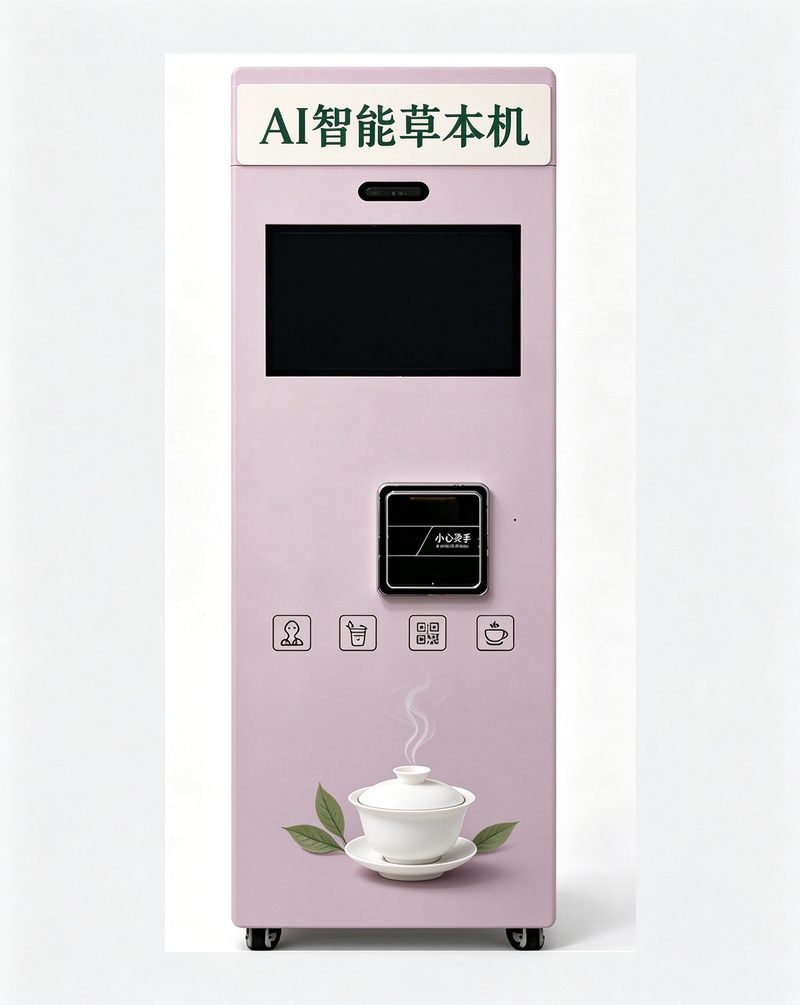
Comparison Sheet: Five Specs Side by Side
| Spec | What to confirm | Why it matters |
|---|---|---|
| Menu breadth | Drink types covered by the capsule range | Widens the buyer base per site |
| Footprint | 2 square metres and a household power line | Fits almost any dwell point |
| Payment | QR scan-to-pay with a per-order reference | Settlement without arguments |
| Connectivity | 4G/WiFi stock and fault reporting | Routes planned on data |
| Service terms | Response time and parts availability | Decides how long a fault lasts |
One Minute at the Machine
10:50, between meetings, the back corner of a convenience store. A night porter on his round walks up to the capsule herbal tea machine and taps the screen twice, picks the same drink as always, and is walking away before the cup is full. The cup arrives capped, a chrysanthemum herbal tea still warm enough to notice on the walk back.
The restock note writes itself: the popular line is down one row.
Multiply that minute by the hours the site is actually awake, and the placement argument writes itself: the machine is not competing with the cafe down the street - it is serving the traffic that never walks there.
The Dashboard Number That Lies
Every dashboard has one number that is technically true and practically misleading: revenue before refunds, cups including test pours, uptime that counts a machine that cannot vend.
Pick the definitions once, write them down, and use the same ones in every conversation with a host. A number that changes meaning between meetings destroys trust faster than a bad month does.
The Screen Is a Noticeboard
Most operators use the screen for the menu and nothing else, which wastes the only surface the customer reads before deciding. A line about the next restock, a new flavour, or a price change belongs there.
Keep it to one message at a time and change it on a schedule. A screen showing five notices is a screen nobody reads, and a notice left up for a month becomes furniture.
Capacity vs Footprint
Capacity questions are really route questions: what matters is how many cups a site drinks between two restock visits, not the theoretical ceiling of the hardware.
For many placements, a single capsule herbal tea machine with a disciplined cadence beats an oversized unit nobody refills on time.
Menu Naming and What Sells
Menu names do more work than recipes. A line called 'house milk tea' sells on familiarity; the same powder called 'brown sugar premium' sells on curiosity. Both are the same capsule, and the site decides which one it needs.
Keep the list short enough to read in eight seconds and rotate one line at a time. Changing three at once makes the data unreadable and the regulars nervous.
The First Invoice Tells You the Truth
The first consumable invoice is the first honest document in the project. Every model before it was an assumption; the invoice is what the site actually consumed, including the lines nobody planned for.
Read it against the model line by line. If cups consumed are below modelled cups sold, there is waste or shrinkage; if consumables are above, the menu mix drifted. Both are cheaper to fix in month two than month twelve.
Queues, Layout and the Second Cabinet
A single cabinet serves about three customers a minute at its best; beyond that the queue becomes the advertisement nobody wants. The second unit is justified by queue length, not by revenue alone.
Place the second cabinet beside the first rather than across the room. Two machines in one sightline share a queue, a restock trip and a fault log; two across a lobby share nothing but a landlord.
The Regular Nobody Recruited
The same face, four weeks running. An intern rehearsing a presentation stops at the rest area of a logistics warehouse, takes two - one now, one for the colleague minding the desk, and the pattern has stopped being a coincidence.
No promotion produced that habit. A machine that is always there, always stocked and always the same cup did it, which is a quieter kind of marketing than anything with a budget.
A site is not won on the first cup; it is won on the fifteenth. By the time the queue reforms, the machine is already serving the next regular.
What Gets Wiped, and When
The cleaning that matters is not the deep clean; it is the ninety seconds between customers - a wiped tray, a cleared cup chute, a lid bin emptied before it looks full. A cabinet cleaned once a week reads as dirty by Thursday.
Write the routine on the inside of the door in four lines, and stock the cloth where the person standing there can reach it. Cleaning routines fail for lack of a cloth far more often than for lack of willingness.
Daily Routine in Ten Minutes
The routine around a capsule herbal tea machine is short by design: a glance at the dashboard, a quick wipe of the cup table, and a stock note if the level looks off.
- Check sales and stock on the dashboard before leaving the depot
- Wipe cup area and touch panel during each visit
- Log any failed vend so patterns show up early
The Metric Nobody Reports: Cups Lost to Faults
Operators report cups sold and rarely report cups not sold. A unit that is down for six hours at peak has a cost that never appears in a sales report, and therefore never appears in a decision.
Estimate it: peak-hour cups per hour from the ledger, times hours down, times a recovery factor below one. The number is rough and it changes priorities immediately, because it is usually larger than the maintenance budget.
Moving a Machine Three Metres
A move of three metres sounds trivial and costs a day. It needs a power check at the new spot, a floor check, a network check, and a re-commissioning; then the first week at the new position runs on novelty again.
That is why placement deserves the argument it gets. The cheapest move is the one settled in a walkthrough with a measuring tape, before the cabinet is bolted down and the coffee is loaded.
Power, Noise and the Neighbours
Two complaints arrive faster than any other: the machine is loud at the wrong hour, and it shares a socket with something that matters. Neither is hard to pre-empt - ask what else is on that circuit and where the closest desk sits.
A 2 square metres cabinet on household power is quiet in ordinary use, but the compressor's cycle is what people notice. Placing it where the corridor is already noisy costs nothing and removes the most common objection.
A Maintenance Problem That Is Cleaning
A meaningful share of service calls end with a cleaning task rather than a repair. Blocked powder paths, cloudy sensors, scaled heaters - all look like faults from the dashboard and are routines from the site.
Before dispatching a technician, ask the site to run the daily clean and report back. It costs a phone call, and it converts a callout into a habit. The sites that do it well have visibly fewer faults.
What the First Ninety Days Decide
A placement has roughly ninety days to become a habit. In that window the regulars are formed, the restock rhythm settles, and the host's staff decide whether the machine is their problem or somebody else's.
Three things should happen in that window and often do not: a restock missed and recovered, a fault fixed inside a day, and one menu change based on what actually sold. Each is a small test of whether the operation behind the machine exists.
After ninety days the site is what it is. Turning a settled site around costs more than opening a new one, which is why the first quarter deserves more attention than the tenth.
The Capsule Order That Sets the Year
The first capsule order is a forecast disguised as a purchase. Order too little and the first stockout teaches customers to walk on; order too much and the shelf life decides the loss for you.
The working rule is one full cycle at the site plus a buffer held at the depot, with the mix weighted toward the two lines the site is most likely to repeat. Everything else is a trial row.
Review it at the end of month one with the ledger open. The curve, not the sales rep, should decide the second order - and by month three the order almost writes itself.
The Month the Building Emptied
The same face, four weeks running. A night porter on his round stops at a fruit wholesale hall office, scans, hesitates over the menu for a second, then picks the new flavour the dashboard has been quietly promoting, and the pattern has stopped being a coincidence.
No promotion produced that habit. A machine that is always there, always stocked and always the same cup did it, which is a quieter kind of marketing than anything with a budget.
A site is not won on the first cup; it is won on the fifteenth. Nobody photographs it; the machine has simply become part of the floor plan.
A Placement, Three Months In
The pilot at a furniture mall staff corridor began as a favour to the site host and turned into the easiest arithmetic in the fleet: staff and contractor flow, the steady base load comes from the fit-out crews. When the second machine conversation started, the first month's ledger did most of the talking.
The ledger and the walkthrough told different stories for a month. The ledger said demand; the walkthrough said a queue at the wrong hour. The walkthrough was right, and the fix cost nothing.
What a Working Site Looks Like
The pilot at a logistics warehouse rest area began as a favour to the site host and turned into the easiest arithmetic in the fleet: shift-change traffic, the morning peak carries the day. When the second machine conversation started, the first month's ledger did most of the talking.
The quarter's lesson was about the restock hour, not the menu. Moving the visit ninety minutes earlier recovered the morning peak, and the peak turned out to be most of the site.
The Ledger Tells the Story
Three months into a placement at a wholesale market office row, the pattern has settled: early-morning trade, and the first two hours outsell the afternoon. The menu has been trimmed twice - the dashboard ranked the lines, the bottom three went, and nobody wrote in to mourn them.
What made the site work was unglamorous: a cabinet in sight of a window, a restock on the day the building was quiet, and a host who knew exactly who to call.
The Hour Nobody Staffs
By ten at night a co-working floor pantry has emptied out, and the capsule herbal tea machine is the only lit thing in the corridor. The site closes at six; the traffic does not.
A delivery rider helmet in hand is the customer now - the one who cannot buy a chrysanthemum herbal tea anywhere else at this hour, and who will remember that tomorrow.
Anyone pricing a placement on daytime footfall alone is pricing half a site. The site host walks past without looking up - the highest compliment a placement gets.
Straight Answers to the Hard Questions
"The shop next door already sells drinks."
A shop sells drinks when someone is behind the counter. The machine sells at seven in the morning, at eleven at night, and every minute the shutters are down - it is a different business, not a rival.
"How do I know the numbers are real?"
Every order carries its own reference and exports monthly against capsule consumption. You reconcile a report, not a shoebox of receipts.
"We tried a vending machine years ago and it was a disaster."
The difference is the telemetry. Stock, faults and sales report themselves now, so a machine that quietly fails gets noticed the same hour - not the following month.
"Can it really run unattended all day?"
That is the design brief: uptime, alerts and a route. The machine does the shift work; you do the arithmetic.
A Week on the Route, Logged
- Monday - Route planned from the weekend's dashboard; the week's capsule order confirmed.
- Tuesday - Long route day - six machines, two top-ups flagged, one nozzle wiped twice.
- Wednesday - Halfway check on capsule depth; one line is running ahead of plan and earns a second row next visit.
- Thursday - Books day. The monthly figure gets compared to the site's own count, and the two agree within normal wastage.
- Friday - Contact card refreshed at the lobby unit, and the host's new shift supervisor walked through the basics.
- Saturday - Half-day route. The transit site runs hot, the office sites sleep, and the van gets its filters swapped.
- Sunday - Silent day by design - alerts on, phone on, van parked.
Twelve Months, Two Columns
| Month | What changes | What to do about it |
|---|---|---|
| Jan | Budget season: the annual consumables figure gets signed this month. | The quietest fortnight of the year - good for audits, bad for optimism. |
| Feb | Valentine week bends the coffee and milk-tea lines upward for ten days. | Short month, long queues on the 14th; order the dessert-adjacent capsules early. |
| Mar | Exam season starts on campuses; the library site stops being a quiet placement. | Spring footfall returns with the weather; fruit lines start their climb. |
| Apr | Rain weeks teach you which sites have indoor dwell; note them for the record. | The first warm spell moves demand later in the day; watch the four o clock hour. |
| May | Holiday Mondays distort the weekly curve; compare like with like before judging a site. | Mid-year route review: cut the weakest ten percent if the ledger says so. |
| Jun | The first genuinely hot week tells you whether the chilled lines were sized right. | Half-year service check: seals, nozzles, payment terminals. |
| Jul | Peak heat shifts demand; the curve moves later into the evening. | Holiday travel lifts transit and hotel sites for roughly three weeks. |
| Aug | Use the lull for operator training and contract renewals. | Capsule storage gets hot in August; check the stockroom before the shelf life does. |
| Sep | Order winter capsule volumes early - the ramp catches late buyers. | Campus sites refill; the coffee line at eight in the morning comes back overnight. |
| Oct | The hot-drink golden window opens; the curve steepens week on week. | Autumn fairs and exhibitions fill the trade-hall sites. |
| Nov | Cold-weather peak builds; popular lines deserve a double buffer. | Darkness at five changes the traffic shape; the evening hour gains, the lunch hour thins. |
| Dec | The last week is dead in offices and frantic in transit; stock for one and rest for the other. | Festive peaks everywhere except the empty offices; plan the route around both. |
Notes I Keep Rewriting
The best placement advice I ever got fit on a napkin: the ledger discipline decides the curve, and the curve decides everything else.
My first site taught me the arithmetic; my fourth taught me the route order, which is the part that scales.
The dashboard is honest, the host is honest, and both are approximate. the first-month readings is what turns two approximations into a decision.
How It Stacks Up
| The old way | What it costs | Where it fails | What the machine changes |
|---|---|---|---|
| Staffed counter | A rota to fill, holidays to cover, overtime at the edges | Shuts when the last person leaves | A capsule herbal tea machine covers the closed hours without a rota |
| Traditional coin vending | Cash handling, change runs, slot jams | No telemetry; faults found by complaint | Every sale logged, every fault alerted |
| Corner cafe | A lease, a build-out, a barista roster | Menu changes mean reprinting and retraining | The menu changes when the capsule order does |
| Model line | Core drinks | Best-fit venues | Service rhythm |
|---|---|---|---|
| Coffee machine | Espresso, americano, latte | Office lobbies, clinics, showrooms | Restock every 2-3 weeks |
| Milk tea machine | Milk tea and tea lines | High streets, campuses, food courts | Restock every 2-3 weeks |
| Juice machine | Fruit lines, chilled options | Gyms, cinemas, family venues | Restock every 2-3 weeks |
| Herbal tea machine | Herbal and traditional teas | Clinics, wellness floors, night sites | Restock every 2-3 weeks |
A Checklist Worth Printing
- Confirm the delivery lift's depth before the van leaves
- Keep a laminated contact card inside the cabinet door
- Fix the price list at launch and review it quarterly
- Confirm footprint and power before signing the placement
- Price one cycle of capsules before promising a payback figure
- Export the ledger monthly and match it to consumption
- Review alerts quarterly and remove the noisy ones
- Keep one experimental line per machine and review it monthly
- Walk the route in the order the traffic allows, not the map
- Keep one seal and nozzle kit per ten machines
- Test payment on site before the host's opening hour
- Log the first repair with date, part and cause
The Takeaway
Every line above exists because somebody paid for learning it the hard way. Borrow it instead.
Common questions
How long does installation take?
On a prepared site, commissioning is typically finished in under an hour: position, power, network check and a run of test cups.
Rent or revenue share?
Flat rent suits steady sites, share suits unproven ones; hybrids split the difference.
How are capsules shipped and stored?
Stackable dated boxes, dry storage off the floor, first-in-first-out rotation at the depot.
Who prepares the site?
The host clears the spot and power; the operator brings levelling, testing and the first capsule load.
Can the menu change without a technician?
Yes - capsule menus change at the restock visit; nothing on the machine needs touching.
What happens during a power cut?
The machine resumes when power returns; in-flight vends are voided and refunded per the posted rule.
How often do filters change?
By litres, not by date: the interval is set from measured hardness and logged on the sheet.
Is there a contract lock-in?
Placement terms vary by venue; trial periods with clear move-out terms are common and sensible.
Machines this article refers to
Related reading
- Shelf Life and Rotation for Chinese Herbal Tea Vending Machine Stock
- Payment Setup for a Hotel Herbal Tea Station
- Cleaning Standards for the Chinese Herbal Tea Vending Machine
- Watching Many Sites from One Screen: the Office Herbal Tea Corner
Summary
Choosing a capsule herbal tea machine comes down to five comparisons - menu range, footprint, payment, connectivity and service terms - made on the same sheet.
Request the spec sheet and the TCO worksheet together - they read as one document.