How to Choose a 24/7 Juice Kiosk for High-Traffic Venues
In one line: Choosing a 24/7 juice kiosk comes down to five comparisons - menu range, footprint, payment, connectivity and service terms - made on the same sheet.
Key facts: 2 square metres footprint, household power, QR scan-to-pay with a per-order reference and 4G/WiFi reporting - four lines a spec sheet must state, not imply.
The Routine Decides the Numbers
Site managers judge the 24/7 juice kiosk by how it behaves on the busiest hour, not the average one. The notes that follow come from ordinary deployments and ordinary complaints.
Five Specs Worth Comparing
- Menu breadth: how many drink types the capsule range covers
- Footprint: 2 square metres is the planning figure for a standard unit
- Payment: QR scan-to-pay plus a settlement ledger
- Connectivity: 4G/WiFi reporting for stock and faults
- Service: spare parts availability and response terms
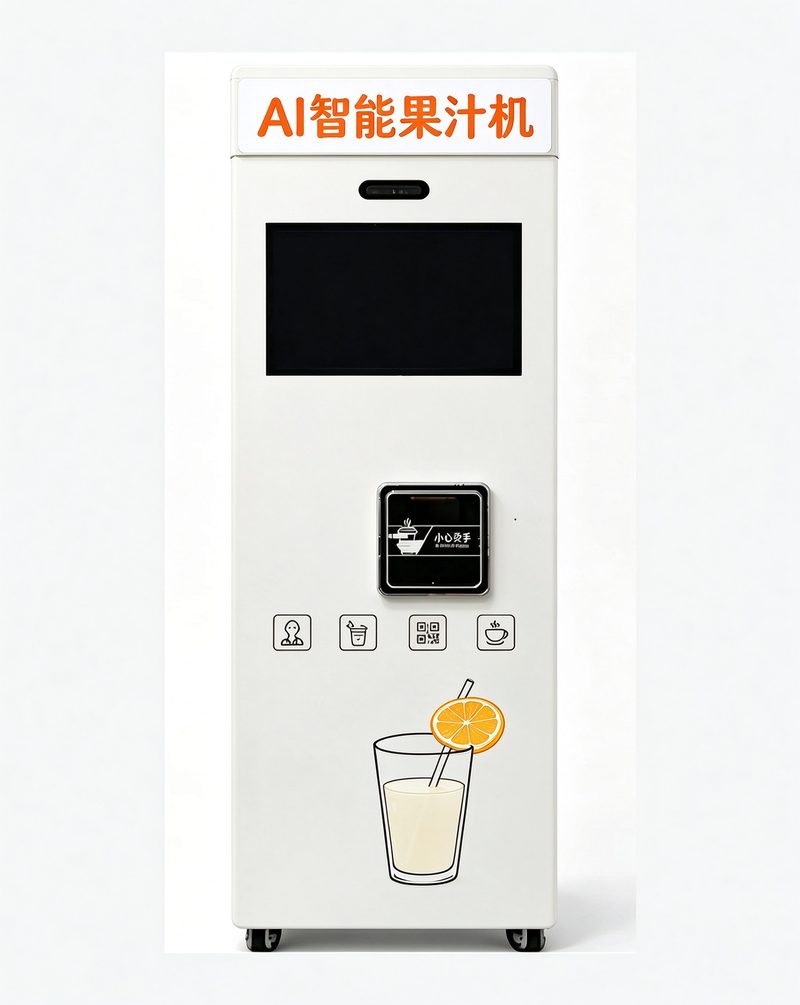
Comparison Sheet: Five Specs Side by Side
| Spec | What to confirm | Why it matters |
|---|---|---|
| Menu breadth | Drink types covered by the capsule range | Widens the buyer base per site |
| Footprint | 2 square metres and a household power line | Fits almost any dwell point |
| Payment | QR scan-to-pay with a per-order reference | Settlement without arguments |
| Connectivity | 4G/WiFi stock and fault reporting | Routes planned on data |
| Service terms | Response time and parts availability | Decides how long a fault lasts |
The Month the Building Emptied
The same face, four weeks running. An elderly regular who remembers coin machines stops at the corridor outside a hospital waiting hall, takes two - one now, one for the colleague minding the desk, and the pattern has stopped being a coincidence.
No promotion produced that habit. A machine that is always there, always stocked and always the same cup did it, which is a quieter kind of marketing than anything with a budget.
A site is not won on the first cup; it is won on the fifteenth. The site host walks past without looking up - the highest compliment a placement gets.
What a Host Asks After Three Months
At the first renewal conversation the host asks three things: how many cups, how many complaints, and whether anyone has asked about the machine. The third question is the one that decides renewal.
Bring the numbers, but bring the quotes too. One sentence from a tenant about the queue being gone is worth more than a page of revenue.
Two Weeks Without a Restock
A site that survives two weeks without a restock is telling you something useful: its real consumption is lower than the model, or its customers are more tolerant than expected. Both are worth knowing.
Run the test once deliberately, on a quiet site, and watch what empties first. The answer is the site's actual priority order, which is rarely the order the menu was written in.
The Screen Is a Noticeboard
Most operators use the screen for the menu and nothing else, which wastes the only surface the customer reads before deciding. A line about the next restock, a new flavour, or a price change belongs there.
Keep it to one message at a time and change it on a schedule. A screen showing five notices is a screen nobody reads, and a notice left up for a month becomes furniture.
Lessons From the First Quarter
A quiet machine is a trusted machine. Lights that work, a screen that answers, a pickup area wiped between rounds — these say more about the operation than any panel sticker.
Trust compounds quietly, in renewal conversations and in the passers-by who finally stop. It is the only marketing an unattended corner truly owns.
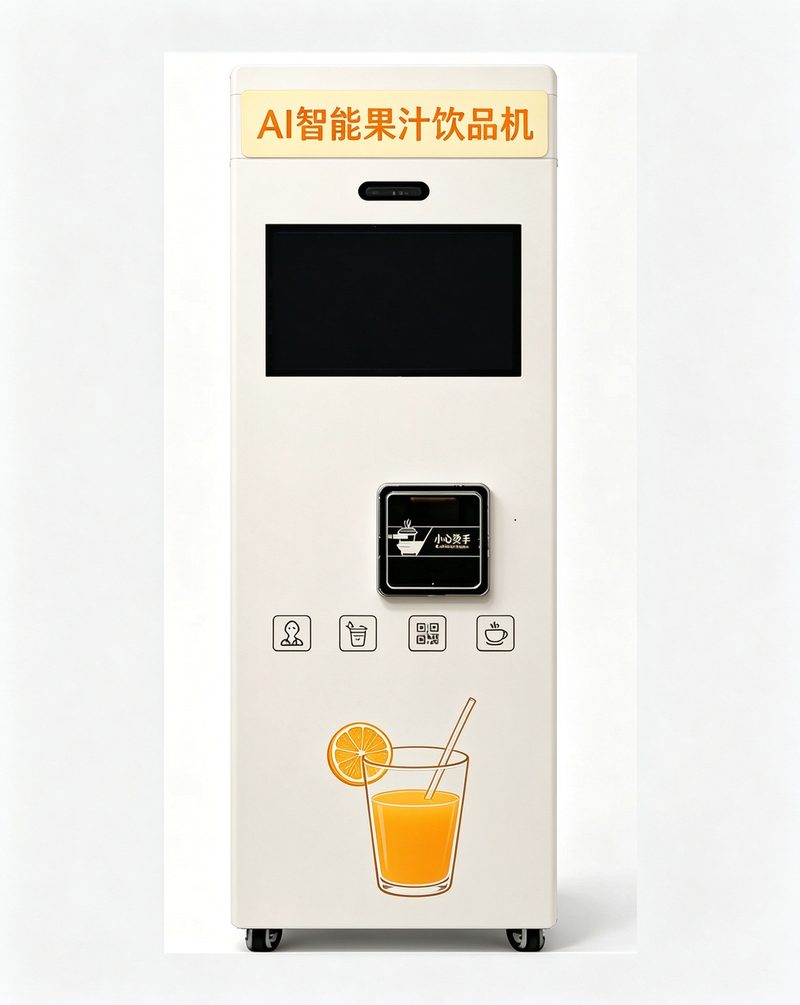
Electricity per Cup
Power is a small line per cup and a visible line per invoice. A machine idling at full heat overnight can double the monthly figure without selling a single drink.
Ask for the standby draw, then set a schedule that matches the venue's hours. A lobby that empties at eight does not need a heated cabinet at midnight.
The Metric Nobody Reports: Cups Lost to Faults
Operators report cups sold and rarely report cups not sold. A unit that is down for six hours at peak has a cost that never appears in a sales report, and therefore never appears in a decision.
Estimate it: peak-hour cups per hour from the ledger, times hours down, times a recovery factor below one. The number is rough and it changes priorities immediately, because it is usually larger than the maintenance budget.
The Hour Nobody Staffs
By ten at night the back corner of a convenience store has emptied out, and the 24/7 juice kiosk is the only lit thing in the corridor. The site closes at six; the traffic does not.
A site foreman counting change he no longer needs is the customer now - the one who cannot buy an orange juice anywhere else at this hour, and who will remember that tomorrow.
Anyone pricing a placement on daytime footfall alone is pricing half a site. No one needed help, which is the entire point.
What a Trial Actually Measures
A trial is not a small version of the business. It measures whether the site's traffic shows up on the days nobody is watching, and whether the host's team leaves the machine alone.
Decide before the trial starts what result would end it: a cup floor, an uptime floor, and a complaint ceiling. A trial without exit criteria becomes a permanent arrangement by default.
A Menu for the Morning Only
Some sites sell ninety percent of their cups before eleven. Running a full-day menu there means stocking lines that expire before they sell, and paying for shelf space that never trades.
A morning menu is not a smaller menu; it is a different one - faster to vend, simpler to restock, and honest about the fact that the site closes at two. Review it when the building's pattern changes, not on a calendar.
Five Questions for Every Supplier
Ask every supplier the same five questions and write the answers down verbatim: capsule sourcing lead time, cup-and-lid compatibility, firmware update policy, spare-part price list, and who pays freight on a warranty swap.
The differences show up in the commas. One vendor quotes capsule lead time in days, another in weeks; one treats lids as consumables on contract, another as an upsell. Three months in, those commas decide whether a 24/7 juice kiosk runs or waits.
The Season the Site Forgets
Every site has a month it forgets: the week between holidays, the exam period, the shutdown for maintenance. Consumption drops and nobody tells the operator, so the next restock arrives into an empty building.
Ask the host for their calendar once a year and put the dates in the system. Two minutes of typing prevents a delivery that sits untouched for a fortnight and a stock rotation problem in the drawer.
Adding the Second Machine
The second unit is justified by a plateau, not by a peak. When a site's curve has held flat for a quarter and the route still has slack, the arithmetic is already done - the rest is scheduling.
Doubling on one good month is how fleets end up with two machines selling the same forty cups. Wait for the flat line; it is the site telling you its size.
The First Invoice Tells You the Truth
The first consumable invoice is the first honest document in the project. Every model before it was an assumption; the invoice is what the site actually consumed, including the lines nobody planned for.
Read it against the model line by line. If cups consumed are below modelled cups sold, there is waste or shrinkage; if consumables are above, the menu mix drifted. Both are cheaper to fix in month two than month twelve.
The Gap Between Installation and the First Regular
Installation day produces a spike that means nothing: colleagues trying the new thing, a queue at eleven, a photograph for the host's newsletter. The number that matters arrives in week three, when the curious have gone and the habit has or has not formed.
Operators who read the spike as demand order too much stock and plan a second unit; operators who read week three correctly either fix the menu or accept the site for what it is. The difference between the two readings is about ten days of patience.
A useful habit: mark the day the spike ends on the ledger, and treat everything after it as the real business. The 24/7 juice kiosk on a site that survives that line is a placement; the one that does not is an experiment that has already paid for its lesson.
The Price of Being Reachable
Every site has a radius inside which service is cheap and outside which it is a small expedition. The number that matters is not distance in kilometres but minutes from the nearest other site at the hour you would actually drive.
A site alone at the edge of a route carries the whole cost of that edge: the visit that exists only for it, the spare part carried for it, the afternoon spent getting there. Price it as if it were alone, because on the bad days it is.
This is also the argument for saying no. Two sites forty minutes apart are worth less than one site with twice the volume, and an operator who cannot refuse the far one ends up with a route that eats its own margin quietly.
The Vend That Did Not Happen
The same face, four weeks running. A site foreman counting change he no longer needs stops at the corridor outside a hospital waiting hall, collects the cup, checks the cap out of habit, and folds back into the corridor traffic, and the pattern has stopped being a coincidence.
No promotion produced that habit. A machine that is always there, always stocked and always the same cup did it, which is a quieter kind of marketing than anything with a budget.
A site is not won on the first cup; it is won on the fifteenth. No one needed help, which is the entire point.
A Placement, Three Months In
Three months into a placement at a community clinic hallway, the pattern has settled: appointment-schedule traffic, and the queue before lunch is the whole story. The menu has been trimmed twice - the dashboard ranked the lines, the bottom three went, and nobody wrote in to mourn them.
The host's own staff ended up doing the small things - topping cups, wiping the tray - and that informal care showed up as fewer complaints than any service level agreement would have delivered.
What a Working Site Looks Like
Three months into a placement at a wholesale market office row, the pattern has settled: early-morning trade, and the first two hours outsell the afternoon. The menu has been trimmed twice - the dashboard ranked the lines, the bottom three went, and nobody wrote in to mourn them.
The host's own staff ended up doing the small things - topping cups, wiping the tray - and that informal care showed up as fewer complaints than any service level agreement would have delivered.
The Ledger Tells the Story
Three months into a placement at a hotel corridor by the lifts, the pattern has settled: late-evening demand, and nights outperform the average once the tour groups check in. The menu has been trimmed twice - the dashboard ranked the lines, the bottom three went, and nobody wrote in to mourn them.
The first month argued with the second and lost. What looked like a slow start was a queue forming in the wrong half hour - once the route moved the restock earlier, the same site sold the same cups with half the empty rows.
A Cup in the Middle of a Workday
Half past nine, after the factory bus at a library reading-room vestibule. The queue at the coffee counter downstairs is eight deep; the 24/7 juice kiosk has three cups' worth of waiting in it, and no queue.
A wholesaler tallying receipts on a crate waits the forty seconds scrolling a phone, pockets the receipt without looking at it, then goes back upstairs with the cup still in hand - a two-minute errand that a staffed counter would have turned into ten.
Speed is not a luxury feature here; it is the placement's whole economics. It is the fourth cup this corner has sold since the hour began.
Straight Answers to the Hard Questions
"How do I know the numbers are real?"
Every order carries its own reference and exports monthly against capsule consumption. You reconcile a report, not a shoebox of receipts.
"The shop next door already sells drinks."
A shop sells drinks when someone is behind the counter. The machine sells at seven in the morning, at eleven at night, and every minute the shutters are down - it is a different business, not a rival.
"Doesn't it need plumbing and rewiring?"
A household power line and two square metres cover it. Most placements are standing and selling the same week the site agreement is signed.
"What if it gets vandalised or someone walks off with the cash?"
There is no cash box to walk off with - every sale is a logged QR payment, and the cabinet is bolted steel with an alarm on the door. Insurance conversations get easier when the till is a database.
A Week on the Route, Logged
- Monday - Week opens with paperwork - capsule order signed off, one site's access hours re-confirmed by message.
- Tuesday - The long run: four sites before ten, two after lunch, one drawer rotated while the kettle boiled.
- Wednesday - Midweek dip on the office sites; herbal line restocked at the clinic cluster.
- Thursday - Books day. The monthly figure gets compared to the site's own count, and the two agree within normal wastage.
- Friday - The Friday visit happens before four, because after four the site is a queue and a machine that needs nothing.
- Saturday - Half-day route. The transit site runs hot, the office sites sleep, and the van gets its filters swapped.
- Sunday - Nothing scheduled. Alerts forwarded to the phone, one dashboard glance at noon, no wheels turned.
Twelve Months, Two Columns
| Month | Traffic pattern | Route decision |
|---|---|---|
| Jan | Budget season: the annual consumables figure gets signed this month. | The quietest fortnight of the year - good for audits, bad for optimism. |
| Feb | Valentine week bends the coffee and milk-tea lines upward for ten days. | Short month, long queues on the 14th; order the dessert-adjacent capsules early. |
| Mar | Exam season starts on campuses; the library site stops being a quiet placement. | Quarter close: reconcile the ledger and prune the menu bottom. |
| Apr | A good month to trial one new capsule line per machine. | The first warm spell moves demand later in the day; watch the four o clock hour. |
| May | Holiday Mondays distort the weekly curve; compare like with like before judging a site. | Mid-year route review: cut the weakest ten percent if the ledger says so. |
| Jun | Half-year service check: seals, nozzles, payment terminals. | The first genuinely hot week tells you whether the chilled lines were sized right. |
| Jul | Peak heat shifts demand; the curve moves later into the evening. | Holiday travel lifts transit and hotel sites for roughly three weeks. |
| Aug | Capsule storage gets hot in August; check the stockroom before the shelf life does. | The slowest office month; the tourist corridors carry the fleet instead. |
| Sep | Back-to-routine week is the second new year; footfall snaps back fast. | Order winter capsule volumes early - the ramp catches late buyers. |
| Oct | The hot-drink golden window opens; the curve steepens week on week. | The first cold snap is worth a route note: it usually front-loads the month by a week. |
| Nov | Darkness at five changes the traffic shape; the evening hour gains, the lunch hour thins. | Year-end host meetings: renewals, shares, next-year placements. |
| Dec | Festive peaks everywhere except the empty offices; plan the route around both. | Close the ledger, thank the hosts, and let the dashboard write the next order. |
From the Operator's Notebook
Every operator I respect has the same boring habit: they write the week down. the first-month readings is where the writing pays for itself.
The machine never argues. It just records what you did about the first-month readings, and hands the record back at the end of the quarter.
I stopped chasing new sites for three months and fixed the capsule rotation instead. Revenue went up without a single new placement.
How It Stacks Up
| The old way | What it costs | Where it fails | What the machine changes |
|---|---|---|---|
| Staffed counter | Wages every month, plus training and turnover | Open only as long as someone stands there | A 24/7 juice kiosk sells the hours the counter never could |
| Traditional coin vending | Cash handling, change runs, slot jams | No telemetry; faults found by complaint | Every sale logged, every fault alerted |
| Corner cafe | A lease, a build-out, a barista roster | Menu changes mean reprinting and retraining | The menu changes when the capsule order does |
| Line | What it pours | Where it fits best | Restock rhythm |
|---|---|---|---|
| Coffee machine | Espresso, americano, latte | Offices, hotels, waiting areas | Restock every 2-3 weeks |
| Milk tea machine | Milk tea and tea lines | High streets, campuses, food courts | Restock every 2-3 weeks |
| Juice machine | Fruit lines, chilled options | Gyms, leisure, transit | Restock every 2-3 weeks |
| Herbal tea machine | Herbal and traditional teas | Wellness centres, community halls | Restock every 2-3 weeks |
A Checklist Worth Printing
- Note the site's quiet hours before scheduling a service visit
- Set a two-week buffer at the depot, not at the site
- Date capsule boxes and rotate first in, first out
- Fix the price list at launch and review it quarterly
- Price one cycle of capsules before promising a payback figure
- Verify the capsule order lead time in weeks, not promises
- Log the first month's cup curve against the plan
- Keep one experimental line per machine and review it monthly
- Export the ledger monthly and match it to consumption
- Agree a trial period with a written move-out term
- Keep one seal and nozzle kit per ten machines
- Photograph the installation for the machine folder
The Takeaway
Every line above exists because somebody paid for learning it the hard way. Borrow it instead.
Common questions
Is there a contract lock-in?
Placement terms vary by venue; trial periods with clear move-out terms are common and sensible.
When does the second machine make sense?
When the first one's ledger shows a stable curve and the restock route has spare capacity.
What happens if a flavour runs out?
The dashboard flags the line before it empties; the next route carries the buffer.
Who prepares the site?
The host clears the spot and power; the operator brings levelling, testing and the first capsule load.
How are capsules shipped and stored?
Stackable dated boxes, dry storage off the floor, first-in-first-out rotation at the depot.
Does the machine need a water line?
Many units run without plumbing; confirm the water arrangement for the specific model during placement prep.
How long does installation take?
On a prepared site, commissioning is typically finished in under an hour: position, power, network check and a run of test cups.
What happens during a power cut?
The machine resumes when power returns; in-flight vends are voided and refunded per the posted rule.
Machines this article refers to
Related reading
- Commercial Juice Vending Machine FAQ: What Buyers Ask First
- A Buyer's Checklist for the Capsule Juice Machine
- Installing An Office Juice Station: Timeline and Checklist
- The Weekly Routine Around An Unattended Juice Corner
Summary
Choosing a 24/7 juice kiosk comes down to five comparisons - menu range, footprint, payment, connectivity and service terms - made on the same sheet.
Book a commissioning slot only after the checklist above is signed off.