Office Juice Station Buying Guide: Specs That Actually Matter
In one line: Choosing an office juice station comes down to five comparisons - menu range, footprint, payment, connectivity and service terms - made on the same sheet.
Key facts: 2 square metres footprint, household power, QR scan-to-pay with a per-order reference and 4G/WiFi reporting - four lines a spec sheet must state, not imply.
Three Threads Run Through Every Purchase
There is a version of the office juice station conversation that happens before purchase and another that happens after month one. The structure follows the questions buyers actually ask, in the order they ask them.
Five Specs Worth Comparing
- Menu breadth: how many drink types the capsule range covers
- Footprint: 2 square metres is the planning figure for a standard unit
- Payment: QR scan-to-pay plus a settlement ledger
- Connectivity: 4G/WiFi reporting for stock and faults
- Service: spare parts availability and response terms
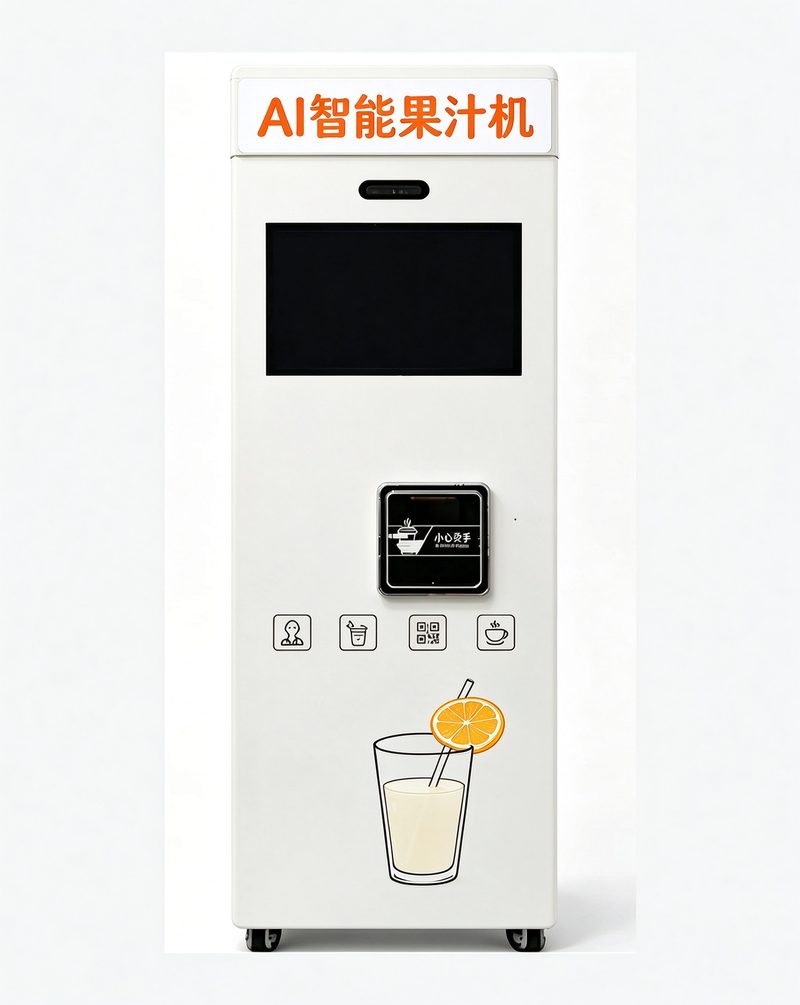
Comparison Sheet: Five Specs Side by Side
| Spec | What to confirm | Why it matters |
|---|---|---|
| Menu breadth | Drink types covered by the capsule range | Widens the buyer base per site |
| Footprint | 2 square metres and a household power line | Fits almost any dwell point |
| Payment | QR scan-to-pay with a per-order reference | Settlement without arguments |
| Connectivity | 4G/WiFi stock and fault reporting | Routes planned on data |
| Service terms | Response time and parts availability | Decides how long a fault lasts |
The Regular Nobody Recruited
The same face, four weeks running. An intern rehearsing a presentation stops at an exhibition centre loading corridor, scans, hesitates over the menu for a second, then picks the new flavour the dashboard has been quietly promoting, and the pattern has stopped being a coincidence.
No promotion produced that habit. A machine that is always there, always stocked and always the same cup did it, which is a quieter kind of marketing than anything with a budget.
A site is not won on the first cup; it is won on the fifteenth. The restock note writes itself: the popular line is down one row.
Reporting Across Sites
A report that grows with the fleet stops being read at about site twelve. The fix is not a better dashboard but a shorter one: same five lines for every site, ranked, with exceptions above them.
The lines worth keeping are cups per day, net per cup, stockouts, faults and the age of the oldest unresolved complaint. Everything else is available on request, which is where it belongs.
The Report Nobody Reads
A monthly report with fourteen charts gets opened once. A report with three lines gets read every month, and the three lines are the ones that change a decision: cups, net, and what broke.
Send it on the same date every month, in the same shape, with one sentence at the top saying what changed. Consistency is what turns a report into a habit, and habits are what make a host trust the operator.
Choosing the First Site
The first site teaches the operator the business, so it should be chosen for learning speed rather than for size: close enough to visit weekly, forgiving enough to survive mistakes, busy enough to produce data.
A site twenty minutes away with modest traffic beats a landmark site two hours away, because the first one can be watched. Watching is what turns a placement into a method.
Capacity vs Footprint
Capacity questions are really route questions: what matters is how many cups a site drinks between two restock visits, not the theoretical ceiling of the hardware.
For many placements, a single office juice station with a disciplined cadence beats an oversized unit nobody refills on time.
What a Host Asks After Three Months
At the first renewal conversation the host asks three things: how many cups, how many complaints, and whether anyone has asked about the machine. The third question is the one that decides renewal.
Bring the numbers, but bring the quotes too. One sentence from a tenant about the queue being gone is worth more than a page of revenue.
A Contract That Fits a Small Host
Small hosts - a single cafe, a small clinic, a workshop - cannot absorb a contract written for a property company. Length, notice periods and liability clauses designed for a landlord will stall a deal that should take a week.
Keep a short form for them: one page, three obligations each side, a thirty-day exit. The money is smaller but the cycle is faster, and small hosts refer each other in a way property companies never do.
Two Floors Down, Another Machine
The same face, four weeks running. A visiting auditor with a folder under one arm stops at a fruit wholesale hall office, collects the cup, checks the cap out of habit, and folds back into the corridor traffic, and the pattern has stopped being a coincidence.
No promotion produced that habit. A machine that is always there, always stocked and always the same cup did it, which is a quieter kind of marketing than anything with a budget.
A site is not won on the first cup; it is won on the fifteenth. By the time the queue reforms, the machine is already serving the next regular.
When the Menu Is Too Long
A menu of twenty lines sells like a menu of five, minus the stock risk and the decision time. The extra fifteen exist because somebody liked them in a meeting.
Cut to the two best sellers, one experiment and one line that protects the price ladder. Review monthly; a line nobody orders twice is a line nobody recommends.
Capsule Storage and Shelf Life
Capsules are food before they are inventory. Store them dry, dated, off the floor, and rotate first in first out; the shelf life printed on the box is a limit, not a target.
The practical buffer is one full cycle plus a week, held at the depot rather than in a hot back room. Operators who over-order to chase a discount usually pay it back in write-offs.
The Metric Nobody Reports: Cups Lost to Faults
Operators report cups sold and rarely report cups not sold. A unit that is down for six hours at peak has a cost that never appears in a sales report, and therefore never appears in a decision.
Estimate it: peak-hour cups per hour from the ledger, times hours down, times a recovery factor below one. The number is rough and it changes priorities immediately, because it is usually larger than the maintenance budget.
The Wrong Metric at the Right Time
In the first month, the useful metric is not revenue; it is whether the routine works. Did the restock happen, did the site call when something broke, did anybody complain to the host?
Revenue in month one measures curiosity. The routine is what makes month nine possible, so measure the routine first and let revenue follow.
The Small Consumables Nobody Counts
Cups, lids, stirrers and napkins never appear in a payback model and always appear in a month-end surprise. They are cheap per unit and expensive per thousand, and they are the first thing to run out when a site gets busy.
Count them the way stock is counted: a fixed par level per site, checked at every restock, ordered with the capsules rather than separately. A site that runs out of lids has effectively run out of drinks.
Capsule Storage in a Warm Room
Capsules stored next to a boiler or in a south-facing room age faster than the label suggests. Heat softens the seal and the cup starts tasting of the packaging rather than the coffee.
Store at the depot in a cool, dry place and keep only two weeks of stock on site. The rule is simple to state and easy to break, and the symptom - a taste complaint with no machine fault - is hard to trace.
What the First Month Actually Looks Like
Week one is noise: curious cups, staff trials, a payment hiccup on Tuesday. Week two is when the curve starts meaning something - the regulars appear, and the dashboard begins to draw a shape.
By week four a placement has usually told you one of three truths: the site holds a daily rhythm worth feeding, the site is slower than the walkthrough suggested and the menu needs widening, or the spot is simply wrong and the trial clause earns its keep.
None of these outcomes is failure. The expensive version of this learning is a twelve-month lease signed without a trial; the cheap version is four weeks and a written move-out term.
What Operators Get Wrong About Quality
Quality in an unmanned site is not the peak cup; it is the worst cup of the week. A machine that produces one excellent drink and nine acceptable ones is judged by the nine, not the one.
That reframing changes what to measure: water hardness drift, capsule storage temperature, cleaning interval adherence, and the age of the oldest capsule in the drawer. All four are unglamorous and all four show up in the cup.
It also changes what to buy. A format with a narrower menu and a tighter process usually wins on the worst cup, which is the only cup the site remembers.
When Competition Moves In
The same face, four weeks running. A first-time visitor following the signs stops at a bus terminal mezzanine near the ticket gates, holds the cup with both hands and says nothing, which is its own review, and the pattern has stopped being a coincidence.
No promotion produced that habit. A machine that is always there, always stocked and always the same cup did it, which is a quieter kind of marketing than anything with a budget.
A site is not won on the first cup; it is won on the fifteenth. The restock note writes itself: the popular line is down one row.
A Placement, Three Months In
Three months into a placement at a coach station waiting row, the pattern has settled: departures-board waves, and each delayed departure buys another round of cups. The menu has been trimmed twice - the dashboard ranked the lines, the bottom three went, and nobody wrote in to mourn them.
Nothing dramatic happened, which is the result worth reporting. The machine stayed stocked, the sheet got signed, the ledger matched the capsule invoices, and the host stopped mentioning it - the highest form of approval a placement gets.
What a Working Site Looks Like
Three months into a placement at an office park lobby, the pattern has settled: weekday morning peaks, and Fridays run light and Mondays run heavy, every week. The menu has been trimmed twice - the dashboard ranked the lines, the bottom three went, and nobody wrote in to mourn them.
The ledger and the walkthrough told different stories for a month. The ledger said demand; the walkthrough said a queue at the wrong hour. The walkthrough was right, and the fix cost nothing.
The Ledger Tells the Story
Three months into a placement at a gym entrance corridor, the pattern has settled: class-timetable surges, and the evening class change is the golden window. The menu has been trimmed twice - the dashboard ranked the lines, the bottom three went, and nobody wrote in to mourn them.
Half the value came from what was removed: two slow lines, one noisy alert, and a promotion that discounted the only product everybody bought at full price anyway.
The Month the Building Emptied
The same face, four weeks running. A delivery rider helmet in hand stops at a driving-school waiting shelter, waits the forty seconds scrolling a phone, pockets the receipt without looking at it, and the pattern has stopped being a coincidence.
No promotion produced that habit. A machine that is always there, always stocked and always the same cup did it, which is a quieter kind of marketing than anything with a budget.
A site is not won on the first cup; it is won on the fifteenth. Nobody photographs it; the machine has simply become part of the floor plan.
Straight Answers to the Hard Questions
"Will people trust a drink made by a box?"
They trust the cup more than the counter when the cup is consistent. Capsule brewing means the tenth cup matches the first, and the cleaning sheet posted on the glass does more for confidence than any slogan.
"Is the tea or coffee actually any good?"
Good enough that the repeat rate, not the first sale, pays for the placement. The capsule range covers espresso, milk tea, fruit and herbal lines, so the regulars settle in and the curious keep sampling.
"The shop next door already sells drinks."
A shop sells drinks when someone is behind the counter. The machine sells at seven in the morning, at eleven at night, and every minute the shutters are down - it is a different business, not a rival.
"What about hygiene inspections?"
A capsule system keeps the wet parts few and the routine short; the cleaning sheet and the service log are exactly what an inspector asks to see.
A Week on the Route, Logged
- Monday - Dashboard review first: two sites ran hot over the weekend, so their rows go to the front of the van.
- Tuesday - Route day proper. A payment terminal at the second stop needed a restart; the log records the minute it happened.
- Wednesday - Midweek is the quiet read: office sites cool off, clinic and gym sites pick up the slack.
- Thursday - Ledger exported and matched against capsule consumption; one gap investigated.
- Friday - The Friday visit happens before four, because after four the site is a queue and a machine that needs nothing.
- Saturday - Half-day route. The transit site runs hot, the office sites sleep, and the van gets its filters swapped.
- Sunday - Nothing scheduled. Alerts forwarded to the phone, one dashboard glance at noon, no wheels turned.
Twelve Months, Two Columns
| Month | What the traffic does | What the operator does |
|---|---|---|
| Jan | New-year footfall is slow to wake; keep the hot lines deep and the route tight. | Budget season: the annual consumables figure gets signed this month. |
| Feb | The post-holiday dip is real; use it for deep cleans and filter changes. | Short month, long queues on the 14th; order the dessert-adjacent capsules early. |
| Mar | Exam season starts on campuses; the library site stops being a quiet placement. | Quarter close: reconcile the ledger and prune the menu bottom. |
| Apr | Rain weeks teach you which sites have indoor dwell; note them for the record. | The first warm spell moves demand later in the day; watch the four o clock hour. |
| May | Holiday Mondays distort the weekly curve; compare like with like before judging a site. | Mid-year route review: cut the weakest ten percent if the ledger says so. |
| Jun | Half-year service check: seals, nozzles, payment terminals. | Exam and event season bends public-hall sites; stock ahead of the dates. |
| Jul | Peak heat shifts demand; the curve moves later into the evening. | Holiday travel lifts transit and hotel sites for roughly three weeks. |
| Aug | The slowest office month; the tourist corridors carry the fleet instead. | Capsule storage gets hot in August; check the stockroom before the shelf life does. |
| Sep | Campus sites refill; the coffee line at eight in the morning comes back overnight. | Order winter capsule volumes early - the ramp catches late buyers. |
| Oct | The first cold snap is worth a route note: it usually front-loads the month by a week. | The hot-drink golden window opens; the curve steepens week on week. |
| Nov | Cold-weather peak builds; popular lines deserve a double buffer. | Year-end host meetings: renewals, shares, next-year placements. |
| Dec | Close the ledger, thank the hosts, and let the dashboard write the next order. | Festive peaks everywhere except the empty offices; plan the route around both. |
Three Things the Route Taught Me
My first site taught me the arithmetic; my fourth taught me the alert settings, which is the part that scales.
If I could send one paragraph back to my first order, it would be this - the alert settings is not a purchase, it is a schedule, and the schedule is written in the ledger whether you look at it or not.
The dashboard is honest, the host is honest, and both are approximate. the site walkthrough is what turns two approximations into a decision.
How It Stacks Up
| The old way | What it costs | Where it fails | What the machine changes |
|---|---|---|---|
| Staffed counter | Wages every month, plus training and turnover | Open only as long as someone stands there | A office juice station sells the hours the counter never could |
| Traditional coin vending | Cash handling, change runs, slot jams | No telemetry; faults found by complaint | Every sale logged, every fault alerted |
| Corner cafe | A lease, a build-out, a barista roster | Menu changes mean reprinting and retraining | The menu changes when the capsule order does |
| Model line | Core drinks | Best-fit venues | Service rhythm |
|---|---|---|---|
| Coffee machine | Espresso, americano, latte | Corporate floors, hotel corridors | Restock every 2-3 weeks |
| Milk tea machine | Milk tea and tea lines | High streets, campuses, food courts | Restock every 2-3 weeks |
| Juice machine | Fruit lines, chilled options | Gyms, leisure, transit | Restock every 2-3 weeks |
| Herbal tea machine | Herbal and traditional teas | Clinics, wellness floors, night sites | Restock every 2-3 weeks |
A Checklist Worth Printing
- Walk the cleaning sheet on every visit, not from memory
- Set the filter calendar by measured water hardness
- Set stock thresholds on the dashboard before day one
- Keep a laminated contact card inside the cabinet door
- Agree restock cadence and access hours in writing
- Confirm who empties the bin beside the cabinet
- Log the first repair with date, part and cause
- Compare the monthly ledger to the site's own count once a quarter
- Write the power draw and floor load into the site agreement
- Export the ledger monthly and match it to consumption
- Agree the refund rule before the first complaint, not after
- Check the pickup slot height against the host's accessibility notes
The Takeaway
Every line above exists because somebody paid for learning it the hard way. Borrow it instead.
Common questions
Is there a contract lock-in?
Placement terms vary by venue; trial periods with clear move-out terms are common and sensible.
Who cleans the machine?
The operator, on the visit sheet - cup area and panel each visit, drawer and tray weekly.
What does a cup actually cost?
Capsule plus cup plus a share of parts, power and cleaning - the per-cup figure is fixed with the supplier and held against invoices.
What if payment fails mid-vend?
The vend is voided, the ledger records it, and the posted refund rule handles the customer the same day.
Rent or revenue share?
Flat rent suits steady sites, share suits unproven ones; hybrids split the difference.
What spare parts should I stock?
Seals and nozzles first, a spare payment terminal, and the fuses that solve site-side faults.
How long does installation take?
On a prepared site, commissioning is typically finished in under an hour: position, power, network check and a run of test cups.
What happens during a power cut?
The machine resumes when power returns; in-flight vends are voided and refunded per the posted rule.
The machines behind this article
Related reading
- Smart Juice Machine Payments: Offline Cases and Reconciliation
- Unattended Juice Corner Buying Guide: Specs That Actually Matter
- Smart Juice Machine FAQ: What Buyers Ask First
- Cleaning Standards for the Commercial Juice Vending Machine
Summary
Choosing an office juice station comes down to five comparisons - menu range, footprint, payment, connectivity and service terms - made on the same sheet.
Book a commissioning slot only after the checklist above is signed off.