The Weekly Routine Around a Self-Service Coffee Machine
In one line: The self-service coffee machine routine is short by design: dashboard, wipe-down, stock note - repeated with discipline rather than enthusiasm.
Key facts: A fault that reaches the host before it reaches you has already cost the placement; the alert settings are the product.
The Routine Decides the Numbers
Site managers judge the self-service coffee machine by how it behaves on the busiest hour, not the average one. Treat the checklist items as questions to answer in writing, not as advice to agree with.
A Week in the Life of One Machine
Monday: route planned from the dashboard. Midweek: top-up and wipe-down. Friday: ledger export and a note on anything odd. That is the whole rhythm.
The routine exists to protect the two numbers that matter: uptime and stock availability.
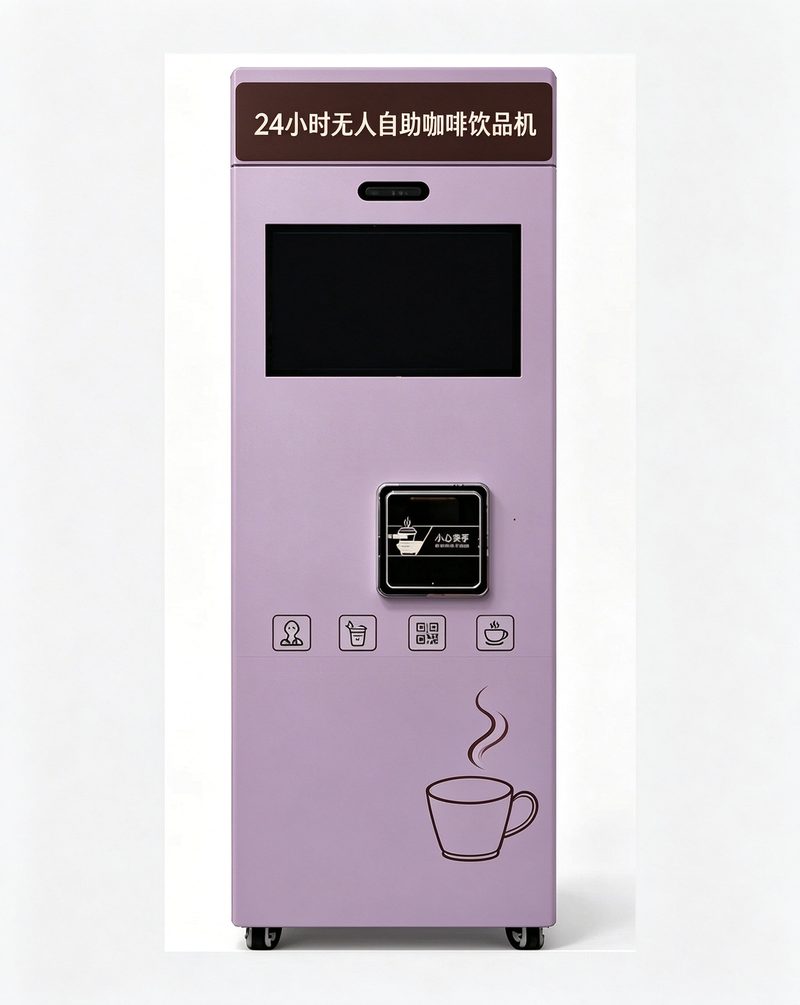
The Weekly Routine, Timed
| Task | Frequency | Minutes |
|---|---|---|
| Dashboard review | Daily | 2 |
| Wipe-down at site | Each visit | 3 |
| Stock top-up | every 2-3 weeks | 15-25 |
| Ledger export | Monthly | 10 |
| Filter check | Per calendar | 5 |
The Hour Nobody Staffs
By ten at night a chess-and-cards room lobby has emptied out, and the self-service coffee machine is the only lit thing in the corridor. The site closes at six; the traffic does not.
A visiting auditor with a folder under one arm is the customer now - the one who cannot buy a flat white anywhere else at this hour, and who will remember that tomorrow.
Anyone pricing a placement on daytime footfall alone is pricing half a site. The dashboard records it as one line; the day's curve bends up almost imperceptibly.
Daily Routine in Ten Minutes
The routine around a self-service coffee machine is short by design: a glance at the dashboard, a quick wipe of the cup table, and a stock note if the level looks off.
- Check sales and stock on the dashboard before leaving the depot
- Wipe cup area and touch panel during each visit
- Log any failed vend so patterns show up early
The Sales Rep Who Knows the Route
A rep who has never restocked a machine will sell capacity that the route cannot serve. The result looks like a good deal and behaves like a permanent overtime bill.
Ask what a typical morning looks like, how many sites one person covers, and what happens when somebody is on leave. Answers that arrive without hesitation are worth more than any specification sheet.
The Invoice That Arrives Late
Payment terms decide how many sites a small operator can carry. A thirty-day term on a site that pays in sixty is not a paperwork problem; it is a loan the operator is making without interest.
Agree the date, the method and the penalty before the machine is installed, and put all three in the placement terms. Chasing an invoice is the most expensive hour in the month because it produces nothing.
Where the Queue Stands
A machine beside a till queue is invisible until the queue clears; a machine twenty metres from the queue is a separate decision. Placement relative to an existing line of people decides more than the machine's own visibility.
Stand where a customer stands at the busiest hour and look for the machine. If you have to move, it is in the wrong place - and moving it before installation is free.
What to Do With a Site That Complains Constantly
A site that complains about everything is usually telling you one thing badly. Somewhere in the list is a real problem - a noise, a queue, a stockout - and the rest is the frustration of not being heard.
Ask them to rank the three that matter most and fix those. A site that feels heard becomes reasonable; a site that receives a defensive email becomes a former site at renewal.
Notes That Survive Handovers
Review the week every Friday with three numbers: cups sold, faults per hundred cups, and stockouts. If any of the three moves for two weeks in a row, something upstream changed — venue traffic, capsule quality, or a route that grew too long.
Trends, not incidents, are what retire machines and rewrite routes. A self-service coffee machine that trends well on three quiet numbers earns its corner without anyone having to defend it in a meeting.
From the Service Route
The operator's van stops at the back corner of a convenience store on a route that will cover six more machines before noon. The dashboard has already ranked the visit: stock fine, no faults, one line running low.
While the drawers are topped, a delivery rider helmet in hand wanders up; the sale happens between two tasks, takes two - one now, one for the colleague minding the desk.
This is what unattended means in practice - not absence, but attention aimed exactly where the data says. The dashboard records it as one line; the day's curve bends up almost imperceptibly.
The Cup That Does Not Fit
Cup dimensions look like a detail until a stack sits too tight in the chute or a lid will not seat. Machines are built around a nominal size, and the tolerance is smaller than most buyers assume.
Test the actual cup you intend to buy, not the one in the brochure, and test a full stack rather than a single cup. A mismatch discovered on installation day is a week of lost sales and an argument about whose specification was wrong.
Handling Peak Hours
Peak hours are won before they arrive: full capsule drawers, a clean nozzle, tested payment, and nothing pending on the fault list.
The Routine That Protects Uptime
A fifteen-minute opening ritual keeps a self-service coffee machine boring in the good sense: wipe the pickup area, glance at capsule counts, confirm the dashboard shows zero faults, and clear the cup waste if the site has none.
Boring is the goal. Every dramatic moment in unattended operation — a jam, a sold-out row, a payment hang — is a small routine that was skipped somewhere upstream.
A Complaint Is a Signal, Not a Verdict
The first complaint about a site usually describes a real defect in a clumsy way. The customer says the coffee tastes burnt; the actual problem is a heater cycling two degrees high.
Treat the complaint as a pointer and check the machine data before defending the product. Operators who answer the data find the fault; operators who answer the words find an argument.
Handling a Complaint in Front of Others
A complaint voiced at the machine is a performance with an audience, and the audience decides how much damage it does. Answering quietly and fixing it on the spot ends most of them.
The rule worth writing down: never argue about the money at the machine. Refund, then reconcile later. The queue remembers the argument far longer than the operator remembers the five euros.
When the Site Restocks Itself
Handing restocking to the host's own staff trades route cost for control. It works when the host already runs a shift routine and fails when restocking becomes somebody's fourth job.
If you try it, keep the par levels in your system, not theirs, and audit monthly against the ledger. A site that restocks itself still needs a number that says whether it is being done.
Why the Second Year Is Different
Year one is judged on installation and novelty; year two on the ordinary. The machine is no longer new, the host has changed staff once, and the regulars have settled into a number that does not move much.
Three things typically shift: the menu that sold at launch has lost its novelty, the first parts are due, and the host's own numbers have been reviewed once - which sometimes means a request to renegotiate the split.
Operators who plan for those three arrive at the renewal with a case; operators who do not arrive with a complaint. The renewal conversation is decided in month fourteen, not month twenty-three.
Reading Someone Else's Payback Figure
A payback figure quoted by a supplier is a conclusion without its inputs. Before comparing it to your own, ask for five numbers: cups per day, price per cup, consumable cost, site share and what was excluded.
The exclusion list is where the optimism lives. Power, restock labour, payment fees and spares are the four lines most often missing, and together they can double a payback period without changing a single sale.
A useful discipline: rebuild the supplier's number with your own inputs before you sign anything. If their model and yours disagree, the disagreement is worth more than the machine's specification sheet.
The Person Who Quietly Runs It
The same face, four weeks running. A night porter on his round stops at the night queue area of a long-distance coach station, holds the cup with both hands and says nothing, which is its own review, and the pattern has stopped being a coincidence.
No promotion produced that habit. A machine that is always there, always stocked and always the same cup did it, which is a quieter kind of marketing than anything with a budget.
A site is not won on the first cup; it is won on the fifteenth. No one needed help, which is the entire point.
A Placement, Three Months In
Three months into a placement at a hotel corridor by the lifts, the pattern has settled: late-evening demand, and nights outperform the average once the tour groups check in. The menu has been trimmed twice - the dashboard ranked the lines, the bottom three went, and nobody wrote in to mourn them.
The interesting number is not the peak day; it is the worst weekday, because that is the one the rent has to survive. In this case the floor held, and a floor that holds is what lets an operator plan a second site.
What a Working Site Looks Like
The pilot at a gym entrance corridor began as a favour to the site host and turned into the easiest arithmetic in the fleet: class-timetable surges, the evening class change is the golden window. When the second machine conversation started, the first month's ledger did most of the talking.
The quarter's lesson was about the restock hour, not the menu. Moving the visit ninety minutes earlier recovered the morning peak, and the peak turned out to be most of the site.
The Ledger Tells the Story
Three months into a placement at a gym entrance corridor, the pattern has settled: class-timetable surges, and the evening class change is the golden window. The menu has been trimmed twice - the dashboard ranked the lines, the bottom three went, and nobody wrote in to mourn them.
The quarter's lesson was about the restock hour, not the menu. Moving the visit ninety minutes earlier recovered the morning peak, and the peak turned out to be most of the site.
What the Site Sells at 23:40
By ten at night the ferry terminal waiting row has emptied out, and the self-service coffee machine is the only lit thing in the corridor. The site closes at six; the traffic does not.
A first-time visitor following the signs is the customer now - the one who cannot buy a flat white anywhere else at this hour, and who will remember that tomorrow.
Anyone pricing a placement on daytime footfall alone is pricing half a site. The sale lands in the ledger before the door swings shut.
Straight Answers to the Hard Questions
"How do I know the numbers are real?"
Every order carries its own reference and exports monthly against capsule consumption. You reconcile a report, not a shoebox of receipts.
"Will people trust a drink made by a box?"
They trust the cup more than the counter when the cup is consistent. Capsule brewing means the tenth cup matches the first, and the cleaning sheet posted on the glass does more for confidence than any slogan.
"The shop next door already sells drinks."
A shop sells drinks when someone is behind the counter. The machine sells at seven in the morning, at eleven at night, and every minute the shutters are down - it is a different business, not a rival.
"A machine like that must cost a fortune up front."
Less than the rent deposit for the counter it replaces. The machine is one of eight cost lines, and the payback window runs three to eight months at a site with real foot traffic - the worksheet in this series breaks all eight out.
The Week's Route, Written Down
- Monday - Dashboard review first: two sites ran hot over the weekend, so their rows go to the front of the van.
- Tuesday - The long run: four sites before ten, two after lunch, one drawer rotated while the kettle boiled.
- Wednesday - Midweek is the quiet read: office sites cool off, clinic and gym sites pick up the slack.
- Thursday - Ledger exported and matched against capsule consumption; one gap investigated.
- Friday - Peak-site visit before the evening rush; contact card replaced at one unit.
- Saturday - Weekend shift: fewer sites, more cleaning. Two drip trays, one filter, and a machine that looks new again.
- Sunday - Rest day, which is also a system: the alerts keep watch and the ledger keeps counting.
Twelve Months, Two Columns
| Month | Traffic pattern | Route decision |
|---|---|---|
| Jan | Budget season: the annual consumables figure gets signed this month. | New-year footfall is slow to wake; keep the hot lines deep and the route tight. |
| Feb | Short month, long queues on the 14th; order the dessert-adjacent capsules early. | The post-holiday dip is real; use it for deep cleans and filter changes. |
| Mar | Spring footfall returns with the weather; fruit lines start their climb. | Quarter close: reconcile the ledger and prune the menu bottom. |
| Apr | A good month to trial one new capsule line per machine. | The first warm spell moves demand later in the day; watch the four o clock hour. |
| May | Holiday Mondays distort the weekly curve; compare like with like before judging a site. | Mid-year route review: cut the weakest ten percent if the ledger says so. |
| Jun | Exam and event season bends public-hall sites; stock ahead of the dates. | The first genuinely hot week tells you whether the chilled lines were sized right. |
| Jul | Holiday travel lifts transit and hotel sites for roughly three weeks. | Office sites go quiet and tourist corridors take over; move the route, not the menu. |
| Aug | The slowest office month; the tourist corridors carry the fleet instead. | Capsule storage gets hot in August; check the stockroom before the shelf life does. |
| Sep | Back-to-routine week is the second new year; footfall snaps back fast. | Order winter capsule volumes early - the ramp catches late buyers. |
| Oct | Autumn fairs and exhibitions fill the trade-hall sites. | The first cold snap is worth a route note: it usually front-loads the month by a week. |
| Nov | Year-end host meetings: renewals, shares, next-year placements. | Cold-weather peak builds; popular lines deserve a double buffer. |
| Dec | Festive peaks everywhere except the empty offices; plan the route around both. | Close the ledger, thank the hosts, and let the dashboard write the next order. |
From the Operator's Notebook
My first site taught me the arithmetic; my fourth taught me the route order, which is the part that scales.
There is a version of this business that runs on charm, and it works until the charming person takes a holiday. the host conversation is the version that survives the holiday.
Every operator I respect has the same boring habit: they write the week down. the alert settings is where the writing pays for itself.
How It Stacks Up
| The old way | What it costs | Where it fails | What the machine changes |
|---|---|---|---|
| Staffed counter | A rota to fill, holidays to cover, overtime at the edges | Shuts when the last person leaves | A self-service coffee machine covers the closed hours without a rota |
| Traditional coin vending | Cash handling, change runs, slot jams | No telemetry; faults found by complaint | Every sale logged, every fault alerted |
| Corner cafe | Rent, fit-out, staffed peaks | Fixed menu, fixed hours | Capsule range rotates at the restock visit, not by renovation |
| Model line | Core drinks | Best-fit venues | Service rhythm |
|---|---|---|---|
| Coffee machine | Espresso, americano, latte | Offices, hotels, waiting areas | Restock every 2-3 weeks |
| Milk tea machine | Milk tea and tea lines | Malls, adult-education campuses, staff rooms | Restock every 2-3 weeks |
| Juice machine | Fruit lines, chilled options | Gyms, leisure, transit | Restock every 2-3 weeks |
| Herbal tea machine | Herbal and traditional teas | Hospitals, tea houses, late shifts | Restock every 2-3 weeks |
A Checklist Worth Printing
- Post the contact and refund rule at the machine
- Keep a laminated contact card inside the cabinet door
- Confirm footprint and power before signing the placement
- Verify the capsule order lead time in weeks, not promises
- Walk the route in the order the traffic allows, not the map
- Check the pickup slot height against the host's accessibility notes
- Agree in writing who pays for power and consumables
- Log the first month's cup curve against the plan
- Set stock thresholds on the dashboard before day one
- Set a two-week buffer at the depot, not at the site
- Review alerts quarterly and remove the noisy ones
- Put the fault codes in plain words on the inside door
The Takeaway
The plan that survives contact with a busy site is the one written with the operator, not merely for them.
Common questions
What happens if a flavour runs out?
The dashboard flags the line before it empties; the next route carries the buffer.
Who cleans the machine?
The operator, on the visit sheet - cup area and panel each visit, drawer and tray weekly.
Is there a contract lock-in?
Placement terms vary by venue; trial periods with clear move-out terms are common and sensible.
Can the menu change without a technician?
Yes - capsule menus change at the restock visit; nothing on the machine needs touching.
What if payment fails mid-vend?
The vend is voided, the ledger records it, and the posted refund rule handles the customer the same day.
How often do filters change?
By litres, not by date: the interval is set from measured hardness and logged on the sheet.
How often does someone need to visit?
On normal demand, the restock route lands every 2-3 weeks per machine, with dashboard alerts filling the gaps.
What happens during a power cut?
The machine resumes when power returns; in-flight vends are voided and refunded per the posted rule.
Machines this article refers to
Related reading
- Water Quality and the Self-Service Espresso Machine
- 24/7 Coffee Machine Answers for Importers and Operators
- Settlement and Refunds on a Capsule Coffee Machine
- Installing a Capsule Coffee Machine: Timeline and Checklist
Summary
The self-service coffee machine routine is short by design: dashboard, wipe-down, stock note - repeated with discipline rather than enthusiasm.
Send the site's foot-traffic notes and the capsule shortlist will follow.