Running a 24/7 Herbal Tea Kiosk Day to Day
In one line: The 24/7 herbal tea kiosk routine is short by design: dashboard, wipe-down, stock note - repeated with discipline rather than enthusiasm.
Key facts: Dashboard in the morning, wipe-down on site, stock note on the app - minutes a day, restock windows of every 2-3 weeks, one filter calendar.
What Separates a Busy Unit from a Quiet One
Buyers of the 24/7 herbal tea kiosk tend to over-plan the hardware and under-plan the restock run. This page keeps the routine in view, not only the hardware.
A Week in the Life of One Machine
Monday: route planned from the dashboard. Midweek: top-up and wipe-down. Friday: ledger export and a note on anything odd. That is the whole rhythm.
The routine exists to protect the two numbers that matter: uptime and stock availability.
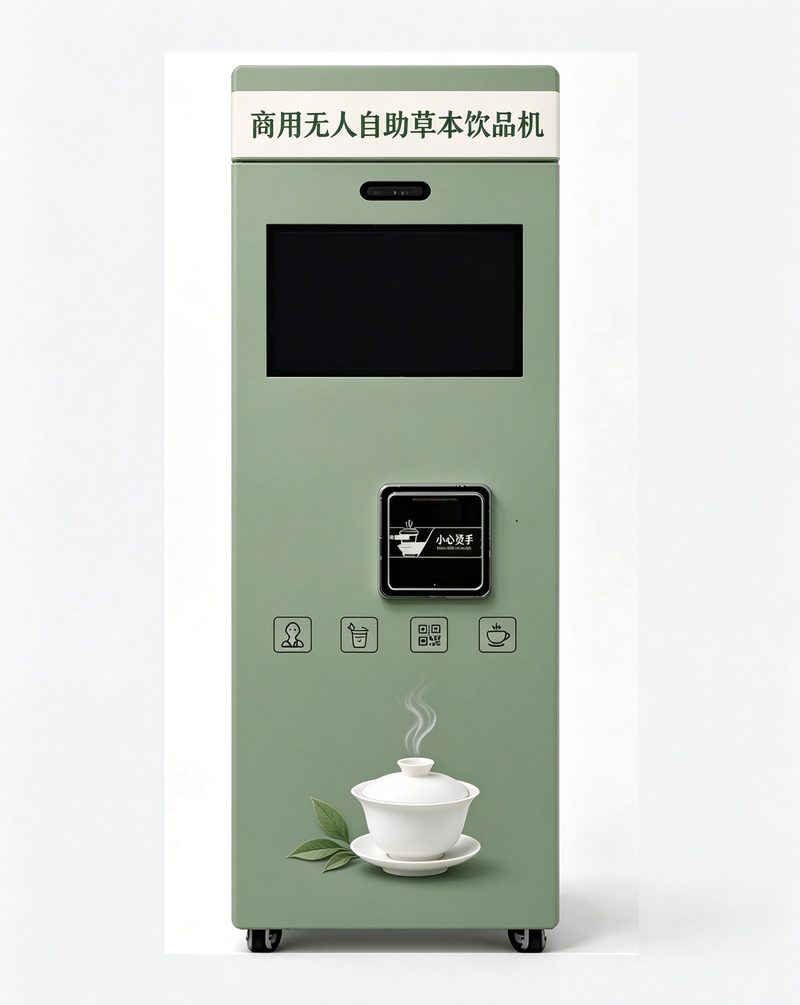
The Weekly Routine, Timed
| Task | Frequency | Minutes |
|---|---|---|
| Dashboard review | Daily | 2 |
| Wipe-down at site | Each visit | 3 |
| Stock top-up | every 2-3 weeks | 15-25 |
| Ledger export | Monthly | 10 |
| Filter check | Per calendar | 5 |
A Cup in the Middle of a Workday
11 pm at a 24-hour stop at the morning queue inside a produce wholesale gate. The queue at the coffee counter downstairs is eight deep; the 24/7 herbal tea kiosk has three cups' worth of waiting in it, and no queue.
A forklift driver with gloves tucked in his belt holds the cup with both hands and says nothing, which is its own review, then goes back upstairs with the cup still in hand - a two-minute errand that a staffed counter would have turned into ten.
Speed is not a luxury feature here; it is the placement's whole economics. The site host walks past without looking up - the highest compliment a placement gets.
The Screen Is a Noticeboard
Most operators use the screen for the menu and nothing else, which wastes the only surface the customer reads before deciding. A line about the next restock, a new flavour, or a price change belongs there.
Keep it to one message at a time and change it on a schedule. A screen showing five notices is a screen nobody reads, and a notice left up for a month becomes furniture.
The Maintenance That Pays for Itself
Some maintenance tasks return more than they cost within a quarter: descaling on hard water, replacing outlet seals before they leak, and cleaning the condenser on a chiller that runs hot.
Put those three on a calendar with a fixed interval rather than waiting for a fault. The rest of the maintenance list can stay reactive; these three cannot, because their failure mode is expensive and quiet.
When the Promotion Ends
A launch price teaches customers a number. When it ends, some of them leave, and the ones who stay are the actual market for the site - which is useful information bought at a discount.
Plan the exit before the launch: how long the price runs, what replaces it, and what a normal week looks like afterwards. A promotion without an end date is a price cut with extra paperwork.
The First Complaint About Price
The first price complaint is rarely about the number. It is about comparison: against the chain downstairs, against the machine that used to be here, against what the customer assumed an unmanned cup should cost.
Answer with the comparison the customer is actually making, not with a cost breakdown. If the site sits next to a two-dollar counter, the machine has to earn its price through speed and hours rather than argue about beans.
The Three Days After a Breakdown
A breakdown costs the repair plus three days of habit. The first day the regulars wait, the second they try the place next door, and by the third some of them have decided they prefer it.
That is why the useful metric is time to first cup after a fault, not mean time between faults. A machine that fails twice a year and recovers in an hour is cheaper than one that fails once and is out for a week.
Rent, Revenue Share or Hybrid
Flat rent suits a proven site where the operator wants predictability. Revenue share suits an unproven one where the host believes in the traffic. Hybrid splits the difference and is the most common answer in high-rent corners.
Whichever model, insist on honest metering and a written method for counting. The disputes that end placements are almost never about the percentage; they are about whose number is real.
The Month the Building Emptied
The same face, four weeks running. A warehouse clerk racing a timer stops at a library reading-room vestibule, holds the cup with both hands and says nothing, which is its own review, and the pattern has stopped being a coincidence.
No promotion produced that habit. A machine that is always there, always stocked and always the same cup did it, which is a quieter kind of marketing than anything with a budget.
A site is not won on the first cup; it is won on the fifteenth. By the time the queue reforms, the machine is already serving the next regular.
The Fault That Only Happens in Winter
Some faults are seasonal and get diagnosed as random: a door seal that stiffens in the cold, condensation that trips a sensor, a heater that works harder and reveals a weak element.
Log the month with every fault. After one year the pattern is obvious, and the fix is usually a part replacement done in autumn rather than a service call in January.
When the Host Wants Their Own Branding
Hosts increasingly ask for their logo on the cabinet, their colours on the screen and their name on the cup. It is a reasonable request and a different product: brand work, not equipment.
Decide in advance what is included and what is charged: wrap, screen skin, cup print, and the minimum order those imply. Customisation promised verbally during a walkthrough becomes an unpaid project three weeks later.
The First Week of a New Site
The first week has one job: find out what breaks. Not how many cups sell - that number is still mostly curiosity - but which part of the routine does not survive contact with the building.
Write three lines every evening: what failed, who fixed it, how long it took. By Friday the pattern is visible, and the pattern is what a second site should be planned around.
Where the Queue Stands
A machine beside a till queue is invisible until the queue clears; a machine twenty metres from the queue is a separate decision. Placement relative to an existing line of people decides more than the machine's own visibility.
Stand where a customer stands at the busiest hour and look for the machine. If you have to move, it is in the wrong place - and moving it before installation is free.
Power, Noise and the Neighbours
Two complaints arrive faster than any other: the machine is loud at the wrong hour, and it shares a socket with something that matters. Neither is hard to pre-empt - ask what else is on that circuit and where the closest desk sits.
A 2 square metres cabinet on household power is quiet in ordinary use, but the compressor's cycle is what people notice. Placing it where the corridor is already noisy costs nothing and removes the most common objection.
Price Ladder and Cup Sizes
Two sizes and three prices cover most sites: a small cup that undercuts the nearby cafe, a large one that beats it on volume, and a middle line that exists to make the large look reasonable.
The ladder should be readable in one glance. If a customer needs to compare four prices to choose, the menu is doing the operator's work for them, badly.
What Service Actually Costs
Service cost is not the technician’s hourly rate. It is the travel, the diagnostic time, the parts carried, and the sales lost while the unit waits - and the last one usually dwarfs the first three.
That is why response time beats repair quality as a buying criterion. A machine fixed perfectly in four days costs more than one fixed adequately in four hours, because the site's habit does not wait.
The practical implication is unglamorous: keep the four fast-moving parts at the depot, pre-authorise the first hour of diagnosis, and measure time-to-first-cup after a fault rather than time-to-close-ticket.
What Buyers Mean by Reliable
Reliability means different things to different buyers. A facilities manager means it never embarrasses me; an operator means it rarely needs a visit; an investor means the numbers repeat.
The engineering answer - mean time between failures - speaks to none of them directly. What each wants is a version of the same thing: a machine whose bad days are predictable and recoverable, and a supplier who answers on a Saturday.
So when a buyer says reliable, ask which failure they are imagining. The answer tells you whether to talk about parts, about monitoring, or about the service contract - and all three conversations end in the same place, which is response time in writing.
The Hour Nobody Staffs
By ten at night a warehouse office mezzanine has emptied out, and the 24/7 herbal tea kiosk is the only lit thing in the corridor. The site closes at six; the traffic does not.
An elderly regular who remembers coin machines is the customer now - the one who cannot buy a chrysanthemum herbal tea anywhere else at this hour, and who will remember that tomorrow.
Anyone pricing a placement on daytime footfall alone is pricing half a site. The sale lands in the ledger before the door swings shut.
A Placement, Three Months In
The pilot at a coach station waiting row began as a favour to the site host and turned into the easiest arithmetic in the fleet: departures-board waves, each delayed departure buys another round of cups. When the second machine conversation started, the first month's ledger did most of the talking.
Nothing dramatic happened, which is the result worth reporting. The machine stayed stocked, the sheet got signed, the ledger matched the capsule invoices, and the host stopped mentioning it - the highest form of approval a placement gets.
What a Working Site Looks Like
The pilot at a wholesale market office row began as a favour to the site host and turned into the easiest arithmetic in the fleet: early-morning trade, the first two hours outsell the afternoon. When the second machine conversation started, the first month's ledger did most of the talking.
The host's own staff ended up doing the small things - topping cups, wiping the tray - and that informal care showed up as fewer complaints than any service level agreement would have delivered.
The Ledger Tells the Story
Three months into a placement at a community clinic hallway, the pattern has settled: appointment-schedule traffic, and the queue before lunch is the whole story. The menu has been trimmed twice - the dashboard ranked the lines, the bottom three went, and nobody wrote in to mourn them.
The first month argued with the second and lost. What looked like a slow start was a queue forming in the wrong half hour - once the route moved the restock earlier, the same site sold the same cups with half the empty rows.
Two Floors Down, Another Machine
The same face, four weeks running. A site foreman counting change he no longer needs stops at a trade hall rest nook between exhibition aisles, scans, hesitates over the menu for a second, then picks the new flavour the dashboard has been quietly promoting, and the pattern has stopped being a coincidence.
No promotion produced that habit. A machine that is always there, always stocked and always the same cup did it, which is a quieter kind of marketing than anything with a budget.
A site is not won on the first cup; it is won on the fifteenth. No one needed help, which is the entire point.
Straight Answers to the Hard Questions
"Is the tea or coffee actually any good?"
Good enough that the repeat rate, not the first sale, pays for the placement. The capsule range covers espresso, milk tea, fruit and herbal lines, so the regulars settle in and the curious keep sampling.
"Will people trust a drink made by a box?"
They trust the cup more than the counter when the cup is consistent. Capsule brewing means the tenth cup matches the first, and the cleaning sheet posted on the glass does more for confidence than any slogan.
"What about hygiene inspections?"
A capsule system keeps the wet parts few and the routine short; the cleaning sheet and the service log are exactly what an inspector asks to see.
"Can it really run unattended all day?"
That is the design brief: uptime, alerts and a route. The machine does the shift work; you do the arithmetic.
A Week on the Route, Logged
- Monday - Route planned from the weekend's dashboard; the week's capsule order confirmed.
- Tuesday - Long route day - six machines, two top-ups flagged, one nozzle wiped twice.
- Wednesday - Midweek is the quiet read: office sites cool off, clinic and gym sites pick up the slack.
- Thursday - Reconciliation morning - cups sold against capsules issued, and the one discrepancy traced to a demo cup.
- Friday - Peak-site visit before the evening rush; contact card replaced at one unit.
- Saturday - Light route; the hotel machine's drawer rotated first in, first out.
- Sunday - Rest day, which is also a system: the alerts keep watch and the ledger keeps counting.
Twelve Months, Two Columns
| Month | What changes | What to do about it |
|---|---|---|
| Jan | The quietest fortnight of the year - good for audits, bad for optimism. | New-year footfall is slow to wake; keep the hot lines deep and the route tight. |
| Feb | Short month, long queues on the 14th; order the dessert-adjacent capsules early. | Valentine week bends the coffee and milk-tea lines upward for ten days. |
| Mar | Quarter close: reconcile the ledger and prune the menu bottom. | Exam season starts on campuses; the library site stops being a quiet placement. |
| Apr | A good month to trial one new capsule line per machine. | Rain weeks teach you which sites have indoor dwell; note them for the record. |
| May | Warm evenings extend the outdoor sites; chilled options earn their drawer space. | Holiday Mondays distort the weekly curve; compare like with like before judging a site. |
| Jun | Exam and event season bends public-hall sites; stock ahead of the dates. | The first genuinely hot week tells you whether the chilled lines were sized right. |
| Jul | Office sites go quiet and tourist corridors take over; move the route, not the menu. | Holiday travel lifts transit and hotel sites for roughly three weeks. |
| Aug | Capsule storage gets hot in August; check the stockroom before the shelf life does. | Use the lull for operator training and contract renewals. |
| Sep | Order winter capsule volumes early - the ramp catches late buyers. | Campus sites refill; the coffee line at eight in the morning comes back overnight. |
| Oct | Autumn fairs and exhibitions fill the trade-hall sites. | The hot-drink golden window opens; the curve steepens week on week. |
| Nov | Year-end host meetings: renewals, shares, next-year placements. | Cold-weather peak builds; popular lines deserve a double buffer. |
| Dec | Close the ledger, thank the hosts, and let the dashboard write the next order. | The last week is dead in offices and frantic in transit; stock for one and rest for the other. |
Notes I Keep Rewriting
I used to think the machine was the business. Four hundred route stops later, the honest version: the machine is the storefront, and the business is the route order around it.
If I could send one paragraph back to my first order, it would be this - the host conversation is not a purchase, it is a schedule, and the schedule is written in the ledger whether you look at it or not.
Nobody warns you that the hard part is not buying the machine. It is the first-month readings, done the same way in month nine as in month one.
How It Stacks Up
| The old way | What it costs | Where it fails | What the machine changes |
|---|---|---|---|
| Staffed counter | A rota to fill, holidays to cover, overtime at the edges | Shuts when the last person leaves | A 24/7 herbal tea kiosk covers the closed hours without a rota |
| Traditional coin vending | Cash handling, change runs, slot jams | No telemetry; faults found by complaint | Every sale logged, every fault alerted |
| Corner cafe | A lease, a build-out, a barista roster | Menu changes mean reprinting and retraining | The menu changes when the capsule order does |
| Model line | Core drinks | Best-fit venues | Service rhythm |
|---|---|---|---|
| Coffee machine | Espresso, americano, latte | Corporate floors, hotel corridors | Restock every 2-3 weeks |
| Milk tea machine | Milk tea and tea lines | High streets, campuses, food courts | Restock every 2-3 weeks |
| Juice machine | Fruit lines, chilled options | Gyms, leisure, transit | Restock every 2-3 weeks |
| Herbal tea machine | Herbal and traditional teas | Wellness centres, community halls | Restock every 2-3 weeks |
A Checklist Worth Printing
- Set stock thresholds on the dashboard before day one
- Ask what else shares the socket the machine will use
- Date capsule boxes and rotate first in, first out
- Confirm the delivery lift's depth before the van leaves
- Check the pickup slot height against the host's accessibility notes
- Compare the monthly ledger to the site's own count once a quarter
- Record the host's renewal date where the route can see it
- Ask the host where hot drinks are usually bought nearby
- Confirm footprint and power before signing the placement
- Decide who owns the cups before the first order
- Photograph the installation for the machine folder
- Confirm who empties the bin beside the cabinet
The Takeaway
Run the sheet, place the first unit, and let the first month of data argue for the second.
Common questions
What happens during a power cut?
The machine resumes when power returns; in-flight vends are voided and refunded per the posted rule.
How often does someone need to visit?
On normal demand, the restock route lands every 2-3 weeks per machine, with dashboard alerts filling the gaps.
Can I run twenty sites alone?
Up to a point - routes planned from live data are what make small fleets workable with one service person.
How are capsules shipped and stored?
Stackable dated boxes, dry storage off the floor, first-in-first-out rotation at the depot.
What is the usual payback window?
The planning band is 3-8 months, set mainly by site quality and the local price of a cup.
Is there a contract lock-in?
Placement terms vary by venue; trial periods with clear move-out terms are common and sensible.
Rent or revenue share?
Flat rent suits steady sites, share suits unproven ones; hybrids split the difference.
How often do filters change?
By litres, not by date: the interval is set from measured hardness and logged on the sheet.
Machines this article refers to
Related reading
- Water Quality and the Commercial Herbal Drink Dispenser
- How to Choose a Commercial Herbal Drink Dispenser for High-Traffic Venues
- Spare Parts and Service Terms for An Unmanned Herbal Tea Machine
- Installing a Traditional Tea Vending Machine: Timeline and Checklist
Summary
The 24/7 herbal tea kiosk routine is short by design: dashboard, wipe-down, stock note - repeated with discipline rather than enthusiasm.
Book a commissioning slot only after the checklist above is signed off.