Running an Unmanned Juice Machine Day to Day
In one line: A single machine is a pilot; the habits around it are the product. This page writes those habits down. Written for importers comparing suppliers.
Key facts: Dashboard in the morning, wipe-down on site, stock note on the app - minutes a day, restock windows of every 2-3 weeks, one filter calendar.
Three Threads Run Through Every Purchase
Field notes from the unmanned juice machine deployment read less like a launch story and more like a checklist. The structure follows the questions buyers actually ask, in the order they ask them.
A Week in the Life of One Machine
Monday: route planned from the dashboard. Midweek: top-up and wipe-down. Friday: ledger export and a note on anything odd. That is the whole rhythm.
The routine exists to protect the two numbers that matter: uptime and stock availability.
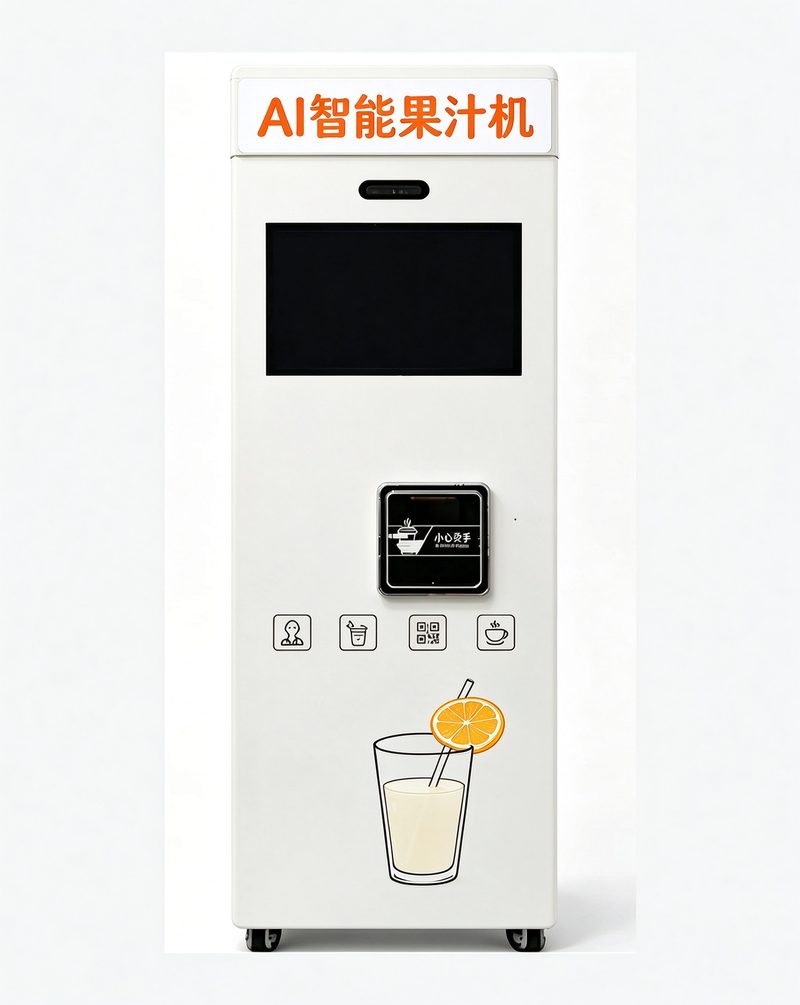
The Weekly Routine, Timed
| Task | Frequency | Minutes |
|---|---|---|
| Dashboard review | Daily | 2 |
| Wipe-down at site | Each visit | 3 |
| Stock top-up | every 2-3 weeks | 15-25 |
| Ledger export | Monthly | 10 |
| Filter check | Per calendar | 5 |
One Minute at the Machine
The tail of the lunch rush, a fruit wholesale hall office. A warehouse clerk racing a timer walks up to the unmanned juice machine and takes two - one now, one for the colleague minding the desk. The cup arrives capped, an orange juice still warm enough to notice on the walk back.
The sale lands in the ledger before the door swings shut.
Multiply that minute by the hours the site is actually awake, and the placement argument writes itself: the machine is not competing with the cafe down the street - it is serving the traffic that never walks there.
Reading a Slow Month
A slow month has four usual causes: holidays, weather, a fault nobody reported, or a host who changed something. Only one of them is about the machine.
Check the fault log first, then the venue calendar, then the menu. Blaming the location before checking the log is how operators talk themselves out of a good site.
Route Math: How Many Sites per Morning
A route is arithmetic with traffic in it. Six to eight sites per morning is the working range for a single van when stops cluster, and the number falls fast once two sites sit on opposite sides of a city.
Cluster first, then count. Operators who plan by geography rather than by urgency serve more machines with the same hours and keep every 2-3 weeks windows honest across the whole fleet.
Payment Reconciliation Past the Terminal
The terminal settles; the ledger still has to agree. QR scan-to-pay produces a reference per order, and the operator's job is to match those references against capsules issued and cups sold - three lists that should tell one story.
Disagreements are usually small and always explainable: a demo cup, a voided vend, a refund nobody logged. The habit worth keeping is a weekly match rather than a monthly surprise, because a month of drift takes an afternoon to unpick.
Payment and Reconciliation Basics
Every sale is logged against a timestamp and a method, so the monthly settlement is a report rather than an argument.
- QR scan-to-pay covers the standard flow; each order carries its own reference
- Export the ledger monthly and match it against capsule consumption
- Agree in advance who refunds failed vends and how fast
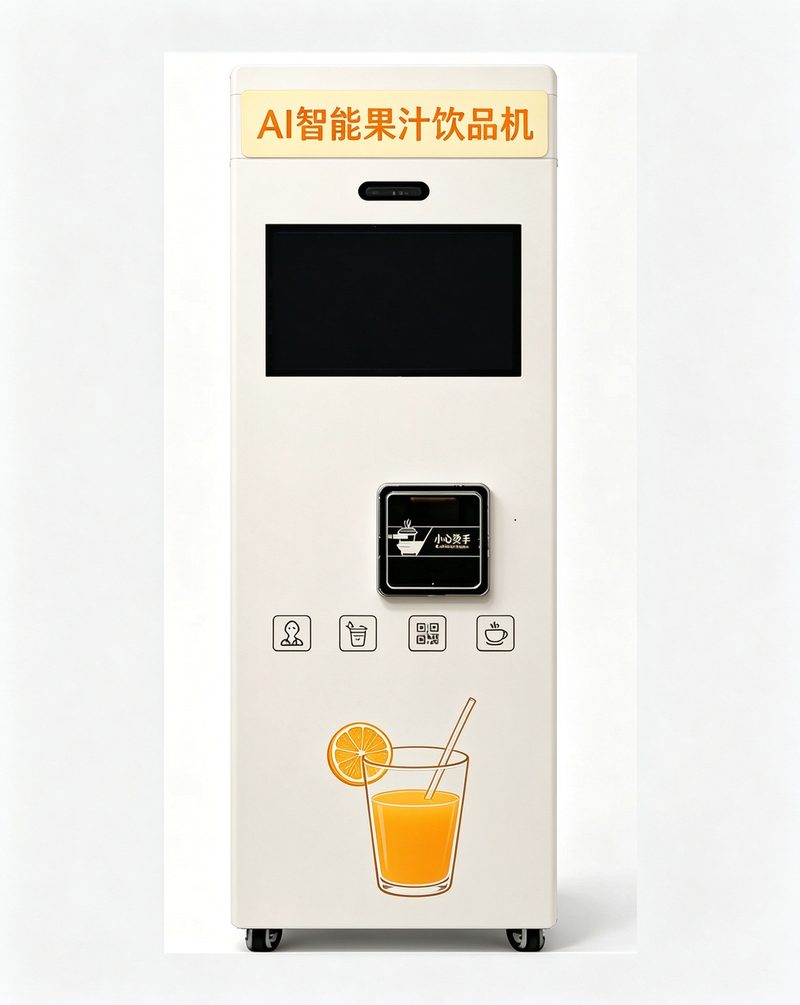
Reporting Across Sites
A report that grows with the fleet stops being read at about site twelve. The fix is not a better dashboard but a shorter one: same five lines for every site, ranked, with exceptions above them.
The lines worth keeping are cups per day, net per cup, stockouts, faults and the age of the oldest unresolved complaint. Everything else is available on request, which is where it belongs.
Water That Changes in Summer
Water is not a constant. Summer supply, a different treatment plant, or a building's own softener can shift hardness enough to change how coffee tastes and how fast a filter clogs.
Test hardness when the season turns, not only at commissioning, and move the filter schedule to follow the reading. A taste complaint in July is often a water report from May.
A Cup in the Middle of a Workday
A slow Sunday evening at a wholesale market tea point. The queue at the coffee counter downstairs is eight deep; the unmanned juice machine has three cups' worth of waiting in it, and no queue.
A wholesaler tallying receipts on a crate taps the screen twice, picks the same drink as always, and is walking away before the cup is full, then goes back upstairs with the cup still in hand - a two-minute errand that a staffed counter would have turned into ten.
Speed is not a luxury feature here; it is the placement's whole economics. The restock note writes itself: the popular line is down one row.
Two Machines, One Route
Adding a second machine to an existing site is the cheapest growth available, and it fails for a boring reason: the restock trip doubles while the visit count stays the same.
Plan the second unit as a separate stop in the route, then look for the saving elsewhere. Operators who assume a shared visit usually discover it on the third week.
Spare Parts as a Policy
The spare-parts question is not what to stock but what to promise. A promise of four-hour repair with no local part is a promise the route cannot keep.
Decide the promise first, then stock to it: the part that fails most, the part that stops everything, and the consumable that runs out between visits.
Hiring for the Route
Route work rewards a specific temperament: someone who notices a full bin, a leaning cup stack and a screen with a fingerprint on it without being told to look. It is not a skill that shows up on a CV.
Hire on a trial morning with two sites and watch what gets cleaned without prompting. The person who wipes the shelf before restocking it will save more money over a year than the one who restocks fastest.
Training the Site Contact, Not Just the Operator
The person who works beside the machine every day is the first responder, whether or not anyone planned it that way. Ten minutes with them - where the cups live, what the screen means when it flashes, which number to call - converts a stalled machine into a two-minute fix.
Give the site one page, laminated, taped inside the cabinet door. Sites that have it report fewer avoidable calls; sites without it call about the same three things for a year.
Handling Peak Hours
Peak hours are won before they arrive: full capsule drawers, a clean nozzle, tested payment, and nothing pending on the fault list.
Being Recognised as Staff
In a shared building, the person refilling a cabinet is read as either staff or stranger within about ten seconds, and the difference decides whether anyone reports a fault to them.
A lanyard, a name on the contact card, and a habit of greeting the front desk cost almost nothing. They turn three separate visits into a relationship the site can use.
What the Host Actually Wants
Ask a host what they want from a placement and the first answer is rarely the real one. 'Something for the tenants' usually means fewer complaints about the coffee run; 'extra income' usually means a number they can defend in a meeting.
The second answer is the useful one. A host defending a number wants predictable reporting; a host solving complaints wants the queue gone by nine. An unmanned juice machine answers both, but only if the operator asks which problem is being paid for.
Placements that last tend to be the ones where the host can say, in one sentence, what the machine fixed. When nobody can say that sentence, the machine is on borrowed time and the renewal conversation starts from nothing.
When the Site Changes Hands
Hosts move on: a building changes manager, a canteen changes operator, a clinic changes owner. The machine stays, and the relationship that supported it resets to zero.
The operators who survive that reset keep three things current: a named contact with a phone number, a one-page summary of what the machine has done for the site, and a copy of the placement terms in the machine folder.
That page is worth more than any brochure. It converts a new manager's suspicion into a short conversation about numbers - and it usually takes fifteen minutes to write.
The Corner Before and After
Six months ago the night queue area of a long-distance coach station was dead floor space - a bin, a poster, and the occasional sigh from a night porter on his round who wanted an orange juice and had nowhere to get it.
Now there is a unmanned juice machine against that wall. The routine is unremarkable, which is the compliment: takes two - one now, one for the colleague minding the desk.
It is the fourth cup this corner has sold since the hour began.
A Placement, Three Months In
Three months into a placement at a logistics warehouse rest area, the pattern has settled: shift-change traffic, and the morning peak carries the day. The menu has been trimmed twice - the dashboard ranked the lines, the bottom three went, and nobody wrote in to mourn them.
No single number makes the case; the shape does. Cups per week climb through the ramp, plateau where the site's rhythm settles, and the menu mix flattens the seasonal dips. When the host asks what it would take to add a second unit, the answer is a copy of the first one's ledger.
What a Working Site Looks Like
The pilot at a furniture mall staff corridor began as a favour to the site host and turned into the easiest arithmetic in the fleet: staff and contractor flow, the steady base load comes from the fit-out crews. When the second machine conversation started, the first month's ledger did most of the talking.
What the site taught was patience with a shape. Weeks one to three looked like a verdict; weeks four to twelve were the actual answer, and the answer was better than the verdict.
The Ledger Tells the Story
The pilot at a logistics warehouse rest area began as a favour to the site host and turned into the easiest arithmetic in the fleet: shift-change traffic, the morning peak carries the day. When the second machine conversation started, the first month's ledger did most of the talking.
The interesting number is not the peak day; it is the worst weekday, because that is the one the rent has to survive. In this case the floor held, and a floor that holds is what lets an operator plan a second site.
The Two-Minute Break That Pays
11 pm at a 24-hour stop at a warehouse office mezzanine. The queue at the coffee counter downstairs is eight deep; the unmanned juice machine has three cups' worth of waiting in it, and no queue.
A forklift driver with gloves tucked in his belt takes two - one now, one for the colleague minding the desk, then goes back upstairs with the cup still in hand - a two-minute errand that a staffed counter would have turned into ten.
Speed is not a luxury feature here; it is the placement's whole economics. It is the fourth cup this corner has sold since the hour began.
Straight Answers to the Hard Questions
"How do I know the numbers are real?"
Every order carries its own reference and exports monthly against capsule consumption. You reconcile a report, not a shoebox of receipts.
"Is the tea or coffee actually any good?"
Good enough that the repeat rate, not the first sale, pays for the placement. The capsule range covers espresso, milk tea, fruit and herbal lines, so the regulars settle in and the curious keep sampling.
"Who fixes it when something goes wrong?"
The faults that actually happen - a clogged nozzle, a payment hiccup - are site-side fixes measured in minutes, which is why the parts kit lives in the service van. Anything rarer is a module swap under the service terms you negotiated.
"Sounds like a headache to restock."
The restock route runs every two to three weeks per machine on normal demand, sized by the dashboard rather than by guesswork. One van, one morning, ten sites.
Seven Days, One Van, Seven Notes
- Monday - Dashboard review first: two sites ran hot over the weekend, so their rows go to the front of the van.
- Tuesday - Route day proper. A payment terminal at the second stop needed a restart; the log records the minute it happened.
- Wednesday - Midweek is the quiet read: office sites cool off, clinic and gym sites pick up the slack.
- Thursday - Ledger exported and matched against capsule consumption; one gap investigated.
- Friday - Contact card refreshed at the lobby unit, and the host's new shift supervisor walked through the basics.
- Saturday - Half-day route. The transit site runs hot, the office sites sleep, and the van gets its filters swapped.
- Sunday - Nothing scheduled. Alerts forwarded to the phone, one dashboard glance at noon, no wheels turned.
Twelve Months, Two Columns
| Month | What the traffic does | What the operator does |
|---|---|---|
| Jan | New-year footfall is slow to wake; keep the hot lines deep and the route tight. | Budget season: the annual consumables figure gets signed this month. |
| Feb | Short month, long queues on the 14th; order the dessert-adjacent capsules early. | The post-holiday dip is real; use it for deep cleans and filter changes. |
| Mar | Exam season starts on campuses; the library site stops being a quiet placement. | Spring footfall returns with the weather; fruit lines start their climb. |
| Apr | The first warm spell moves demand later in the day; watch the four o clock hour. | A good month to trial one new capsule line per machine. |
| May | Mid-year route review: cut the weakest ten percent if the ledger says so. | Holiday Mondays distort the weekly curve; compare like with like before judging a site. |
| Jun | Exam and event season bends public-hall sites; stock ahead of the dates. | Half-year service check: seals, nozzles, payment terminals. |
| Jul | Peak heat shifts demand; the curve moves later into the evening. | Holiday travel lifts transit and hotel sites for roughly three weeks. |
| Aug | The slowest office month; the tourist corridors carry the fleet instead. | Capsule storage gets hot in August; check the stockroom before the shelf life does. |
| Sep | Order winter capsule volumes early - the ramp catches late buyers. | Campus sites refill; the coffee line at eight in the morning comes back overnight. |
| Oct | The hot-drink golden window opens; the curve steepens week on week. | Autumn fairs and exhibitions fill the trade-hall sites. |
| Nov | Cold-weather peak builds; popular lines deserve a double buffer. | Year-end host meetings: renewals, shares, next-year placements. |
| Dec | The last week is dead in offices and frantic in transit; stock for one and rest for the other. | Close the ledger, thank the hosts, and let the dashboard write the next order. |
Notes I Keep Rewriting
My first site taught me the arithmetic; my fourth taught me the route order, which is the part that scales.
The best placement advice I ever got fit on a napkin: the ledger discipline decides the curve, and the curve decides everything else.
I used to think the machine was the business. Four hundred route stops later, the honest version: the machine is the storefront, and the business is the capsule rotation around it.
How It Stacks Up
| The old way | What it costs | Where it fails | What the machine changes |
|---|---|---|---|
| Staffed counter | A rota to fill, holidays to cover, overtime at the edges | Shuts when the last person leaves | A unmanned juice machine covers the closed hours without a rota |
| Traditional coin vending | Coin floats, collection trips, notes that jam | Problems surface as complaints, weeks late | Payment and faults report themselves the same hour |
| Corner cafe | A lease, a build-out, a barista roster | Menu changes mean reprinting and retraining | The menu changes when the capsule order does |
| Model line | Core drinks | Best-fit venues | Service rhythm |
|---|---|---|---|
| Coffee machine | Espresso, americano, latte | Office lobbies, clinics, showrooms | Restock every 2-3 weeks |
| Milk tea machine | Milk tea and tea lines | Retail floors, schools, factory canteens | Restock every 2-3 weeks |
| Juice machine | Fruit lines, chilled options | Gyms, leisure, transit | Restock every 2-3 weeks |
| Herbal tea machine | Herbal and traditional teas | Wellness centres, community halls | Restock every 2-3 weeks |
A Checklist Worth Printing
- Agree a trial period with a written move-out term
- Check signage faces the waiting area, not the wall
- Put the fault codes in plain words on the inside door
- Agree in writing who pays for power and consumables
- Confirm footprint and power before signing the placement
- Record the host's renewal date where the route can see it
- Measure the walk from the door to the cabinet before delivery
- Check the pickup slot height against the host's accessibility notes
- Verify the capsule order lead time in weeks, not promises
- Confirm who empties the bin beside the cabinet
- Set the filter calendar by measured water hardness
- Keep one seal and nozzle kit per ten machines
The Takeaway
Keep the worksheet alive after installation - it costs nothing to maintain and answers most debates.
Common questions
How are capsules shipped and stored?
Stackable dated boxes, dry storage off the floor, first-in-first-out rotation at the depot.
What happens during a power cut?
The machine resumes when power returns; in-flight vends are voided and refunded per the posted rule.
Is there a contract lock-in?
Placement terms vary by venue; trial periods with clear move-out terms are common and sensible.
Who prepares the site?
The host clears the spot and power; the operator brings levelling, testing and the first capsule load.
When does the second machine make sense?
When the first one's ledger shows a stable curve and the restock route has spare capacity.
Rent or revenue share?
Flat rent suits steady sites, share suits unproven ones; hybrids split the difference.
How often does someone need to visit?
On normal demand, the restock route lands every 2-3 weeks per machine, with dashboard alerts filling the gaps.
What does a cup actually cost?
Capsule plus cup plus a share of parts, power and cleaning - the per-cup figure is fixed with the supplier and held against invoices.
The machines behind this article
Related reading
- Capsule Supply Chains for the Unmanned Juice Machine
- Water Quality and the Unmanned Juice Machine
- Watching Many Sites from One Screen: the Smart Juice Machine
- Remote Monitoring for a Self-Service Fruit Drink Machine Fleet
Summary
A single machine is a pilot; the habits around it are the product. This page writes those habits down. Written for importers comparing suppliers.
Book a commissioning slot only after the checklist above is signed off.