Placement Playbook for the Commercial Herbal Drink Dispenser
In one line: A commercial herbal drink dispenser lives or dies by its dwell point: where people already stand, wait or pause decides the cup curve before day one.
Key facts: A 2 square metres corner on household power is enough; the binding constraint is access hours for the restock van.
What Separates a Busy Unit from a Quiet One
The commercial herbal drink dispenser decision looks technical from outside and organisational from inside. The structure follows the questions buyers actually ask, in the order they ask them.
Reading Foot Traffic by Hour
Two sites with identical daily totals can behave completely differently: one sells across the day, the other sells twenty cups in two hours.
Match the machine's capsule stock to the shape of the curve, not just its size.
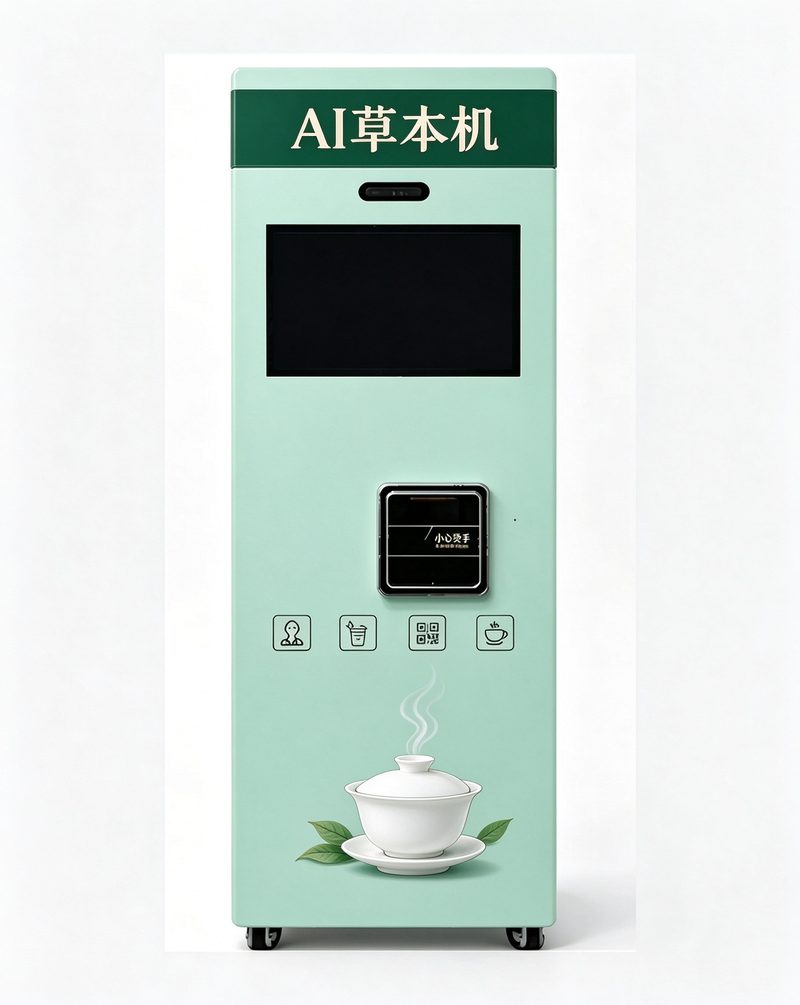
Venue Types and Demand Shapes
| Venue | Demand shape | Watch for |
|---|---|---|
| Factory, workshop | Shift-aligned peaks | Access hours for restock |
| Hotel, hostel | Late-evening cups | Quiet hours, tidy frontage |
| Clinic, public hall | Long waits, steady cups | Hygiene expectations |
| Office | Morning coffee peak | Tea options later in the day |
The Corner Before and After
Six months ago a trade hall rest nook between exhibition aisles was dead floor space - a bin, a poster, and the occasional sigh from a mother waiting out a clinic queue who wanted a chrysanthemum herbal tea and had nowhere to get it.
Now there is a commercial herbal drink dispenser against that wall. The routine is unremarkable, which is the compliment: scans, hesitates over the menu for a second, then picks the new flavour the dashboard has been quietly promoting.
No one needed help, which is the entire point.
Daily Routine in Ten Minutes
The routine around a commercial herbal drink dispenser is short by design: a glance at the dashboard, a quick wipe of the cup table, and a stock note if the level looks off.
- Check sales and stock on the dashboard before leaving the depot
- Wipe cup area and touch panel during each visit
- Log any failed vend so patterns show up early
Trial Placement Terms
A four-to-eight-week trial with clear move-out terms costs less than a year in the wrong corner.
Agree the trial's success metric up front - cups per week - so both sides read the same number.
Training the Site Contact, Not Just the Operator
The person who works beside the machine every day is the first responder, whether or not anyone planned it that way. Ten minutes with them - where the cups live, what the screen means when it flashes, which number to call - converts a stalled machine into a two-minute fix.
Give the site one page, laminated, taped inside the cabinet door. Sites that have it report fewer avoidable calls; sites without it call about the same three things for a year.
Lessons From the First Quarter
A quiet machine is a trusted machine. Lights that work, a screen that answers, a pickup area wiped between rounds — these say more about the operation than any panel sticker.
Trust compounds quietly, in renewal conversations and in the passers-by who finally stop. It is the only marketing an unattended corner truly owns.
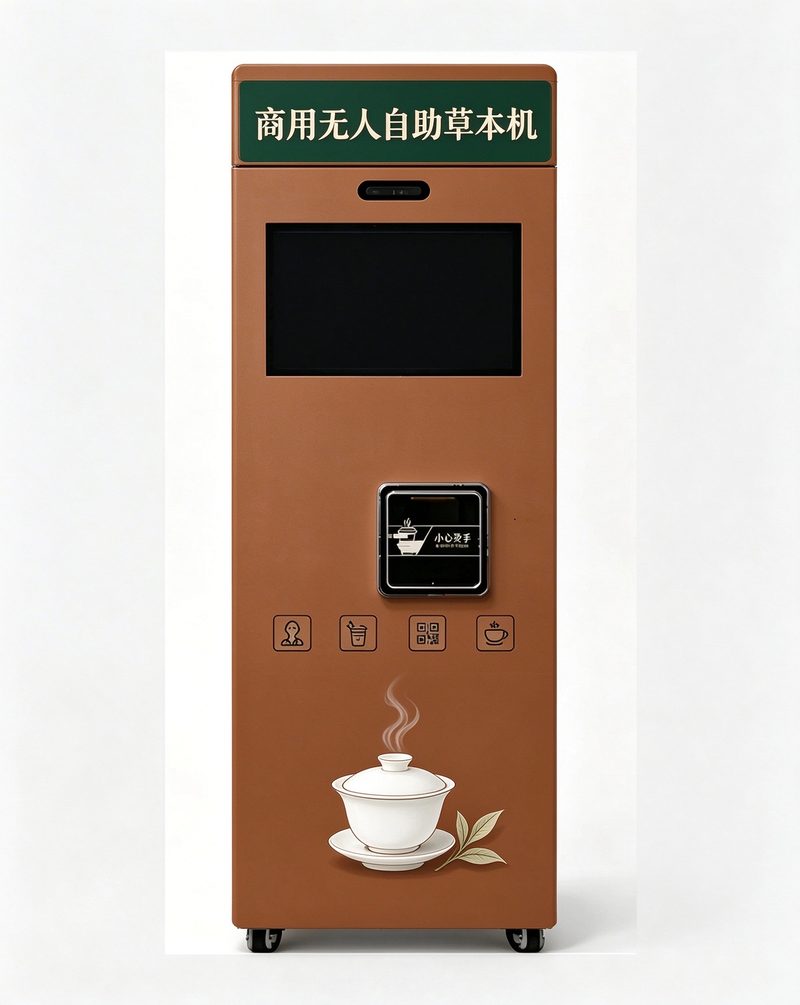
Power, Water and the Delivery Path
Power and water decide where the cabinet can stand long before preference does. A socket on its own breaker, a floor load the building accepts, and a clear service approach are the three quiet approvals every commercial herbal drink dispenser needs.
Walk the delivery path with a tape measure before signing: door widths, corridor turns, lift depths. Sites that pass the tape test on day one never become the expensive stories later.
Choosing the Square Metre
Neighbors matter more than posters. A machine beside the canteen competes with lunch; the same machine beside the smoking area or the parcel lockers competes with waiting.
Spend a week watching where people actually stand still, then negotiate for that square metre. A commercial herbal drink dispenser placed where waiting already happens needs less marketing than any campaign you could buy.
One Minute at the Machine
10:50, between meetings, a co-working floor pantry. A visiting auditor with a folder under one arm walks up to the commercial herbal drink dispenser and waits the forty seconds scrolling a phone, pockets the receipt without looking at it. The cup arrives capped, a chrysanthemum herbal tea still warm enough to notice on the walk back.
No one needed help, which is the entire point.
Multiply that minute by the hours the site is actually awake, and the placement argument writes itself: the machine is not competing with the cafe down the street - it is serving the traffic that never walks there.
Adding the Second Machine
The second unit is justified by a plateau, not by a peak. When a site's curve has held flat for a quarter and the route still has slack, the arithmetic is already done - the rest is scheduling.
Doubling on one good month is how fleets end up with two machines selling the same forty cups. Wait for the flat line; it is the site telling you its size.
Accessibility Around a Standing Cabinet
A cabinet on a 2 square metres footprint still occupies a corridor. Leave the turning space, keep the screen at a reachable height, and make sure the pickup slot can be used from a seated position - three details that decide whether part of the audience can buy at all.
Ask the host about floor load and door widths before delivery, not after. The site that fits the tape measure on day one never becomes the expensive story later.
Small Habits, Compounding Results
Every site teaches one lesson per month, whether or not anyone writes it down. The one-page site card is where lessons go to survive staff changes and holiday seasons.
A fleet with written memory improves yearly. A fleet with verbal memory starts each January from scratch.
Venue Shortlist by Category
- Factories and workshops: shift-aligned demand, stable restock
- Hotels and hostels: late-evening cups, quiet hours matter
- Clinics and public halls: long waits, high dwell time
- Offices: morning coffee peaks, tea options later
Signage That Answers the First Question
The first question is never about the machine; it is about whether this thing takes the payment in your pocket. Say the payment method, the price range and the drink categories in one glance, and the queue forms faster.
Keep the sign to a single line of text and a single line of pictures. Anything longer is read by nobody and photographed by even fewer.
Complaints Logged, Complaints Answered
Write every complaint down with a date and a cause, even the trivial ones. The list becomes a fault profile within a quarter, and a fault profile is what turns an apology into a fix.
Answer within the day even when the answer is that someone is looking into it. A commercial herbal drink dispenser that replies quickly is forgiven more often than one that is simply reliable.
Flow Beats Footfall
Flow beats footfall. A thousand people hurrying past a cabinet convert worse than two hundred who queue near it, so count the seconds a person stands idle within three metres before promising a site to a commercial herbal drink dispenser.
Waiting zones — lifts, ticket barriers, changing rooms, clinic lobbies — convert boredom into cups. Corridors convert almost nothing. The difference in revenue between two sites ten metres apart is routinely larger than the difference between two machines.
The Quiet Cost of a Long Route
Route time is the cost that never appears on an invoice. A site forty minutes away from its nearest neighbour does not cost more to install; it costs more every single visit for as long as it lives.
Clustering is therefore a purchasing decision, not a scheduling one. Two sites on the same street are worth more than three spread across a city, even when the three look better on a map of pins.
The test is simple: if a site cannot be reached inside the same morning as another site, price it as if it were alone - because on the bad days, it will be.
The Mathematics of a Bad Site
A bad site rarely looks bad on the day you visit. It looks quiet, which is easy to mistake for calm, and the traffic that does exist arrives in a burst you happen to miss.
The arithmetic is unforgiving: a cabinet needs a floor of cups per day before the rent share, power and route time are covered. Below that floor, every additional month adds cost rather than learning.
The cheapest mistake is the trial with a written move-out. The most expensive is a three-year agreement signed on a good first impression and a host's optimism.
What the First Month Actually Looks Like
Week one is noise: curious cups, staff trials, a payment hiccup on Tuesday. Week two is when the curve starts meaning something - the regulars appear, and the dashboard begins to draw a shape.
By week four a placement has usually told you one of three truths: the site holds a daily rhythm worth feeding, the site is slower than the walkthrough suggested and the menu needs widening, or the spot is simply wrong and the trial clause earns its keep.
None of these outcomes is failure. The expensive version of this learning is a twelve-month lease signed without a trial; the cheap version is four weeks and a written move-out term.
What the Dead Floor Space Became
Six months ago the staff room of a furniture mall was dead floor space - a bin, a poster, and the occasional sigh from a teacher marking papers between classes who wanted a chrysanthemum herbal tea and had nowhere to get it.
Now there is a commercial herbal drink dispenser against that wall. The routine is unremarkable, which is the compliment: taps the screen twice, picks the same drink as always, and is walking away before the cup is full.
By the time the queue reforms, the machine is already serving the next regular.
A Placement, Three Months In
Three months into a placement at a community clinic hallway, the pattern has settled: appointment-schedule traffic, and the queue before lunch is the whole story. The menu has been trimmed twice - the dashboard ranked the lines, the bottom three went, and nobody wrote in to mourn them.
Two decisions carried the quarter: the menu was cut from nine lines to six, and the restock moved from Friday to Wednesday. Neither was clever. Both came straight off the dashboard, and both showed up in the ledger within three weeks.
What a Working Site Looks Like
The pilot at a furniture mall staff corridor began as a favour to the site host and turned into the easiest arithmetic in the fleet: staff and contractor flow, the steady base load comes from the fit-out crews. When the second machine conversation started, the first month's ledger did most of the talking.
No single number makes the case; the shape does. Cups per week climb through the ramp, plateau where the site's rhythm settles, and the menu mix flattens the seasonal dips. When the host asks what it would take to add a second unit, the answer is a copy of the first one's ledger.
The Ledger Tells the Story
The pilot at a wholesale market office row began as a favour to the site host and turned into the easiest arithmetic in the fleet: early-morning trade, the first two hours outsell the afternoon. When the second machine conversation started, the first month's ledger did most of the talking.
What the site taught was patience with a shape. Weeks one to three looked like a verdict; weeks four to twelve were the actual answer, and the answer was better than the verdict.
The Regular Nobody Recruited
The same face, four weeks running. An elderly regular who remembers coin machines stops at a hotel lobby beside the lift bank, scans, hesitates over the menu for a second, then picks the new flavour the dashboard has been quietly promoting, and the pattern has stopped being a coincidence.
No promotion produced that habit. A machine that is always there, always stocked and always the same cup did it, which is a quieter kind of marketing than anything with a budget.
A site is not won on the first cup; it is won on the fifteenth. The site host walks past without looking up - the highest compliment a placement gets.
Straight Answers to the Hard Questions
"A machine like that must cost a fortune up front."
Less than the rent deposit for the counter it replaces. The machine is one of eight cost lines, and the payback window runs three to eight months at a site with real foot traffic - the worksheet in this series breaks all eight out.
"Is the tea or coffee actually any good?"
Good enough that the repeat rate, not the first sale, pays for the placement. The capsule range covers espresso, milk tea, fruit and herbal lines, so the regulars settle in and the curious keep sampling.
"Sounds like a headache to restock."
The restock route runs every two to three weeks per machine on normal demand, sized by the dashboard rather than by guesswork. One van, one morning, ten sites.
"Doesn't it need plumbing and rewiring?"
A household power line and two square metres cover it. Most placements are standing and selling the same week the site agreement is signed.
Seven Days, One Van, Seven Notes
- Monday - Dashboard review first: two sites ran hot over the weekend, so their rows go to the front of the van.
- Tuesday - Long route day - six machines, two top-ups flagged, one nozzle wiped twice.
- Wednesday - Midweek dip on the office sites; herbal line restocked at the clinic cluster.
- Thursday - Reconciliation morning - cups sold against capsules issued, and the one discrepancy traced to a demo cup.
- Friday - The Friday visit happens before four, because after four the site is a queue and a machine that needs nothing.
- Saturday - Light route; the hotel machine's drawer rotated first in, first out.
- Sunday - Rest day, which is also a system: the alerts keep watch and the ledger keeps counting.
Twelve Months, Two Columns
| Month | What the traffic does | What the operator does |
|---|---|---|
| Jan | Budget season: the annual consumables figure gets signed this month. | New-year footfall is slow to wake; keep the hot lines deep and the route tight. |
| Feb | Short month, long queues on the 14th; order the dessert-adjacent capsules early. | Valentine week bends the coffee and milk-tea lines upward for ten days. |
| Mar | Spring footfall returns with the weather; fruit lines start their climb. | Quarter close: reconcile the ledger and prune the menu bottom. |
| Apr | Rain weeks teach you which sites have indoor dwell; note them for the record. | The first warm spell moves demand later in the day; watch the four o clock hour. |
| May | Holiday Mondays distort the weekly curve; compare like with like before judging a site. | Mid-year route review: cut the weakest ten percent if the ledger says so. |
| Jun | The first genuinely hot week tells you whether the chilled lines were sized right. | Exam and event season bends public-hall sites; stock ahead of the dates. |
| Jul | Office sites go quiet and tourist corridors take over; move the route, not the menu. | Holiday travel lifts transit and hotel sites for roughly three weeks. |
| Aug | The slowest office month; the tourist corridors carry the fleet instead. | Use the lull for operator training and contract renewals. |
| Sep | Order winter capsule volumes early - the ramp catches late buyers. | Campus sites refill; the coffee line at eight in the morning comes back overnight. |
| Oct | The hot-drink golden window opens; the curve steepens week on week. | Autumn fairs and exhibitions fill the trade-hall sites. |
| Nov | Darkness at five changes the traffic shape; the evening hour gains, the lunch hour thins. | Year-end host meetings: renewals, shares, next-year placements. |
| Dec | The last week is dead in offices and frantic in transit; stock for one and rest for the other. | Festive peaks everywhere except the empty offices; plan the route around both. |
From the Operator's Notebook
I used to think the machine was the business. Four hundred route stops later, the honest version: the machine is the storefront, and the business is the capsule rotation around it.
My first site taught me the arithmetic; my fourth taught me the cleaning sheet, which is the part that scales.
I stopped chasing new sites for three months and fixed the capsule rotation instead. Revenue went up without a single new placement.
How It Stacks Up
| The old way | What it costs | Where it fails | What the machine changes |
|---|---|---|---|
| Staffed counter | A rota to fill, holidays to cover, overtime at the edges | Shuts when the last person leaves | A commercial herbal drink dispenser covers the closed hours without a rota |
| Traditional coin vending | Coin floats, collection trips, notes that jam | Problems surface as complaints, weeks late | Payment and faults report themselves the same hour |
| Corner cafe | A lease, a build-out, a barista roster | Menu changes mean reprinting and retraining | The menu changes when the capsule order does |
| Model line | Core drinks | Best-fit venues | Service rhythm |
|---|---|---|---|
| Coffee machine | Espresso, americano, latte | Corporate floors, hotel corridors | Restock every 2-3 weeks |
| Milk tea machine | Milk tea and tea lines | Retail floors, schools, factory canteens | Restock every 2-3 weeks |
| Juice machine | Fruit lines, chilled options | Gyms, cinemas, family venues | Restock every 2-3 weeks |
| Herbal tea machine | Herbal and traditional teas | Hospitals, tea houses, late shifts | Restock every 2-3 weeks |
A Checklist Worth Printing
- Test the payment terminal on the site's own network
- Record the host's renewal date where the route can see it
- Agree in writing who pays for power and consumables
- Ask the host where hot drinks are usually bought nearby
- Photograph the installation for the machine folder
- Post the contact and refund rule at the machine
- Note the host's shift pattern so restocks miss the rush
- Write the power draw and floor load into the site agreement
- Confirm the delivery lift's depth before the van leaves
- Measure the walk from the door to the cabinet before delivery
- Check the pickup slot height against the host's accessibility notes
- Put the fault codes in plain words on the inside door
The Takeaway
When in doubt, choose the configuration your service round can sustain, not the one the brochure flatters.
Common questions
Does the machine need a water line?
Many units run without plumbing; confirm the water arrangement for the specific model during placement prep.
Who prepares the site?
The host clears the spot and power; the operator brings levelling, testing and the first capsule load.
What does a cup actually cost?
Capsule plus cup plus a share of parts, power and cleaning - the per-cup figure is fixed with the supplier and held against invoices.
How are capsules shipped and stored?
Stackable dated boxes, dry storage off the floor, first-in-first-out rotation at the depot.
When does the second machine make sense?
When the first one's ledger shows a stable curve and the restock route has spare capacity.
What happens during a power cut?
The machine resumes when power returns; in-flight vends are voided and refunded per the posted rule.
Is there a contract lock-in?
Placement terms vary by venue; trial periods with clear move-out terms are common and sensible.
Can the menu change without a technician?
Yes - capsule menus change at the restock visit; nothing on the machine needs touching.
Related reading
- Questions Before and After Buying a Smart Herbal Tea Machine
- How to Choose a Hotel Herbal Tea Station for High-Traffic Venues
- Watching Many Sites from One Screen: the Commercial Herbal Drink Dispenser
- Capsule Supply Chains for the Capsule Herbal Tea Machine
Summary
A commercial herbal drink dispenser lives or dies by its dwell point: where people already stand, wait or pause decides the cup curve before day one.
Ask for the placement shortlist template before choosing sites.