Picking the Spot: Automatic Juice Dispenser Placement Notes
In one line: An automatic juice dispenser lives or dies by its dwell point: where people already stand, wait or pause decides the cup curve before day one.
Key facts: People already standing - queues, waiting rooms, lift lobbies - convert to cups without being asked; cold corners do not.
What Separates a Busy Unit from a Quiet One
Two sites can order the same automatic juice dispenser and end up with completely different monthly results. Treat the checklist items as questions to answer in writing, not as advice to agree with.
Reading Foot Traffic by Hour
Two sites with identical daily totals can behave completely differently: one sells across the day, the other sells twenty cups in two hours.
Match the machine's capsule stock to the shape of the curve, not just its size.
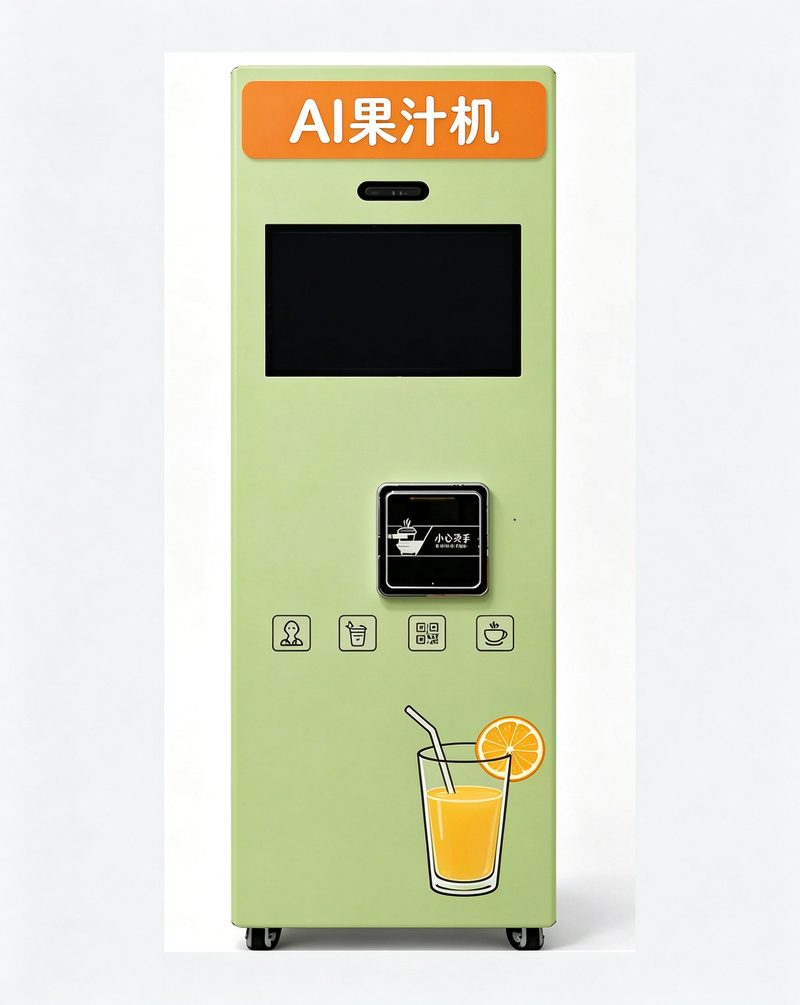
Venue Types and Demand Shapes
| Venue | Demand shape | Watch for |
|---|---|---|
| Factory, workshop | Shift-aligned peaks | Access hours for restock |
| Hotel, hostel | Late-evening cups | Quiet hours, tidy frontage |
| Clinic, public hall | Long waits, steady cups | Hygiene expectations |
| Office | Morning coffee peak | Tea options later in the day |
The Regular Nobody Recruited
The same face, four weeks running. A delivery rider helmet in hand stops at the morning queue inside a produce wholesale gate, collects the cup, checks the cap out of habit, and folds back into the corridor traffic, and the pattern has stopped being a coincidence.
No promotion produced that habit. A machine that is always there, always stocked and always the same cup did it, which is a quieter kind of marketing than anything with a budget.
A site is not won on the first cup; it is won on the fifteenth. Nobody photographs it; the machine has simply become part of the floor plan.
Payment and Reconciliation Basics
Every sale is logged against a timestamp and a method, so the monthly settlement is a report rather than an argument.
- QR scan-to-pay covers the standard flow; each order carries its own reference
- Export the ledger monthly and match it against capsule consumption
- Agree in advance who refunds failed vends and how fast
Power, Noise and the Neighbours
Two complaints arrive faster than any other: the machine is loud at the wrong hour, and it shares a socket with something that matters. Neither is hard to pre-empt - ask what else is on that circuit and where the closest desk sits.
A 2 square metres cabinet on household power is quiet in ordinary use, but the compressor's cycle is what people notice. Placing it where the corridor is already noisy costs nothing and removes the most common objection.
Daily Routine in Ten Minutes
The routine around an automatic juice dispenser is short by design: a glance at the dashboard, a quick wipe of the cup table, and a stock note if the level looks off.
- Check sales and stock on the dashboard before leaving the depot
- Wipe cup area and touch panel during each visit
- Log any failed vend so patterns show up early
Flow Beats Footfall
Flow beats footfall. A thousand people hurrying past a cabinet convert worse than two hundred who queue near it, so count the seconds a person stands idle within three metres before promising a site to an automatic juice dispenser.
Waiting zones — lifts, ticket barriers, changing rooms, clinic lobbies — convert boredom into cups. Corridors convert almost nothing. The difference in revenue between two sites ten metres apart is routinely larger than the difference between two machines.
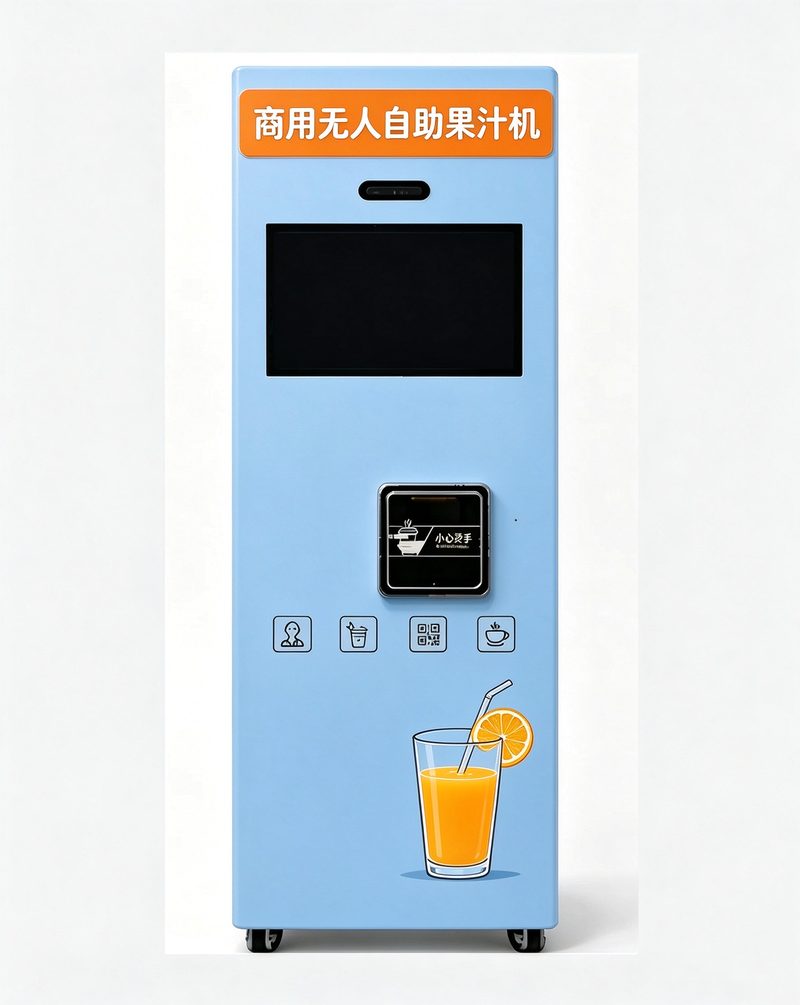
Reporting Across Sites
A report that grows with the fleet stops being read at about site twelve. The fix is not a better dashboard but a shorter one: same five lines for every site, ranked, with exceptions above them.
The lines worth keeping are cups per day, net per cup, stockouts, faults and the age of the oldest unresolved complaint. Everything else is available on request, which is where it belongs.
Choosing the Square Metre
Neighbors matter more than posters. A machine beside the canteen competes with lunch; the same machine beside the smoking area or the parcel lockers competes with waiting.
Spend a week watching where people actually stand still, then negotiate for that square metre. An automatic juice dispenser placed where waiting already happens needs less marketing than any campaign you could buy.
One Minute at the Machine
10:50, between meetings, the rest area of a logistics warehouse. A teacher marking papers between classes walks up to the automatic juice dispenser and takes two - one now, one for the colleague minding the desk. The cup arrives capped, an orange juice still warm enough to notice on the walk back.
The restock note writes itself: the popular line is down one row.
Multiply that minute by the hours the site is actually awake, and the placement argument writes itself: the machine is not competing with the cafe down the street - it is serving the traffic that never walks there.
Venue Shortlist by Category
- Factories and workshops: shift-aligned demand, stable restock
- Hotels and hostels: late-evening cups, quiet hours matter
- Clinics and public halls: long waits, high dwell time
- Offices: morning coffee peaks, tea options later
Power, Water and the Delivery Path
Power and water decide where the cabinet can stand long before preference does. A socket on its own breaker, a floor load the building accepts, and a clear service approach are the three quiet approvals every automatic juice dispenser needs.
Walk the delivery path with a tape measure before signing: door widths, corridor turns, lift depths. Sites that pass the tape test on day one never become the expensive stories later.
Trial Placement Terms
A four-to-eight-week trial with clear move-out terms costs less than a year in the wrong corner.
Agree the trial's success metric up front - cups per week - so both sides read the same number.
Contract Clauses Worth Reading Twice
Four clauses carry most of the risk in a placement: access hours for the restock van, who pays for power, what happens if the host changes use of the space, and how either side exits without penalty.
None of them needs a lawyer to draft, and all of them are cheaper to agree before the cabinet is bolted down. An automatic juice dispenser that cannot be serviced inside the host's hours is a machine that will miss its every 2-3 weeks rhythm sooner or later.
The Case for Fewer, Better Sites
A fleet of ten average sites costs more to serve than a fleet of six good ones: the same van hours, the same capsule handling, half the revenue concentration, twice the host relationships to babysit.
The walkthrough exists to say no. A site that fails two of the placement checks - dwell time, visibility, access hours - will fail them forever, politely, while consuming the same service capacity as a winner.
Pruning is not retreat. Every weak site traded up to a better corner raises the fleet's average, simplifies the route, and frees the operator's attention for the placements that compound.
What the Host Actually Wants
Ask a host what they want from a placement and the first answer is rarely the real one. 'Something for the tenants' usually means fewer complaints about the coffee run; 'extra income' usually means a number they can defend in a meeting.
The second answer is the useful one. A host defending a number wants predictable reporting; a host solving complaints wants the queue gone by nine. An automatic juice dispenser answers both, but only if the operator asks which problem is being paid for.
Placements that last tend to be the ones where the host can say, in one sentence, what the machine fixed. When nobody can say that sentence, the machine is on borrowed time and the renewal conversation starts from nothing.
Reading a Contract Like an Operator
Operators read contracts backwards: start with the exit, then the access hours, then the money. Everything before that is decoration if the machine cannot be reached at seven in the morning.
The exit clause matters more than the rate. A placement that cannot be ended without penalty is a bet that must win; one with a written move-out is a test that can fail cheaply.
Then check who owns what: the cups, the bin, the socket, the liability. Four nouns, four sentences, and the document stops being a trap for whoever signs it next.
The Minute That Pays the Rent
The first cold night of the season, a fruit wholesale hall office. A security guard off the midnight shift walks up to the automatic juice dispenser and waits the forty seconds scrolling a phone, pockets the receipt without looking at it. The cup arrives capped, an orange juice still warm enough to notice on the walk back.
It is the fourth cup this corner has sold since the hour began.
Multiply that minute by the hours the site is actually awake, and the placement argument writes itself: the machine is not competing with the cafe down the street - it is serving the traffic that never walks there.
A Placement, Three Months In
Three months into a placement at a furniture mall staff corridor, the pattern has settled: staff and contractor flow, and the steady base load comes from the fit-out crews. The menu has been trimmed twice - the dashboard ranked the lines, the bottom three went, and nobody wrote in to mourn them.
Nothing dramatic happened, which is the result worth reporting. The machine stayed stocked, the sheet got signed, the ledger matched the capsule invoices, and the host stopped mentioning it - the highest form of approval a placement gets.
What a Working Site Looks Like
Three months into a placement at a logistics warehouse rest area, the pattern has settled: shift-change traffic, and the morning peak carries the day. The menu has been trimmed twice - the dashboard ranked the lines, the bottom three went, and nobody wrote in to mourn them.
The interesting number is not the peak day; it is the worst weekday, because that is the one the rent has to survive. In this case the floor held, and a floor that holds is what lets an operator plan a second site.
The Ledger Tells the Story
Three months into a placement at a logistics warehouse rest area, the pattern has settled: shift-change traffic, and the morning peak carries the day. The menu has been trimmed twice - the dashboard ranked the lines, the bottom three went, and nobody wrote in to mourn them.
Two decisions carried the quarter: the menu was cut from nine lines to six, and the restock moved from Friday to Wednesday. Neither was clever. Both came straight off the dashboard, and both showed up in the ledger within three weeks.
The Hour Nobody Staffs
By ten at night the waiting bench of a vehicle inspection lane has emptied out, and the automatic juice dispenser is the only lit thing in the corridor. The site closes at six; the traffic does not.
A forklift driver with gloves tucked in his belt is the customer now - the one who cannot buy an orange juice anywhere else at this hour, and who will remember that tomorrow.
Anyone pricing a placement on daytime footfall alone is pricing half a site. No one needed help, which is the entire point.
Straight Answers to the Hard Questions
"Will people trust a drink made by a box?"
They trust the cup more than the counter when the cup is consistent. Capsule brewing means the tenth cup matches the first, and the cleaning sheet posted on the glass does more for confidence than any slogan.
"Can it really run unattended all day?"
That is the design brief: uptime, alerts and a route. The machine does the shift work; you do the arithmetic.
"Doesn't it need plumbing and rewiring?"
A household power line and two square metres cover it. Most placements are standing and selling the same week the site agreement is signed.
"We tried a vending machine years ago and it was a disaster."
The difference is the telemetry. Stock, faults and sales report themselves now, so a machine that quietly fails gets noticed the same hour - not the following month.
The Week's Route, Written Down
- Monday - Week opens with paperwork - capsule order signed off, one site's access hours re-confirmed by message.
- Tuesday - Route day proper. A payment terminal at the second stop needed a restart; the log records the minute it happened.
- Wednesday - Midweek is the quiet read: office sites cool off, clinic and gym sites pick up the slack.
- Thursday - Ledger exported and matched against capsule consumption; one gap investigated.
- Friday - Contact card refreshed at the lobby unit, and the host's new shift supervisor walked through the basics.
- Saturday - Weekend shift: fewer sites, more cleaning. Two drip trays, one filter, and a machine that looks new again.
- Sunday - Nothing scheduled. Alerts forwarded to the phone, one dashboard glance at noon, no wheels turned.
Twelve Months, Two Columns
| Month | What the traffic does | What the operator does |
|---|---|---|
| Jan | Budget season: the annual consumables figure gets signed this month. | New-year footfall is slow to wake; keep the hot lines deep and the route tight. |
| Feb | Short month, long queues on the 14th; order the dessert-adjacent capsules early. | Valentine week bends the coffee and milk-tea lines upward for ten days. |
| Mar | Exam season starts on campuses; the library site stops being a quiet placement. | Quarter close: reconcile the ledger and prune the menu bottom. |
| Apr | Rain weeks teach you which sites have indoor dwell; note them for the record. | The first warm spell moves demand later in the day; watch the four o clock hour. |
| May | Holiday Mondays distort the weekly curve; compare like with like before judging a site. | Warm evenings extend the outdoor sites; chilled options earn their drawer space. |
| Jun | Exam and event season bends public-hall sites; stock ahead of the dates. | The first genuinely hot week tells you whether the chilled lines were sized right. |
| Jul | Peak heat shifts demand; the curve moves later into the evening. | Office sites go quiet and tourist corridors take over; move the route, not the menu. |
| Aug | Capsule storage gets hot in August; check the stockroom before the shelf life does. | Use the lull for operator training and contract renewals. |
| Sep | Order winter capsule volumes early - the ramp catches late buyers. | Back-to-routine week is the second new year; footfall snaps back fast. |
| Oct | The first cold snap is worth a route note: it usually front-loads the month by a week. | The hot-drink golden window opens; the curve steepens week on week. |
| Nov | Cold-weather peak builds; popular lines deserve a double buffer. | Darkness at five changes the traffic shape; the evening hour gains, the lunch hour thins. |
| Dec | The last week is dead in offices and frantic in transit; stock for one and rest for the other. | Close the ledger, thank the hosts, and let the dashboard write the next order. |
Three Things the Route Taught Me
I stopped chasing new sites for three months and fixed the alert settings instead. Revenue went up without a single new placement.
If I could send one paragraph back to my first order, it would be this - the route order is not a purchase, it is a schedule, and the schedule is written in the ledger whether you look at it or not.
Nobody warns you that the hard part is not buying the machine. It is the route order, done the same way in month nine as in month one.
How It Stacks Up
| The old way | What it costs | Where it fails | What the machine changes |
|---|---|---|---|
| Staffed counter | Wages every month, plus training and turnover | Open only as long as someone stands there | A automatic juice dispenser sells the hours the counter never could |
| Traditional coin vending | Cash handling, change runs, slot jams | No telemetry; faults found by complaint | Every sale logged, every fault alerted |
| Corner cafe | Rent, fit-out, staffed peaks | Fixed menu, fixed hours | Capsule range rotates at the restock visit, not by renovation |
| Line | What it pours | Where it fits best | Restock rhythm |
|---|---|---|---|
| Coffee machine | Espresso, americano, latte | Office lobbies, clinics, showrooms | Restock every 2-3 weeks |
| Milk tea machine | Milk tea and tea lines | High streets, campuses, food courts | Restock every 2-3 weeks |
| Juice machine | Fruit lines, chilled options | Gyms, cinemas, family venues | Restock every 2-3 weeks |
| Herbal tea machine | Herbal and traditional teas | Wellness centres, community halls | Restock every 2-3 weeks |
A Checklist Worth Printing
- Export the ledger monthly and match it to consumption
- Keep one experimental line per machine and review it monthly
- Set stock thresholds on the dashboard before day one
- Post the contact and refund rule at the machine
- Check signage faces the waiting area, not the wall
- Check the pickup slot height against the host's accessibility notes
- Ask what else shares the socket the machine will use
- Test payment on site before the host's opening hour
- Test the payment terminal on the site's own network
- Compare the monthly ledger to the site's own count once a quarter
- Walk the cleaning sheet on every visit, not from memory
- Set a two-week buffer at the depot, not at the site
The Takeaway
Start narrow: one site, one menu, one restock rhythm - then widen on evidence.
Common questions
What happens during a power cut?
The machine resumes when power returns; in-flight vends are voided and refunded per the posted rule.
What does a cup actually cost?
Capsule plus cup plus a share of parts, power and cleaning - the per-cup figure is fixed with the supplier and held against invoices.
Is there a contract lock-in?
Placement terms vary by venue; trial periods with clear move-out terms are common and sensible.
What is the usual payback window?
The planning band is 3-8 months, set mainly by site quality and the local price of a cup.
Does the machine need a water line?
Many units run without plumbing; confirm the water arrangement for the specific model during placement prep.
Who prepares the site?
The host clears the spot and power; the operator brings levelling, testing and the first capsule load.
Can I run twenty sites alone?
Up to a point - routes planned from live data are what make small fleets workable with one service person.
How are capsules shipped and stored?
Stackable dated boxes, dry storage off the floor, first-in-first-out rotation at the depot.
Related reading
- Self-Service Fruit Drink Machine Payments: Offline Cases and Reconciliation
- Ordering and Storage for Smart Juice Machine Capsules
- Capsule Juice Machine Payments: Offline Cases and Reconciliation
- Unmanned Juice Machine FAQ: What Buyers Ask First
Summary
An automatic juice dispenser lives or dies by its dwell point: where people already stand, wait or pause decides the cup curve before day one.
Ask for the placement shortlist template before choosing sites.