Where an Office Juice Station Earns Its Keep
In one line: Placement is a reading exercise - hourly traffic, sight lines and access hours - and this page turns it into a checklist.
Key facts: A 2 square metres corner on household power is enough; the binding constraint is access hours for the restock van.
From Quote to First Cup
The gap between the office juice station that earns its space and one that quietly stops is usually paperwork, not hardware. The aim is a plan a site manager can defend a quarter later, not a better pitch.
Reading Foot Traffic by Hour
Two sites with identical daily totals can behave completely differently: one sells across the day, the other sells twenty cups in two hours.
Match the machine's capsule stock to the shape of the curve, not just its size.
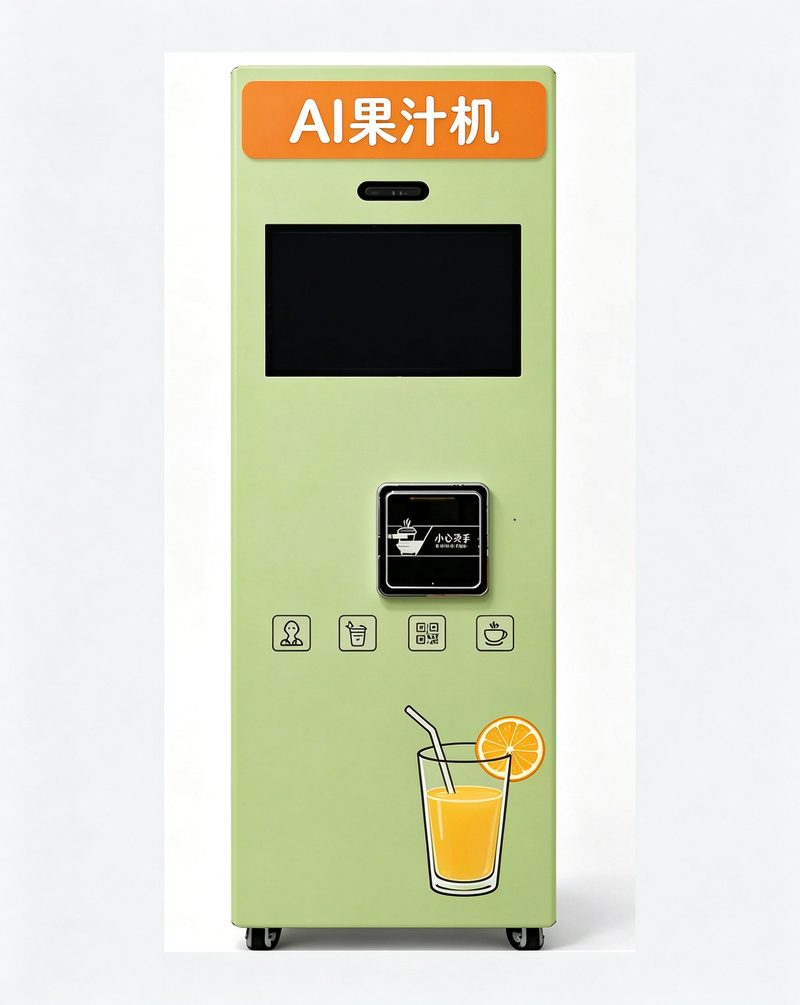
Venue Types and Demand Shapes
| Venue | Demand shape | Watch for |
|---|---|---|
| Factory, workshop | Shift-aligned peaks | Access hours for restock |
| Hotel, hostel | Late-evening cups | Quiet hours, tidy frontage |
| Clinic, public hall | Long waits, steady cups | Hygiene expectations |
| Office | Morning coffee peak | Tea options later in the day |
The Month the Building Emptied
The same face, four weeks running. A warehouse clerk racing a timer stops at the courier station counter line, waits the forty seconds scrolling a phone, pockets the receipt without looking at it, and the pattern has stopped being a coincidence.
No promotion produced that habit. A machine that is always there, always stocked and always the same cup did it, which is a quieter kind of marketing than anything with a budget.
A site is not won on the first cup; it is won on the fifteenth. The restock note writes itself: the popular line is down one row.
Reading the Ledger Monthly
The busiest week of the year is chosen by the venue, not by the operator. Exam seasons, holidays, and weather move traffic; the restock calendar should move with them rather than argue.
One flexible day per week in the route absorbs most of what a calendar can throw at a fleet.
The Second Vandalism Incident
One incident is bad luck; two in the same place is information. The second tells you whether the site is exposed by location, by lighting, or by the fact that nobody is around after ten.
Before spending on cameras, change what is cheap to change: move the cabinet into sight of a window, add light, shorten the unattended hours. Hardware deters the casual attempt; placement deters the determined one.
When the Capsule Recipe Changes
Suppliers reformulate. A capsule that tasted one way for two years can change grind, dose or packaging with a short notice, and the site notices before the operator does.
Keep one sealed sample of the current lot and taste it against the new lot before the pallet goes out. It takes ten minutes and prevents a month of complaints about the coffee tasting different, with no evidence on either side.
Buildings With No Signal
Basements, factories and older buildings can have no usable mobile signal at the cabinet. A machine that depends on the network for payment will stand there looking healthy and selling nothing.
Test the actual spot with the actual SIM before delivery. If coverage is poor, the answers are a wired connection, an offline card mode with a stored limit, or a different corner - in that order of cost.
Cash, Card and the Queue Behind Them
Payment speed decides throughput more than brewing speed does. A tap that takes four seconds adds a person to the queue at the busiest hour.
Watch one full purchase at peak and count the taps. If the count is above four, the queue is being created by the interface, not by the coffee.
Setting Par Levels From the Ledger
Par levels set by feel produce two failures at once: some sites run dry, others carry stock that expires. The ledger already contains the answer - average daily cups by line, times the restock interval, plus a buffer.
Recalculate quarterly rather than annually. A site whose traffic shifted in spring will still be running last year's numbers in autumn, and the symptoms look like a demand problem when they are a planning problem.
The Regular Nobody Recruited
The same face, four weeks running. A visiting auditor with a folder under one arm stops at the night queue area of a long-distance coach station, takes two - one now, one for the colleague minding the desk, and the pattern has stopped being a coincidence.
No promotion produced that habit. A machine that is always there, always stocked and always the same cup did it, which is a quieter kind of marketing than anything with a budget.
A site is not won on the first cup; it is won on the fifteenth. The dashboard records it as one line; the day's curve bends up almost imperceptibly.
Payment Reconciliation Past the Terminal
The terminal settles; the ledger still has to agree. QR scan-to-pay produces a reference per order, and the operator's job is to match those references against capsules issued and cups sold - three lists that should tell one story.
Disagreements are usually small and always explainable: a demo cup, a voided vend, a refund nobody logged. The habit worth keeping is a weekly match rather than a monthly surprise, because a month of drift takes an afternoon to unpick.
The Site That Is Too Good
A site that outperforms its model is a risk disguised as a success. It usually means the host has not yet noticed how much money is moving through their lobby.
Expect the renegotiation and prepare for it: keep the ledger clean, report the numbers before they are asked for, and offer a revision tied to volume rather than waiting to be handed one. The operator who brings the spreadsheet keeps the site.
End of Life: Resale, Refurbish, Scrap
Every machine ends somewhere. The residual value question belongs in the purchase decision, because a unit that can be moved and resold carries a different risk from one that cannot.
Three destinations: resale to a smaller operator, refurbishment for a second life on a cheaper site, or scrap by weight. Knowing which is realistic changes what payback period is honest.
Notes From the Field
Unattended retail rewards the person who shows up on a schedule. Machines do not need watching; they need intervals — cleaning intervals, restock intervals, ledger intervals — kept boringly on time.
The operators who last are rarely the loudest. They are the ones whose Wednesday route looks the same in week forty as it did in week one.
When the Host Asks for a Discount
A host asking for a higher share is usually testing whether the number on the table was built or guessed. Answering with a concession teaches them it was guessed.
The better reply is arithmetic: here is the cup volume the site needs for the current share to work, here is what happens to it at the share you are asking for, and here is the trial period that will tell us which is right. Discounts are cheap when the volume is real and expensive when it is not.
The Cup Itself: Rim, Heat, Foam
Customers judge a drink before tasting it: whether the rim is clean, whether the cup is warm to hold, whether the surface looks like something a person made. None of that is on the specification sheet and all of it decides the second purchase.
Temperature is the easiest to get wrong and the cheapest to fix. A cup that arrives drinkable rather than scalding suits a lobby; one that arrives hot suits a winter street. The setting is a menu decision, not a machine decision.
Pricing the Machine Against the Counter
The comparison buyers actually make is not machine against machine; it is machine against the counter they would otherwise staff. A counter carries wages, training, turnover and a rota that has to be filled on public holidays.
Put those four lines beside the machine's four - equipment, consumables, placement, service - and the comparison becomes honest quickly. The machine usually wins on hours and loses on menu breadth, which is exactly the trade a buyer should be choosing deliberately.
Written down, that comparison also protects the buyer from the wrong purchase: a site that needs a barista's range should hire one, and a site that needs round-the-clock consistency should not.
The Month the Machine Broke Twice
Two failures in one month is a pattern, not bad luck. The useful response is to write the timeline: what failed, what was replaced, how long the site waited, and what the site did while it waited.
The second failure usually shares a cause with the first - a power fault that damaged a board, a water filter that was never changed, a cup chute that jams in humidity. Replacing the part without the cause buys a third failure.
What the venue remembers is not the fault but the gap. A machine back within four hours reads as reliable; the same fault with a two-day wait reads as a supplier problem regardless of the cause.
The Corner Before and After
Six months ago an office park lobby by the mail shelves was dead floor space - a bin, a poster, and the occasional sigh from a delivery rider helmet in hand who wanted an orange juice and had nowhere to get it.
Now there is a office juice station against that wall. The routine is unremarkable, which is the compliment: takes two - one now, one for the colleague minding the desk.
It is the fourth cup this corner has sold since the hour began.
A Placement, Three Months In
Three months into a placement at a logistics warehouse rest area, the pattern has settled: shift-change traffic, and the morning peak carries the day. The menu has been trimmed twice - the dashboard ranked the lines, the bottom three went, and nobody wrote in to mourn them.
Nothing dramatic happened, which is the result worth reporting. The machine stayed stocked, the sheet got signed, the ledger matched the capsule invoices, and the host stopped mentioning it - the highest form of approval a placement gets.
What a Working Site Looks Like
The pilot at a community clinic hallway began as a favour to the site host and turned into the easiest arithmetic in the fleet: appointment-schedule traffic, the queue before lunch is the whole story. When the second machine conversation started, the first month's ledger did most of the talking.
The ledger and the walkthrough told different stories for a month. The ledger said demand; the walkthrough said a queue at the wrong hour. The walkthrough was right, and the fix cost nothing.
The Ledger Tells the Story
The pilot at a coach station waiting row began as a favour to the site host and turned into the easiest arithmetic in the fleet: departures-board waves, each delayed departure buys another round of cups. When the second machine conversation started, the first month's ledger did most of the talking.
The quarter's lesson was about the restock hour, not the menu. Moving the visit ninety minutes earlier recovered the morning peak, and the peak turned out to be most of the site.
From the Service Route
The operator's van stops at the rest area of a logistics warehouse on a route that will cover six more machines before noon. The dashboard has already ranked the visit: stock fine, no faults, one line running low.
While the drawers are topped, a first-time visitor following the signs wander up; the sale happens between two tasks, waits the forty seconds scrolling a phone, pockets the receipt without looking at it.
This is what unattended means in practice - not absence, but attention aimed exactly where the data says. No one needed help, which is the entire point.
Straight Answers to the Hard Questions
"Doesn't it need plumbing and rewiring?"
A household power line and two square metres cover it. Most placements are standing and selling the same week the site agreement is signed.
"Sounds like a headache to restock."
The restock route runs every two to three weeks per machine on normal demand, sized by the dashboard rather than by guesswork. One van, one morning, ten sites.
"Can it really run unattended all day?"
That is the design brief: uptime, alerts and a route. The machine does the shift work; you do the arithmetic.
"The shop next door already sells drinks."
A shop sells drinks when someone is behind the counter. The machine sells at seven in the morning, at eleven at night, and every minute the shutters are down - it is a different business, not a rival.
Seven Days, One Van, Seven Notes
- Monday - Week opens with paperwork - capsule order signed off, one site's access hours re-confirmed by message.
- Tuesday - Long route day - six machines, two top-ups flagged, one nozzle wiped twice.
- Wednesday - Midweek dip on the office sites; herbal line restocked at the clinic cluster.
- Thursday - Ledger exported and matched against capsule consumption; one gap investigated.
- Friday - Contact card refreshed at the lobby unit, and the host's new shift supervisor walked through the basics.
- Saturday - Weekend shift: fewer sites, more cleaning. Two drip trays, one filter, and a machine that looks new again.
- Sunday - Nothing scheduled. Alerts forwarded to the phone, one dashboard glance at noon, no wheels turned.
Twelve Months, Two Columns
| Month | Traffic pattern | Route decision |
|---|---|---|
| Jan | Budget season: the annual consumables figure gets signed this month. | The quietest fortnight of the year - good for audits, bad for optimism. |
| Feb | Valentine week bends the coffee and milk-tea lines upward for ten days. | Short month, long queues on the 14th; order the dessert-adjacent capsules early. |
| Mar | Spring footfall returns with the weather; fruit lines start their climb. | Exam season starts on campuses; the library site stops being a quiet placement. |
| Apr | A good month to trial one new capsule line per machine. | Rain weeks teach you which sites have indoor dwell; note them for the record. |
| May | Holiday Mondays distort the weekly curve; compare like with like before judging a site. | Mid-year route review: cut the weakest ten percent if the ledger says so. |
| Jun | The first genuinely hot week tells you whether the chilled lines were sized right. | Half-year service check: seals, nozzles, payment terminals. |
| Jul | Peak heat shifts demand; the curve moves later into the evening. | Office sites go quiet and tourist corridors take over; move the route, not the menu. |
| Aug | The slowest office month; the tourist corridors carry the fleet instead. | Use the lull for operator training and contract renewals. |
| Sep | Campus sites refill; the coffee line at eight in the morning comes back overnight. | Order winter capsule volumes early - the ramp catches late buyers. |
| Oct | Autumn fairs and exhibitions fill the trade-hall sites. | The hot-drink golden window opens; the curve steepens week on week. |
| Nov | Year-end host meetings: renewals, shares, next-year placements. | Darkness at five changes the traffic shape; the evening hour gains, the lunch hour thins. |
| Dec | Close the ledger, thank the hosts, and let the dashboard write the next order. | The last week is dead in offices and frantic in transit; stock for one and rest for the other. |
Notes I Keep Rewriting
The dashboard is honest, the host is honest, and both are approximate. the ledger discipline is what turns two approximations into a decision.
Every operator I respect has the same boring habit: they write the week down. the capsule rotation is where the writing pays for itself.
I stopped chasing new sites for three months and fixed the first-month readings instead. Revenue went up without a single new placement.
How It Stacks Up
| The old way | What it costs | Where it fails | What the machine changes |
|---|---|---|---|
| Staffed counter | A rota to fill, holidays to cover, overtime at the edges | Shuts when the last person leaves | A office juice station covers the closed hours without a rota |
| Traditional coin vending | Cash handling, change runs, slot jams | No telemetry; faults found by complaint | Every sale logged, every fault alerted |
| Corner cafe | A lease, a build-out, a barista roster | Menu changes mean reprinting and retraining | The menu changes when the capsule order does |
| Model line | Core drinks | Best-fit venues | Service rhythm |
|---|---|---|---|
| Coffee machine | Espresso, americano, latte | Offices, hotels, waiting areas | Restock every 2-3 weeks |
| Milk tea machine | Milk tea and tea lines | Retail floors, schools, factory canteens | Restock every 2-3 weeks |
| Juice machine | Fruit lines, chilled options | Gyms, leisure, transit | Restock every 2-3 weeks |
| Herbal tea machine | Herbal and traditional teas | Wellness centres, community halls | Restock every 2-3 weeks |
A Checklist Worth Printing
- Ask what else shares the socket the machine will use
- Measure the walk from the door to the cabinet before delivery
- Keep one experimental line per machine and review it monthly
- Date capsule boxes and rotate first in, first out
- Test payment on site before the host's opening hour
- Put the fault codes in plain words on the inside door
- Note the site's quiet hours before scheduling a service visit
- Test the payment terminal on the site's own network
- Confirm who empties the bin beside the cabinet
- Agree in writing who pays for power and consumables
- Check signage faces the waiting area, not the wall
- Agree the refund rule before the first complaint, not after
The Takeaway
The plan that survives contact with a busy site is the one written with the operator, not merely for them.
Common questions
Can the menu change without a technician?
Yes - capsule menus change at the restock visit; nothing on the machine needs touching.
Does the machine need a water line?
Many units run without plumbing; confirm the water arrangement for the specific model during placement prep.
What happens if a flavour runs out?
The dashboard flags the line before it empties; the next route carries the buffer.
When does the second machine make sense?
When the first one's ledger shows a stable curve and the restock route has spare capacity.
What does a cup actually cost?
Capsule plus cup plus a share of parts, power and cleaning - the per-cup figure is fixed with the supplier and held against invoices.
Is there a contract lock-in?
Placement terms vary by venue; trial periods with clear move-out terms are common and sensible.
What happens during a power cut?
The machine resumes when power returns; in-flight vends are voided and refunded per the posted rule.
What if payment fails mid-vend?
The vend is voided, the ledger records it, and the posted refund rule handles the customer the same day.
Machines this article refers to
Related reading
- Placement Playbook for the Unattended Juice Corner
- A Buyer's Checklist for the Capsule Juice Machine
- Ordering and Storage for Office Juice Station Capsules
- Self-Service Fruit Drink Machine Hygiene: A Sheet That Gets Used
Summary
Placement is a reading exercise - hourly traffic, sight lines and access hours - and this page turns it into a checklist.
Ask for the placement shortlist template before choosing sites.