Budgeting a Commercial Coffee Dispenser Without Surprises
In one line: Budgeting a commercial coffee dispenser means writing down every recurring line before the order, then letting the site's own cup curve correct the sheet.
Key facts: Machine, placement, consumables, parts, power and connectivity, site fee, cleaning, downtime - eight lines, and only one of them is the sticker.
Three Threads Run Through Every Purchase
Site visits for the commercial coffee dispenser tend to end with the same three questions about stock, uptime and settlement. Each section answers a question that tends to arrive at a specific point in the buying process.
The Cost Lines Behind the Sticker
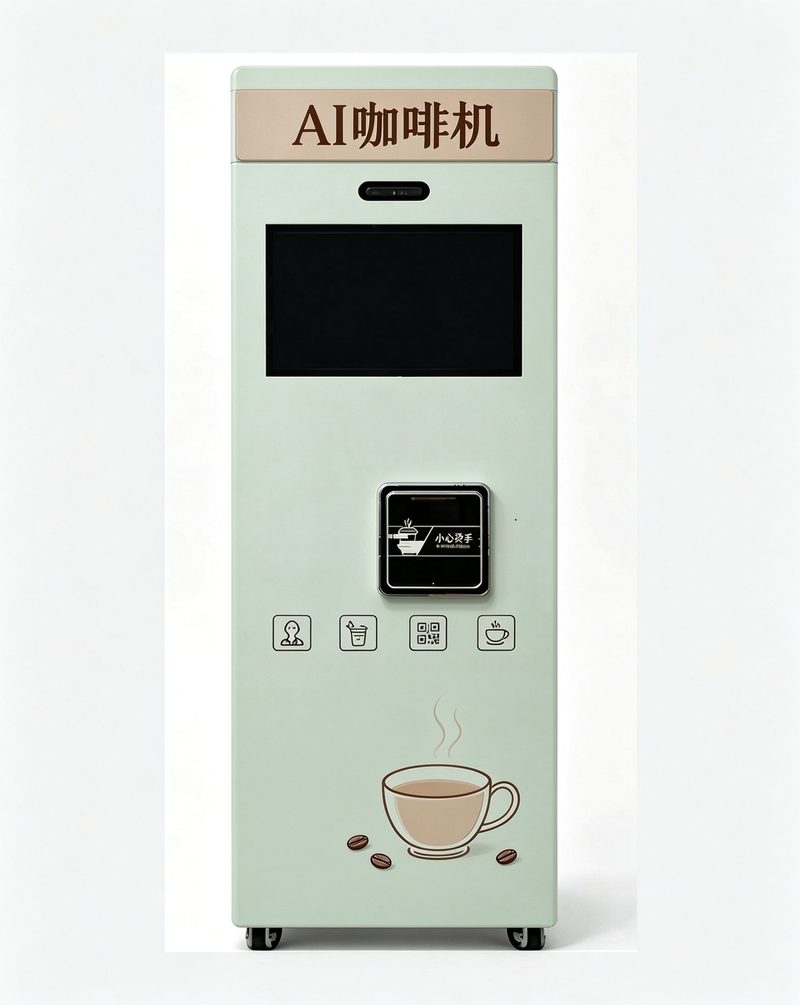
The sticker is one line of eight. Machine, placement, consumables, parts, power and connectivity, site fee, cleaning time and downtime make up the rest.
Written down separately, the lines show which lever actually moves the payback window of 3-8 months.
The Eight Cost Lines at a Glance
| Cost line | When it hits | How it scales |
|---|---|---|
| Machine (configured) | Before delivery | Fixed by the order |
| Placement and delivery | At installation | Per site |
| Consumables | Monthly | Directly with cup volume |
| Spare parts kit | One-time plus top-ups | With fleet size |
| Power and connectivity | Monthly | Flat per machine |
| Site fee or share | Monthly | With the venue agreement |
| Cleaning time | Weekly | With visit frequency |
| Downtime | Irregular | With service terms |
The Regular Nobody Recruited
The same face, four weeks running. An intern rehearsing a presentation stops at the corridor outside a hospital waiting hall, taps the screen twice, picks the same drink as always, and is walking away before the cup is full, and the pattern has stopped being a coincidence.
No promotion produced that habit. A machine that is always there, always stocked and always the same cup did it, which is a quieter kind of marketing than anything with a budget.
A site is not won on the first cup; it is won on the fifteenth. Nobody photographs it; the machine has simply become part of the floor plan.
Price per Cup, Not per Machine
Price per cup is the metric that survives contact with reality. Divide everything — capsules, cups, power, rent share, terminal fees, your own restock time — by cups sold, and compare it to what the venue charges.
Margins that look thin per cup turn healthy per week once volume is honest. Margins that look rich per cup usually hide a restock route nobody has priced. The ledger settles these arguments; intuition rarely does.
The Photo You Take on Day One
Photograph the installed unit, the socket, the water connection if there is one, the floor around it and the route in. Ten photographs taken on installation day answer a year of arguments about what was there before.
Store them with the site file, not on somebody's phone. When a host says the machine damaged the floor, the photo either settles it in a minute or proves the claim - both outcomes are useful.
Payback Windows in Practice
Site quality moves the payback window more than hardware choices do; a mid-range unit on a busy dwell point beats a premium unit in a dead corner.
Treat 3-8 months as the planning band, then let the site's own cup curve decide where inside it the truth sits.
Queues, Layout and the Second Cabinet
A single cabinet serves about three customers a minute at its best; beyond that the queue becomes the advertisement nobody wants. The second unit is justified by queue length, not by revenue alone.
Place the second cabinet beside the first rather than across the room. Two machines in one sightline share a queue, a restock trip and a fault log; two across a lobby share nothing but a landlord.
Structural or Seasonal
A bad month is either seasonal or structural, and the two demand opposite responses. Seasonal means the site will recover on its own; structural means it will not, and waiting costs a quarter.
The tell is the shape of the week rather than the size of the month: a seasonal dip keeps its weekday rhythm and shrinks evenly, while a structural one loses the peak first. Compare the same weekday across three months before concluding anything.
Two Machines, One Route
Adding a second machine to an existing site is the cheapest growth available, and it fails for a boring reason: the restock trip doubles while the visit count stays the same.
Plan the second unit as a separate stop in the route, then look for the saving elsewhere. Operators who assume a shared visit usually discover it on the third week.
One Customer, Four Weeks Straight
The same face, four weeks running. A night porter on his round stops at a university staff building foyer, scans, hesitates over the menu for a second, then picks the new flavour the dashboard has been quietly promoting, and the pattern has stopped being a coincidence.
No promotion produced that habit. A machine that is always there, always stocked and always the same cup did it, which is a quieter kind of marketing than anything with a budget.
A site is not won on the first cup; it is won on the fifteenth. The site host walks past without looking up - the highest compliment a placement gets.
The Handover File
Every site should survive its operator. A single folder - placement terms, wiring and water notes, machine serial, capsule par levels, host contacts, and the last three service visits - turns a two-week handover into an afternoon.
Keep it in one place and update it on the day something changes, not at the end of the quarter. The file is also the fastest way to answer the question every new host asks first: who do I call.
Accessibility Around a Standing Cabinet
A cabinet on a 2 square metres footprint still occupies a corridor. Leave the turning space, keep the screen at a reachable height, and make sure the pickup slot can be used from a seated position - three details that decide whether part of the audience can buy at all.
Ask the host about floor load and door widths before delivery, not after. The site that fits the tape measure on day one never becomes the expensive story later.
Remote Monitoring Keeps Rounds Short
With 4G/WiFi connectivity the fleet reports stock, sales and faults on its own, so depot runs replace guesswork with routes.
Alerts are worth tuning: stock thresholds, offline events and vend failures cover the bulk of what used to be discovered by surprise.
A Simple TCO Worksheet
- List all eight cost lines with today's figures
- Model the cup curve across one full seasonal cycle
- Fix the per-cup consumable figure with the supplier
- Average kit and filter spend across twelve months
- Compare machines on the same assumptions
Rent, Revenue Share or Hybrid
Flat rent suits a proven site where the operator wants predictability. Revenue share suits an unproven one where the host believes in the traffic. Hybrid splits the difference and is the most common answer in high-rent corners.
Whichever model, insist on honest metering and a written method for counting. The disputes that end placements are almost never about the percentage; they are about whose number is real.
The Contract Review Nobody Does
Most placement contracts are signed once and read never. The clauses that matter six months later are access hours, the notice period, and who owns the cups.
A fifteen-minute review at signature, with the three clauses highlighted, prevents most of the arguments that end placements early.
Reading a Contract Like an Operator
Operators read contracts backwards: start with the exit, then the access hours, then the money. Everything before that is decoration if the machine cannot be reached at seven in the morning.
The exit clause matters more than the rate. A placement that cannot be ended without penalty is a bet that must win; one with a written move-out is a test that can fail cheaply.
Then check who owns what: the cups, the bin, the socket, the liability. Four nouns, four sentences, and the document stops being a trap for whoever signs it next.
A Pilot Is Not a Small Site
A pilot exists to produce a decision, and a site exists to produce a margin. Confusing the two is how operators end up with six machines in six buildings and no idea which one works.
Run a pilot with an explicit question attached: does the traffic show up, does the host leave the machine alone, does the routine survive a normal week. Three questions, one month, one written answer.
A site, by contrast, is judged on the ledger: cups, net and complaints. Once the question is answered, the commercial coffee dispenser either becomes a site or is removed - and the decision should be made on the day the month closes, not whenever somebody gets round to it.
The Corner Before and After
Six months ago a fruit wholesale hall office was dead floor space - a bin, a poster, and the occasional sigh from a delivery rider helmet in hand who wanted a flat white and had nowhere to get it.
Now there is a commercial coffee dispenser against that wall. The routine is unremarkable, which is the compliment: scans, hesitates over the menu for a second, then picks the new flavour the dashboard has been quietly promoting.
Nobody photographs it; the machine has simply become part of the floor plan.
A Placement, Three Months In
Three months into a placement at a wholesale market office row, the pattern has settled: early-morning trade, and the first two hours outsell the afternoon. The menu has been trimmed twice - the dashboard ranked the lines, the bottom three went, and nobody wrote in to mourn them.
What the site taught was patience with a shape. Weeks one to three looked like a verdict; weeks four to twelve were the actual answer, and the answer was better than the verdict.
What a Working Site Looks Like
The pilot at a gym entrance corridor began as a favour to the site host and turned into the easiest arithmetic in the fleet: class-timetable surges, the evening class change is the golden window. When the second machine conversation started, the first month's ledger did most of the talking.
The interesting number is not the peak day; it is the worst weekday, because that is the one the rent has to survive. In this case the floor held, and a floor that holds is what lets an operator plan a second site.
The Ledger Tells the Story
The pilot at a gym entrance corridor began as a favour to the site host and turned into the easiest arithmetic in the fleet: class-timetable surges, the evening class change is the golden window. When the second machine conversation started, the first month's ledger did most of the talking.
The quarter's lesson was about the restock hour, not the menu. Moving the visit ninety minutes earlier recovered the morning peak, and the peak turned out to be most of the site.
The Vend That Did Not Happen
The same face, four weeks running. A night porter on his round stops at the fitting-zone bench of a home improvement market, collects the cup, checks the cap out of habit, and folds back into the corridor traffic, and the pattern has stopped being a coincidence.
No promotion produced that habit. A machine that is always there, always stocked and always the same cup did it, which is a quieter kind of marketing than anything with a budget.
A site is not won on the first cup; it is won on the fifteenth. The site host walks past without looking up - the highest compliment a placement gets.
Straight Answers to the Hard Questions
"Will people trust a drink made by a box?"
They trust the cup more than the counter when the cup is consistent. Capsule brewing means the tenth cup matches the first, and the cleaning sheet posted on the glass does more for confidence than any slogan.
"Is the tea or coffee actually any good?"
Good enough that the repeat rate, not the first sale, pays for the placement. The capsule range covers espresso, milk tea, fruit and herbal lines, so the regulars settle in and the curious keep sampling.
"Doesn't it need plumbing and rewiring?"
A household power line and two square metres cover it. Most placements are standing and selling the same week the site agreement is signed.
"What about hygiene inspections?"
A capsule system keeps the wet parts few and the routine short; the cleaning sheet and the service log are exactly what an inspector asks to see.
Seven Days, One Van, Seven Notes
- Monday - Week opens with paperwork - capsule order signed off, one site's access hours re-confirmed by message.
- Tuesday - Long route day - six machines, two top-ups flagged, one nozzle wiped twice.
- Wednesday - Midweek dip on the office sites; herbal line restocked at the clinic cluster.
- Thursday - Ledger exported and matched against capsule consumption; one gap investigated.
- Friday - The Friday visit happens before four, because after four the site is a queue and a machine that needs nothing.
- Saturday - Weekend shift: fewer sites, more cleaning. Two drip trays, one filter, and a machine that looks new again.
- Sunday - Silent day by design - alerts on, phone on, van parked.
Twelve Months, Two Columns
| Month | What the traffic does | What the operator does |
|---|---|---|
| Jan | New-year footfall is slow to wake; keep the hot lines deep and the route tight. | The quietest fortnight of the year - good for audits, bad for optimism. |
| Feb | Short month, long queues on the 14th; order the dessert-adjacent capsules early. | Valentine week bends the coffee and milk-tea lines upward for ten days. |
| Mar | Exam season starts on campuses; the library site stops being a quiet placement. | Spring footfall returns with the weather; fruit lines start their climb. |
| Apr | The first warm spell moves demand later in the day; watch the four o clock hour. | A good month to trial one new capsule line per machine. |
| May | Holiday Mondays distort the weekly curve; compare like with like before judging a site. | Mid-year route review: cut the weakest ten percent if the ledger says so. |
| Jun | Half-year service check: seals, nozzles, payment terminals. | The first genuinely hot week tells you whether the chilled lines were sized right. |
| Jul | Holiday travel lifts transit and hotel sites for roughly three weeks. | Peak heat shifts demand; the curve moves later into the evening. |
| Aug | Capsule storage gets hot in August; check the stockroom before the shelf life does. | Use the lull for operator training and contract renewals. |
| Sep | Order winter capsule volumes early - the ramp catches late buyers. | Back-to-routine week is the second new year; footfall snaps back fast. |
| Oct | The hot-drink golden window opens; the curve steepens week on week. | The first cold snap is worth a route note: it usually front-loads the month by a week. |
| Nov | Cold-weather peak builds; popular lines deserve a double buffer. | Year-end host meetings: renewals, shares, next-year placements. |
| Dec | The last week is dead in offices and frantic in transit; stock for one and rest for the other. | Festive peaks everywhere except the empty offices; plan the route around both. |
From the Operator's Notebook
Nobody warns you that the hard part is not buying the machine. It is the first-month readings, done the same way in month nine as in month one.
I stopped chasing new sites for three months and fixed the capsule rotation instead. Revenue went up without a single new placement.
The dashboard is honest, the host is honest, and both are approximate. the capsule rotation is what turns two approximations into a decision.
How It Stacks Up
| The old way | What it costs | Where it fails | What the machine changes |
|---|---|---|---|
| Staffed counter | A rota to fill, holidays to cover, overtime at the edges | Shuts when the last person leaves | A commercial coffee dispenser covers the closed hours without a rota |
| Traditional coin vending | Cash handling, change runs, slot jams | No telemetry; faults found by complaint | Every sale logged, every fault alerted |
| Corner cafe | A lease, a build-out, a barista roster | Menu changes mean reprinting and retraining | The menu changes when the capsule order does |
| Model line | Core drinks | Best-fit venues | Service rhythm |
|---|---|---|---|
| Coffee machine | Espresso, americano, latte | Offices, hotels, waiting areas | Restock every 2-3 weeks |
| Milk tea machine | Milk tea and tea lines | High streets, campuses, food courts | Restock every 2-3 weeks |
| Juice machine | Fruit lines, chilled options | Gyms, leisure, transit | Restock every 2-3 weeks |
| Herbal tea machine | Herbal and traditional teas | Wellness centres, community halls | Restock every 2-3 weeks |
A Checklist Worth Printing
- Test the payment terminal on the site's own network
- Check the pickup slot height against the host's accessibility notes
- Price one cycle of capsules before promising a payback figure
- Check signage faces the waiting area, not the wall
- Confirm footprint and power before signing the placement
- Test payment on site before the host's opening hour
- Compare the monthly ledger to the site's own count once a quarter
- Set stock thresholds on the dashboard before day one
- Fix the price list at launch and review it quarterly
- Keep a laminated contact card inside the cabinet door
- Note the host's shift pattern so restocks miss the rush
- Record the host's renewal date where the route can see it
The Takeaway
The plan that survives contact with a busy site is the one written with the operator, not merely for them.
Common questions
What happens during a power cut?
The machine resumes when power returns; in-flight vends are voided and refunded per the posted rule.
Is there a contract lock-in?
Placement terms vary by venue; trial periods with clear move-out terms are common and sensible.
When does the second machine make sense?
When the first one's ledger shows a stable curve and the restock route has spare capacity.
What does a cup actually cost?
Capsule plus cup plus a share of parts, power and cleaning - the per-cup figure is fixed with the supplier and held against invoices.
Can I run twenty sites alone?
Up to a point - routes planned from live data are what make small fleets workable with one service person.
Rent or revenue share?
Flat rent suits steady sites, share suits unproven ones; hybrids split the difference.
What spare parts should I stock?
Seals and nozzles first, a spare payment terminal, and the fuses that solve site-side faults.
What if payment fails mid-vend?
The vend is voided, the ledger records it, and the posted refund rule handles the customer the same day.
Machines this article refers to
Related reading
- Placement Playbook for the Self-Service Coffee Machine
- Revenue Share and Rent: Smart Coffee Kiosk Placement Contracts
- How Many Machines Can One Person Run? Remote Monitoring and Visit Planning Across Sites | DOZZON
- Shelf Life and Rotation for Capsule Coffee Machine Stock
Summary
Budgeting a commercial coffee dispenser means writing down every recurring line before the order, then letting the site's own cup curve correct the sheet.
Send the site's foot-traffic notes and the capsule shortlist will follow.