Dashboards and Alerts for the Staff Canteen Milk Tea Machine
In one line: With 4G/WiFi reporting, a staff canteen milk tea machine fleet describes itself: stock, faults and hourly sales arrive before the depot does.
Key facts: Sales-against-curve is the quiet alert: it flags a dying placement before the host complains.
The Routine Decides the Numbers
Walk into a site that runs the staff canteen milk tea machine and the first question is rarely about the machine itself. The aim is a plan a site manager can defend a quarter later, not a better pitch.
What to Watch on the Dashboard
- Stock levels per capsule line
- Fault codes and offline events
- Hourly sales against the site's curve
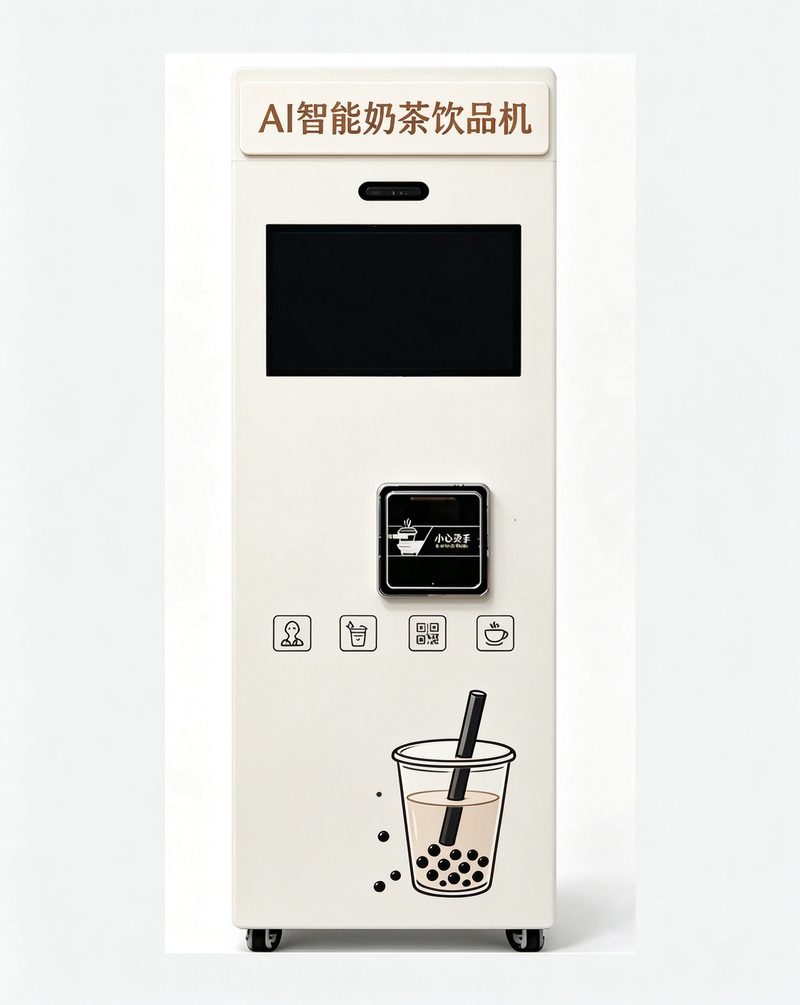
Alerts, Triggers, First Actions
| Alert | Trigger | First action |
|---|---|---|
| Stock low | Below threshold | Add line to next route |
| Machine offline | Over an hour | Power and SIM check by phone |
| Vend failures | Repeated | Walk the host through the slot |
| Sales drop | Against the curve | Visit before the host notices |
One Minute at the Machine
Half past nine, after the factory bus, a badminton hall snack corner. A night porter on his round walks up to the staff canteen milk tea machine and takes two - one now, one for the colleague minding the desk. The cup arrives capped, a cup of milk tea still warm enough to notice on the walk back.
No one needed help, which is the entire point.
Multiply that minute by the hours the site is actually awake, and the placement argument writes itself: the machine is not competing with the cafe down the street - it is serving the traffic that never walks there.
Repair or Replace, Out of Warranty
Out of warranty the question stops being what broke and becomes what the machine is worth per month. A repair that costs two months of net is a decision; one that costs six is a replacement wearing a repair's clothes.
Compare the repair quote against the site's steady net, not against the machine's purchase price. The purchase price is sunk, and comparing to it is how operators keep a losing unit alive for two extra years.
Remote Diagnostics and What They Miss
A 4G/WiFi module reports stock, faults and sales, and it does that well. What it cannot report is a sticky drip tray, a cup stack placed out of reach, or a host who has quietly unplugged the machine to charge a floor polisher.
So the dashboard ranks visits; it does not replace them. The useful habit is a short physical check on the same trip, because the last metre of diagnosis is still done by hand.
Counting Footfall Without a Sensor
A camera-free way to size a site: count for twenty minutes at the worst time of day, then again at the best. The ratio between them says more about the venue than the daily total does.
Write down what people are doing while they wait, not just how many pass. Two hundred people walking past a cabinet convert worse than forty who queue beside it for four minutes.
When the Power Bill Arrives
Power is the cost line most often estimated and least often checked. A cabinet with heating, chilling and a screen does not idle at zero, and standby load runs twenty-four hours whether anybody buys or not.
Read one real bill before modelling the second site. If the host pays, put the estimate in the placement terms anyway - a host who discovers an unexpected line in month two becomes a host who revisits the share.

What Gets Wiped, and When
The cleaning that matters is not the deep clean; it is the ninety seconds between customers - a wiped tray, a cleared cup chute, a lid bin emptied before it looks full. A cabinet cleaned once a week reads as dirty by Thursday.
Write the routine on the inside of the door in four lines, and stock the cloth where the person standing there can reach it. Cleaning routines fail for lack of a cloth far more often than for lack of willingness.
What Buyers Compare Before They Call
Buyers compare four things before they ever pick up the phone: footprint against the space they have, drink range against their audience, service terms against their own staff, and the all-in first-year number against their budget.
Answer those four on one page and the first call becomes a conversation about a site, not an interrogation about a brochure. A staff canteen milk tea machine that states 3-8 months payback without the assumptions behind it invites exactly the questions nobody wants.
The Corner Before and After
Six months ago a chess-and-cards room lobby was dead floor space - a bin, a poster, and the occasional sigh from two nurses sharing a ten-minute break who wanted a cup of milk tea and had nowhere to get it.
Now there is a staff canteen milk tea machine against that wall. The routine is unremarkable, which is the compliment: takes two - one now, one for the colleague minding the desk.
It is the fourth cup this corner has sold since the hour began.
Rent, Revenue Share or Hybrid
Flat rent suits a proven site where the operator wants predictability. Revenue share suits an unproven one where the host believes in the traffic. Hybrid splits the difference and is the most common answer in high-rent corners.
Whichever model, insist on honest metering and a written method for counting. The disputes that end placements are almost never about the percentage; they are about whose number is real.
The Three Days After a Breakdown
A breakdown costs the repair plus three days of habit. The first day the regulars wait, the second they try the place next door, and by the third some of them have decided they prefer it.
That is why the useful metric is time to first cup after a fault, not mean time between faults. A machine that fails twice a year and recovers in an hour is cheaper than one that fails once and is out for a week.
Adding the Second Machine
The second unit is justified by a plateau, not by a peak. When a site's curve has held flat for a quarter and the route still has slack, the arithmetic is already done - the rest is scheduling.
Doubling on one good month is how fleets end up with two machines selling the same forty cups. Wait for the flat line; it is the site telling you its size.
When the Promotion Ends
A launch price teaches customers a number. When it ends, some of them leave, and the ones who stay are the actual market for the site - which is useful information bought at a discount.
Plan the exit before the launch: how long the price runs, what replaces it, and what a normal week looks like afterwards. A promotion without an end date is a price cut with extra paperwork.
The Second Machine Decision
A second machine at the same site is a different decision from the first. The first was about whether the site works; the second is about what the first one cannot do - a second temperature, a second menu, a queue that forms at nine and disappears by ten.
The test is not revenue doubling. It is whether the existing machine is at its ceiling at the hour that matters: if it is idle at eleven and blocked at nine, the site needs capacity, not another product line. If it is idle all day, a second machine only doubles the rent share.
Alerts You Answer and Alerts You Mute
Watch the fleet in route order, not in alphabetical order. The screen that mirrors today's driving plan turns monitoring into ten focused minutes instead of an open-ended scroll.
The 4G/WiFi link makes the data free; the route discipline makes it useful. The pair together is how one operator keeps thirty sites without living in a spreadsheet.
The Price of Being Reachable
Every site has a radius inside which service is cheap and outside which it is a small expedition. The number that matters is not distance in kilometres but minutes from the nearest other site at the hour you would actually drive.
A site alone at the edge of a route carries the whole cost of that edge: the visit that exists only for it, the spare part carried for it, the afternoon spent getting there. Price it as if it were alone, because on the bad days it is.
This is also the argument for saying no. Two sites forty minutes apart are worth less than one site with twice the volume, and an operator who cannot refuse the far one ends up with a route that eats its own margin quietly.
When to Add the Second Machine
The second machine is justified by two curves crossing: the first unit's sales plateau at a level the site can sustain, and the restock route still has slack. When both hold for a quarter, the second placement is arithmetic, not courage.
The failure mode is doubling on a high - one good month is weather, not climate. The reliable trigger is a plateau: the site has told you its size, the menu has told you its ceiling, and the ledger has shown you the margin survived the plateau.
Fleets that grow this way inherit an accidental gift: every habit - cadence, cleaning, reconciliation - was built to be copied before it was needed twice.
The Person Who Quietly Runs It
The same face, four weeks running. An intern rehearsing a presentation stops at the back corner of a convenience store, collects the cup, checks the cap out of habit, and folds back into the corridor traffic, and the pattern has stopped being a coincidence.
No promotion produced that habit. A machine that is always there, always stocked and always the same cup did it, which is a quieter kind of marketing than anything with a budget.
A site is not won on the first cup; it is won on the fifteenth. It is the fourth cup this corner has sold since the hour began.
A Placement, Three Months In
The pilot at a community clinic hallway began as a favour to the site host and turned into the easiest arithmetic in the fleet: appointment-schedule traffic, the queue before lunch is the whole story. When the second machine conversation started, the first month's ledger did most of the talking.
The quarter's lesson was about the restock hour, not the menu. Moving the visit ninety minutes earlier recovered the morning peak, and the peak turned out to be most of the site.
What a Working Site Looks Like
Three months into a placement at a wholesale market office row, the pattern has settled: early-morning trade, and the first two hours outsell the afternoon. The menu has been trimmed twice - the dashboard ranked the lines, the bottom three went, and nobody wrote in to mourn them.
Nothing dramatic happened, which is the result worth reporting. The machine stayed stocked, the sheet got signed, the ledger matched the capsule invoices, and the host stopped mentioning it - the highest form of approval a placement gets.
The Ledger Tells the Story
The pilot at a furniture mall staff corridor began as a favour to the site host and turned into the easiest arithmetic in the fleet: staff and contractor flow, the steady base load comes from the fit-out crews. When the second machine conversation started, the first month's ledger did most of the talking.
The ledger and the walkthrough told different stories for a month. The ledger said demand; the walkthrough said a queue at the wrong hour. The walkthrough was right, and the fix cost nothing.
What the Dead Floor Space Became
Six months ago the rest area of a logistics warehouse was dead floor space - a bin, a poster, and the occasional sigh from a saleswoman between two showroom appointments who wanted a cup of milk tea and had nowhere to get it.
Now there is a staff canteen milk tea machine against that wall. The routine is unremarkable, which is the compliment: scans, hesitates over the menu for a second, then picks the new flavour the dashboard has been quietly promoting.
The dashboard records it as one line; the day's curve bends up almost imperceptibly.
Straight Answers to the Hard Questions
"Is the tea or coffee actually any good?"
Good enough that the repeat rate, not the first sale, pays for the placement. The capsule range covers espresso, milk tea, fruit and herbal lines, so the regulars settle in and the curious keep sampling.
"We tried a vending machine years ago and it was a disaster."
The difference is the telemetry. Stock, faults and sales report themselves now, so a machine that quietly fails gets noticed the same hour - not the following month.
"Doesn't it need plumbing and rewiring?"
A household power line and two square metres cover it. Most placements are standing and selling the same week the site agreement is signed.
"Will people trust a drink made by a box?"
They trust the cup more than the counter when the cup is consistent. Capsule brewing means the tenth cup matches the first, and the cleaning sheet posted on the glass does more for confidence than any slogan.
A Week on the Route, Logged
- Monday - Week opens with paperwork - capsule order signed off, one site's access hours re-confirmed by message.
- Tuesday - Route day proper. A payment terminal at the second stop needed a restart; the log records the minute it happened.
- Wednesday - Halfway check on capsule depth; one line is running ahead of plan and earns a second row next visit.
- Thursday - Books day. The monthly figure gets compared to the site's own count, and the two agree within normal wastage.
- Friday - Peak-site visit before the evening rush; contact card replaced at one unit.
- Saturday - Half-day route. The transit site runs hot, the office sites sleep, and the van gets its filters swapped.
- Sunday - Rest day, which is also a system: the alerts keep watch and the ledger keeps counting.
Twelve Months, Two Columns
| Month | Traffic pattern | Route decision |
|---|---|---|
| Jan | Budget season: the annual consumables figure gets signed this month. | The quietest fortnight of the year - good for audits, bad for optimism. |
| Feb | The post-holiday dip is real; use it for deep cleans and filter changes. | Valentine week bends the coffee and milk-tea lines upward for ten days. |
| Mar | Exam season starts on campuses; the library site stops being a quiet placement. | Spring footfall returns with the weather; fruit lines start their climb. |
| Apr | A good month to trial one new capsule line per machine. | Rain weeks teach you which sites have indoor dwell; note them for the record. |
| May | Warm evenings extend the outdoor sites; chilled options earn their drawer space. | Mid-year route review: cut the weakest ten percent if the ledger says so. |
| Jun | Exam and event season bends public-hall sites; stock ahead of the dates. | The first genuinely hot week tells you whether the chilled lines were sized right. |
| Jul | Office sites go quiet and tourist corridors take over; move the route, not the menu. | Peak heat shifts demand; the curve moves later into the evening. |
| Aug | Capsule storage gets hot in August; check the stockroom before the shelf life does. | Use the lull for operator training and contract renewals. |
| Sep | Order winter capsule volumes early - the ramp catches late buyers. | Back-to-routine week is the second new year; footfall snaps back fast. |
| Oct | The hot-drink golden window opens; the curve steepens week on week. | Autumn fairs and exhibitions fill the trade-hall sites. |
| Nov | Year-end host meetings: renewals, shares, next-year placements. | Cold-weather peak builds; popular lines deserve a double buffer. |
| Dec | Festive peaks everywhere except the empty offices; plan the route around both. | The last week is dead in offices and frantic in transit; stock for one and rest for the other. |
Three Things the Route Taught Me
If I could send one paragraph back to my first order, it would be this - the host conversation is not a purchase, it is a schedule, and the schedule is written in the ledger whether you look at it or not.
There is a version of this business that runs on charm, and it works until the charming person takes a holiday. the route order is the version that survives the holiday.
The machine never argues. It just records what you did about the ledger discipline, and hands the record back at the end of the quarter.
How It Stacks Up
| The old way | What it costs | Where it fails | What the machine changes |
|---|---|---|---|
| Staffed counter | A rota to fill, holidays to cover, overtime at the edges | Shuts when the last person leaves | A staff canteen milk tea machine covers the closed hours without a rota |
| Traditional coin vending | Coin floats, collection trips, notes that jam | Problems surface as complaints, weeks late | Payment and faults report themselves the same hour |
| Corner cafe | A lease, a build-out, a barista roster | Menu changes mean reprinting and retraining | The menu changes when the capsule order does |
| Model line | Core drinks | Best-fit venues | Service rhythm |
|---|---|---|---|
| Coffee machine | Espresso, americano, latte | Corporate floors, hotel corridors | Restock every 2-3 weeks |
| Milk tea machine | Milk tea and tea lines | High streets, campuses, food courts | Restock every 2-3 weeks |
| Juice machine | Fruit lines, chilled options | Gyms, cinemas, family venues | Restock every 2-3 weeks |
| Herbal tea machine | Herbal and traditional teas | Hospitals, tea houses, late shifts | Restock every 2-3 weeks |
A Checklist Worth Printing
- Agree restock cadence and access hours in writing
- Log the first repair with date, part and cause
- Review alerts quarterly and remove the noisy ones
- Export the ledger monthly and match it to consumption
- Keep one experimental line per machine and review it monthly
- Agree the refund rule before the first complaint, not after
- Confirm who empties the bin beside the cabinet
- Verify the capsule order lead time in weeks, not promises
- Confirm the delivery lift's depth before the van leaves
- Put the fault codes in plain words on the inside door
- Check the pickup slot height against the host's accessibility notes
- Test payment on site before the host's opening hour
The Takeaway
Start narrow: one site, one menu, one restock rhythm - then widen on evidence.
Common questions
When does the second machine make sense?
When the first one's ledger shows a stable curve and the restock route has spare capacity.
How long does installation take?
On a prepared site, commissioning is typically finished in under an hour: position, power, network check and a run of test cups.
What spare parts should I stock?
Seals and nozzles first, a spare payment terminal, and the fuses that solve site-side faults.
Who cleans the machine?
The operator, on the visit sheet - cup area and panel each visit, drawer and tray weekly.
Can I run twenty sites alone?
Up to a point - routes planned from live data are what make small fleets workable with one service person.
What happens during a power cut?
The machine resumes when power returns; in-flight vends are voided and refunded per the posted rule.
How often does someone need to visit?
On normal demand, the restock route lands every 2-3 weeks per machine, with dashboard alerts filling the gaps.
Is there a contract lock-in?
Placement terms vary by venue; trial periods with clear move-out terms are common and sensible.
Machines this article refers to
Related reading
- Capsule Supply Chains for the Unattended Tea Bar
- Seasonal Menu Planning for a Staff Canteen Milk Tea Machine
- Installing a Self-Service Milk Tea Machine: Timeline and Checklist
- Remote Monitoring for a Self-Service Milk Tea Machine Fleet
Summary
With 4G/WiFi reporting, a staff canteen milk tea machine fleet describes itself: stock, faults and hourly sales arrive before the depot does.
Request the spec sheet and the TCO worksheet together - they read as one document.