Capsule Counts: Keeping an Automatic Milk Tea Vending Machine Supplied
In one line: Capsule stock is a route question: size the order on the restock cadence of every 2-3 weeks and let the dashboard name the popular lines.
Key facts: FIFO rotation in the drawer, dated stock off the floor, and restock windows of every 2-3 weeks per cluster keep waste near zero.
The Routine Decides the Numbers
The automatic milk tea vending machine placed well and stocked badly will still disappoint the site. Read it as a worksheet: the useful parts are the ones you can copy into your own file.
Restock Cadence That Matches Demand
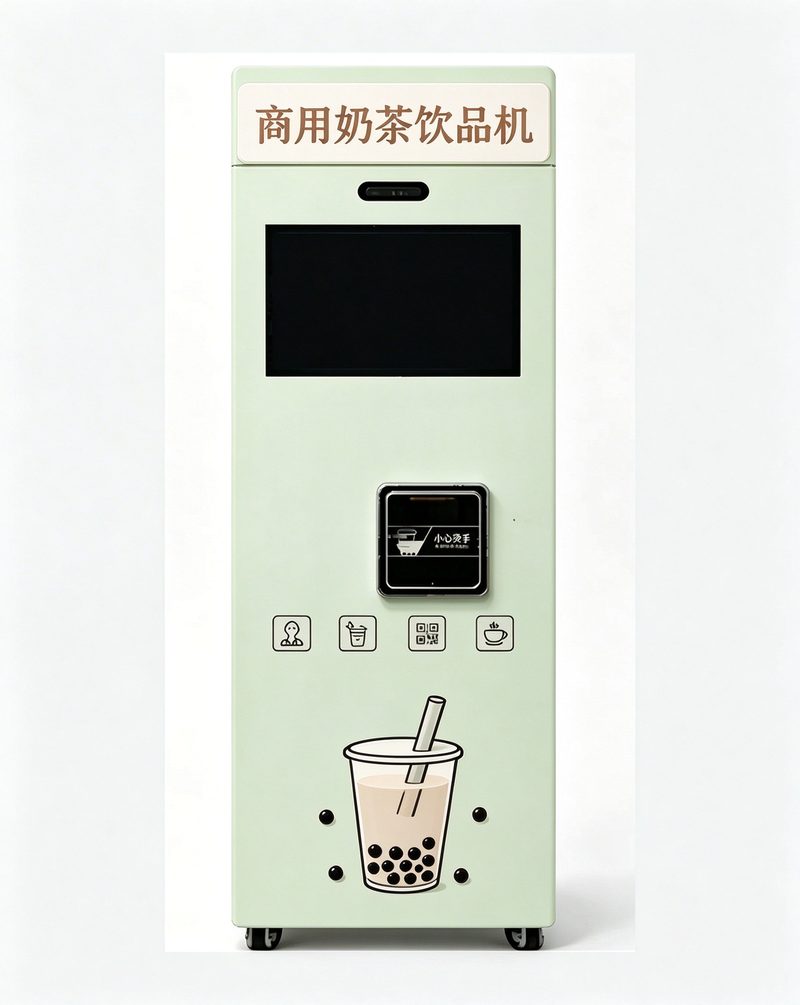
Under normal demand an automatic milk tea vending machine drinks its capsules over every 2-3 weeks; the route is built around that rhythm instead of around panic runs.
Watch the curve for two cycles, then lock the cadence per site.
Stock Signals and Actions
| Signal | Threshold | Action |
|---|---|---|
| Capsule line low | Below set level | Add to next route |
| Site offline | Over an hour | Check power and network first |
| Repeat vend failure | Two in a day | Site-side fix before next round |
| Slow line | No sales in 14 days | Trim from the menu |
The Regular Nobody Recruited
The same face, four weeks running. An intern rehearsing a presentation stops at the second-floor rest deck of a furniture expo, taps the screen twice, picks the same drink as always, and is walking away before the cup is full, and the pattern has stopped being a coincidence.
No promotion produced that habit. A machine that is always there, always stocked and always the same cup did it, which is a quieter kind of marketing than anything with a budget.
A site is not won on the first cup; it is won on the fifteenth. The dashboard records it as one line; the day's curve bends up almost imperceptibly.
The Second Vandalism Incident
One incident is bad luck; two in the same place is information. The second tells you whether the site is exposed by location, by lighting, or by the fact that nobody is around after ten.
Before spending on cameras, change what is cheap to change: move the cabinet into sight of a window, add light, shorten the unattended hours. Hardware deters the casual attempt; placement deters the determined one.
The Small Consumables Nobody Counts
Cups, lids, stirrers and napkins never appear in a payback model and always appear in a month-end surprise. They are cheap per unit and expensive per thousand, and they are the first thing to run out when a site gets busy.
Count them the way stock is counted: a fixed par level per site, checked at every restock, ordered with the capsules rather than separately. A site that runs out of lids has effectively run out of drinks.
The First Week Is Not the Business
Week one runs on curiosity. Colleagues try the new thing, the host tells everyone, and the number looks like a business. Week five is the first honest reading.
Judge a site on weeks five to eight, and only after a restock has been missed once, because that is when the routine either exists or does not. A launch figure quoted as a run rate flatters every placement ever signed.
Capsule Storage at the Site
- Dry, off the floor, away from direct sun
- First in, first out - date the boxes as they go in
- One visit's buffer on site, the rest at the depot
Selling the Machine or Placing It
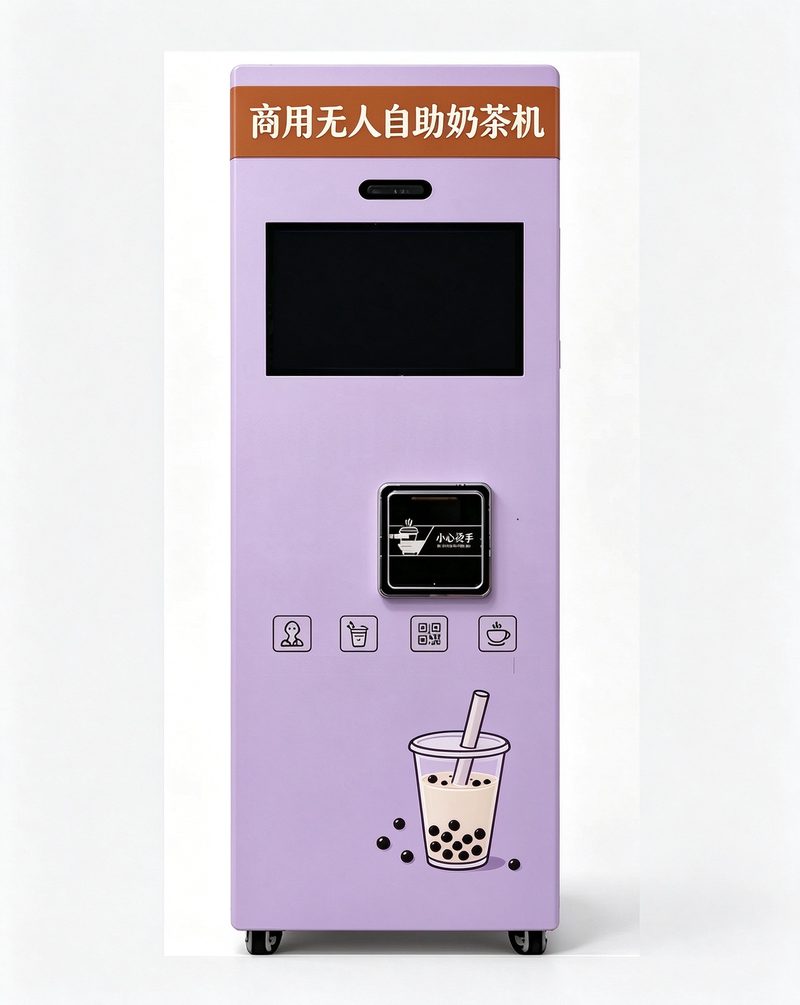
Two business models sit behind the same cabinet: sell it and hand over the site, or keep it and pay the host a share. The first collects money once and loses the consumable; the second collects slowly and owns the risk.
The choice should follow the operator's strength. If the strength is service and route density, keep the machine; if it is sales and installation, sell it. Operators who mix the two without deciding end up servicing machines they no longer own.
What the Data Tells You
The dashboard answers three questions: which drinks sell, which hours carry them, and which sites pay for a second machine.
Menu changes should come from those three answers, not from instinct alone.
The Month the Building Emptied
The same face, four weeks running. A saleswoman between two showroom appointments stops at a community clinic corridor by the pharmacy window, takes two - one now, one for the colleague minding the desk, and the pattern has stopped being a coincidence.
No promotion produced that habit. A machine that is always there, always stocked and always the same cup did it, which is a quieter kind of marketing than anything with a budget.
A site is not won on the first cup; it is won on the fifteenth. The dashboard records it as one line; the day's curve bends up almost imperceptibly.
Signage That Does Real Work
Most machine signage answers a question nobody asked. A sign saying the machine exists is decoration; a sign saying how to pay, what to do if it fails, and when it is restocked does actual work.
Test it by watching a first-time customer for thirty seconds. If they hesitate, the sign failed; if they press and leave, it worked. Two lines on a card beat a printed banner on the wall.
Buffer Stocks Without Dead Inventory
Dates matter more in herbal and milk-tea capsules than in coffee, so rotate by expiry at every visit: new stock behind, near-dated stock forward, and anything past its window out of the cabinet entirely.
A two-minute rotation at restock time prevents the one complaint that spreads faster than any flavour review — the cup that tasted like the shelf it sat on.
Capsule Storage and Shelf Life
Capsules are food before they are inventory. Store them dry, dated, off the floor, and rotate first in first out; the shelf life printed on the box is a limit, not a target.
The practical buffer is one full cycle plus a week, held at the depot rather than in a hot back room. Operators who over-order to chase a discount usually pay it back in write-offs.
The Line That Always Sells Out First
Every site has one line that empties first, and it is rarely the one the menu was designed around. It is whatever the site's own routine already pointed at before the machine arrived.
Stock that line deeper than the model suggests for the first month, then read the ledger. A stockout on the leading line teaches customers to check elsewhere, and the habit is expensive to rebuild.
Menu Rotation Without a Kitchen
A capsule menu rotates by the box, not by the recipe, which is why seasonal changes cost a restock decision instead of a renovation. Four lines out, four in, and the drawer tells you within a fortnight whether the read was right.
Keep one experimental row per machine. If it still sells after a month, it graduates; if it dies, the loss is a box, not a build.
Compliance and Site Etiquette
Quiet hours, tidy frontage and clear contact details keep hosts happy; none of it is complicated, all of it is noticed.
Keep the machine's paperwork - model, power, hygiene sheet - on file for venue audits.
Reading a Contract Like an Operator
Operators read contracts backwards: start with the exit, then the access hours, then the money. Everything before that is decoration if the machine cannot be reached at seven in the morning.
The exit clause matters more than the rate. A placement that cannot be ended without penalty is a bet that must win; one with a written move-out is a test that can fail cheaply.
Then check who owns what: the cups, the bin, the socket, the liability. Four nouns, four sentences, and the document stops being a trap for whoever signs it next.
Handing a Route to a New Operator
A route is a set of habits, and habits do not transfer through a spreadsheet. What transfers is a folder: site contacts, access hours, the fault history, the quirks of each host, and the two sites that need a phone call before a visit.
The handover week should be walked, not emailed. A new operator who has met four hosts and seen two restocks will keep the route alive; one who has only read the ledger will lose the first site within a quarter.
Write the first month's expectations down too: which numbers mean the handover worked, and which mean it did not. A handover without a test is a hope with a signature.
Two Floors Down, Another Machine
The same face, four weeks running. A teacher marking papers between classes stops at the corridor outside a hospital waiting hall, taps the screen twice, picks the same drink as always, and is walking away before the cup is full, and the pattern has stopped being a coincidence.
No promotion produced that habit. A machine that is always there, always stocked and always the same cup did it, which is a quieter kind of marketing than anything with a budget.
A site is not won on the first cup; it is won on the fifteenth. The dashboard records it as one line; the day's curve bends up almost imperceptibly.
A Placement, Three Months In
The pilot at a hotel corridor by the lifts began as a favour to the site host and turned into the easiest arithmetic in the fleet: late-evening demand, nights outperform the average once the tour groups check in. When the second machine conversation started, the first month's ledger did most of the talking.
The quarter's lesson was about the restock hour, not the menu. Moving the visit ninety minutes earlier recovered the morning peak, and the peak turned out to be most of the site.
The Ledger Tells the Story
The pilot at a logistics warehouse rest area began as a favour to the site host and turned into the easiest arithmetic in the fleet: shift-change traffic, the morning peak carries the day. When the second machine conversation started, the first month's ledger did most of the talking.
The host's own staff ended up doing the small things - topping cups, wiping the tray - and that informal care showed up as fewer complaints than any service level agreement would have delivered.
The Person Who Quietly Runs It
The same face, four weeks running. Two nurses sharing a ten-minute break stops at the ferry terminal waiting row, holds the cup with both hands and says nothing, which is its own review, and the pattern has stopped being a coincidence.
No promotion produced that habit. A machine that is always there, always stocked and always the same cup did it, which is a quieter kind of marketing than anything with a budget.
A site is not won on the first cup; it is won on the fifteenth. The sale lands in the ledger before the door swings shut.
Straight Answers to the Hard Questions
"Doesn't it need plumbing and rewiring?"
A household power line and two square metres cover it. Most placements are standing and selling the same week the site agreement is signed.
"How do I know the numbers are real?"
Every order carries its own reference and exports monthly against capsule consumption. You reconcile a report, not a shoebox of receipts.
"Is the tea or coffee actually any good?"
Good enough that the repeat rate, not the first sale, pays for the placement. The capsule range covers espresso, milk tea, fruit and herbal lines, so the regulars settle in and the curious keep sampling.
"The shop next door already sells drinks."
A shop sells drinks when someone is behind the counter. The machine sells at seven in the morning, at eleven at night, and every minute the shutters are down - it is a different business, not a rival.
The Week's Route, Written Down
- Monday - Dashboard review first: two sites ran hot over the weekend, so their rows go to the front of the van.
- Tuesday - Route day proper. A payment terminal at the second stop needed a restart; the log records the minute it happened.
- Wednesday - Midweek is the quiet read: office sites cool off, clinic and gym sites pick up the slack.
- Thursday - Reconciliation morning - cups sold against capsules issued, and the one discrepancy traced to a demo cup.
- Friday - Peak-site visit before the evening rush; contact card replaced at one unit.
- Saturday - Weekend shift: fewer sites, more cleaning. Two drip trays, one filter, and a machine that looks new again.
- Sunday - Rest day, which is also a system: the alerts keep watch and the ledger keeps counting.
Twelve Months, Two Columns
| Month | Traffic pattern | Route decision |
|---|---|---|
| Jan | The quietest fortnight of the year - good for audits, bad for optimism. | Budget season: the annual consumables figure gets signed this month. |
| Feb | Short month, long queues on the 14th; order the dessert-adjacent capsules early. | The post-holiday dip is real; use it for deep cleans and filter changes. |
| Mar | Quarter close: reconcile the ledger and prune the menu bottom. | Exam season starts on campuses; the library site stops being a quiet placement. |
| Apr | A good month to trial one new capsule line per machine. | Rain weeks teach you which sites have indoor dwell; note them for the record. |
| May | Holiday Mondays distort the weekly curve; compare like with like before judging a site. | Warm evenings extend the outdoor sites; chilled options earn their drawer space. |
| Jun | Half-year service check: seals, nozzles, payment terminals. | The first genuinely hot week tells you whether the chilled lines were sized right. |
| Jul | Office sites go quiet and tourist corridors take over; move the route, not the menu. | Peak heat shifts demand; the curve moves later into the evening. |
| Aug | Use the lull for operator training and contract renewals. | Capsule storage gets hot in August; check the stockroom before the shelf life does. |
| Sep | Back-to-routine week is the second new year; footfall snaps back fast. | Campus sites refill; the coffee line at eight in the morning comes back overnight. |
| Oct | The first cold snap is worth a route note: it usually front-loads the month by a week. | The hot-drink golden window opens; the curve steepens week on week. |
| Nov | Cold-weather peak builds; popular lines deserve a double buffer. | Darkness at five changes the traffic shape; the evening hour gains, the lunch hour thins. |
| Dec | Festive peaks everywhere except the empty offices; plan the route around both. | The last week is dead in offices and frantic in transit; stock for one and rest for the other. |
Notes I Keep Rewriting
My first site taught me the arithmetic; my fourth taught me the route order, which is the part that scales.
The dashboard is honest, the host is honest, and both are approximate. the alert settings is what turns two approximations into a decision.
If I could send one paragraph back to my first order, it would be this - the move-out clause is not a purchase, it is a schedule, and the schedule is written in the ledger whether you look at it or not.
How It Stacks Up
| The old way | What it costs | Where it fails | What the machine changes |
|---|---|---|---|
| Staffed counter | Wages every month, plus training and turnover | Open only as long as someone stands there | A automatic milk tea vending machine sells the hours the counter never could |
| Traditional coin vending | Coin floats, collection trips, notes that jam | Problems surface as complaints, weeks late | Payment and faults report themselves the same hour |
| Corner cafe | A lease, a build-out, a barista roster | Menu changes mean reprinting and retraining | The menu changes when the capsule order does |
| Model line | Core drinks | Best-fit venues | Service rhythm |
|---|---|---|---|
| Coffee machine | Espresso, americano, latte | Offices, hotels, waiting areas | Restock every 2-3 weeks |
| Milk tea machine | Milk tea and tea lines | High streets, campuses, food courts | Restock every 2-3 weeks |
| Juice machine | Fruit lines, chilled options | Gyms, cinemas, family venues | Restock every 2-3 weeks |
| Herbal tea machine | Herbal and traditional teas | Wellness centres, community halls | Restock every 2-3 weeks |
A Checklist Worth Printing
- Agree a trial period with a written move-out term
- Log the first month's cup curve against the plan
- Test payment on site before the host's opening hour
- Decide who owns the cups before the first order
- Ask the host where hot drinks are usually bought nearby
- Confirm the delivery lift's depth before the van leaves
- Verify the capsule order lead time in weeks, not promises
- Walk the cleaning sheet on every visit, not from memory
- Confirm footprint and power before signing the placement
- Set the filter calendar by measured water hardness
- Price one cycle of capsules before promising a payback figure
- Set a two-week buffer at the depot, not at the site
The Takeaway
Keep the worksheet alive after installation - it costs nothing to maintain and answers most debates.
Common questions
What is the usual payback window?
The planning band is 3-8 months, set mainly by site quality and the local price of a cup.
Is there a contract lock-in?
Placement terms vary by venue; trial periods with clear move-out terms are common and sensible.
What happens if a flavour runs out?
The dashboard flags the line before it empties; the next route carries the buffer.
How often does someone need to visit?
On normal demand, the restock route lands every 2-3 weeks per machine, with dashboard alerts filling the gaps.
How often do filters change?
By litres, not by date: the interval is set from measured hardness and logged on the sheet.
When does the second machine make sense?
When the first one's ledger shows a stable curve and the restock route has spare capacity.
What happens during a power cut?
The machine resumes when power returns; in-flight vends are voided and refunded per the posted rule.
Can I run twenty sites alone?
Up to a point - routes planned from live data are what make small fleets workable with one service person.
The machines behind this article
Related reading
- Menu Rotation on the Unattended Tea Bar
- Ordering and Storage for Unattended Tea Bar Capsules
- Water Quality and the Office Milk Tea Station
- Negotiating the Spot for a Staff Canteen Milk Tea Machine
Summary
Capsule stock is a route question: size the order on the restock cadence of every 2-3 weeks and let the dashboard name the popular lines.
Request the spec sheet and the TCO worksheet together - they read as one document.