Drinks by Season: Office Coffee Station Menu Notes
In one line: Winter widens the hot window, summer shifts demand to fruit lines; sales data picks the next season's order. Reading order follows the work order.
Key facts: Winter is the hot-drink golden window; summer bends the curve to chilled fruit lines; the menu should bend with it.
What Separates a Busy Unit from a Quiet One
The office coffee station that suits a lobby often needs a different stock plan in a staff canteen. Below is the working version of that conversation, with the numbers left visible.
Menu Rotation by Season
Winter widens the hot window; summer shifts demand toward chilled and fruit lines. The capsule format makes the switch a restock decision, not a hardware one.
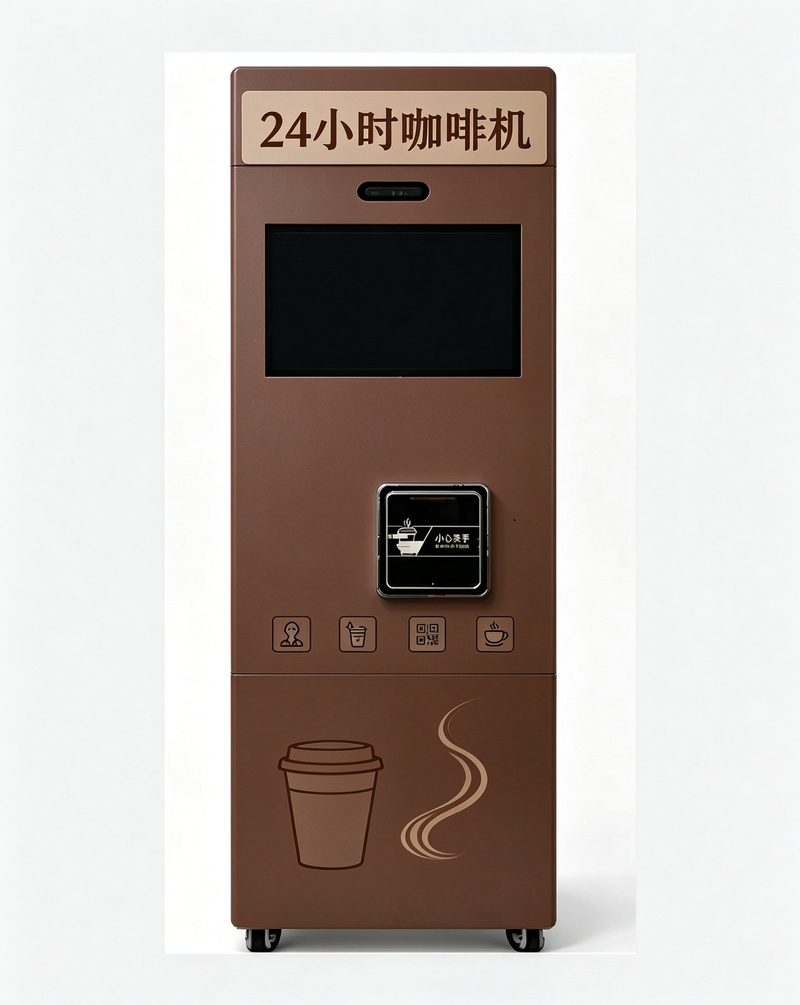
Menu Emphasis by Season
| Season | Emphasis | Restock note |
|---|---|---|
| Winter | Hot coffee, milk tea, herbal | Peak cadence |
| Spring | Mild teas, fruit lines | Standard |
| Summer | Fruit and chilled options | Watch the curve shift |
| Autumn | Warm drinks return | Order earlier for the ramp |
A Cup in the Middle of a Workday
7:40 on a weekday morning at a hotel lobby beside the lift bank. The queue at the coffee counter downstairs is eight deep; the office coffee station has three cups' worth of waiting in it, and no queue.
A site foreman counting change he no longer needs takes two - one now, one for the colleague minding the desk, then goes back upstairs with the cup still in hand - a two-minute errand that a staffed counter would have turned into ten.
Speed is not a luxury feature here; it is the placement's whole economics. Nobody photographs it; the machine has simply become part of the floor plan.
Measuring a Site Without Trusting It
Every site reports its own version of the truth: the host counts footfall, the dashboard counts cups, the operator counts stock. The three numbers disagree by design.
Reconcile them monthly on one page. When the gap is stable, the site is understood; when it moves, something in the building changed before it changed in the ledger.
Spare Parts and the First Repair
The first repair decides the relationship. Keep a small kit on the van - nozzle, seal set, payment module, fuse - and note which part failed, on which machine, at which hour.
A repair closed the same day is remembered as service. A repair that waits for a shipment becomes a story the host tells other hosts, and that story travels faster than any brochure.
Signage That Answers the First Question
The first question is never about the machine; it is about whether this thing takes the payment in your pocket. Say the payment method, the price range and the drink categories in one glance, and the queue forms faster.
Keep the sign to a single line of text and a single line of pictures. Anything longer is read by nobody and photographed by even fewer.
When the Site Restocks Itself
Handing restocking to the host's own staff trades route cost for control. It works when the host already runs a shift routine and fails when restocking becomes somebody's fourth job.
If you try it, keep the par levels in your system, not theirs, and audit monthly against the ledger. A site that restocks itself still needs a number that says whether it is being done.
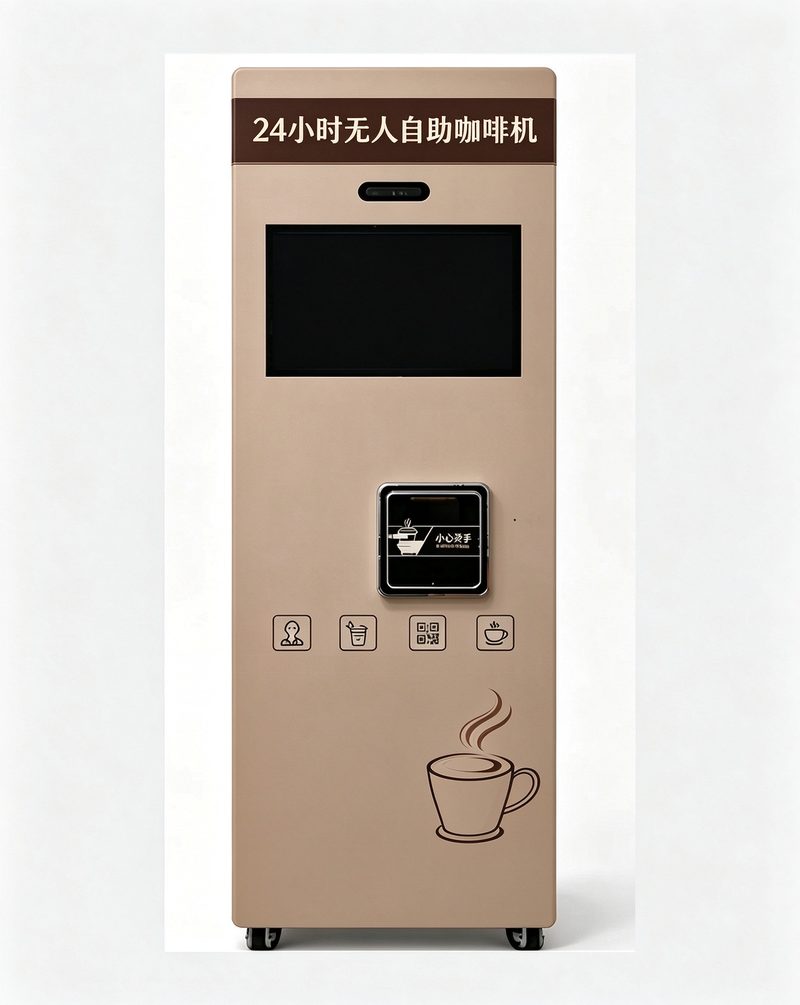
Cash, Card and the Queue Behind Them
Payment speed decides throughput more than brewing speed does. A tap that takes four seconds adds a person to the queue at the busiest hour.
Watch one full purchase at peak and count the taps. If the count is above four, the queue is being created by the interface, not by the coffee.
What the Screen Says About Privacy
A screen that asks for a phone number before pouring a drink tells customers what the machine is really for. Most will tap past it; some will remember it.
Collect only what a loyalty scheme needs to function, say in one line what it is used for, and make the skip button as prominent as the accept button. That is the whole of the policy most sites need.
From the Service Route
The operator's van stops at a university staff building foyer on a route that will cover six more machines before noon. The dashboard has already ranked the visit: stock fine, no faults, one line running low.
While the drawers are topped, a wholesaler tallying receipts on a crate wanders up; the sale happens between two tasks, holds the cup with both hands and says nothing, which is its own review.
This is what unattended means in practice - not absence, but attention aimed exactly where the data says. By the time the queue reforms, the machine is already serving the next regular.
Two Machines, One Route
Adding a second machine to an existing site is the cheapest growth available, and it fails for a boring reason: the restock trip doubles while the visit count stays the same.
Plan the second unit as a separate stop in the route, then look for the saving elsewhere. Operators who assume a shared visit usually discover it on the third week.
The Complaint Made in Public
A complaint at the machine is watched by everyone in the queue, which makes the response part of the product. Speed matters more than completeness: acknowledge, fix or refund, then explain.
Keep a single refund rule and apply it without negotiation in the moment. Arguments at the counter cost more than the drink, and the audience is deciding whether the machine is worth a second try.
The Second Vandalism Incident
One incident is bad luck; two in the same place is information. The second tells you whether the site is exposed by location, by lighting, or by the fact that nobody is around after ten.
Before spending on cameras, change what is cheap to change: move the cabinet into sight of a window, add light, shorten the unattended hours. Hardware deters the casual attempt; placement deters the determined one.
Complaints Logged, Complaints Answered
Write every complaint down with a date and a cause, even the trivial ones. The list becomes a fault profile within a quarter, and a fault profile is what turns an apology into a fix.
Answer within the day even when the answer is that someone is looking into it. An office coffee station that replies quickly is forgiven more often than one that is simply reliable.
Security and Vandalism
Unattended does not mean unobserved. The sites that suffer least are the ones where someone's job includes looking at the machine - a receptionist, a security desk, a cleaner on a fixed round.
Physical measures are cheap: a bolted base, a camera pointed at the queue rather than the machine, and a light that keeps the corner from becoming private after dark.
Compliance and Site Etiquette
Quiet hours, tidy frontage and clear contact details keep hosts happy; none of it is complicated, all of it is noticed.
Keep the machine's paperwork - model, power, hygiene sheet - on file for venue audits.
Pricing the Machine Against the Counter
The comparison buyers actually make is not machine against machine; it is machine against the counter they would otherwise staff. A counter carries wages, training, turnover and a rota that has to be filled on public holidays.
Put those four lines beside the machine's four - equipment, consumables, placement, service - and the comparison becomes honest quickly. The machine usually wins on hours and loses on menu breadth, which is exactly the trade a buyer should be choosing deliberately.
Written down, that comparison also protects the buyer from the wrong purchase: a site that needs a barista's range should hire one, and a site that needs round-the-clock consistency should not.
Handing a Route to a New Operator
A route is a set of habits, and habits do not transfer through a spreadsheet. What transfers is a folder: site contacts, access hours, the fault history, the quirks of each host, and the two sites that need a phone call before a visit.
The handover week should be walked, not emailed. A new operator who has met four hosts and seen two restocks will keep the route alive; one who has only read the ledger will lose the first site within a quarter.
Write the first month's expectations down too: which numbers mean the handover worked, and which mean it did not. A handover without a test is a hope with a signature.
The Regular Nobody Recruited
The same face, four weeks running. A forklift driver with gloves tucked in his belt stops at the smoking-terrace door of an office tower, holds the cup with both hands and says nothing, which is its own review, and the pattern has stopped being a coincidence.
No promotion produced that habit. A machine that is always there, always stocked and always the same cup did it, which is a quieter kind of marketing than anything with a budget.
A site is not won on the first cup; it is won on the fifteenth. The site host walks past without looking up - the highest compliment a placement gets.
A Placement, Three Months In
Three months into a placement at an office park lobby, the pattern has settled: weekday morning peaks, and Fridays run light and Mondays run heavy, every week. The menu has been trimmed twice - the dashboard ranked the lines, the bottom three went, and nobody wrote in to mourn them.
Nothing dramatic happened, which is the result worth reporting. The machine stayed stocked, the sheet got signed, the ledger matched the capsule invoices, and the host stopped mentioning it - the highest form of approval a placement gets.
What a Working Site Looks Like
The pilot at a logistics warehouse rest area began as a favour to the site host and turned into the easiest arithmetic in the fleet: shift-change traffic, the morning peak carries the day. When the second machine conversation started, the first month's ledger did most of the talking.
What the site taught was patience with a shape. Weeks one to three looked like a verdict; weeks four to twelve were the actual answer, and the answer was better than the verdict.
The Ledger Tells the Story
The pilot at a hotel corridor by the lifts began as a favour to the site host and turned into the easiest arithmetic in the fleet: late-evening demand, nights outperform the average once the tour groups check in. When the second machine conversation started, the first month's ledger did most of the talking.
Two decisions carried the quarter: the menu was cut from nine lines to six, and the restock moved from Friday to Wednesday. Neither was clever. Both came straight off the dashboard, and both showed up in the ledger within three weeks.
The Two-Minute Break That Pays
11 pm at a 24-hour stop at the staff room of a furniture mall. The queue at the coffee counter downstairs is eight deep; the office coffee station has three cups' worth of waiting in it, and no queue.
A visiting auditor with a folder under one arm scans, hesitates over the menu for a second, then picks the new flavour the dashboard has been quietly promoting, then goes back upstairs with the cup still in hand - a two-minute errand that a staffed counter would have turned into ten.
Speed is not a luxury feature here; it is the placement's whole economics. By the time the queue reforms, the machine is already serving the next regular.
Straight Answers to the Hard Questions
"Who fixes it when something goes wrong?"
The faults that actually happen - a clogged nozzle, a payment hiccup - are site-side fixes measured in minutes, which is why the parts kit lives in the service van. Anything rarer is a module swap under the service terms you negotiated.
"A machine like that must cost a fortune up front."
Less than the rent deposit for the counter it replaces. The machine is one of eight cost lines, and the payback window runs three to eight months at a site with real foot traffic - the worksheet in this series breaks all eight out.
"Will people trust a drink made by a box?"
They trust the cup more than the counter when the cup is consistent. Capsule brewing means the tenth cup matches the first, and the cleaning sheet posted on the glass does more for confidence than any slogan.
"The shop next door already sells drinks."
A shop sells drinks when someone is behind the counter. The machine sells at seven in the morning, at eleven at night, and every minute the shutters are down - it is a different business, not a rival.
Seven Days, One Van, Seven Notes
- Monday - Dashboard review first: two sites ran hot over the weekend, so their rows go to the front of the van.
- Tuesday - Long route day - six machines, two top-ups flagged, one nozzle wiped twice.
- Wednesday - Midweek dip on the office sites; herbal line restocked at the clinic cluster.
- Thursday - Ledger exported and matched against capsule consumption; one gap investigated.
- Friday - Peak-site visit before the evening rush; contact card replaced at one unit.
- Saturday - Half-day route. The transit site runs hot, the office sites sleep, and the van gets its filters swapped.
- Sunday - Nothing scheduled. Alerts forwarded to the phone, one dashboard glance at noon, no wheels turned.
Twelve Months, Two Columns
| Month | What the traffic does | What the operator does |
|---|---|---|
| Jan | Budget season: the annual consumables figure gets signed this month. | New-year footfall is slow to wake; keep the hot lines deep and the route tight. |
| Feb | The post-holiday dip is real; use it for deep cleans and filter changes. | Short month, long queues on the 14th; order the dessert-adjacent capsules early. |
| Mar | Quarter close: reconcile the ledger and prune the menu bottom. | Spring footfall returns with the weather; fruit lines start their climb. |
| Apr | A good month to trial one new capsule line per machine. | The first warm spell moves demand later in the day; watch the four o clock hour. |
| May | Warm evenings extend the outdoor sites; chilled options earn their drawer space. | Mid-year route review: cut the weakest ten percent if the ledger says so. |
| Jun | Exam and event season bends public-hall sites; stock ahead of the dates. | The first genuinely hot week tells you whether the chilled lines were sized right. |
| Jul | Holiday travel lifts transit and hotel sites for roughly three weeks. | Office sites go quiet and tourist corridors take over; move the route, not the menu. |
| Aug | Use the lull for operator training and contract renewals. | Capsule storage gets hot in August; check the stockroom before the shelf life does. |
| Sep | Back-to-routine week is the second new year; footfall snaps back fast. | Campus sites refill; the coffee line at eight in the morning comes back overnight. |
| Oct | The first cold snap is worth a route note: it usually front-loads the month by a week. | The hot-drink golden window opens; the curve steepens week on week. |
| Nov | Year-end host meetings: renewals, shares, next-year placements. | Darkness at five changes the traffic shape; the evening hour gains, the lunch hour thins. |
| Dec | The last week is dead in offices and frantic in transit; stock for one and rest for the other. | Close the ledger, thank the hosts, and let the dashboard write the next order. |
Notes I Keep Rewriting
There is a version of this business that runs on charm, and it works until the charming person takes a holiday. the cleaning sheet is the version that survives the holiday.
I stopped chasing new sites for three months and fixed the alert settings instead. Revenue went up without a single new placement.
The machine never argues. It just records what you did about the host conversation, and hands the record back at the end of the quarter.
How It Stacks Up
| The old way | What it costs | Where it fails | What the machine changes |
|---|---|---|---|
| Staffed counter | Wages every month, plus training and turnover | Open only as long as someone stands there | A office coffee station sells the hours the counter never could |
| Traditional coin vending | Cash handling, change runs, slot jams | No telemetry; faults found by complaint | Every sale logged, every fault alerted |
| Corner cafe | Rent, fit-out, staffed peaks | Fixed menu, fixed hours | Capsule range rotates at the restock visit, not by renovation |
| Line | What it pours | Where it fits best | Restock rhythm |
|---|---|---|---|
| Coffee machine | Espresso, americano, latte | Offices, hotels, waiting areas | Restock every 2-3 weeks |
| Milk tea machine | Milk tea and tea lines | High streets, campuses, food courts | Restock every 2-3 weeks |
| Juice machine | Fruit lines, chilled options | Gyms, leisure, transit | Restock every 2-3 weeks |
| Herbal tea machine | Herbal and traditional teas | Hospitals, tea houses, late shifts | Restock every 2-3 weeks |
A Checklist Worth Printing
- Record the host's renewal date where the route can see it
- Set stock thresholds on the dashboard before day one
- Log the first month's cup curve against the plan
- Review alerts quarterly and remove the noisy ones
- Agree the refund rule before the first complaint, not after
- Keep one seal and nozzle kit per ten machines
- Put the fault codes in plain words on the inside door
- Date capsule boxes and rotate first in, first out
- Note the host's shift pattern so restocks miss the rush
- Verify the capsule order lead time in weeks, not promises
- Price one cycle of capsules before promising a payback figure
- Agree restock cadence and access hours in writing
The Takeaway
Start narrow: one site, one menu, one restock rhythm - then widen on evidence.
Common questions
How often do filters change?
By litres, not by date: the interval is set from measured hardness and logged on the sheet.
Who prepares the site?
The host clears the spot and power; the operator brings levelling, testing and the first capsule load.
What happens if a flavour runs out?
The dashboard flags the line before it empties; the next route carries the buffer.
Can the menu change without a technician?
Yes - capsule menus change at the restock visit; nothing on the machine needs touching.
Does the machine need a water line?
Many units run without plumbing; confirm the water arrangement for the specific model during placement prep.
Can I run twenty sites alone?
Up to a point - routes planned from live data are what make small fleets workable with one service person.
What happens during a power cut?
The machine resumes when power returns; in-flight vends are voided and refunded per the posted rule.
Is there a contract lock-in?
Placement terms vary by venue; trial periods with clear move-out terms are common and sensible.
The machines behind this article
Related reading
- One Unmanned Coffee Machine, One Month: Lines to Track
- Coin-Operated Coffee Machine Answers for Importers and Operators
- Commissioning Day for the Unmanned Coffee Machine
- Water Quality and the Self-Service Espresso Machine
Summary
Winter widens the hot window, summer shifts demand to fruit lines; sales data picks the next season's order. Reading order follows the work order.
Ask for the placement shortlist template before choosing sites.