Seasonal Menu Planning for a Self-Service Milk Tea Machine
In one line: Seasonal menu planning on a self-service milk tea machine is a restock decision, not a hardware one - the capsule format changes the menu without a technician.
Key facts: Winter is the hot-drink golden window; summer bends the curve to chilled fruit lines; the menu should bend with it.
The Routine Decides the Numbers
Commissioning the self-service milk tea machine is a short event; the first quiet week afterwards is the real test. Each section answers a question that tends to arrive at a specific point in the buying process.
Menu Rotation by Season
Winter widens the hot window; summer shifts demand toward chilled and fruit lines. The capsule format makes the switch a restock decision, not a hardware one.
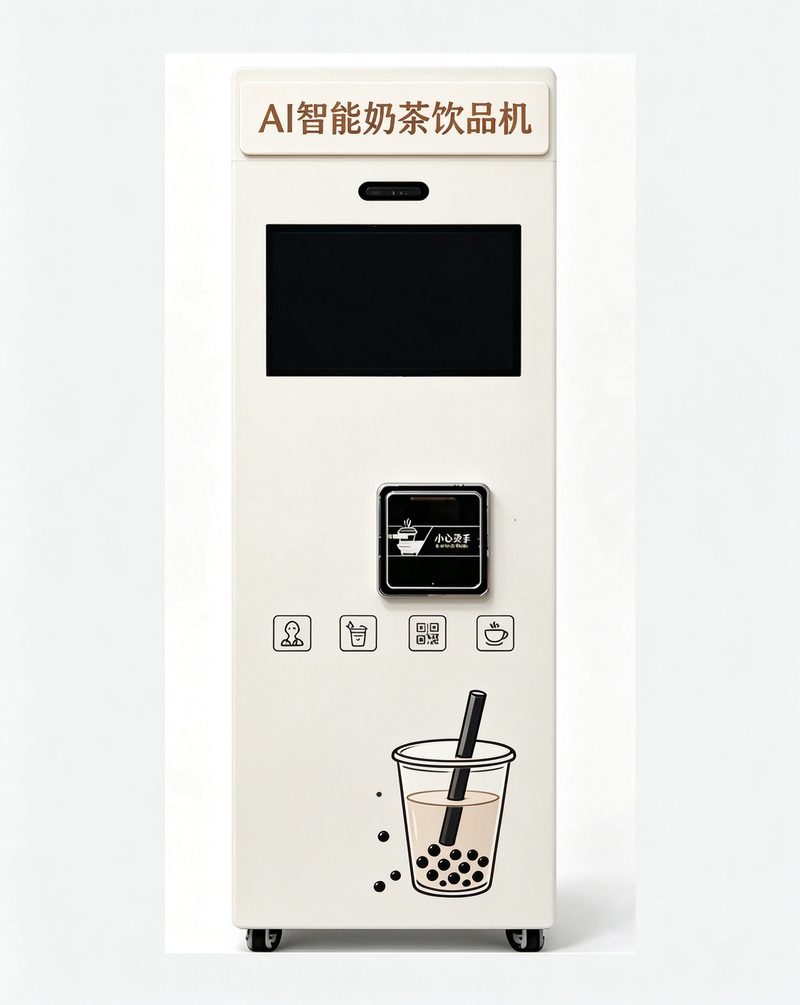
Menu Emphasis by Season
| Season | Emphasis | Restock note |
|---|---|---|
| Winter | Hot coffee, milk tea, herbal | Peak cadence |
| Spring | Mild teas, fruit lines | Standard |
| Summer | Fruit and chilled options | Watch the curve shift |
| Autumn | Warm drinks return | Order earlier for the ramp |
One Minute at the Machine
A hot noon under the awning, an office park lobby by the mail shelves. Two nurses sharing a ten-minute break walks up to the self-service milk tea machine and holds the cup with both hands and says nothing, which is its own review. The cup arrives capped, a cup of milk tea still warm enough to notice on the walk back.
The sale lands in the ledger before the door swings shut.
Multiply that minute by the hours the site is actually awake, and the placement argument writes itself: the machine is not competing with the cafe down the street - it is serving the traffic that never walks there.
Seasonal Prompts at the Machine
Cold weather moves the mix toward hot milk-tea and herbal; warm weather moves it toward iced fruit drinks — where the machine supports them. Shift the row order to match, because the top row is where thumbs go first.
A seasonal swap done in one restock visit costs nothing. The same swap discovered from sales data two months late costs a quarter of the season.
The Site That Is Merely Fine
Most sites are fine: they cover their costs, produce a modest margin, and generate no story. The temptation is to spend attention on them because they never complain.
Attention is the scarce input. A fine site needs a standard visit and nothing more; the hours saved belong at the site with a habit forming or a fault repeating. Treating every site as interesting is how routes get slow.
Where the Machine Earns Its Spot
A self-service milk tea machine does not need the front door - it needs a dwell point: somewhere people stand, wait or pause for a few minutes with nothing to hold their attention.
- Lobby, staff room and lift-lobby corners outperform corridor walls
- 2 square metres of floor and a household power line cover the footprint
- Keep the frontage visible from the main flow; hidden units sell mainly to regulars
Let Sales Data Pick the Next Flavour
The dashboard already ranks the menu; the next season's order is that ranking with two experiments added.
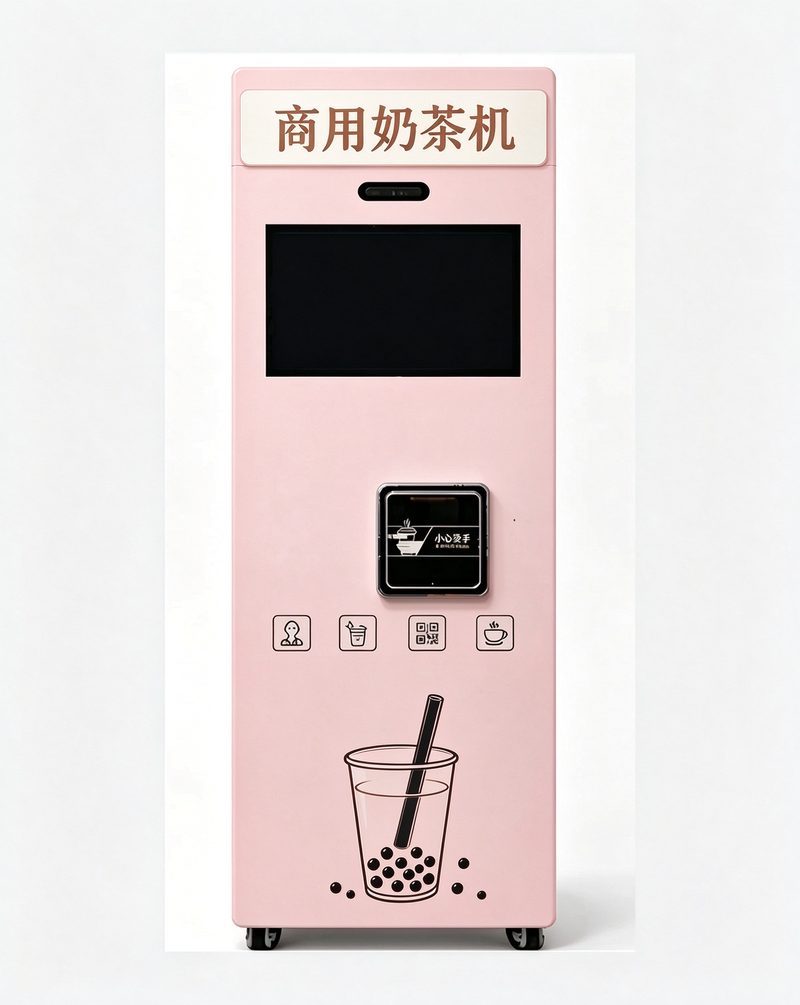
Rotating Lines Without Waste
Two new flavours at a time is the ceiling for an unattended cabinet. More than two and the choice anxiety shows up as slower screens and shorter queues abandoning at the third decision.
Retire the weakest seller with each introduction. Menus that only ever grow end up pretending to be shops, and unattended shops are slow shops.
Repair or Replace, Out of Warranty
Out of warranty the question stops being what broke and becomes what the machine is worth per month. A repair that costs two months of net is a decision; one that costs six is a replacement wearing a repair's clothes.
Compare the repair quote against the site's steady net, not against the machine's purchase price. The purchase price is sunk, and comparing to it is how operators keep a losing unit alive for two extra years.
The Minute That Pays the Rent
The quiet hour after breakfast, the corridor outside a hospital waiting hall. A wholesaler tallying receipts on a crate walks up to the self-service milk tea machine and scans, hesitates over the menu for a second, then picks the new flavour the dashboard has been quietly promoting. The cup arrives capped, a cup of milk tea still warm enough to notice on the walk back.
The restock note writes itself: the popular line is down one row.
Multiply that minute by the hours the site is actually awake, and the placement argument writes itself: the machine is not competing with the cafe down the street - it is serving the traffic that never walks there.
The Line That Always Sells Out First
Every site has one line that empties first, and it is rarely the one the menu was designed around. It is whatever the site's own routine already pointed at before the machine arrived.
Stock that line deeper than the model suggests for the first month, then read the ledger. A stockout on the leading line teaches customers to check elsewhere, and the habit is expensive to rebuild.
Reading a Slow Month
A slow month has four usual causes: holidays, weather, a fault nobody reported, or a host who changed something. Only one of them is about the machine.
Check the fault log first, then the venue calendar, then the menu. Blaming the location before checking the log is how operators talk themselves out of a good site.
When the Promotion Ends
A launch price teaches customers a number. When it ends, some of them leave, and the ones who stay are the actual market for the site - which is useful information bought at a discount.
Plan the exit before the launch: how long the price runs, what replaces it, and what a normal week looks like afterwards. A promotion without an end date is a price cut with extra paperwork.
Loading Bays and Delivery Windows
The delivery is where a placement's real constraints appear: a bay booked for fifteen minutes, a lift that will not take a pallet, a corridor that narrows at the fire door.
Walk the route with a trolley before the first order, not on the day. Every operator has a story about a machine that arrived and could not enter the building it was bought for.
Menus That Follow the Season
Rotate the menu with the building, not the calendar photo. Offices thin out in August and thicken in September; malls follow holidays; transit sites follow timetables. A self-service milk tea machine menu that tracks occupancy keeps sell-through steady.
The capsule shelf mirrors the roster: seasonal types enter small, prove themselves for two weeks, and earn their row.
A Machine for a Mixed-Language Site
Sites with shift workers, international staff or mixed-age footfall need three things on screen: price, choice and what to do when it goes wrong. Everything else is optional and often in the way.
Use pictures for the menu and words only for the exception. A customer who cannot read the interface will still press a picture of a coffee, but will not read a paragraph explaining a fault code.
What an Operator Owes a Host
Beyond the rent share, a host expects four things: the machine looks clean, the space is not cluttered, complaints reach somebody who answers, and the numbers arrive without being chased.
None of the four is expensive, and all four are the reason a placement survives a change of manager. The machine is replaceable; the habit of being easy to deal with is not.
Write the four into the service agreement as commitments rather than intentions, and report against them monthly. A host who can see the commitments being met stops auditing the machine and starts defending it.
When the Host Changes Their Mind
Hosts change: a new manager, a new owner, a new policy from head office. The machine that was welcome in March is asked to move in September, and the reason given is rarely the real one.
The protection is not the contract clause; it is the monthly report. A host who has watched cups and complaints every month knows what the machine does, and a manager inheriting that file inherits the argument for keeping it.
When the request comes anyway, ask for thirty days and a chance to fix the specific complaint. Half the time the complaint is fixable - noise, light, a queue at nine - and the self-service milk tea machine that survives is a site that will not raise it again.
The Month the Building Emptied
The same face, four weeks running. A wholesaler tallying receipts on a crate stops at the reception annex of a driving range, waits the forty seconds scrolling a phone, pockets the receipt without looking at it, and the pattern has stopped being a coincidence.
No promotion produced that habit. A machine that is always there, always stocked and always the same cup did it, which is a quieter kind of marketing than anything with a budget.
A site is not won on the first cup; it is won on the fifteenth. The dashboard records it as one line; the day's curve bends up almost imperceptibly.
A Placement, Three Months In
Three months into a placement at a wholesale market office row, the pattern has settled: early-morning trade, and the first two hours outsell the afternoon. The menu has been trimmed twice - the dashboard ranked the lines, the bottom three went, and nobody wrote in to mourn them.
Two decisions carried the quarter: the menu was cut from nine lines to six, and the restock moved from Friday to Wednesday. Neither was clever. Both came straight off the dashboard, and both showed up in the ledger within three weeks.
What a Working Site Looks Like
Three months into a placement at a furniture mall staff corridor, the pattern has settled: staff and contractor flow, and the steady base load comes from the fit-out crews. The menu has been trimmed twice - the dashboard ranked the lines, the bottom three went, and nobody wrote in to mourn them.
The interesting number is not the peak day; it is the worst weekday, because that is the one the rent has to survive. In this case the floor held, and a floor that holds is what lets an operator plan a second site.
The Ledger Tells the Story
Three months into a placement at a hotel corridor by the lifts, the pattern has settled: late-evening demand, and nights outperform the average once the tour groups check in. The menu has been trimmed twice - the dashboard ranked the lines, the bottom three went, and nobody wrote in to mourn them.
Nothing dramatic happened, which is the result worth reporting. The machine stayed stocked, the sheet got signed, the ledger matched the capsule invoices, and the host stopped mentioning it - the highest form of approval a placement gets.
Two Floors Down, Another Machine
The same face, four weeks running. A visiting auditor with a folder under one arm stops at the driver room of a cold-chain depot, taps the screen twice, picks the same drink as always, and is walking away before the cup is full, and the pattern has stopped being a coincidence.
No promotion produced that habit. A machine that is always there, always stocked and always the same cup did it, which is a quieter kind of marketing than anything with a budget.
A site is not won on the first cup; it is won on the fifteenth. Nobody photographs it; the machine has simply become part of the floor plan.
Straight Answers to the Hard Questions
"How do I know the numbers are real?"
Every order carries its own reference and exports monthly against capsule consumption. You reconcile a report, not a shoebox of receipts.
"Can it really run unattended all day?"
That is the design brief: uptime, alerts and a route. The machine does the shift work; you do the arithmetic.
"What if it gets vandalised or someone walks off with the cash?"
There is no cash box to walk off with - every sale is a logged QR payment, and the cabinet is bolted steel with an alarm on the door. Insurance conversations get easier when the till is a database.
"What about hygiene inspections?"
A capsule system keeps the wet parts few and the routine short; the cleaning sheet and the service log are exactly what an inspector asks to see.
A Week on the Route, Logged
- Monday - Week opens with paperwork - capsule order signed off, one site's access hours re-confirmed by message.
- Tuesday - Long route day - six machines, two top-ups flagged, one nozzle wiped twice.
- Wednesday - Midweek dip on the office sites; herbal line restocked at the clinic cluster.
- Thursday - Books day. The monthly figure gets compared to the site's own count, and the two agree within normal wastage.
- Friday - The Friday visit happens before four, because after four the site is a queue and a machine that needs nothing.
- Saturday - Light route; the hotel machine's drawer rotated first in, first out.
- Sunday - Rest day, which is also a system: the alerts keep watch and the ledger keeps counting.
Twelve Months, Two Columns
| Month | What changes | What to do about it |
|---|---|---|
| Jan | New-year footfall is slow to wake; keep the hot lines deep and the route tight. | Budget season: the annual consumables figure gets signed this month. |
| Feb | Short month, long queues on the 14th; order the dessert-adjacent capsules early. | The post-holiday dip is real; use it for deep cleans and filter changes. |
| Mar | Spring footfall returns with the weather; fruit lines start their climb. | Exam season starts on campuses; the library site stops being a quiet placement. |
| Apr | Rain weeks teach you which sites have indoor dwell; note them for the record. | The first warm spell moves demand later in the day; watch the four o clock hour. |
| May | Holiday Mondays distort the weekly curve; compare like with like before judging a site. | Mid-year route review: cut the weakest ten percent if the ledger says so. |
| Jun | Exam and event season bends public-hall sites; stock ahead of the dates. | Half-year service check: seals, nozzles, payment terminals. |
| Jul | Holiday travel lifts transit and hotel sites for roughly three weeks. | Office sites go quiet and tourist corridors take over; move the route, not the menu. |
| Aug | Use the lull for operator training and contract renewals. | Capsule storage gets hot in August; check the stockroom before the shelf life does. |
| Sep | Order winter capsule volumes early - the ramp catches late buyers. | Back-to-routine week is the second new year; footfall snaps back fast. |
| Oct | The hot-drink golden window opens; the curve steepens week on week. | The first cold snap is worth a route note: it usually front-loads the month by a week. |
| Nov | Cold-weather peak builds; popular lines deserve a double buffer. | Year-end host meetings: renewals, shares, next-year placements. |
| Dec | The last week is dead in offices and frantic in transit; stock for one and rest for the other. | Festive peaks everywhere except the empty offices; plan the route around both. |
Three Things the Route Taught Me
The machine never argues. It just records what you did about the first-month readings, and hands the record back at the end of the quarter.
If I could send one paragraph back to my first order, it would be this - the capsule rotation is not a purchase, it is a schedule, and the schedule is written in the ledger whether you look at it or not.
I used to think the machine was the business. Four hundred route stops later, the honest version: the machine is the storefront, and the business is the restock cadence around it.
How It Stacks Up
| The old way | What it costs | Where it fails | What the machine changes |
|---|---|---|---|
| Staffed counter | A rota to fill, holidays to cover, overtime at the edges | Shuts when the last person leaves | A self-service milk tea machine covers the closed hours without a rota |
| Traditional coin vending | Cash handling, change runs, slot jams | No telemetry; faults found by complaint | Every sale logged, every fault alerted |
| Corner cafe | A lease, a build-out, a barista roster | Menu changes mean reprinting and retraining | The menu changes when the capsule order does |
| Line | What it pours | Where it fits best | Restock rhythm |
|---|---|---|---|
| Coffee machine | Espresso, americano, latte | Office lobbies, clinics, showrooms | Restock every 2-3 weeks |
| Milk tea machine | Milk tea and tea lines | Malls, adult-education campuses, staff rooms | Restock every 2-3 weeks |
| Juice machine | Fruit lines, chilled options | Sports halls, stations, parks | Restock every 2-3 weeks |
| Herbal tea machine | Herbal and traditional teas | Hospitals, tea houses, late shifts | Restock every 2-3 weeks |
A Checklist Worth Printing
- Set the filter calendar by measured water hardness
- Put the fault codes in plain words on the inside door
- Write the power draw and floor load into the site agreement
- Ask the host where hot drinks are usually bought nearby
- Review alerts quarterly and remove the noisy ones
- Walk the route in the order the traffic allows, not the map
- Confirm who empties the bin beside the cabinet
- Walk the cleaning sheet on every visit, not from memory
- Note the host's shift pattern so restocks miss the rush
- Ask what else shares the socket the machine will use
- Check signage faces the waiting area, not the wall
- Note the site's quiet hours before scheduling a service visit
The Takeaway
Run the sheet, place the first unit, and let the first month of data argue for the second.
Common questions
Can the menu change without a technician?
Yes - capsule menus change at the restock visit; nothing on the machine needs touching.
Who cleans the machine?
The operator, on the visit sheet - cup area and panel each visit, drawer and tray weekly.
Can I run twenty sites alone?
Up to a point - routes planned from live data are what make small fleets workable with one service person.
Is there a contract lock-in?
Placement terms vary by venue; trial periods with clear move-out terms are common and sensible.
What happens during a power cut?
The machine resumes when power returns; in-flight vends are voided and refunded per the posted rule.
When does the second machine make sense?
When the first one's ledger shows a stable curve and the restock route has spare capacity.
What happens if a flavour runs out?
The dashboard flags the line before it empties; the next route carries the buffer.
How are capsules shipped and stored?
Stackable dated boxes, dry storage off the floor, first-in-first-out rotation at the depot.
Machines this article refers to
Related reading
- Menu Rotation on the Self-Service Bubble Tea Machine
- Capsule Supply Chains for the Self-Service Milk Tea Machine
- Site Agreements for an Automatic Milk Tea Vending Machine
- Menu Rotation on the Unattended Tea Bar
Summary
Seasonal menu planning on a self-service milk tea machine is a restock decision, not a hardware one - the capsule format changes the menu without a technician.
Book a commissioning slot only after the checklist above is signed off.