Negotiating the Spot for a Capsule Coffee Machine
In one line: A friendly handshake and a written contract are not opposites; this page supplies the writing part for capsule coffee machine placements.
Key facts: Exit terms matter more than entry terms; a clean removal clause is what keeps hosts saying yes.
From Quote to First Cup
The capsule coffee machine project starts with a site and ends with a rhythm nobody wrote down at the start. The rest of the page is the version of this conversation that survives a site visit.
Three Ways to Split Revenue
- Flat rent - simple, the site keeps the upside
- Revenue share - both sides ride the same curve
- Hybrid - a small base plus a share, common in malls
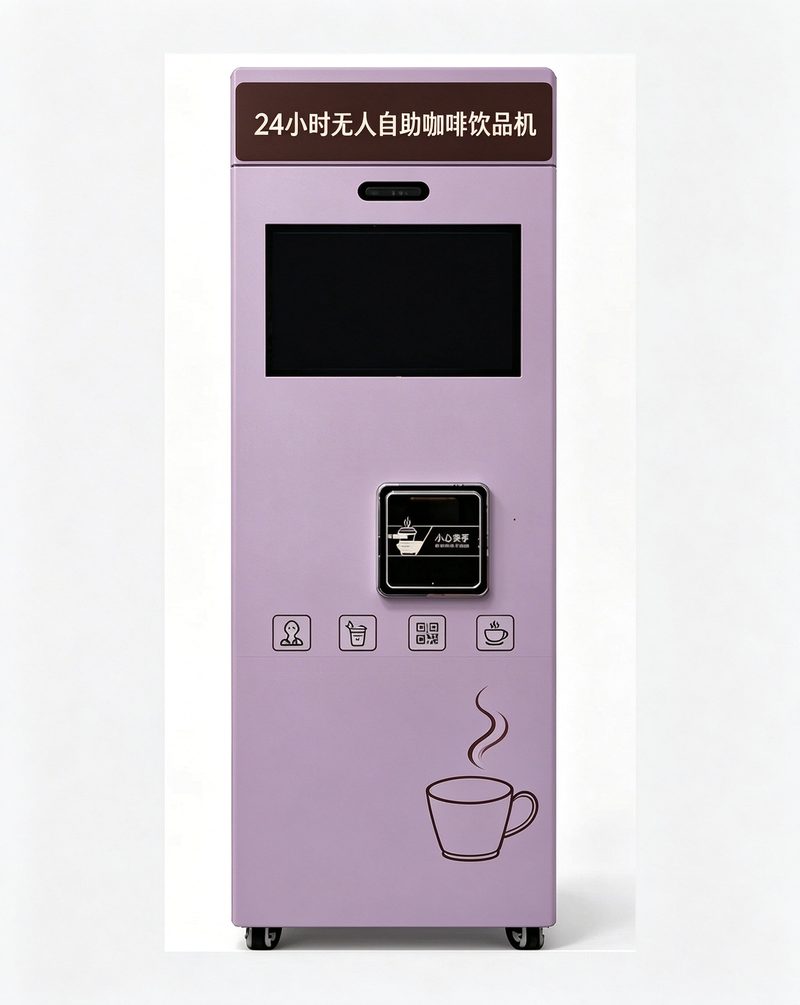
Placement Models Compared
| Model | Fits | Watch for |
|---|---|---|
| Flat rent | Steady, proven sites | Rent eats slow months |
| Revenue share | Unproven placements | Honest metering |
| Hybrid | Malls, high-rent corners | Base plus share clarity |
A Cup in the Middle of a Workday
Just before the mid-shift whistle at the back corner of a convenience store. The queue at the coffee counter downstairs is eight deep; the capsule coffee machine has three cups' worth of waiting in it, and no queue.
A gym regular towel over the shoulder waits the forty seconds scrolling a phone, pockets the receipt without looking at it, then goes back upstairs with the cup still in hand - a two-minute errand that a staffed counter would have turned into ten.
Speed is not a luxury feature here; it is the placement's whole economics. The restock note writes itself: the popular line is down one row.
What a Host Asks After Three Months
At the first renewal conversation the host asks three things: how many cups, how many complaints, and whether anyone has asked about the machine. The third question is the one that decides renewal.
Bring the numbers, but bring the quotes too. One sentence from a tenant about the queue being gone is worth more than a page of revenue.
Reading the Ledger Monthly
The busiest week of the year is chosen by the venue, not by the operator. Exam seasons, holidays, and weather move traffic; the restock calendar should move with them rather than argue.
One flexible day per week in the route absorbs most of what a calendar can throw at a fleet.
Fees, Access and Exit Terms
Put the boring clauses in writing and in order: who reports faults, response time, cleaning schedule visibility, utility responsibility, and what happens to sales data when either side walks away.
Contracts that answer the quiet questions early never get read in anger later. Every clause written on day one is an argument that never happens in year two.
The Repair That Was a Training Problem
Half the service calls that look mechanical are somebody pressing the wrong thing. The machine reports a fault, the operator drives out, and the fix is a restart plus a sentence of instruction that was never given.
Before dispatching a technician, read the last ten minutes of the event log. If the same code appears after the same action three times, the fault is in the routine, not in the hardware - and the cheapest repair is a laminated card taped inside the door.
Cleaning Products That Damage the Machine
The wrong cleaner costs more than the right one. Solvent-based sprays cloud polycarbonate panels, chlorine left on stainless pits it, and a wet cloth around a socket turns a routine wipe into a service call.
Keep one approved cleaner per surface and write it on the inside of the door: food-contact areas, screens, and the outside shell are three different jobs. A cleaner who has to guess will use the strongest thing on the van.
Contract Clauses That Matter
Revenue share conversations go smoother when the venue sees the machine's arithmetic: cups per week at honest footfall, capsule cost, and the share on offer. Numbers first, enthusiasm second.
A capsule coffee machine proposal with a worked example on one page closes faster than a folder of brochures, and it sets the renewal baseline at the same time.
One Minute at the Machine
Just before the mid-shift whistle, a driving-school waiting shelter. A teacher marking papers between classes walks up to the capsule coffee machine and taps the screen twice, picks the same drink as always, and is walking away before the cup is full. The cup arrives capped, a flat white still warm enough to notice on the walk back.
The dashboard records it as one line; the day's curve bends up almost imperceptibly.
Multiply that minute by the hours the site is actually awake, and the placement argument writes itself: the machine is not competing with the cafe down the street - it is serving the traffic that never walks there.
The Cup Itself: Rim, Heat, Foam
Customers judge a drink before tasting it: whether the rim is clean, whether the cup is warm to hold, whether the surface looks like something a person made. None of that is on the specification sheet and all of it decides the second purchase.
Temperature is the easiest to get wrong and the cheapest to fix. A cup that arrives drinkable rather than scalding suits a lobby; one that arrives hot suits a winter street. The setting is a menu decision, not a machine decision.
Renewals Based on Numbers
Review each placement quarterly against its first-month numbers, together with the venue. Machines that drift down get a fix plan; machines that drift up get a renewal conversation early.
The joint review turns the contract from a filed document into a working relationship — and working relationships survive the corridor redesign or the management change that kills unwritten ones.
Loading Bays and Delivery Windows
The delivery is where a placement's real constraints appear: a bay booked for fifteen minutes, a lift that will not take a pallet, a corridor that narrows at the fire door.
Walk the route with a trolley before the first order, not on the day. Every operator has a story about a machine that arrived and could not enter the building it was bought for.
The Contract Review Nobody Does
Most placement contracts are signed once and read never. The clauses that matter six months later are access hours, the notice period, and who owns the cups.
A fifteen-minute review at signature, with the three clauses highlighted, prevents most of the arguments that end placements early.
Signage That Answers the First Question
The first question is never about the machine; it is about whether this thing takes the payment in your pocket. Say the payment method, the price range and the drink categories in one glance, and the queue forms faster.
Keep the sign to a single line of text and a single line of pictures. Anything longer is read by nobody and photographed by even fewer.
The Invoice That Arrives Late
Payment terms decide how many sites a small operator can carry. A thirty-day term on a site that pays in sixty is not a paperwork problem; it is a loan the operator is making without interest.
Agree the date, the method and the penalty before the machine is installed, and put all three in the placement terms. Chasing an invoice is the most expensive hour in the month because it produces nothing.
What the First Month Actually Looks Like
Week one is noise: curious cups, staff trials, a payment hiccup on Tuesday. Week two is when the curve starts meaning something - the regulars appear, and the dashboard begins to draw a shape.
By week four a placement has usually told you one of three truths: the site holds a daily rhythm worth feeding, the site is slower than the walkthrough suggested and the menu needs widening, or the spot is simply wrong and the trial clause earns its keep.
None of these outcomes is failure. The expensive version of this learning is a twelve-month lease signed without a trial; the cheap version is four weeks and a written move-out term.
Reading a Contract Like an Operator
Operators read contracts backwards: start with the exit, then the access hours, then the money. Everything before that is decoration if the machine cannot be reached at seven in the morning.
The exit clause matters more than the rate. A placement that cannot be ended without penalty is a bet that must win; one with a written move-out is a test that can fail cheaply.
Then check who owns what: the cups, the bin, the socket, the liability. Four nouns, four sentences, and the document stops being a trap for whoever signs it next.
The Month the Building Emptied
The same face, four weeks running. An intern rehearsing a presentation stops at the second-floor rest deck of a furniture expo, holds the cup with both hands and says nothing, which is its own review, and the pattern has stopped being a coincidence.
No promotion produced that habit. A machine that is always there, always stocked and always the same cup did it, which is a quieter kind of marketing than anything with a budget.
A site is not won on the first cup; it is won on the fifteenth. The site host walks past without looking up - the highest compliment a placement gets.
A Placement, Three Months In
Three months into a placement at a furniture mall staff corridor, the pattern has settled: staff and contractor flow, and the steady base load comes from the fit-out crews. The menu has been trimmed twice - the dashboard ranked the lines, the bottom three went, and nobody wrote in to mourn them.
The first month argued with the second and lost. What looked like a slow start was a queue forming in the wrong half hour - once the route moved the restock earlier, the same site sold the same cups with half the empty rows.
What a Working Site Looks Like
The pilot at a wholesale market office row began as a favour to the site host and turned into the easiest arithmetic in the fleet: early-morning trade, the first two hours outsell the afternoon. When the second machine conversation started, the first month's ledger did most of the talking.
What the site taught was patience with a shape. Weeks one to three looked like a verdict; weeks four to twelve were the actual answer, and the answer was better than the verdict.
The Ledger Tells the Story
Three months into a placement at a gym entrance corridor, the pattern has settled: class-timetable surges, and the evening class change is the golden window. The menu has been trimmed twice - the dashboard ranked the lines, the bottom three went, and nobody wrote in to mourn them.
Nothing dramatic happened, which is the result worth reporting. The machine stayed stocked, the sheet got signed, the ledger matched the capsule invoices, and the host stopped mentioning it - the highest form of approval a placement gets.
Two Floors Down, Another Machine
The same face, four weeks running. Two nurses sharing a ten-minute break stops at a badminton hall snack corner, takes two - one now, one for the colleague minding the desk, and the pattern has stopped being a coincidence.
No promotion produced that habit. A machine that is always there, always stocked and always the same cup did it, which is a quieter kind of marketing than anything with a budget.
A site is not won on the first cup; it is won on the fifteenth. The restock note writes itself: the popular line is down one row.
Straight Answers to the Hard Questions
"Sounds like a headache to restock."
The restock route runs every two to three weeks per machine on normal demand, sized by the dashboard rather than by guesswork. One van, one morning, ten sites.
"Who fixes it when something goes wrong?"
The faults that actually happen - a clogged nozzle, a payment hiccup - are site-side fixes measured in minutes, which is why the parts kit lives in the service van. Anything rarer is a module swap under the service terms you negotiated.
"Doesn't it need plumbing and rewiring?"
A household power line and two square metres cover it. Most placements are standing and selling the same week the site agreement is signed.
"Can it really run unattended all day?"
That is the design brief: uptime, alerts and a route. The machine does the shift work; you do the arithmetic.
Seven Days, One Van, Seven Notes
- Monday - Route planned from the weekend's dashboard; the week's capsule order confirmed.
- Tuesday - Route day proper. A payment terminal at the second stop needed a restart; the log records the minute it happened.
- Wednesday - Midweek dip on the office sites; herbal line restocked at the clinic cluster.
- Thursday - Reconciliation morning - cups sold against capsules issued, and the one discrepancy traced to a demo cup.
- Friday - The Friday visit happens before four, because after four the site is a queue and a machine that needs nothing.
- Saturday - Weekend shift: fewer sites, more cleaning. Two drip trays, one filter, and a machine that looks new again.
- Sunday - Rest day, which is also a system: the alerts keep watch and the ledger keeps counting.
Twelve Months, Two Columns
| Month | What the traffic does | What the operator does |
|---|---|---|
| Jan | Budget season: the annual consumables figure gets signed this month. | The quietest fortnight of the year - good for audits, bad for optimism. |
| Feb | The post-holiday dip is real; use it for deep cleans and filter changes. | Valentine week bends the coffee and milk-tea lines upward for ten days. |
| Mar | Exam season starts on campuses; the library site stops being a quiet placement. | Spring footfall returns with the weather; fruit lines start their climb. |
| Apr | The first warm spell moves demand later in the day; watch the four o clock hour. | Rain weeks teach you which sites have indoor dwell; note them for the record. |
| May | Warm evenings extend the outdoor sites; chilled options earn their drawer space. | Holiday Mondays distort the weekly curve; compare like with like before judging a site. |
| Jun | Exam and event season bends public-hall sites; stock ahead of the dates. | Half-year service check: seals, nozzles, payment terminals. |
| Jul | Office sites go quiet and tourist corridors take over; move the route, not the menu. | Holiday travel lifts transit and hotel sites for roughly three weeks. |
| Aug | Use the lull for operator training and contract renewals. | Capsule storage gets hot in August; check the stockroom before the shelf life does. |
| Sep | Campus sites refill; the coffee line at eight in the morning comes back overnight. | Order winter capsule volumes early - the ramp catches late buyers. |
| Oct | Autumn fairs and exhibitions fill the trade-hall sites. | The hot-drink golden window opens; the curve steepens week on week. |
| Nov | Cold-weather peak builds; popular lines deserve a double buffer. | Year-end host meetings: renewals, shares, next-year placements. |
| Dec | Festive peaks everywhere except the empty offices; plan the route around both. | The last week is dead in offices and frantic in transit; stock for one and rest for the other. |
Notes I Keep Rewriting
I stopped chasing new sites for three months and fixed the host conversation instead. Revenue went up without a single new placement.
The dashboard is honest, the host is honest, and both are approximate. the route order is what turns two approximations into a decision.
Nobody warns you that the hard part is not buying the machine. It is the ledger discipline, done the same way in month nine as in month one.
How It Stacks Up
| The old way | What it costs | Where it fails | What the machine changes |
|---|---|---|---|
| Staffed counter | Wages every month, plus training and turnover | Open only as long as someone stands there | A capsule coffee machine sells the hours the counter never could |
| Traditional coin vending | Coin floats, collection trips, notes that jam | Problems surface as complaints, weeks late | Payment and faults report themselves the same hour |
| Corner cafe | Rent, fit-out, staffed peaks | Fixed menu, fixed hours | Capsule range rotates at the restock visit, not by renovation |
| Model line | Core drinks | Best-fit venues | Service rhythm |
|---|---|---|---|
| Coffee machine | Espresso, americano, latte | Offices, hotels, waiting areas | Restock every 2-3 weeks |
| Milk tea machine | Milk tea and tea lines | Retail floors, schools, factory canteens | Restock every 2-3 weeks |
| Juice machine | Fruit lines, chilled options | Sports halls, stations, parks | Restock every 2-3 weeks |
| Herbal tea machine | Herbal and traditional teas | Wellness centres, community halls | Restock every 2-3 weeks |
A Checklist Worth Printing
- Log the first repair with date, part and cause
- Keep a laminated contact card inside the cabinet door
- Walk the route in the order the traffic allows, not the map
- Check signage faces the waiting area, not the wall
- Date capsule boxes and rotate first in, first out
- Review alerts quarterly and remove the noisy ones
- Agree restock cadence and access hours in writing
- Confirm footprint and power before signing the placement
- Confirm the delivery lift's depth before the van leaves
- Test the payment terminal on the site's own network
- Confirm who empties the bin beside the cabinet
- Keep one experimental line per machine and review it monthly
The Takeaway
The plan that survives contact with a busy site is the one written with the operator, not merely for them.
Common questions
Who cleans the machine?
The operator, on the visit sheet - cup area and panel each visit, drawer and tray weekly.
Is there a contract lock-in?
Placement terms vary by venue; trial periods with clear move-out terms are common and sensible.
Rent or revenue share?
Flat rent suits steady sites, share suits unproven ones; hybrids split the difference.
How often do filters change?
By litres, not by date: the interval is set from measured hardness and logged on the sheet.
What happens during a power cut?
The machine resumes when power returns; in-flight vends are voided and refunded per the posted rule.
Can I run twenty sites alone?
Up to a point - routes planned from live data are what make small fleets workable with one service person.
Who prepares the site?
The host clears the spot and power; the operator brings levelling, testing and the first capsule load.
How often does someone need to visit?
On normal demand, the restock route lands every 2-3 weeks per machine, with dashboard alerts filling the gaps.
Machines this article refers to
Related reading
- Budgeting a Self-Service Coffee Machine Without Surprises
- From Order to First Cup: Unattended Coffee Corner Delivery and Setup
- Running a Hotel Pantry Coffee Machine Day to Day
- How to Choose An Office Coffee Station for High-Traffic Venues
Summary
A friendly handshake and a written contract are not opposites; this page supplies the writing part for capsule coffee machine placements.
Ask for the placement shortlist template before choosing sites.