After-Sales Planning for the 24/7 Milk Tea Kiosk
In one line: After-sales for a 24/7 milk tea kiosk is written before the fault: a parts kit, response terms and a diagnosis habit that starts on the dashboard.
Key facts: Response terms are written into the contract precisely because faults are rare but not never.
What Separates a Busy Unit from a Quiet One
There is a version of the 24/7 milk tea kiosk conversation that happens before purchase and another that happens after month one. The aim is a plan a site manager can defend a quarter later, not a better pitch.
Spare Parts Kits Worth Keeping
- One full seal and nozzle kit per ten machines
- A spare payment terminal for the fleet
- Fuses and a testing cable for site-side fixes
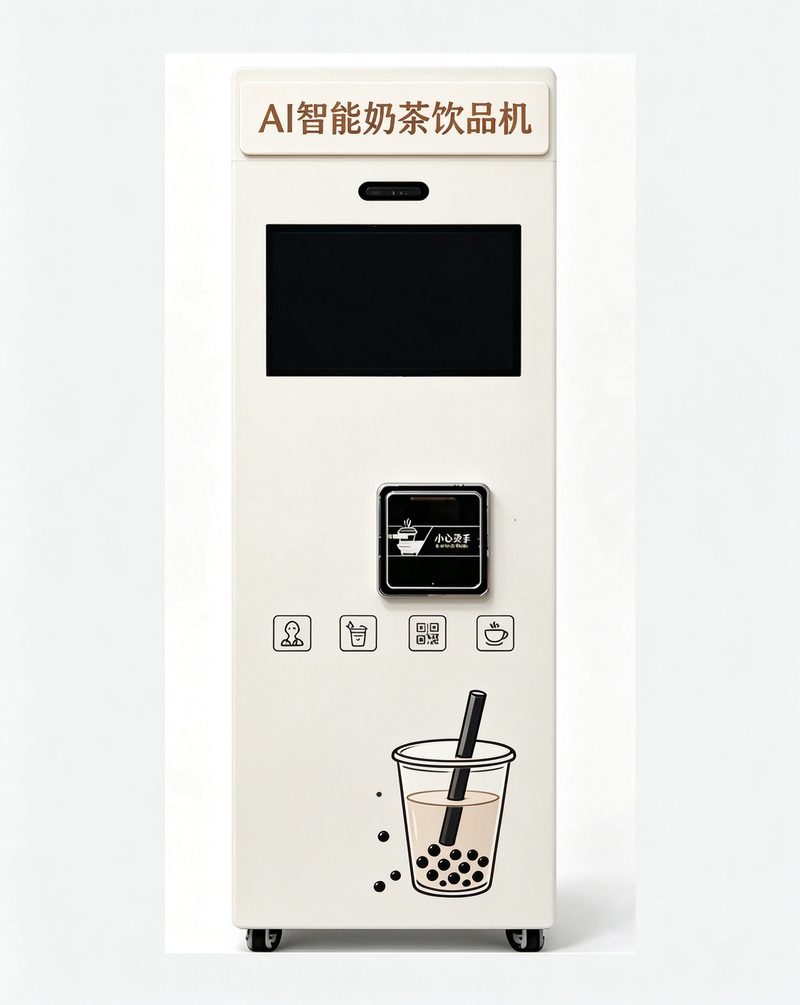
Faults, Causes, Fix Levels
| Fault | Likely cause | Fix level |
|---|---|---|
| No vend | Clogged nozzle or empty line | Site-side, minutes |
| Payment dead | Terminal or SIM | Swap from the parts kit |
| No power | Site breaker or cable | Host electrician |
| Brew issue | Rare; module swap | Depot or engineer |
The Hour Nobody Staffs
By ten at night the tool-room door of a machine shop has emptied out, and the 24/7 milk tea kiosk is the only lit thing in the corridor. The site closes at six; the traffic does not.
A warehouse clerk racing a timer is the customer now - the one who cannot buy a cup of milk tea anywhere else at this hour, and who will remember that tomorrow.
Anyone pricing a placement on daytime footfall alone is pricing half a site. By the time the queue reforms, the machine is already serving the next regular.
Reading a Slow Month
A slow month has four usual causes: holidays, weather, a fault nobody reported, or a host who changed something. Only one of them is about the machine.
Check the fault log first, then the venue calendar, then the menu. Blaming the location before checking the log is how operators talk themselves out of a good site.
Support Terms Worth Reading Twice
Write the service ladder before the first fault: what you fix from the dashboard, what a site contact fixes from the card, what waits for the van, and what goes back to the supplier.
A 24/7 milk tea kiosk with a ladder rarely reaches a panic. Faults enter at the step they belong to, and most never climb past the first one.
Firmware, Updates and Forced Reboots
A machine that updates itself during the lunch rush teaches a venue to distrust it. Update windows belong in the contract and in the schedule, not in the vendor's convenience.
Ask what survives a reboot: stock counts, price settings, the pending order. The answers separate a design that assumed a stable office from one that assumed a real building.
The Twenty-Minute Site Visit
A useful routine visit fits in twenty minutes: two to count stock, three to wipe, five to watch the machine work without intervening, and the rest to talk to whoever is standing nearby.
The five minutes of watching is the part operators skip. It is also the only way to see the queue form, the card fail, or the customer walk away at the price screen.
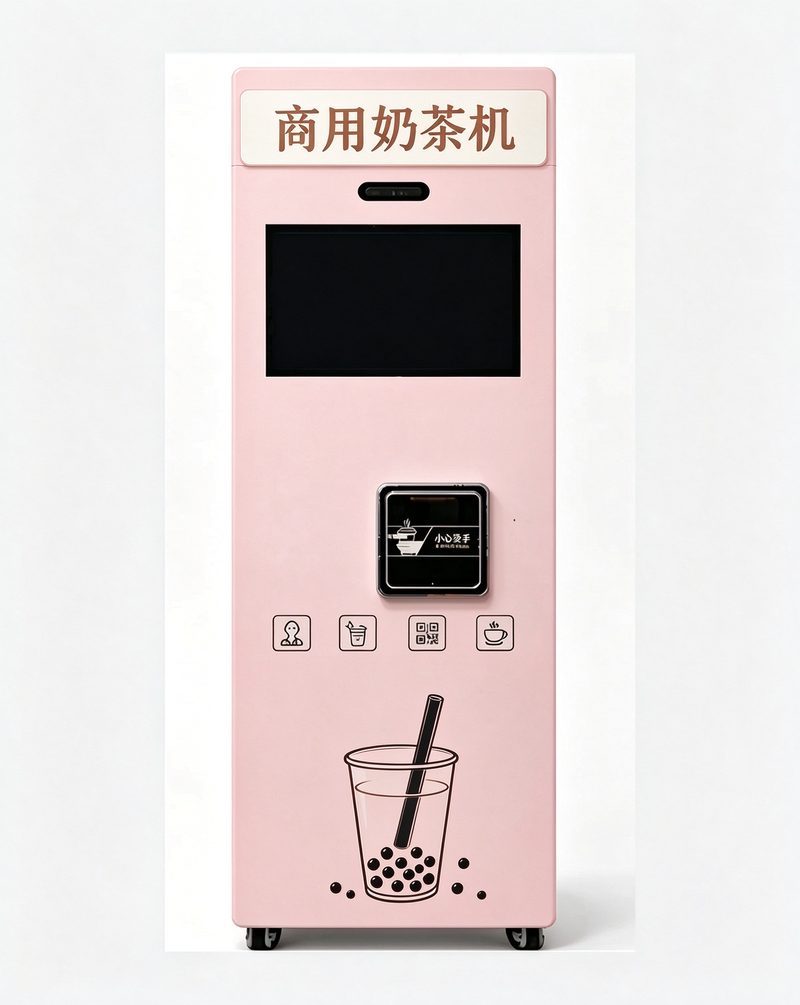
Service Terms to Negotiate
Response time, parts availability and who travels - written into the contract, these three lines decide how long a fault lasts.
Menu Naming and What Sells
Menu names do more work than recipes. A line called 'house milk tea' sells on familiarity; the same powder called 'brown sugar premium' sells on curiosity. Both are the same capsule, and the site decides which one it needs.
Keep the list short enough to read in eight seconds and rotate one line at a time. Changing three at once makes the data unreadable and the regulars nervous.
The Vend That Did Not Happen
The same face, four weeks running. A night porter on his round stops at a chess-and-cards room lobby, holds the cup with both hands and says nothing, which is its own review, and the pattern has stopped being a coincidence.
No promotion produced that habit. A machine that is always there, always stocked and always the same cup did it, which is a quieter kind of marketing than anything with a budget.
A site is not won on the first cup; it is won on the fifteenth. Nobody photographs it; the machine has simply become part of the floor plan.
The First Complaint About Price
The first price complaint is rarely about the number. It is about comparison: against the chain downstairs, against the machine that used to be here, against what the customer assumed an unmanned cup should cost.
Answer with the comparison the customer is actually making, not with a cost breakdown. If the site sits next to a two-dollar counter, the machine has to earn its price through speed and hours rather than argue about beans.
Warranty Scenarios Rehearsed
Read the warranty the way faults will actually arrive: freight direction on a swap, loaner policy during repair, and what voids coverage — including the well-meant repair attempt by a site contact.
Three sentences from the contract, written onto the site card in advance, prevent most of the arguments warranties exist to cause.
Spare Parts and Response Windows
Spare parts are a budget line, not an emergency purchase. Keep the wear items — brew seals, cup sensors, the odd door latch — on the shelf in quantities the fleet's fault log justifies.
The log decides the shelf. Fleets that stock by memory end up with drawers of the wrong parts and weekends lost to waiting for the right one.
Three Numbers Worth Reporting Monthly
Cups sold, faults per hundred cups, and stockouts. Three numbers, one page, sent to whoever owns the site - it takes ten minutes and it changes the tone of every renewal conversation.
Hosts rarely ask for data, and almost always read it when it arrives. A page like that turns a machine in a corner into a service with a name attached.
When the Power Bill Arrives
Power is the cost line most often estimated and least often checked. A cabinet with heating, chilling and a screen does not idle at zero, and standby load runs twenty-four hours whether anybody buys or not.
Read one real bill before modelling the second site. If the host pays, put the estimate in the placement terms anyway - a host who discovers an unexpected line in month two becomes a host who revisits the share.
When the Menu Is Too Long
A menu of twenty lines sells like a menu of five, minus the stock risk and the decision time. The extra fifteen exist because somebody liked them in a meeting.
Cut to the two best sellers, one experiment and one line that protects the price ladder. Review monthly; a line nobody orders twice is a line nobody recommends.
The Numbers Behind the Payback Window
The payback window of 3-8 months is not a promise - it is a band, and where a site lands inside it depends on three variables the buyer controls: the quality of the dwell point, the width of the capsule menu, and the discipline of the restock route.
Buyers who miss the band almost always miss it on the third variable. The machine sells on day one; the route decides whether it keeps selling. A missed visit does not show up as a line item - it shows up as a regular who tried twice and stopped trying.
The honest worksheet therefore has three columns: what the site could sell, what the route can serve, and what the ledger actually recorded. When those three converge, the payback maths stops being a forecast and becomes a reading.
What an Operator Owes a Host
Beyond the rent share, a host expects four things: the machine looks clean, the space is not cluttered, complaints reach somebody who answers, and the numbers arrive without being chased.
None of the four is expensive, and all four are the reason a placement survives a change of manager. The machine is replaceable; the habit of being easy to deal with is not.
Write the four into the service agreement as commitments rather than intentions, and report against them monthly. A host who can see the commitments being met stops auditing the machine and starts defending it.
The Regular Nobody Recruited
The same face, four weeks running. A forklift driver with gloves tucked in his belt stops at the smoking-terrace door of an office tower, collects the cup, checks the cap out of habit, and folds back into the corridor traffic, and the pattern has stopped being a coincidence.
No promotion produced that habit. A machine that is always there, always stocked and always the same cup did it, which is a quieter kind of marketing than anything with a budget.
A site is not won on the first cup; it is won on the fifteenth. The restock note writes itself: the popular line is down one row.
A Placement, Three Months In
The pilot at a hotel corridor by the lifts began as a favour to the site host and turned into the easiest arithmetic in the fleet: late-evening demand, nights outperform the average once the tour groups check in. When the second machine conversation started, the first month's ledger did most of the talking.
Two decisions carried the quarter: the menu was cut from nine lines to six, and the restock moved from Friday to Wednesday. Neither was clever. Both came straight off the dashboard, and both showed up in the ledger within three weeks.
What a Working Site Looks Like
The pilot at a wholesale market office row began as a favour to the site host and turned into the easiest arithmetic in the fleet: early-morning trade, the first two hours outsell the afternoon. When the second machine conversation started, the first month's ledger did most of the talking.
The host's own staff ended up doing the small things - topping cups, wiping the tray - and that informal care showed up as fewer complaints than any service level agreement would have delivered.
The Ledger Tells the Story
The pilot at a hotel corridor by the lifts began as a favour to the site host and turned into the easiest arithmetic in the fleet: late-evening demand, nights outperform the average once the tour groups check in. When the second machine conversation started, the first month's ledger did most of the talking.
No single number makes the case; the shape does. Cups per week climb through the ramp, plateau where the site's rhythm settles, and the menu mix flattens the seasonal dips. When the host asks what it would take to add a second unit, the answer is a copy of the first one's ledger.
The Person Who Quietly Runs It
The same face, four weeks running. A warehouse clerk racing a timer stops at the second-floor rest deck of a furniture expo, collects the cup, checks the cap out of habit, and folds back into the corridor traffic, and the pattern has stopped being a coincidence.
No promotion produced that habit. A machine that is always there, always stocked and always the same cup did it, which is a quieter kind of marketing than anything with a budget.
A site is not won on the first cup; it is won on the fifteenth. The restock note writes itself: the popular line is down one row.
Straight Answers to the Hard Questions
"Is the tea or coffee actually any good?"
Good enough that the repeat rate, not the first sale, pays for the placement. The capsule range covers espresso, milk tea, fruit and herbal lines, so the regulars settle in and the curious keep sampling.
"Sounds like a headache to restock."
The restock route runs every two to three weeks per machine on normal demand, sized by the dashboard rather than by guesswork. One van, one morning, ten sites.
"How do I know the numbers are real?"
Every order carries its own reference and exports monthly against capsule consumption. You reconcile a report, not a shoebox of receipts.
"What if it gets vandalised or someone walks off with the cash?"
There is no cash box to walk off with - every sale is a logged QR payment, and the cabinet is bolted steel with an alarm on the door. Insurance conversations get easier when the till is a database.
A Week on the Route, Logged
- Monday - Dashboard review first: two sites ran hot over the weekend, so their rows go to the front of the van.
- Tuesday - The long run: four sites before ten, two after lunch, one drawer rotated while the kettle boiled.
- Wednesday - Midweek dip on the office sites; herbal line restocked at the clinic cluster.
- Thursday - Books day. The monthly figure gets compared to the site's own count, and the two agree within normal wastage.
- Friday - Contact card refreshed at the lobby unit, and the host's new shift supervisor walked through the basics.
- Saturday - Weekend shift: fewer sites, more cleaning. Two drip trays, one filter, and a machine that looks new again.
- Sunday - Rest day, which is also a system: the alerts keep watch and the ledger keeps counting.
Twelve Months, Two Columns
| Month | Traffic pattern | Route decision |
|---|---|---|
| Jan | The quietest fortnight of the year - good for audits, bad for optimism. | New-year footfall is slow to wake; keep the hot lines deep and the route tight. |
| Feb | Valentine week bends the coffee and milk-tea lines upward for ten days. | The post-holiday dip is real; use it for deep cleans and filter changes. |
| Mar | Quarter close: reconcile the ledger and prune the menu bottom. | Spring footfall returns with the weather; fruit lines start their climb. |
| Apr | The first warm spell moves demand later in the day; watch the four o clock hour. | A good month to trial one new capsule line per machine. |
| May | Mid-year route review: cut the weakest ten percent if the ledger says so. | Holiday Mondays distort the weekly curve; compare like with like before judging a site. |
| Jun | Half-year service check: seals, nozzles, payment terminals. | Exam and event season bends public-hall sites; stock ahead of the dates. |
| Jul | Holiday travel lifts transit and hotel sites for roughly three weeks. | Office sites go quiet and tourist corridors take over; move the route, not the menu. |
| Aug | Capsule storage gets hot in August; check the stockroom before the shelf life does. | Use the lull for operator training and contract renewals. |
| Sep | Back-to-routine week is the second new year; footfall snaps back fast. | Campus sites refill; the coffee line at eight in the morning comes back overnight. |
| Oct | The hot-drink golden window opens; the curve steepens week on week. | Autumn fairs and exhibitions fill the trade-hall sites. |
| Nov | Cold-weather peak builds; popular lines deserve a double buffer. | Year-end host meetings: renewals, shares, next-year placements. |
| Dec | Festive peaks everywhere except the empty offices; plan the route around both. | The last week is dead in offices and frantic in transit; stock for one and rest for the other. |
Notes I Keep Rewriting
The best placement advice I ever got fit on a napkin: the ledger discipline decides the curve, and the curve decides everything else.
My first site taught me the arithmetic; my fourth taught me the cleaning sheet, which is the part that scales.
I used to think the machine was the business. Four hundred route stops later, the honest version: the machine is the storefront, and the business is the first-month readings around it.
How It Stacks Up
| The old way | What it costs | Where it fails | What the machine changes |
|---|---|---|---|
| Staffed counter | A rota to fill, holidays to cover, overtime at the edges | Shuts when the last person leaves | A 24/7 milk tea kiosk covers the closed hours without a rota |
| Traditional coin vending | Cash handling, change runs, slot jams | No telemetry; faults found by complaint | Every sale logged, every fault alerted |
| Corner cafe | Rent, fit-out, staffed peaks | Fixed menu, fixed hours | Capsule range rotates at the restock visit, not by renovation |
| Model line | Core drinks | Best-fit venues | Service rhythm |
|---|---|---|---|
| Coffee machine | Espresso, americano, latte | Office lobbies, clinics, showrooms | Restock every 2-3 weeks |
| Milk tea machine | Milk tea and tea lines | High streets, campuses, food courts | Restock every 2-3 weeks |
| Juice machine | Fruit lines, chilled options | Sports halls, stations, parks | Restock every 2-3 weeks |
| Herbal tea machine | Herbal and traditional teas | Clinics, wellness floors, night sites | Restock every 2-3 weeks |
A Checklist Worth Printing
- Compare the monthly ledger to the site's own count once a quarter
- Export the ledger monthly and match it to consumption
- Set a two-week buffer at the depot, not at the site
- Test payment on site before the host's opening hour
- Fix the price list at launch and review it quarterly
- Walk the route in the order the traffic allows, not the map
- Keep one seal and nozzle kit per ten machines
- Walk the cleaning sheet on every visit, not from memory
- Ask what else shares the socket the machine will use
- Agree in writing who pays for power and consumables
- Record the host's renewal date where the route can see it
- Test the payment terminal on the site's own network
The Takeaway
Run the sheet, place the first unit, and let the first month of data argue for the second.
Common questions
What spare parts should I stock?
Seals and nozzles first, a spare payment terminal, and the fuses that solve site-side faults.
Can the menu change without a technician?
Yes - capsule menus change at the restock visit; nothing on the machine needs touching.
Can I run twenty sites alone?
Up to a point - routes planned from live data are what make small fleets workable with one service person.
How are capsules shipped and stored?
Stackable dated boxes, dry storage off the floor, first-in-first-out rotation at the depot.
What happens during a power cut?
The machine resumes when power returns; in-flight vends are voided and refunded per the posted rule.
Is there a contract lock-in?
Placement terms vary by venue; trial periods with clear move-out terms are common and sensible.
What if payment fails mid-vend?
The vend is voided, the ledger records it, and the posted refund rule handles the customer the same day.
How long does installation take?
On a prepared site, commissioning is typically finished in under an hour: position, power, network check and a run of test cups.
The machines behind this article
Related reading
- Dashboards and Alerts for the Staff Canteen Milk Tea Machine
- Settlement and Refunds on a Smart Milk Tea Machine
- Questions Before and After Buying a Commercial Milk Tea Dispenser
- The Weekly Routine Around a 24/7 Milk Tea Kiosk
Summary
After-sales for a 24/7 milk tea kiosk is written before the fault: a parts kit, response terms and a diagnosis habit that starts on the dashboard.
Book a commissioning slot only after the checklist above is signed off.