Office Coffee Station Answers for Importers and Operators
In one line: The questions around an office coffee station arrive in a predictable order; this page answers them in that order, plainly.
Key facts: Service is the operator's job on a dashboard-sized route; the host's job is power, space and customers.
The Routine Decides the Numbers
Anyone who has restocked the office coffee station on a Monday knows where the plan usually breaks. The aim is a plan a site manager can defend a quarter later, not a better pitch.
Questions Buyers Ask First
How does it pay? Capsule cost per cup against local retail prices, on the site's own foot traffic. Who services it? The operator, on a route sized by the dashboard. What breaks? Rarely the brew unit; usually payment or a clogged nozzle, both site-side fixes.
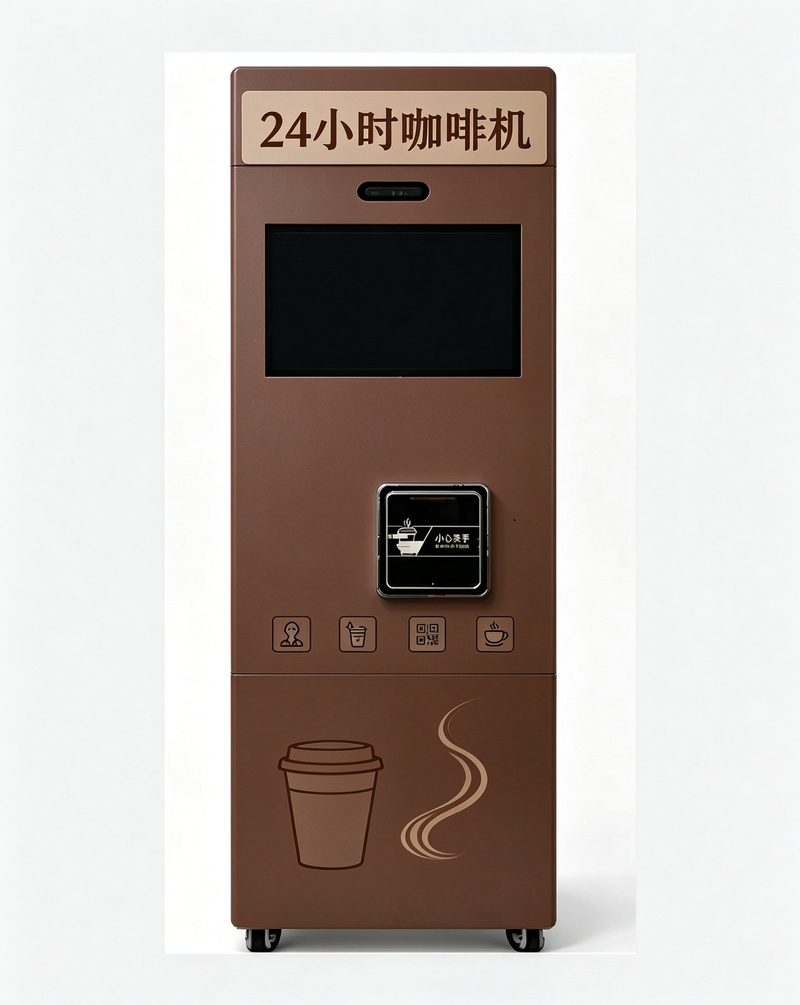
Short Answers at a Glance
| Question | Short answer |
|---|---|
| Who services it? | The operator, on a dashboard-sized route |
| What breaks most often? | Payment or a clogged nozzle - site-side fixes |
| Is plumbing required? | Often not; confirm per model |
| How is stock tracked? | On the dashboard, per capsule line |
From the Service Route
The operator's van stops at the courier station counter line on a route that will cover six more machines before noon. The dashboard has already ranked the visit: stock fine, no faults, one line running low.
While the drawers are topped, a first-time visitor following the signs wander up; the sale happens between two tasks, holds the cup with both hands and says nothing, which is its own review.
This is what unattended means in practice - not absence, but attention aimed exactly where the data says. Nobody photographs it; the machine has simply become part of the floor plan.
A Cleaner Who Cares
The cleaner is the most underused observer in any building. They see the machine at the hours nobody else does, and they notice the spill, the queue and the customer who walks away.
Give them a channel and something in return - a free cup code costs nothing and buys a reliable early warning system. The information is usually better than what the dashboard reports.
Two Machines, One Circuit
Two cabinets on one circuit look fine until both heat at once. The failure arrives as a tripped breaker at the busiest hour, and the site blames the machines rather than the wiring.
Add the rated draw of everything on the circuit, including the kettle and the microwave nobody counted, and compare it to the breaker. If the margin is thin, the fix is electrical and belongs before installation, not after the first outage.
Setting Par Levels From the Ledger
Par levels set by feel produce two failures at once: some sites run dry, others carry stock that expires. The ledger already contains the answer - average daily cups by line, times the restock interval, plus a buffer.
Recalculate quarterly rather than annually. A site whose traffic shifted in spring will still be running last year's numbers in autumn, and the symptoms look like a demand problem when they are a planning problem.
What a Stockout Teaches
A stockout is a measurement, not just a failure. It tells you which line sells faster than the ledger says, which restock interval is too long, and whether the regulars forgive a gap or quietly stop coming.
Write down what ran out, at what hour, and how many days the gap lasted. Two stockouts on the same line in a month means the order size is wrong; stockouts spread across lines means the interval is wrong. The two fixes have nothing in common.
When the Menu Is Too Long
A menu of twenty lines sells like a menu of five, minus the stock risk and the decision time. The extra fifteen exist because somebody liked them in a meeting.
Cut to the two best sellers, one experiment and one line that protects the price ladder. Review monthly; a line nobody orders twice is a line nobody recommends.
Menu Naming and What Sells
Menu names do more work than recipes. A line called 'house milk tea' sells on familiarity; the same powder called 'brown sugar premium' sells on curiosity. Both are the same capsule, and the site decides which one it needs.
Keep the list short enough to read in eight seconds and rotate one line at a time. Changing three at once makes the data unreadable and the regulars nervous.
The Month the Building Emptied
The same face, four weeks running. A saleswoman between two showroom appointments stops at the morning queue inside a produce wholesale gate, scans, hesitates over the menu for a second, then picks the new flavour the dashboard has been quietly promoting, and the pattern has stopped being a coincidence.
No promotion produced that habit. A machine that is always there, always stocked and always the same cup did it, which is a quieter kind of marketing than anything with a budget.
A site is not won on the first cup; it is won on the fifteenth. It is the fourth cup this corner has sold since the hour began.
The Key Nobody Has
Access is agreed at signature and forgotten by installation. Six months later the technician arrives at seven in the morning and the only person with the cabinet key starts at nine.
Settle three things in writing: who holds a key, where the spare lives, and what happens outside their hours. A lockbox on site costs less than one missed restock and removes an argument nobody wins.
The Receipt Nobody Takes
Digital receipts exist mostly for the operator, not the customer. What the customer wants is proof of purchase when the cup does not arrive - and that is a number on a screen, not an email.
Keep a short transaction code on the machine and on the app, so a refund conversation starts with a reference rather than with a description. Sites that do this settle disputes in a minute; sites that do not escalate them.
When the Contract Ends Well
A placement that ends well produces a reference; one that ends badly produces a story told to every other host in the building. The difference is almost entirely in the last thirty days.
Give notice as agreed, remove the machine on a day that suits the site, settle the final share with a statement, and leave the corner clean. It costs a morning and protects the next three placements.
Accessibility Around a Standing Cabinet
A cabinet on a 2 square metres footprint still occupies a corridor. Leave the turning space, keep the screen at a reachable height, and make sure the pickup slot can be used from a seated position - three details that decide whether part of the audience can buy at all.
Ask the host about floor load and door widths before delivery, not after. The site that fits the tape measure on day one never becomes the expensive story later.
Loading Bays and Delivery Windows
The delivery is where a placement's real constraints appear: a bay booked for fifteen minutes, a lift that will not take a pallet, a corridor that narrows at the fire door.
Walk the route with a trolley before the first order, not on the day. Every operator has a story about a machine that arrived and could not enter the building it was bought for.
Payment Reconciliation Past the Terminal
The terminal settles; the ledger still has to agree. QR scan-to-pay produces a reference per order, and the operator's job is to match those references against capsules issued and cups sold - three lists that should tell one story.
Disagreements are usually small and always explainable: a demo cup, a voided vend, a refund nobody logged. The habit worth keeping is a weekly match rather than a monthly surprise, because a month of drift takes an afternoon to unpick.
What an Operator Owes a Host
Beyond the rent share, a host expects four things: the machine looks clean, the space is not cluttered, complaints reach somebody who answers, and the numbers arrive without being chased.
None of the four is expensive, and all four are the reason a placement survives a change of manager. The machine is replaceable; the habit of being easy to deal with is not.
Write the four into the service agreement as commitments rather than intentions, and report against them monthly. A host who can see the commitments being met stops auditing the machine and starts defending it.
What a Facility Manager Checks First
A facility manager walks toward a new cabinet looking at four things, none of them the machine: the floor where it meets the wall, the cable route, the fire door it might block, and whether the bin beside it has a lid.
Answer those four before they are asked and the conversation moves to revenue. Let them find one of the four themselves and the conversation stays on compliance for a month.
The document that helps is one page: a photograph of the installed unit, the power rating, the maintenance contact, and the cleaning routine. Facility teams keep paper, and paper is what survives a change of staff.
What the Van Sees at Seven
The operator's van stops at the back corner of a convenience store on a route that will cover six more machines before noon. The dashboard has already ranked the visit: stock fine, no faults, one line running low.
While the drawers are topped, a wholesaler tallying receipts on a crate wanders up; the sale happens between two tasks, holds the cup with both hands and says nothing, which is its own review.
This is what unattended means in practice - not absence, but attention aimed exactly where the data says. It is the fourth cup this corner has sold since the hour began.
A Placement, Three Months In
Three months into a placement at a gym entrance corridor, the pattern has settled: class-timetable surges, and the evening class change is the golden window. The menu has been trimmed twice - the dashboard ranked the lines, the bottom three went, and nobody wrote in to mourn them.
Two decisions carried the quarter: the menu was cut from nine lines to six, and the restock moved from Friday to Wednesday. Neither was clever. Both came straight off the dashboard, and both showed up in the ledger within three weeks.
What a Working Site Looks Like
Three months into a placement at a logistics warehouse rest area, the pattern has settled: shift-change traffic, and the morning peak carries the day. The menu has been trimmed twice - the dashboard ranked the lines, the bottom three went, and nobody wrote in to mourn them.
What the site taught was patience with a shape. Weeks one to three looked like a verdict; weeks four to twelve were the actual answer, and the answer was better than the verdict.
The Ledger Tells the Story
The pilot at a furniture mall staff corridor began as a favour to the site host and turned into the easiest arithmetic in the fleet: staff and contractor flow, the steady base load comes from the fit-out crews. When the second machine conversation started, the first month's ledger did most of the talking.
What the site taught was patience with a shape. Weeks one to three looked like a verdict; weeks four to twelve were the actual answer, and the answer was better than the verdict.
The Regular Nobody Recruited
The same face, four weeks running. A gym regular towel over the shoulder stops at the smoking-terrace door of an office tower, collects the cup, checks the cap out of habit, and folds back into the corridor traffic, and the pattern has stopped being a coincidence.
No promotion produced that habit. A machine that is always there, always stocked and always the same cup did it, which is a quieter kind of marketing than anything with a budget.
A site is not won on the first cup; it is won on the fifteenth. The dashboard records it as one line; the day's curve bends up almost imperceptibly.
Straight Answers to the Hard Questions
"What about hygiene inspections?"
A capsule system keeps the wet parts few and the routine short; the cleaning sheet and the service log are exactly what an inspector asks to see.
"Will people trust a drink made by a box?"
They trust the cup more than the counter when the cup is consistent. Capsule brewing means the tenth cup matches the first, and the cleaning sheet posted on the glass does more for confidence than any slogan.
"What if it gets vandalised or someone walks off with the cash?"
There is no cash box to walk off with - every sale is a logged QR payment, and the cabinet is bolted steel with an alarm on the door. Insurance conversations get easier when the till is a database.
"Can it really run unattended all day?"
That is the design brief: uptime, alerts and a route. The machine does the shift work; you do the arithmetic.
A Week on the Route, Logged
- Monday - Route planned from the weekend's dashboard; the week's capsule order confirmed.
- Tuesday - The long run: four sites before ten, two after lunch, one drawer rotated while the kettle boiled.
- Wednesday - Midweek is the quiet read: office sites cool off, clinic and gym sites pick up the slack.
- Thursday - Books day. The monthly figure gets compared to the site's own count, and the two agree within normal wastage.
- Friday - Peak-site visit before the evening rush; contact card replaced at one unit.
- Saturday - Light route; the hotel machine's drawer rotated first in, first out.
- Sunday - Silent day by design - alerts on, phone on, van parked.
Twelve Months, Two Columns
| Month | What changes | What to do about it |
|---|---|---|
| Jan | New-year footfall is slow to wake; keep the hot lines deep and the route tight. | Budget season: the annual consumables figure gets signed this month. |
| Feb | Short month, long queues on the 14th; order the dessert-adjacent capsules early. | The post-holiday dip is real; use it for deep cleans and filter changes. |
| Mar | Spring footfall returns with the weather; fruit lines start their climb. | Quarter close: reconcile the ledger and prune the menu bottom. |
| Apr | Rain weeks teach you which sites have indoor dwell; note them for the record. | A good month to trial one new capsule line per machine. |
| May | Mid-year route review: cut the weakest ten percent if the ledger says so. | Holiday Mondays distort the weekly curve; compare like with like before judging a site. |
| Jun | Half-year service check: seals, nozzles, payment terminals. | Exam and event season bends public-hall sites; stock ahead of the dates. |
| Jul | Office sites go quiet and tourist corridors take over; move the route, not the menu. | Peak heat shifts demand; the curve moves later into the evening. |
| Aug | Capsule storage gets hot in August; check the stockroom before the shelf life does. | The slowest office month; the tourist corridors carry the fleet instead. |
| Sep | Campus sites refill; the coffee line at eight in the morning comes back overnight. | Back-to-routine week is the second new year; footfall snaps back fast. |
| Oct | Autumn fairs and exhibitions fill the trade-hall sites. | The first cold snap is worth a route note: it usually front-loads the month by a week. |
| Nov | Darkness at five changes the traffic shape; the evening hour gains, the lunch hour thins. | Year-end host meetings: renewals, shares, next-year placements. |
| Dec | Festive peaks everywhere except the empty offices; plan the route around both. | The last week is dead in offices and frantic in transit; stock for one and rest for the other. |
Notes I Keep Rewriting
If I could send one paragraph back to my first order, it would be this - the alert settings is not a purchase, it is a schedule, and the schedule is written in the ledger whether you look at it or not.
The best placement advice I ever got fit on a napkin: the restock cadence decides the curve, and the curve decides everything else.
The dashboard is honest, the host is honest, and both are approximate. the cleaning sheet is what turns two approximations into a decision.
How It Stacks Up
| The old way | What it costs | Where it fails | What the machine changes |
|---|---|---|---|
| Staffed counter | Wages every month, plus training and turnover | Open only as long as someone stands there | A office coffee station sells the hours the counter never could |
| Traditional coin vending | Cash handling, change runs, slot jams | No telemetry; faults found by complaint | Every sale logged, every fault alerted |
| Corner cafe | A lease, a build-out, a barista roster | Menu changes mean reprinting and retraining | The menu changes when the capsule order does |
| Line | What it pours | Where it fits best | Restock rhythm |
|---|---|---|---|
| Coffee machine | Espresso, americano, latte | Office lobbies, clinics, showrooms | Restock every 2-3 weeks |
| Milk tea machine | Milk tea and tea lines | Malls, adult-education campuses, staff rooms | Restock every 2-3 weeks |
| Juice machine | Fruit lines, chilled options | Gyms, cinemas, family venues | Restock every 2-3 weeks |
| Herbal tea machine | Herbal and traditional teas | Wellness centres, community halls | Restock every 2-3 weeks |
A Checklist Worth Printing
- Confirm who empties the bin beside the cabinet
- Set stock thresholds on the dashboard before day one
- Decide who owns the cups before the first order
- Date capsule boxes and rotate first in, first out
- Set the filter calendar by measured water hardness
- Walk the cleaning sheet on every visit, not from memory
- Agree the refund rule before the first complaint, not after
- Compare the monthly ledger to the site's own count once a quarter
- Test the payment terminal on the site's own network
- Photograph the installation for the machine folder
- Log the first repair with date, part and cause
- Export the ledger monthly and match it to consumption
The Takeaway
When in doubt, choose the configuration your service round can sustain, not the one the brochure flatters.
Common questions
Who prepares the site?
The host clears the spot and power; the operator brings levelling, testing and the first capsule load.
Is there a contract lock-in?
Placement terms vary by venue; trial periods with clear move-out terms are common and sensible.
What happens during a power cut?
The machine resumes when power returns; in-flight vends are voided and refunded per the posted rule.
Can the menu change without a technician?
Yes - capsule menus change at the restock visit; nothing on the machine needs touching.
What spare parts should I stock?
Seals and nozzles first, a spare payment terminal, and the fuses that solve site-side faults.
How long does installation take?
On a prepared site, commissioning is typically finished in under an hour: position, power, network check and a run of test cups.
What is the usual payback window?
The planning band is 3-8 months, set mainly by site quality and the local price of a cup.
How often does someone need to visit?
On normal demand, the restock route lands every 2-3 weeks per machine, with dashboard alerts filling the gaps.
The machines behind this article
Related reading
- After-Sales Planning for the 24/7 Coffee Machine
- The Weekly Routine Around An Automatic Coffee Vending Machine
- Keeping a Hotel Pantry Coffee Machine in Service
- Budgeting a Commercial Coffee Dispenser Without Surprises
Summary
The questions around an office coffee station arrive in a predictable order; this page answers them in that order, plainly.
Send the site's foot-traffic notes and the capsule shortlist will follow.