Commercial Juice Vending Machine Buying Guide: Specs That Actually Matter
In one line: The right commercial juice vending machine is the one your service round can sustain; this page ranks the specs in the order they actually bite.
Key facts: 2 square metres footprint, household power, QR scan-to-pay with a per-order reference and 4G/WiFi reporting - four lines a spec sheet must state, not imply.
The Routine Decides the Numbers
Anyone who has restocked the commercial juice vending machine on a Monday knows where the plan usually breaks. The order below is deliberate: decisions first, numbers second, service terms last.
Five Specs Worth Comparing
- Menu breadth: how many drink types the capsule range covers
- Footprint: 2 square metres is the planning figure for a standard unit
- Payment: QR scan-to-pay plus a settlement ledger
- Connectivity: 4G/WiFi reporting for stock and faults
- Service: spare parts availability and response terms
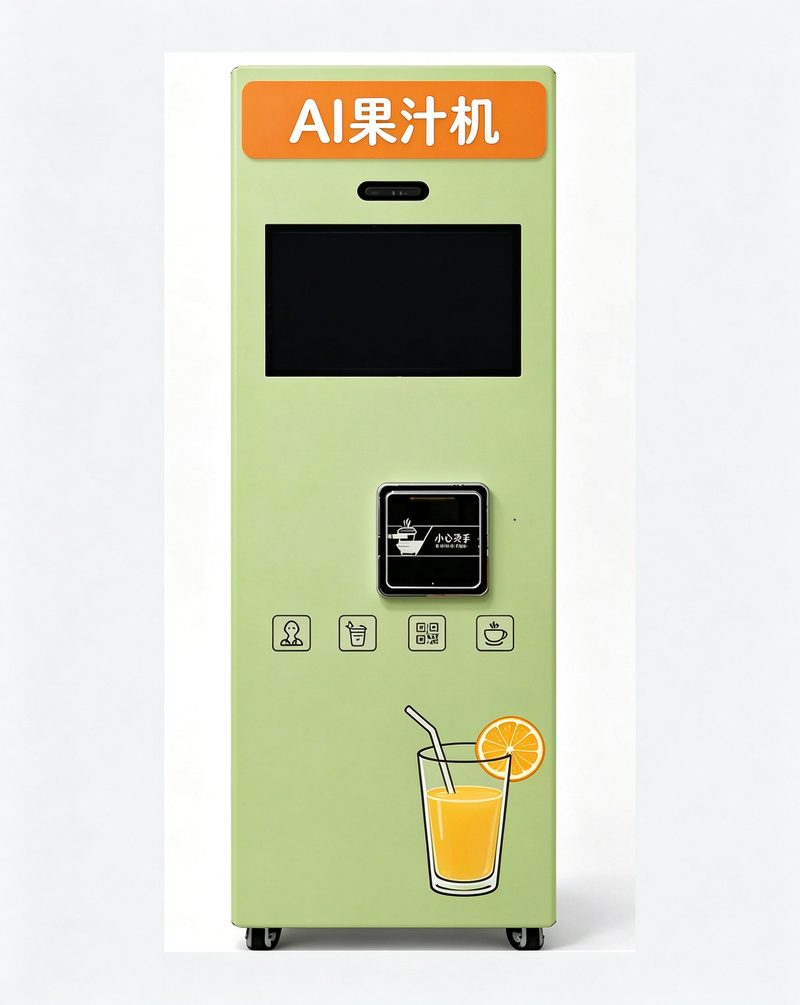
Comparison Sheet: Five Specs Side by Side
| Spec | What to confirm | Why it matters |
|---|---|---|
| Menu breadth | Drink types covered by the capsule range | Widens the buyer base per site |
| Footprint | 2 square metres and a household power line | Fits almost any dwell point |
| Payment | QR scan-to-pay with a per-order reference | Settlement without arguments |
| Connectivity | 4G/WiFi stock and fault reporting | Routes planned on data |
| Service terms | Response time and parts availability | Decides how long a fault lasts |
The Month the Building Emptied
The same face, four weeks running. A warehouse clerk racing a timer stops at the courier station counter line, waits the forty seconds scrolling a phone, pockets the receipt without looking at it, and the pattern has stopped being a coincidence.
No promotion produced that habit. A machine that is always there, always stocked and always the same cup did it, which is a quieter kind of marketing than anything with a budget.
A site is not won on the first cup; it is won on the fifteenth. It is the fourth cup this corner has sold since the hour began.
Repair or Replace, Out of Warranty
Out of warranty the question stops being what broke and becomes what the machine is worth per month. A repair that costs two months of net is a decision; one that costs six is a replacement wearing a repair's clothes.
Compare the repair quote against the site's steady net, not against the machine's purchase price. The purchase price is sunk, and comparing to it is how operators keep a losing unit alive for two extra years.
Hygiene Checks That Survive a Visit
What an inspector asks for is a record, not a promise. A dated cleaning sheet, a filter change log and a note of who signed each visit answer most questions before they are asked twice.
The visible part matters as much: a wiped pickup area and a capped cup say more to a passing customer than any certificate on the wall. On a commercial juice vending machine, the three-minute wipe is the cheapest reputation work available.
When the Building Gains a Second Host
A new tenant, a new canteen operator, a new facility contract - the building can change hands around a machine that never moved. The relationship that supported the placement resets, and nobody tells the operator.
Ask the host for a named contact every six months and keep the answer in the site file. The cost of one email is small; the cost of finding out in month twenty that your contact left in month eight is a placement that quietly ended.
The Cup Itself: Rim, Heat, Foam
Customers judge a drink before tasting it: whether the rim is clean, whether the cup is warm to hold, whether the surface looks like something a person made. None of that is on the specification sheet and all of it decides the second purchase.
Temperature is the easiest to get wrong and the cheapest to fix. A cup that arrives drinkable rather than scalding suits a lobby; one that arrives hot suits a winter street. The setting is a menu decision, not a machine decision.
When a Site Starts Selling Less
A decline is usually one of four things: a tenant left, a competitor arrived, a menu line died, or the machine has been subtly underperforming for weeks. The order matters, because three of the four are cheap to fix.
Check the ledger by daypart before visiting. A decline concentrated in the morning is a traffic story; one spread across the day is a product or machine story; one that appears only on Mondays is a restock story.
The Twenty-Minute Site Visit
A useful routine visit fits in twenty minutes: two to count stock, three to wipe, five to watch the machine work without intervening, and the rest to talk to whoever is standing nearby.
The five minutes of watching is the part operators skip. It is also the only way to see the queue form, the card fail, or the customer walk away at the price screen.
Two Floors Down, Another Machine
The same face, four weeks running. An intern rehearsing a presentation stops at the back corner of a convenience store, taps the screen twice, picks the same drink as always, and is walking away before the cup is full, and the pattern has stopped being a coincidence.
No promotion produced that habit. A machine that is always there, always stocked and always the same cup did it, which is a quieter kind of marketing than anything with a budget.
A site is not won on the first cup; it is won on the fifteenth. By the time the queue reforms, the machine is already serving the next regular.
Demo Conditions vs Deployment Conditions
Weight the demo against the deployment. A showroom unit runs on filtered water and a technician's attention; a corridor unit runs on whatever the building gives it and nobody's. Ask what changes when the demo conditions disappear.
If the answer is a longer cleaning cycle or a stricter capsule spec, put that in the cost model now. A commercial juice vending machine that only behaves under showroom conditions is a rental in disguise.
Cash, Card and the Queue Behind Them
Payment speed decides throughput more than brewing speed does. A tap that takes four seconds adds a person to the queue at the busiest hour.
Watch one full purchase at peak and count the taps. If the count is above four, the queue is being created by the interface, not by the coffee.
What a Trial Actually Measures
A trial is not a small version of the business. It measures whether the site's traffic shows up on the days nobody is watching, and whether the host's team leaves the machine alone.
Decide before the trial starts what result would end it: a cup floor, an uptime floor, and a complaint ceiling. A trial without exit criteria becomes a permanent arrangement by default.
The Key Nobody Has
Access is agreed at signature and forgotten by installation. Six months later the technician arrives at seven in the morning and the only person with the cabinet key starts at nine.
Settle three things in writing: who holds a key, where the spare lives, and what happens outside their hours. A lockbox on site costs less than one missed restock and removes an argument nobody wins.
The Complaint Made in Public
A complaint at the machine is watched by everyone in the queue, which makes the response part of the product. Speed matters more than completeness: acknowledge, fix or refund, then explain.
Keep a single refund rule and apply it without negotiation in the moment. Arguments at the counter cost more than the drink, and the audience is deciding whether the machine is worth a second try.
The First Complaint About Price
The first price complaint is rarely about the number. It is about comparison: against the chain downstairs, against the machine that used to be here, against what the customer assumed an unmanned cup should cost.
Answer with the comparison the customer is actually making, not with a cost breakdown. If the site sits next to a two-dollar counter, the machine has to earn its price through speed and hours rather than argue about beans.
What a Facility Manager Checks First
A facility manager walks toward a new cabinet looking at four things, none of them the machine: the floor where it meets the wall, the cable route, the fire door it might block, and whether the bin beside it has a lid.
Answer those four before they are asked and the conversation moves to revenue. Let them find one of the four themselves and the conversation stays on compliance for a month.
The document that helps is one page: a photograph of the installed unit, the power rating, the maintenance contact, and the cleaning routine. Facility teams keep paper, and paper is what survives a change of staff.
The Numbers Behind the Payback Window
The payback window of 3-8 months is not a promise - it is a band, and where a site lands inside it depends on three variables the buyer controls: the quality of the dwell point, the width of the capsule menu, and the discipline of the restock route.
Buyers who miss the band almost always miss it on the third variable. The machine sells on day one; the route decides whether it keeps selling. A missed visit does not show up as a line item - it shows up as a regular who tried twice and stopped trying.
The honest worksheet therefore has three columns: what the site could sell, what the route can serve, and what the ledger actually recorded. When those three converge, the payback maths stops being a forecast and becomes a reading.
The Hour Nobody Staffs
By ten at night the staff corridor of a regional hospital has emptied out, and the commercial juice vending machine is the only lit thing in the corridor. The site closes at six; the traffic does not.
A site foreman counting change he no longer needs is the customer now - the one who cannot buy an orange juice anywhere else at this hour, and who will remember that tomorrow.
Anyone pricing a placement on daytime footfall alone is pricing half a site. By the time the queue reforms, the machine is already serving the next regular.
A Placement, Three Months In
Three months into a placement at a gym entrance corridor, the pattern has settled: class-timetable surges, and the evening class change is the golden window. The menu has been trimmed twice - the dashboard ranked the lines, the bottom three went, and nobody wrote in to mourn them.
What the site taught was patience with a shape. Weeks one to three looked like a verdict; weeks four to twelve were the actual answer, and the answer was better than the verdict.
What a Working Site Looks Like
Three months into a placement at an office park lobby, the pattern has settled: weekday morning peaks, and Fridays run light and Mondays run heavy, every week. The menu has been trimmed twice - the dashboard ranked the lines, the bottom three went, and nobody wrote in to mourn them.
The ledger and the walkthrough told different stories for a month. The ledger said demand; the walkthrough said a queue at the wrong hour. The walkthrough was right, and the fix cost nothing.
The Ledger Tells the Story
The pilot at an office park lobby began as a favour to the site host and turned into the easiest arithmetic in the fleet: weekday morning peaks, Fridays run light and Mondays run heavy, every week. When the second machine conversation started, the first month's ledger did most of the talking.
What made the site work was unglamorous: a cabinet in sight of a window, a restock on the day the building was quiet, and a host who knew exactly who to call.
A Cup in the Middle of a Workday
Just before the mid-shift whistle at a driving-school waiting shelter. The queue at the coffee counter downstairs is eight deep; the commercial juice vending machine has three cups' worth of waiting in it, and no queue.
Two nurses sharing a ten-minute break scans, hesitates over the menu for a second, then picks the new flavour the dashboard has been quietly promoting, then goes back upstairs with the cup still in hand - a two-minute errand that a staffed counter would have turned into ten.
Speed is not a luxury feature here; it is the placement's whole economics. It is the fourth cup this corner has sold since the hour began.
Straight Answers to the Hard Questions
"What if it gets vandalised or someone walks off with the cash?"
There is no cash box to walk off with - every sale is a logged QR payment, and the cabinet is bolted steel with an alarm on the door. Insurance conversations get easier when the till is a database.
"Who fixes it when something goes wrong?"
The faults that actually happen - a clogged nozzle, a payment hiccup - are site-side fixes measured in minutes, which is why the parts kit lives in the service van. Anything rarer is a module swap under the service terms you negotiated.
"Doesn't it need plumbing and rewiring?"
A household power line and two square metres cover it. Most placements are standing and selling the same week the site agreement is signed.
"The shop next door already sells drinks."
A shop sells drinks when someone is behind the counter. The machine sells at seven in the morning, at eleven at night, and every minute the shutters are down - it is a different business, not a rival.
A Week on the Route, Logged
- Monday - Route planned from the weekend's dashboard; the week's capsule order confirmed.
- Tuesday - Route day proper. A payment terminal at the second stop needed a restart; the log records the minute it happened.
- Wednesday - Midweek dip on the office sites; herbal line restocked at the clinic cluster.
- Thursday - Reconciliation morning - cups sold against capsules issued, and the one discrepancy traced to a demo cup.
- Friday - Peak-site visit before the evening rush; contact card replaced at one unit.
- Saturday - Weekend shift: fewer sites, more cleaning. Two drip trays, one filter, and a machine that looks new again.
- Sunday - Silent day by design - alerts on, phone on, van parked.
Twelve Months, Two Columns
| Month | Traffic pattern | Route decision |
|---|---|---|
| Jan | The quietest fortnight of the year - good for audits, bad for optimism. | Budget season: the annual consumables figure gets signed this month. |
| Feb | Valentine week bends the coffee and milk-tea lines upward for ten days. | Short month, long queues on the 14th; order the dessert-adjacent capsules early. |
| Mar | Spring footfall returns with the weather; fruit lines start their climb. | Quarter close: reconcile the ledger and prune the menu bottom. |
| Apr | A good month to trial one new capsule line per machine. | Rain weeks teach you which sites have indoor dwell; note them for the record. |
| May | Warm evenings extend the outdoor sites; chilled options earn their drawer space. | Mid-year route review: cut the weakest ten percent if the ledger says so. |
| Jun | Exam and event season bends public-hall sites; stock ahead of the dates. | The first genuinely hot week tells you whether the chilled lines were sized right. |
| Jul | Office sites go quiet and tourist corridors take over; move the route, not the menu. | Peak heat shifts demand; the curve moves later into the evening. |
| Aug | Capsule storage gets hot in August; check the stockroom before the shelf life does. | Use the lull for operator training and contract renewals. |
| Sep | Campus sites refill; the coffee line at eight in the morning comes back overnight. | Order winter capsule volumes early - the ramp catches late buyers. |
| Oct | The first cold snap is worth a route note: it usually front-loads the month by a week. | Autumn fairs and exhibitions fill the trade-hall sites. |
| Nov | Year-end host meetings: renewals, shares, next-year placements. | Cold-weather peak builds; popular lines deserve a double buffer. |
| Dec | Close the ledger, thank the hosts, and let the dashboard write the next order. | The last week is dead in offices and frantic in transit; stock for one and rest for the other. |
Three Things the Route Taught Me
There is a version of this business that runs on charm, and it works until the charming person takes a holiday. the site walkthrough is the version that survives the holiday.
The best placement advice I ever got fit on a napkin: the alert settings decides the curve, and the curve decides everything else.
I used to think the machine was the business. Four hundred route stops later, the honest version: the machine is the storefront, and the business is the restock cadence around it.
How It Stacks Up
| The old way | What it costs | Where it fails | What the machine changes |
|---|---|---|---|
| Staffed counter | A rota to fill, holidays to cover, overtime at the edges | Shuts when the last person leaves | A commercial juice vending machine covers the closed hours without a rota |
| Traditional coin vending | Cash handling, change runs, slot jams | No telemetry; faults found by complaint | Every sale logged, every fault alerted |
| Corner cafe | A lease, a build-out, a barista roster | Menu changes mean reprinting and retraining | The menu changes when the capsule order does |
| Model line | Core drinks | Best-fit venues | Service rhythm |
|---|---|---|---|
| Coffee machine | Espresso, americano, latte | Corporate floors, hotel corridors | Restock every 2-3 weeks |
| Milk tea machine | Milk tea and tea lines | Retail floors, schools, factory canteens | Restock every 2-3 weeks |
| Juice machine | Fruit lines, chilled options | Gyms, cinemas, family venues | Restock every 2-3 weeks |
| Herbal tea machine | Herbal and traditional teas | Clinics, wellness floors, night sites | Restock every 2-3 weeks |
A Checklist Worth Printing
- Confirm the delivery lift's depth before the van leaves
- Confirm who empties the bin beside the cabinet
- Keep a laminated contact card inside the cabinet door
- Compare the monthly ledger to the site's own count once a quarter
- Date capsule boxes and rotate first in, first out
- Ask what else shares the socket the machine will use
- Keep one seal and nozzle kit per ten machines
- Fix the price list at launch and review it quarterly
- Test the payment terminal on the site's own network
- Ask the host where hot drinks are usually bought nearby
- Note the host's shift pattern so restocks miss the rush
- Keep one experimental line per machine and review it monthly
The Takeaway
When in doubt, choose the configuration your service round can sustain, not the one the brochure flatters.
Common questions
Is there a contract lock-in?
Placement terms vary by venue; trial periods with clear move-out terms are common and sensible.
Can the menu change without a technician?
Yes - capsule menus change at the restock visit; nothing on the machine needs touching.
What happens during a power cut?
The machine resumes when power returns; in-flight vends are voided and refunded per the posted rule.
How long does installation take?
On a prepared site, commissioning is typically finished in under an hour: position, power, network check and a run of test cups.
Does the machine need a water line?
Many units run without plumbing; confirm the water arrangement for the specific model during placement prep.
What if payment fails mid-vend?
The vend is voided, the ledger records it, and the posted refund rule handles the customer the same day.
Who cleans the machine?
The operator, on the visit sheet - cup area and panel each visit, drawer and tray weekly.
What spare parts should I stock?
Seals and nozzles first, a spare payment terminal, and the fuses that solve site-side faults.
Related machines
Related reading
- Seasonal Menu Planning for an Automatic Juice Dispenser
- A Restock Route for Each Hotel Juice Dispenser
- Commissioning Day for the Unattended Juice Corner
- Seasonal Menu Planning for a Hotel Juice Dispenser
Summary
The right commercial juice vending machine is the one your service round can sustain; this page ranks the specs in the order they actually bite.
Book a commissioning slot only after the checklist above is signed off.