Running Machines Across Several Sites: Remote Monitoring and Visit Planning
In one line: One person's machine count is not a stamina question - it is set by what the remote layer answers before anyone drives anywhere, and by how tightly alerts convert into batched, purposeful visits instead of anxious ones.
Key facts: Manageable fleet size grows with three things: telemetry that answers the questions you would otherwise drive to check, alert rules with one owner and written thresholds, and visit planning that batches restocking, cleaning and filter swaps into round trips.
The question behind the question
'How many machines can one person manage?' sounds like a question about effort, but effort is not the constraint - information is. The operator's week is spent answering five questions about machines they cannot see: is it on and serving, what is running low, what has failed, what sells, and what needs doing before tomorrow. Every one of those answered remotely is a visit saved; every one that needs a drive is a route designed around blindness.
That is why the honest answer ranges from a handful to several dozen machines per person, and why the range moves with the quality of two systems: what the telemetry reports, and how tightly alerts become planned routes. Both are designable before the fleet exists.
What the remote layer must answer before you drive
Remote monitoring pays for itself only when it answers the questions you would otherwise drive to ask. The working minimum: online status and in-or-out-of-service state, stock level per capsule compartment, consumable and cup estimates, current errors with codes, temperature where cooling applies, and sales by day and by product.
Then two practical refinements separate a dashboard from a tool: how fresh the readings are - a stock figure six hours old cannot protect an afternoon rush - and whether problems arrive as tickets rather than as charts. A screen nobody watches is decoration; the useful minimum is one alert destination, one owner, and a written rule for what each alert triggers.
| Question you would drive for | What telemetry answers | What it becomes |
|---|---|---|
| Is the machine even working? | Online, serving, out-of-service, error codes | Immediate call or calm continuation |
| What will run out tomorrow? | Per-compartment stock and cup estimates | Restocking list, ranked by urgency |
| Did anything break overnight? | Error log with timestamps | First-response instruction or swap order |
| What actually sells here? | Sales by day and product | Menu and capsule mix decisions |
| Is the machine healthy? | Temperature, usage counters, filter life | Scheduled maintenance, not surprises |
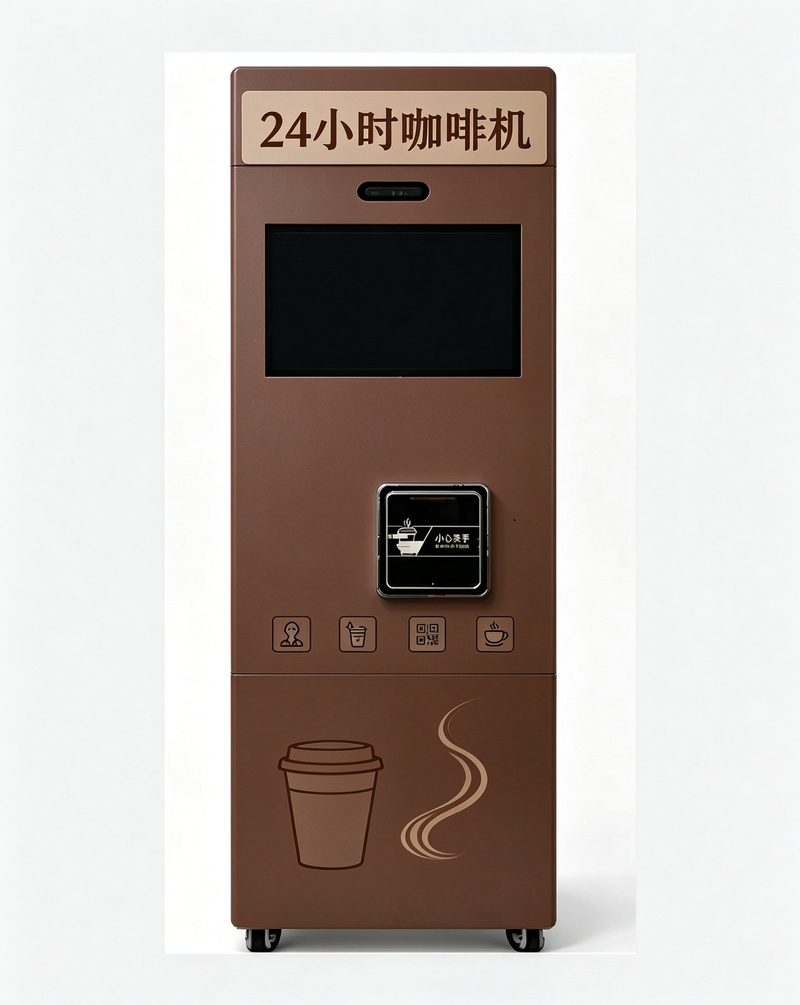
From alert to route: how visits get planned
The operating loop that scales is boring on purpose. Alerts land in one channel; each becomes a ticket with a machine, a symptom and a suggested action; tickets are sorted by urgency and geography; and the week's work is dispatched as round trips that carry restocking, cleaning, filter swaps and any first-response fixes together. One well-built visit serves several purposes; five anxious ones serve one each.
The discipline that makes this work is refusing emergency-shaped errands. A single empty compartment at a slow site waits for the route; a dead machine at a peak site jumps the queue with a swap-unit plan rather than a diagnosis session. The route calendar absorbs the predictable; the alert rules protect the unpredictable; nothing rides on memory.
One Minute at the Machine
A rainy 3 in the afternoon, the night queue area of a long-distance coach station. A forklift driver with gloves tucked in his belt walks up to the unmanned drink machine and collects the cup, checks the cap out of habit, and folds back into the corridor traffic. The cup arrives capped, a flat white still warm enough to notice on the walk back.
Nobody photographs it; the machine has simply become part of the floor plan.
Multiply that minute by the hours the site is actually awake, and the placement argument writes itself: the machine is not competing with the cafe down the street - it is serving the traffic that never walks there.
One Minute at the Machine
The tail of the lunch rush, the waiting bench of a vehicle inspection lane. A mother waiting out a clinic queue walks up to the unmanned drink machine and holds the cup with both hands and says nothing, which is its own review. The cup arrives capped, a flat white still warm enough to notice on the walk back.
No one needed help, which is the entire point.
Multiply that minute by the hours the site is actually awake, and the placement argument writes itself: the machine is not competing with the cafe down the street - it is serving the traffic that never walks there.
One Minute at the Machine
7:40 on a weekday morning, the back corner of a convenience store. A warehouse clerk racing a timer walks up to the unmanned drink machine and scans, hesitates over the menu for a second, then picks the new flavour the dashboard has been quietly promoting. The cup arrives capped, a flat white still warm enough to notice on the walk back.
The site host walks past without looking up - the highest compliment a placement gets.
Multiply that minute by the hours the site is actually awake, and the placement argument writes itself: the machine is not competing with the cafe down the street - it is serving the traffic that never walks there.
One Minute at the Machine
Half past nine, after the factory bus, the night queue area of a long-distance coach station. A security guard off the midnight shift walks up to the unmanned drink machine and collects the cup, checks the cap out of habit, and folds back into the corridor traffic. The cup arrives capped, a flat white still warm enough to notice on the walk back.
By the time the queue reforms, the machine is already serving the next regular.
Multiply that minute by the hours the site is actually awake, and the placement argument writes itself: the machine is not competing with the cafe down the street - it is serving the traffic that never walks there.
The Corner Before and After
Six months ago the rest area of a logistics warehouse was dead floor space - a bin, a poster, and the occasional sigh from a mother waiting out a clinic queue who wanted a flat white and had nowhere to get it.
Now there is a unmanned drink machine against that wall. The routine is unremarkable, which is the compliment: waits the forty seconds scrolling a phone, pockets the receipt without looking at it.
No one needed help, which is the entire point.
Alert rules that survive real weeks
- One owner per alert class - when everything is everyone's job, outages are nobody's
- Written thresholds: what stock level, which error codes, what temperature drift triggers what action
- Severity split: jump-now for revenue-blocking faults, next-route for everything else
- A daily glance at the exception list, and a weekly look at trends - the daily queue is for machines, the weekly review is for the fleet
- Silence is also a signal: a machine that stops reporting is checked like one that reports a fault
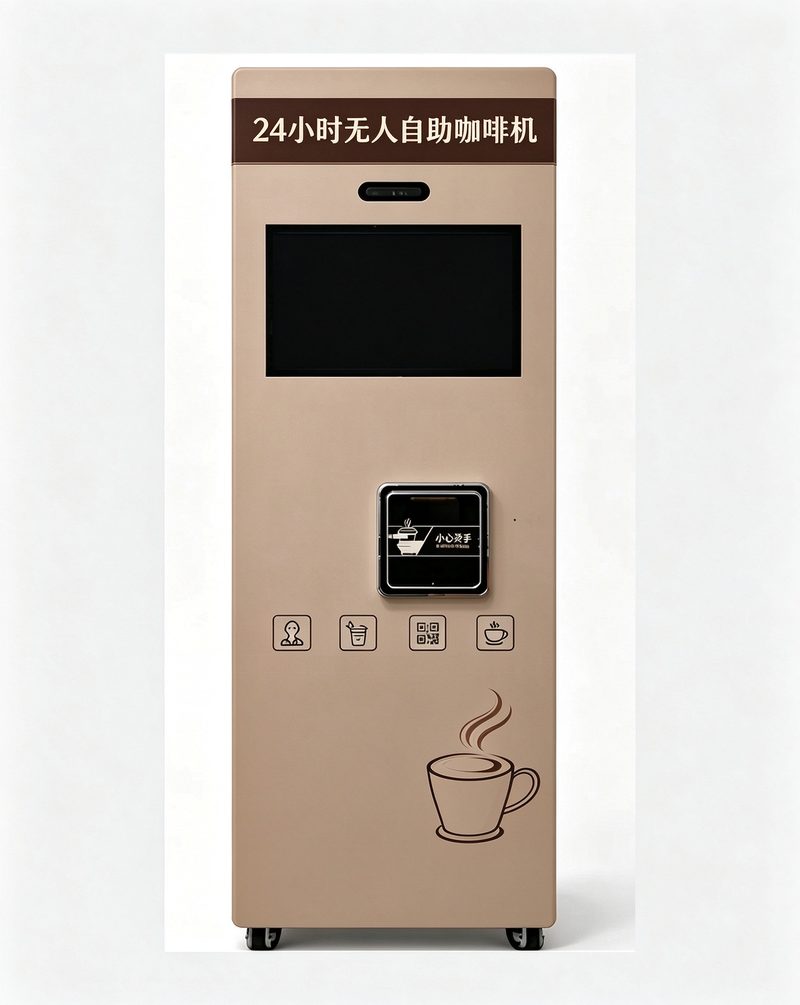
The operating pattern at 1-5, 5-20 and 20+ sites
At one to five machines, the owner does everything and the main risk is over-visiting - telemetry exists to tell you not to drive. At five to twenty, the route calendar becomes the spine: fixed restocking days by geography, batched maintenance, and alerts that only ever insert work into the plan. Beyond twenty, the job turns managerial: routes per driver, a named first responder per region, swap-unit logistics instead of repair logistics, and a weekly data review that decides menus, capsule mix and which sites deserve a second machine.
The pattern matters because it changes what to buy. A one-machine operator over-specifies; a twenty-machine operator who bought without telemetry or swap terms re-buys the fleet's processes the hard way. State the target scale when ordering - the configuration, the spare-parts plan and the monitoring setup all follow from it.
A week in the life of a well-run route
- Monday: review the week's sales and exception list; set the restocking plan per site
- Midweek: run the planned round trips - capsules, cleaning, filter swaps where due, first-response fixes from tickets
- Daily in between: clear the alert queue; jump-now items dispatch immediately with swap units, not toolboxes
- End of week: reconcile sales and settlements per machine, review which sites earned menu changes, and confirm next week's route
- Monthly: the fleet review - cup curves, downtime hours, capsule mix, and the sites conversation about second machines
Training the Person Who Will Run the Route
The machine ships with documentation; the route ships with habits. The operator who lasts is the one trained on three things before the first van leaves: reading the dashboard without hope or fear, walking the cleaning sheet in the same order every time, and logging anomalies the same day they appear.
Everything else can be learned on the road. What cannot be retrofitted is the discipline of writing things down - because a fleet that runs on memory runs until the memory gets sick, takes a holiday, or quits.
The training day costs a few hours; the habits it installs are the difference between a route that scales and a route that quietly caps the business at whichever number the founder can personally supervise.
The Handover Between Buyer and Operator
Importers who sell to operators, and operators who employ route staff, share one failure point: the handover. The machine arrives; the knowledge does not.
The fix is a one-page handover sheet: configuration, capsule lines and their order codes, the cleaning cadence, the filter calendar, the service contacts, and the three faults most likely to occur with their fixes. Written once, reused forever.
Buyers who receive this page report the same thing: onboarding stops being a week of phone calls and becomes an afternoon. The supplier who provides it unprompted is remembered at reorder time.
What the First Month Actually Looks Like
Week one is noise: curious cups, staff trials, a payment hiccup on Tuesday. Week two is when the curve starts meaning something - the regulars appear, and the dashboard begins to draw a shape.
By week four a placement has usually told you one of three truths: the site holds a daily rhythm worth feeding, the site is slower than the walkthrough suggested and the menu needs widening, or the spot is simply wrong and the trial clause earns its keep.
None of these outcomes is failure. The expensive version of this learning is a twelve-month lease signed without a trial; the cheap version is four weeks and a written move-out term.
The Consumables Ledger
Capsules, cups, lids, cleaning supplies - the consumables line is where tidy operators and messy ones part company, because it is the one line that scales perfectly with sales and therefore audits itself.
The discipline is simple: fix the per-cup figure with the supplier, record deliveries against machine consumption monthly, and investigate any gap wider than normal wastage. The gap is rarely theft; it is usually unlogged demos, damaged goods, or a site pouring two lines nobody priced.
A clean consumables ledger also arms the next negotiation - volume committed in writing is the cheapest discount a supplier will ever give.
Documentation That Saves a Service Call
Most service calls are archaeology: what changed, when, and who noticed first. A machine folder that holds the commissioning sheet, the filter log, the cleaning history and the fault timeline turns a mystery into a diagnosis before the van door opens.
The habit costs a minute per visit and pays for itself the first time a technician asks 'has anything changed recently?' and gets an answer instead of a shrug.
It also changes the tone of warranty conversations. A documented machine gets the benefit of the doubt; an undocumented one gets a debate.
A Placement, Three Months In
The pilot at a community clinic hallway began as a favour to the site host and turned into the easiest arithmetic in the fleet: appointment-schedule traffic, the queue before lunch is the whole story. When the second machine conversation started, the first month's ledger did most of the talking.
No single number makes the case; the shape does. Cups per week climb through the ramp, plateau where the site's rhythm settles, and the menu mix flattens the seasonal dips. When the host asks what it would take to add a second unit, the answer is a copy of the first one's ledger.
Menu Breadth and Capsule Range
A wide capsule range widens the buyer base: coffee for the morning, tea and herbal options later in the day, fruit flavours where they fit the venue.
Cashless First, Cash Optional
QR scan-to-pay carries the standard flow; where venues ask for coins, a coin module keeps both worlds on one ledger.
The Cost Lines Behind the Sticker
The sticker is one line of eight. Machine, placement, consumables, parts, power and connectivity, site fee, cleaning time and downtime make up the rest.
Written down separately, the lines show which lever actually moves the payback window of 3-8 months.
What to Watch on the Dashboard
- Stock levels per capsule line
- Fault codes and offline events
- Hourly sales against the site's curve
Menu Rotation by Season
Winter widens the hot window; summer shifts demand toward chilled and fruit lines. The capsule format makes the switch a restock decision, not a hardware one.
A Placement, Three Months In
Three months into a placement at a logistics warehouse rest area, the pattern has settled: shift-change traffic, and the morning peak carries the day. The menu has been trimmed twice - the dashboard ranked the lines, the bottom three went, and nobody wrote in to mourn them.
No single number makes the case; the shape does. Cups per week climb through the ramp, plateau where the site's rhythm settles, and the menu mix flattens the seasonal dips. When the host asks what it would take to add a second unit, the answer is a copy of the first one's ledger.
The Ledger Tells the Story
The pilot at a hotel corridor by the lifts began as a favour to the site host and turned into the easiest arithmetic in the fleet: late-evening demand, nights outperform the average once the tour groups check in. When the second machine conversation started, the first month's ledger did most of the talking.
No single number makes the case; the shape does. Cups per week climb through the ramp, plateau where the site's rhythm settles, and the menu mix flattens the seasonal dips. When the host asks what it would take to add a second unit, the answer is a copy of the first one's ledger.
Straight Answers to the Hard Questions
"Sounds like a headache to restock."
The restock route runs every two to three weeks per machine on normal demand, sized by the dashboard rather than by guesswork. One van, one morning, ten sites.
"Doesn't it need plumbing and rewiring?"
A household power line and two square metres cover it. Most placements are standing and selling the same week the site agreement is signed.
"Is the tea or coffee actually any good?"
Good enough that the repeat rate, not the first sale, pays for the placement. The capsule range covers espresso, milk tea, fruit and herbal lines, so the regulars settle in and the curious keep sampling.
"A machine like that must cost a fortune up front."
Less than the rent deposit for the counter it replaces. The machine is one of eight cost lines, and the payback window runs three to eight months at a site with real foot traffic - the worksheet in this series breaks all eight out.
A Week on the Route, Logged
- Monday - Route planned from the weekend's dashboard; the week's capsule order confirmed.
- Tuesday - Long route day - six machines, two top-ups flagged, one nozzle wiped twice.
- Wednesday - Midweek dip on the office sites; herbal line restocked at the clinic cluster.
- Thursday - Ledger exported and matched against capsule consumption; one gap investigated.
- Friday - Peak-site visit before the evening rush; contact card replaced at one unit.
- Saturday - Light route; the hotel machine's drawer rotated first in, first out.
- Sunday - Silent day by design - alerts on, phone on, van parked.
Twelve Months, Two Columns
| Month | What the traffic does | What the operator does |
|---|---|---|
| Jan | New-year footfall is slow to wake; keep the hot lines deep and the route tight. | Budget season: the annual consumables figure gets signed this month. |
| Feb | The post-holiday dip is real; use it for deep cleans and filter changes. | Valentine week bends the coffee and milk-tea lines upward for ten days. |
| Mar | Spring footfall returns with the weather; fruit lines start their climb. | Quarter close: reconcile the ledger and prune the menu bottom. |
| Apr | Rain weeks teach you which sites have indoor dwell; note them for the record. | A good month to trial one new capsule line per machine. |
| May | Warm evenings extend the outdoor sites; chilled options earn their drawer space. | Mid-year route review: cut the weakest ten percent if the ledger says so. |
| Jun | Exam and event season bends public-hall sites; stock ahead of the dates. | Half-year service check: seals, nozzles, payment terminals. |
| Jul | Peak heat shifts demand; the curve moves later into the evening. | Holiday travel lifts transit and hotel sites for roughly three weeks. |
| Aug | The slowest office month; the tourist corridors carry the fleet instead. | Use the lull for operator training and contract renewals. |
| Sep | Back-to-routine week is the second new year; footfall snaps back fast. | Order winter capsule volumes early - the ramp catches late buyers. |
| Oct | The hot-drink golden window opens; the curve steepens week on week. | Autumn fairs and exhibitions fill the trade-hall sites. |
| Nov | Cold-weather peak builds; popular lines deserve a double buffer. | Year-end host meetings: renewals, shares, next-year placements. |
| Dec | Festive peaks everywhere except the empty offices; plan the route around both. | Close the ledger, thank the hosts, and let the dashboard write next year's first order. |
From the Operator's Notebook
I used to think the machine was the business. Four hundred route stops later, the honest version: the machine is the storefront, and the business is the the ledger discipline around it.
If I could send one paragraph back to my first order, it would be this - the cleaning sheet is not a purchase, it is a schedule, and the schedule is written in the ledger whether you look at it or not.
The best placement advice I ever got fit on a napkin: the ledger discipline decides the curve, and the curve decides everything else.
How It Stacks Up
| The old way | What it costs | Where it fails | What the machine changes |
|---|---|---|---|
| Staffed counter | Wages every month, plus training and turnover | Open only as long as someone stands there | A unmanned drink machine sells the hours the counter never could |
| Traditional coin vending | Cash handling, change runs, slot jams | No telemetry; faults found by complaint | Every sale logged, every fault alerted |
| Corner cafe | Rent, fit-out, staffed peaks | Fixed menu, fixed hours | Capsule range rotates at the restock visit, not by renovation |
| Model line | Core drinks | Best-fit venues | Service rhythm |
|---|---|---|---|
| Coffee machine | Espresso, americano, latte | Offices, hotels, waiting areas | Restock every 2-3 weeks |
| Milk tea machine | Milk tea and tea lines | Malls, adult-education campuses, staff rooms | Restock every 2-3 weeks |
| Juice machine | Fruit lines, chilled options | Gyms, leisure, transit | Restock every 2-3 weeks |
| Herbal tea machine | Herbal and traditional teas | Clinics, wellness floors, night sites | Restock every 2-3 weeks |
Common questions
How many self-service machines can one person actually manage?
Anywhere from a handful to several dozen, depending on telemetry quality and route design - not on stamina. With stock and fault states arriving remotely and visits batched into round trips, the driving becomes the only real limit, and planned routes stretch it far.
What should machine telemetry include at minimum?
Online and service state, per-compartment stock, consumable estimates, error codes with timestamps, temperature where cooling applies, and sales by day and product. Readings must be fresh enough to protect an afternoon rush, and problems should arrive as actionable tickets, not as charts.
How do alerts become visits without chaos?
One channel, one owner per alert class, written thresholds, and a severity split: revenue-blocking faults dispatch immediately with a swap-unit plan; everything else joins the next planned route. Emergency-shaped errands are the habit that breaks fleets.
Do I need different machine configuration at twenty sites than at five?
Yes - state the target scale when ordering. Beyond a handful of sites you want swap-level spare-parts terms, remote diagnostics as standard, and settlement exports per machine, because the fleet's processes are cheaper to buy correctly than to retrofit.
What does a healthy multi-site week actually look like?
A planned restocking round covering capsules, cleaning and due filters; an alert queue cleared daily with jump-now dispatch for dead machines; a weekly reconciliation and trend review; and a monthly fleet review that decides menus and second machines. Boring, batched, and profitable.
What does a cup actually cost?
Capsule plus cup plus a share of parts, power and cleaning - the per-cup figure is fixed with the supplier and held against invoices.
What is the usual payback window?
The planning band is 3-8 months, set mainly by site quality and the local price of a cup.
Does the machine need a water line?
Many units run without plumbing; confirm the water arrangement for the specific model during placement prep.
Summary
Tell us how many sites you are planning and the distances between them, and we will propose the monitoring setup, spare-parts plan and route pattern that fits that scale before the first machine ships.
Browse the machine series on the product page, cooperation terms on the cooperation page, or reach the team through the contact page.