Self-Service Milk Tea Machine Operations: A Practical Routine
In one line: A single machine is a pilot; the habits around it are the product. This page writes those habits down. Nothing assumes a large fleet.
Key facts: A fault that reaches the host before it reaches you has already cost the placement; the alert settings are the product.
From Quote to First Cup
Commissioning the self-service milk tea machine is a short event; the first quiet week afterwards is the real test. Treat the checklist items as questions to answer in writing, not as advice to agree with.
A Week in the Life of One Machine
Monday: route planned from the dashboard. Midweek: top-up and wipe-down. Friday: ledger export and a note on anything odd. That is the whole rhythm.
The routine exists to protect the two numbers that matter: uptime and stock availability.
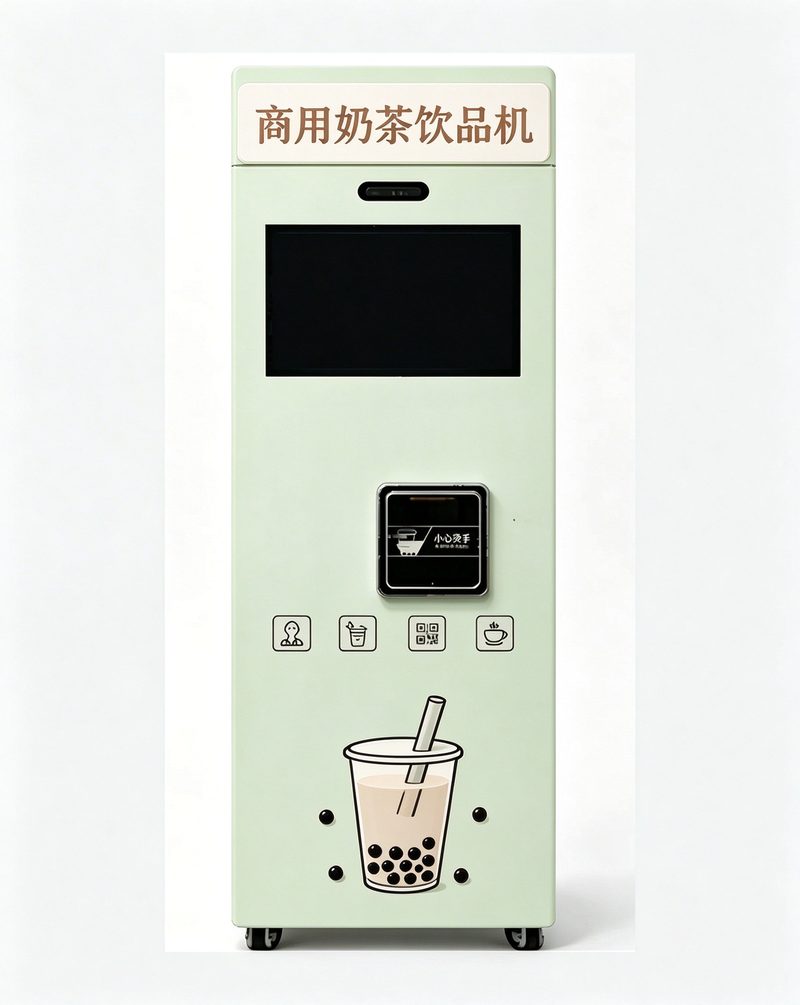
The Weekly Routine, Timed
| Task | Frequency | Minutes |
|---|---|---|
| Dashboard review | Daily | 2 |
| Wipe-down at site | Each visit | 3 |
| Stock top-up | every 2-3 weeks | 15-25 |
| Ledger export | Monthly | 10 |
| Filter check | Per calendar | 5 |
The Corner Before and After
Six months ago the fitting-zone bench of a home improvement market was dead floor space - a bin, a poster, and the occasional sigh from a wholesaler tallying receipts on a crate who wanted a cup of milk tea and had nowhere to get it.
Now there is a self-service milk tea machine against that wall. The routine is unremarkable, which is the compliment: waits the forty seconds scrolling a phone, pockets the receipt without looking at it.
The sale lands in the ledger before the door swings shut.
The Site That Is Merely Fine
Most sites are fine: they cover their costs, produce a modest margin, and generate no story. The temptation is to spend attention on them because they never complain.
Attention is the scarce input. A fine site needs a standard visit and nothing more; the hours saved belong at the site with a habit forming or a fault repeating. Treating every site as interesting is how routes get slow.
Handling Peak Hours
Peak hours are won before they arrive: full capsule drawers, a clean nozzle, tested payment, and nothing pending on the fault list.
Being Recognised as Staff
In a shared building, the person refilling a cabinet is read as either staff or stranger within about ten seconds, and the difference decides whether anyone reports a fault to them.
A lanyard, a name on the contact card, and a habit of greeting the front desk cost almost nothing. They turn three separate visits into a relationship the site can use.
Payment and Reconciliation Basics
Every sale is logged against a timestamp and a method, so the monthly settlement is a report rather than an argument.
- QR scan-to-pay covers the standard flow; each order carries its own reference
- Export the ledger monthly and match it against capsule consumption
- Agree in advance who refunds failed vends and how fast
Escalation Without Drama
Give each site a one-page card: who holds the door key, who to call for capsules, what the error codes on the screen mean in plain words, and where the backup cups live.
Cards beat memory, and memory beats hope. When the person who always fixed things is on holiday, the card is the difference between a five-minute fix and a dark machine over the weekend.
Training the Site Contact, Not Just the Operator
The person who works beside the machine every day is the first responder, whether or not anyone planned it that way. Ten minutes with them - where the cups live, what the screen means when it flashes, which number to call - converts a stalled machine into a two-minute fix.
Give the site one page, laminated, taped inside the cabinet door. Sites that have it report fewer avoidable calls; sites without it call about the same three things for a year.
What the Dead Floor Space Became
Six months ago a badminton hall snack corner was dead floor space - a bin, a poster, and the occasional sigh from a security guard off the midnight shift who wanted a cup of milk tea and had nowhere to get it.
Now there is a self-service milk tea machine against that wall. The routine is unremarkable, which is the compliment: taps the screen twice, picks the same drink as always, and is walking away before the cup is full.
The site host walks past without looking up - the highest compliment a placement gets.
The Routine That Protects Uptime
A fifteen-minute opening ritual keeps a self-service milk tea machine boring in the good sense: wipe the pickup area, glance at capsule counts, confirm the dashboard shows zero faults, and clear the cup waste if the site has none.
Boring is the goal. Every dramatic moment in unattended operation — a jam, a sold-out row, a payment hang — is a small routine that was skipped somewhere upstream.
What Training Actually Means
An unmanned machine still has three people who need to know something: whoever tops the cups, whoever answers the phone, and whoever unlocks the door. Training is a card with three names on it, not a session.
Write the three names into the site file and re-check them quarterly. The most common failure in a well-built placement is not mechanical; it is nobody knowing who to call on a Saturday.
The Repair That Was a Training Problem
Half the service calls that look mechanical are somebody pressing the wrong thing. The machine reports a fault, the operator drives out, and the fix is a restart plus a sentence of instruction that was never given.
Before dispatching a technician, read the last ten minutes of the event log. If the same code appears after the same action three times, the fault is in the routine, not in the hardware - and the cheapest repair is a laminated card taped inside the door.
Notes That Survive Handovers
Review the week every Friday with three numbers: cups sold, faults per hundred cups, and stockouts. If any of the three moves for two weeks in a row, something upstream changed — venue traffic, capsule quality, or a route that grew too long.
Trends, not incidents, are what retire machines and rewrite routes. A self-service milk tea machine that trends well on three quiet numbers earns its corner without anyone having to defend it in a meeting.
When the Site Restocks Itself
Handing restocking to the host's own staff trades route cost for control. It works when the host already runs a shift routine and fails when restocking becomes somebody's fourth job.
If you try it, keep the par levels in your system, not theirs, and audit monthly against the ledger. A site that restocks itself still needs a number that says whether it is being done.
Cleaning Contractors and Shared Space
In most buildings the floor around the cabinet is cleaned by someone who has never been told the machine exists. Their cloth stops at the cabinet's edge, and the edge is where the spills live.
Ten minutes with the cleaning supervisor solves more hygiene complaints than any specification. Write the machine into their round, and leave a contact for the day the bin overflows.
Writing Down What the Contract Forgot
Placement contracts fail on the dull clauses. Who pays if the breaker trips at midnight? Who wipes the floor when a cup breaks on a holiday? Who gets the phone call when the machine plays up during the host's big event?
None of this needs lawyers on the first pass; it needs a half-page of plain sentences both sides initial. The act of writing them down surfaces the assumptions that would otherwise surface as disputes.
Operators with the cleanest contracts report the same discovery: hosts respect specificity. A document that says exactly who does what on a bad day reads as professionalism, not distrust - and it wins placements that charm cannot.
Handing a Route to a New Operator
A route is a set of habits, and habits do not transfer through a spreadsheet. What transfers is a folder: site contacts, access hours, the fault history, the quirks of each host, and the two sites that need a phone call before a visit.
The handover week should be walked, not emailed. A new operator who has met four hosts and seen two restocks will keep the route alive; one who has only read the ledger will lose the first site within a quarter.
Write the first month's expectations down too: which numbers mean the handover worked, and which mean it did not. A handover without a test is a hope with a signature.
The Month the Building Emptied
The same face, four weeks running. A saleswoman between two showroom appointments stops at a co-working floor pantry, holds the cup with both hands and says nothing, which is its own review, and the pattern has stopped being a coincidence.
No promotion produced that habit. A machine that is always there, always stocked and always the same cup did it, which is a quieter kind of marketing than anything with a budget.
A site is not won on the first cup; it is won on the fifteenth. No one needed help, which is the entire point.
A Placement, Three Months In
Three months into a placement at an office park lobby, the pattern has settled: weekday morning peaks, and Fridays run light and Mondays run heavy, every week. The menu has been trimmed twice - the dashboard ranked the lines, the bottom three went, and nobody wrote in to mourn them.
What made the site work was unglamorous: a cabinet in sight of a window, a restock on the day the building was quiet, and a host who knew exactly who to call.
What a Working Site Looks Like
Three months into a placement at a wholesale market office row, the pattern has settled: early-morning trade, and the first two hours outsell the afternoon. The menu has been trimmed twice - the dashboard ranked the lines, the bottom three went, and nobody wrote in to mourn them.
The host's own staff ended up doing the small things - topping cups, wiping the tray - and that informal care showed up as fewer complaints than any service level agreement would have delivered.
The Ledger Tells the Story
The pilot at a logistics warehouse rest area began as a favour to the site host and turned into the easiest arithmetic in the fleet: shift-change traffic, the morning peak carries the day. When the second machine conversation started, the first month's ledger did most of the talking.
No single number makes the case; the shape does. Cups per week climb through the ramp, plateau where the site's rhythm settles, and the menu mix flattens the seasonal dips. When the host asks what it would take to add a second unit, the answer is a copy of the first one's ledger.
A Cup in the Middle of a Workday
Half past nine, after the factory bus at a trade hall rest nook between exhibition aisles. The queue at the coffee counter downstairs is eight deep; the self-service milk tea machine has three cups' worth of waiting in it, and no queue.
A teacher marking papers between classes collects the cup, checks the cap out of habit, and folds back into the corridor traffic, then goes back upstairs with the cup still in hand - a two-minute errand that a staffed counter would have turned into ten.
Speed is not a luxury feature here; it is the placement's whole economics. Nobody photographs it; the machine has simply become part of the floor plan.
Straight Answers to the Hard Questions
"Is the tea or coffee actually any good?"
Good enough that the repeat rate, not the first sale, pays for the placement. The capsule range covers espresso, milk tea, fruit and herbal lines, so the regulars settle in and the curious keep sampling.
"Will people trust a drink made by a box?"
They trust the cup more than the counter when the cup is consistent. Capsule brewing means the tenth cup matches the first, and the cleaning sheet posted on the glass does more for confidence than any slogan.
"We tried a vending machine years ago and it was a disaster."
The difference is the telemetry. Stock, faults and sales report themselves now, so a machine that quietly fails gets noticed the same hour - not the following month.
"The shop next door already sells drinks."
A shop sells drinks when someone is behind the counter. The machine sells at seven in the morning, at eleven at night, and every minute the shutters are down - it is a different business, not a rival.
Seven Days, One Van, Seven Notes
- Monday - Route planned from the weekend's dashboard; the week's capsule order confirmed.
- Tuesday - The long run: four sites before ten, two after lunch, one drawer rotated while the kettle boiled.
- Wednesday - Midweek is the quiet read: office sites cool off, clinic and gym sites pick up the slack.
- Thursday - Books day. The monthly figure gets compared to the site's own count, and the two agree within normal wastage.
- Friday - The Friday visit happens before four, because after four the site is a queue and a machine that needs nothing.
- Saturday - Half-day route. The transit site runs hot, the office sites sleep, and the van gets its filters swapped.
- Sunday - Rest day, which is also a system: the alerts keep watch and the ledger keeps counting.
Twelve Months, Two Columns
| Month | Traffic pattern | Route decision |
|---|---|---|
| Jan | New-year footfall is slow to wake; keep the hot lines deep and the route tight. | Budget season: the annual consumables figure gets signed this month. |
| Feb | Short month, long queues on the 14th; order the dessert-adjacent capsules early. | The post-holiday dip is real; use it for deep cleans and filter changes. |
| Mar | Exam season starts on campuses; the library site stops being a quiet placement. | Quarter close: reconcile the ledger and prune the menu bottom. |
| Apr | The first warm spell moves demand later in the day; watch the four o clock hour. | Rain weeks teach you which sites have indoor dwell; note them for the record. |
| May | Mid-year route review: cut the weakest ten percent if the ledger says so. | Holiday Mondays distort the weekly curve; compare like with like before judging a site. |
| Jun | The first genuinely hot week tells you whether the chilled lines were sized right. | Half-year service check: seals, nozzles, payment terminals. |
| Jul | Holiday travel lifts transit and hotel sites for roughly three weeks. | Peak heat shifts demand; the curve moves later into the evening. |
| Aug | Capsule storage gets hot in August; check the stockroom before the shelf life does. | The slowest office month; the tourist corridors carry the fleet instead. |
| Sep | Campus sites refill; the coffee line at eight in the morning comes back overnight. | Back-to-routine week is the second new year; footfall snaps back fast. |
| Oct | The first cold snap is worth a route note: it usually front-loads the month by a week. | The hot-drink golden window opens; the curve steepens week on week. |
| Nov | Year-end host meetings: renewals, shares, next-year placements. | Cold-weather peak builds; popular lines deserve a double buffer. |
| Dec | Festive peaks everywhere except the empty offices; plan the route around both. | Close the ledger, thank the hosts, and let the dashboard write the next order. |
From the Operator's Notebook
The best placement advice I ever got fit on a napkin: the first-month readings decides the curve, and the curve decides everything else.
Nobody warns you that the hard part is not buying the machine. It is the restock cadence, done the same way in month nine as in month one.
I used to think the machine was the business. Four hundred route stops later, the honest version: the machine is the storefront, and the business is the cleaning sheet around it.
How It Stacks Up
| The old way | What it costs | Where it fails | What the machine changes |
|---|---|---|---|
| Staffed counter | A rota to fill, holidays to cover, overtime at the edges | Shuts when the last person leaves | A self-service milk tea machine covers the closed hours without a rota |
| Traditional coin vending | Coin floats, collection trips, notes that jam | Problems surface as complaints, weeks late | Payment and faults report themselves the same hour |
| Corner cafe | A lease, a build-out, a barista roster | Menu changes mean reprinting and retraining | The menu changes when the capsule order does |
| Line | What it pours | Where it fits best | Restock rhythm |
|---|---|---|---|
| Coffee machine | Espresso, americano, latte | Office lobbies, clinics, showrooms | Restock every 2-3 weeks |
| Milk tea machine | Milk tea and tea lines | Retail floors, schools, factory canteens | Restock every 2-3 weeks |
| Juice machine | Fruit lines, chilled options | Sports halls, stations, parks | Restock every 2-3 weeks |
| Herbal tea machine | Herbal and traditional teas | Hospitals, tea houses, late shifts | Restock every 2-3 weeks |
A Checklist Worth Printing
- Date capsule boxes and rotate first in, first out
- Review alerts quarterly and remove the noisy ones
- Fix the price list at launch and review it quarterly
- Keep a laminated contact card inside the cabinet door
- Walk the route in the order the traffic allows, not the map
- Set the filter calendar by measured water hardness
- Ask the host where hot drinks are usually bought nearby
- Walk the cleaning sheet on every visit, not from memory
- Confirm who empties the bin beside the cabinet
- Write the power draw and floor load into the site agreement
- Check the pickup slot height against the host's accessibility notes
- Check signage faces the waiting area, not the wall
The Takeaway
The plan that survives contact with a busy site is the one written with the operator, not merely for them.
Common questions
How often does someone need to visit?
On normal demand, the restock route lands every 2-3 weeks per machine, with dashboard alerts filling the gaps.
Rent or revenue share?
Flat rent suits steady sites, share suits unproven ones; hybrids split the difference.
How long does installation take?
On a prepared site, commissioning is typically finished in under an hour: position, power, network check and a run of test cups.
What happens during a power cut?
The machine resumes when power returns; in-flight vends are voided and refunded per the posted rule.
What spare parts should I stock?
Seals and nozzles first, a spare payment terminal, and the fuses that solve site-side faults.
Is there a contract lock-in?
Placement terms vary by venue; trial periods with clear move-out terms are common and sensible.
What is the usual payback window?
The planning band is 3-8 months, set mainly by site quality and the local price of a cup.
Who prepares the site?
The host clears the spot and power; the operator brings levelling, testing and the first capsule load.
The machines behind this article
Related reading
- Keeping a Self-Service Bubble Tea Machine Clean Between Rounds
- Watching Many Sites from One Screen: the Office Milk Tea Station
- Dashboards and Alerts for the Staff Canteen Milk Tea Machine
- Where a Commercial Milk Tea Dispenser Earns Its Keep
Summary
A single machine is a pilot; the habits around it are the product. This page writes those habits down. Nothing assumes a large fleet.
Send the site's foot-traffic notes and the capsule shortlist will follow.