Settlement and Refunds on a 24/7 Juice Kiosk
In one line: Payment setup for a 24/7 juice kiosk is three decisions: method, offline handling and who refunds a failed vend. Applies to a single unit as much as a fleet.
Key facts: QR scan-to-pay with a per-order reference; failed vends void and log; offline sales queue locally and sync on reconnect.
The Routine Decides the Numbers
The 24/7 juice kiosk rarely fails suddenly; it drifts, and the drift shows up in the numbers first. Read it as a worksheet: the useful parts are the ones you can copy into your own file.
Cashless First, Cash Optional
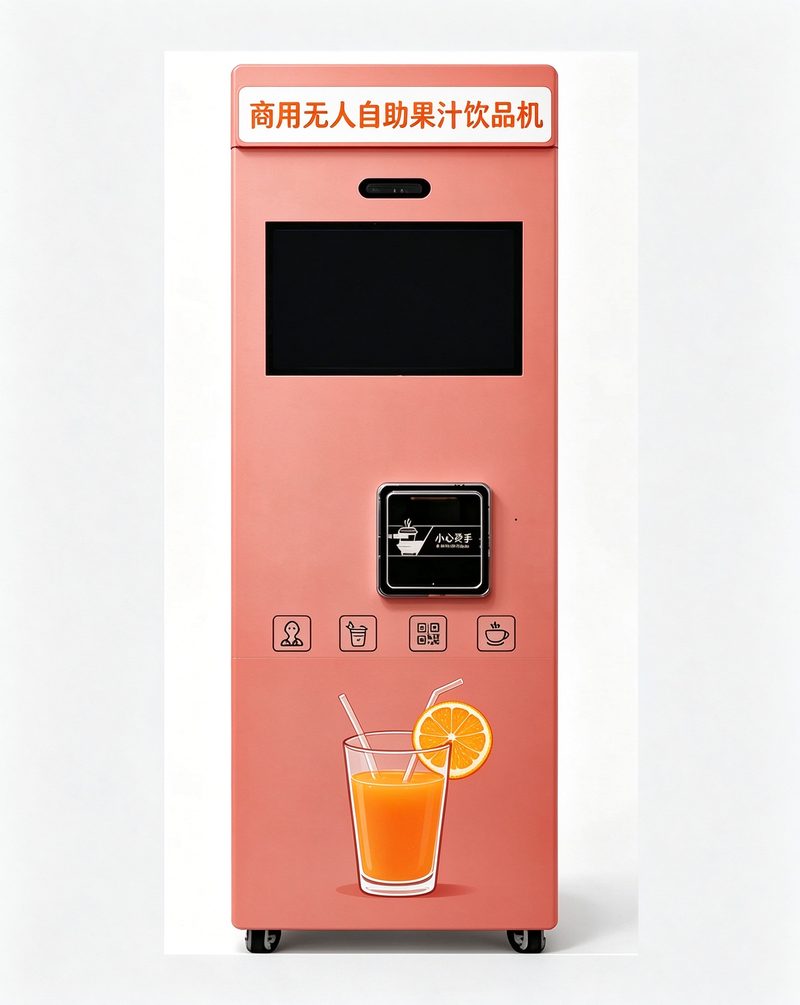
QR scan-to-pay carries the standard flow; where venues ask for coins, a coin module keeps both worlds on one ledger.
Payment Cases and Ownership
| Case | What happens | Owner |
|---|---|---|
| Normal sale | QR scan-to-pay, per-order reference | Machine ledger |
| Failed vend | Voided and logged | Operator refunds same day |
| Offline network | Sales queue locally | Sync on reconnect |
| Monthly close | Ledger export | Operator and host reconcile |
Two Floors Down, Another Machine
The same face, four weeks running. Two nurses sharing a ten-minute break stops at a 4S store customer lounge, takes two - one now, one for the colleague minding the desk, and the pattern has stopped being a coincidence.
No promotion produced that habit. A machine that is always there, always stocked and always the same cup did it, which is a quieter kind of marketing than anything with a budget.
A site is not won on the first cup; it is won on the fifteenth. By the time the queue reforms, the machine is already serving the next regular.
Settlement and the Ledger
Reconcile terminal reports against cup counts weekly. The two numbers drift apart in known ways — offline sales that sync late, test cups during maintenance, and the occasional sensor that counts a queue as a sale.
A ten-minute reconciliation finds drift while it is still drift. Left alone, drift becomes a conversation with the venue that nobody planned to have.
The Season the Site Forgets
Every site has a month it forgets: the week between holidays, the exam period, the shutdown for maintenance. Consumption drops and nobody tells the operator, so the next restock arrives into an empty building.
Ask the host for their calendar once a year and put the dates in the system. Two minutes of typing prevents a delivery that sits untouched for a fortnight and a stock rotation problem in the drawer.
What the Machine Cannot Tell You
A dashboard knows cups, codes and cash. It does not know that the corridor was closed for a week, that the host moved the bin, or that the regular who came every morning changed jobs.
The numbers explain what happened after the fact; the walkthrough explains why. A site read only from the dashboard drifts slowly and then suddenly, and the drift is always visible to whoever stands there for twenty minutes.
Refund Path for Failed Vends
Failed vends are rare but loud. A posted contact and a same-day refund rule turn a complaint into a footnote.
Who Owns the Cup
In most placements nobody has thought about who owns the cup after it is vended. That question becomes real when a host's cleaner starts collecting them, or when the local waste rules change.
Decide three things in writing: whether the machine vends its own cup, who empties the bin beside it, and what happens to the waste stream if the host’s contract changes. Three sentences, no ambiguity, no argument later.
When Cash Still Matters
Offline fallback is part of the payment design, not an excuse for it. Know exactly what a 24/7 juice kiosk does when the 4G/WiFi link drops — which sales queue for later sync, which fail outright, and how the screen explains it to a customer holding a phone.
Sites with a written fallback rehearse it once and never think about it again. Sites without one meet it on a busy Friday.
The Month the Building Emptied
The same face, four weeks running. A first-time visitor following the signs stops at the fitting-zone bench of a home improvement market, taps the screen twice, picks the same drink as always, and is walking away before the cup is full, and the pattern has stopped being a coincidence.
No promotion produced that habit. A machine that is always there, always stocked and always the same cup did it, which is a quieter kind of marketing than anything with a budget.
A site is not won on the first cup; it is won on the fifteenth. It is the fourth cup this corner has sold since the hour began.
When the Site Asks for Decaf
Decaf requests are a signal about the site, not about the menu. They usually arrive where the foot traffic includes pregnant customers, late shifts or older regulars - and where the machine currently offers nothing for them after three in the afternoon.
Decaf is also the cheapest way to test a new line: one capsule SKU, one shelf position, no new hardware. Watch its share for a month before assuming the site wants more variety rather than this specific thing.
A Report the Host Can Forward
Hosts do not need dashboards; they need one page they can send upward without editing. Cups served, uptime, one improvement, one issue - written in their language, not in machine language.
Send it on a fixed day each month, even when nothing happened. Predictability is what makes a host defend the placement internally, and it costs ten minutes.
Notes From the Field
Unattended retail rewards the person who shows up on a schedule. Machines do not need watching; they need intervals — cleaning intervals, restock intervals, ledger intervals — kept boringly on time.
The operators who last are rarely the loudest. They are the ones whose Wednesday route looks the same in week forty as it did in week one.
The Twenty-Minute Site Visit
A useful routine visit fits in twenty minutes: two to count stock, three to wipe, five to watch the machine work without intervening, and the rest to talk to whoever is standing nearby.
The five minutes of watching is the part operators skip. It is also the only way to see the queue form, the card fail, or the customer walk away at the price screen.
Handling a Complaint in Front of Others
A complaint voiced at the machine is a performance with an audience, and the audience decides how much damage it does. Answering quietly and fixing it on the spot ends most of them.
The rule worth writing down: never argue about the money at the machine. Refund, then reconcile later. The queue remembers the argument far longer than the operator remembers the five euros.
Payment Flows in Practice
Settlement clarity starts with one rule: every refund has a reason code. Machine faults, double scans, and change disputes each get their own code, and the codes tell you which 24/7 juice kiosk, which site, and which week needs attention.
Un-coded refunds look small daily and large quarterly. The code list is the cheapest audit tool on the market.
What a Facility Manager Checks First
A facility manager walks toward a new cabinet looking at four things, none of them the machine: the floor where it meets the wall, the cable route, the fire door it might block, and whether the bin beside it has a lid.
Answer those four before they are asked and the conversation moves to revenue. Let them find one of the four themselves and the conversation stays on compliance for a month.
The document that helps is one page: a photograph of the installed unit, the power rating, the maintenance contact, and the cleaning routine. Facility teams keep paper, and paper is what survives a change of staff.
The Case for Fewer, Better Sites
A fleet of ten average sites costs more to serve than a fleet of six good ones: the same van hours, the same capsule handling, half the revenue concentration, twice the host relationships to babysit.
The walkthrough exists to say no. A site that fails two of the placement checks - dwell time, visibility, access hours - will fail them forever, politely, while consuming the same service capacity as a winner.
Pruning is not retreat. Every weak site traded up to a better corner raises the fleet's average, simplifies the route, and frees the operator's attention for the placements that compound.
What a Closed Site Costs
The same face, four weeks running. A mother waiting out a clinic queue stops at the smoking-terrace door of an office tower, holds the cup with both hands and says nothing, which is its own review, and the pattern has stopped being a coincidence.
No promotion produced that habit. A machine that is always there, always stocked and always the same cup did it, which is a quieter kind of marketing than anything with a budget.
A site is not won on the first cup; it is won on the fifteenth. It is the fourth cup this corner has sold since the hour began.
A Placement, Three Months In
Three months into a placement at a community clinic hallway, the pattern has settled: appointment-schedule traffic, and the queue before lunch is the whole story. The menu has been trimmed twice - the dashboard ranked the lines, the bottom three went, and nobody wrote in to mourn them.
What made the site work was unglamorous: a cabinet in sight of a window, a restock on the day the building was quiet, and a host who knew exactly who to call.
What a Working Site Looks Like
The pilot at an office park lobby began as a favour to the site host and turned into the easiest arithmetic in the fleet: weekday morning peaks, Fridays run light and Mondays run heavy, every week. When the second machine conversation started, the first month's ledger did most of the talking.
What the site taught was patience with a shape. Weeks one to three looked like a verdict; weeks four to twelve were the actual answer, and the answer was better than the verdict.
The Ledger Tells the Story
The pilot at a logistics warehouse rest area began as a favour to the site host and turned into the easiest arithmetic in the fleet: shift-change traffic, the morning peak carries the day. When the second machine conversation started, the first month's ledger did most of the talking.
The interesting number is not the peak day; it is the worst weekday, because that is the one the rent has to survive. In this case the floor held, and a floor that holds is what lets an operator plan a second site.
The Corner Before and After
Six months ago the smoking-terrace door of an office tower was dead floor space - a bin, a poster, and the occasional sigh from a teacher marking papers between classes who wanted an orange juice and had nowhere to get it.
Now there is a 24/7 juice kiosk against that wall. The routine is unremarkable, which is the compliment: holds the cup with both hands and says nothing, which is its own review.
It is the fourth cup this corner has sold since the hour began.
Straight Answers to the Hard Questions
"Doesn't it need plumbing and rewiring?"
A household power line and two square metres cover it. Most placements are standing and selling the same week the site agreement is signed.
"How do I know the numbers are real?"
Every order carries its own reference and exports monthly against capsule consumption. You reconcile a report, not a shoebox of receipts.
"Sounds like a headache to restock."
The restock route runs every two to three weeks per machine on normal demand, sized by the dashboard rather than by guesswork. One van, one morning, ten sites.
"A machine like that must cost a fortune up front."
Less than the rent deposit for the counter it replaces. The machine is one of eight cost lines, and the payback window runs three to eight months at a site with real foot traffic - the worksheet in this series breaks all eight out.
A Week on the Route, Logged
- Monday - Week opens with paperwork - capsule order signed off, one site's access hours re-confirmed by message.
- Tuesday - Route day proper. A payment terminal at the second stop needed a restart; the log records the minute it happened.
- Wednesday - Midweek is the quiet read: office sites cool off, clinic and gym sites pick up the slack.
- Thursday - Books day. The monthly figure gets compared to the site's own count, and the two agree within normal wastage.
- Friday - Peak-site visit before the evening rush; contact card replaced at one unit.
- Saturday - Light route; the hotel machine's drawer rotated first in, first out.
- Sunday - Nothing scheduled. Alerts forwarded to the phone, one dashboard glance at noon, no wheels turned.
Twelve Months, Two Columns
| Month | What the traffic does | What the operator does |
|---|---|---|
| Jan | Budget season: the annual consumables figure gets signed this month. | New-year footfall is slow to wake; keep the hot lines deep and the route tight. |
| Feb | Valentine week bends the coffee and milk-tea lines upward for ten days. | The post-holiday dip is real; use it for deep cleans and filter changes. |
| Mar | Exam season starts on campuses; the library site stops being a quiet placement. | Quarter close: reconcile the ledger and prune the menu bottom. |
| Apr | Rain weeks teach you which sites have indoor dwell; note them for the record. | The first warm spell moves demand later in the day; watch the four o clock hour. |
| May | Mid-year route review: cut the weakest ten percent if the ledger says so. | Warm evenings extend the outdoor sites; chilled options earn their drawer space. |
| Jun | The first genuinely hot week tells you whether the chilled lines were sized right. | Exam and event season bends public-hall sites; stock ahead of the dates. |
| Jul | Holiday travel lifts transit and hotel sites for roughly three weeks. | Office sites go quiet and tourist corridors take over; move the route, not the menu. |
| Aug | Use the lull for operator training and contract renewals. | The slowest office month; the tourist corridors carry the fleet instead. |
| Sep | Campus sites refill; the coffee line at eight in the morning comes back overnight. | Back-to-routine week is the second new year; footfall snaps back fast. |
| Oct | The first cold snap is worth a route note: it usually front-loads the month by a week. | Autumn fairs and exhibitions fill the trade-hall sites. |
| Nov | Cold-weather peak builds; popular lines deserve a double buffer. | Year-end host meetings: renewals, shares, next-year placements. |
| Dec | The last week is dead in offices and frantic in transit; stock for one and rest for the other. | Close the ledger, thank the hosts, and let the dashboard write the next order. |
Three Things the Route Taught Me
Every operator I respect has the same boring habit: they write the week down. the route order is where the writing pays for itself.
If I could send one paragraph back to my first order, it would be this - the move-out clause is not a purchase, it is a schedule, and the schedule is written in the ledger whether you look at it or not.
The machine never argues. It just records what you did about the capsule rotation, and hands the record back at the end of the quarter.
How It Stacks Up
| The old way | What it costs | Where it fails | What the machine changes |
|---|---|---|---|
| Staffed counter | A rota to fill, holidays to cover, overtime at the edges | Shuts when the last person leaves | A 24/7 juice kiosk covers the closed hours without a rota |
| Traditional coin vending | Coin floats, collection trips, notes that jam | Problems surface as complaints, weeks late | Payment and faults report themselves the same hour |
| Corner cafe | A lease, a build-out, a barista roster | Menu changes mean reprinting and retraining | The menu changes when the capsule order does |
| Line | What it pours | Where it fits best | Restock rhythm |
|---|---|---|---|
| Coffee machine | Espresso, americano, latte | Offices, hotels, waiting areas | Restock every 2-3 weeks |
| Milk tea machine | Milk tea and tea lines | Retail floors, schools, factory canteens | Restock every 2-3 weeks |
| Juice machine | Fruit lines, chilled options | Gyms, cinemas, family venues | Restock every 2-3 weeks |
| Herbal tea machine | Herbal and traditional teas | Clinics, wellness floors, night sites | Restock every 2-3 weeks |
A Checklist Worth Printing
- Decide who owns the cups before the first order
- Date capsule boxes and rotate first in, first out
- Log the first month's cup curve against the plan
- Check signage faces the waiting area, not the wall
- Agree in writing who pays for power and consumables
- Test the payment terminal on the site's own network
- Post the contact and refund rule at the machine
- Put the fault codes in plain words on the inside door
- Note the site's quiet hours before scheduling a service visit
- Write the power draw and floor load into the site agreement
- Measure the walk from the door to the cabinet before delivery
- Confirm the delivery lift's depth before the van leaves
The Takeaway
Start narrow: one site, one menu, one restock rhythm - then widen on evidence.
Common questions
How are capsules shipped and stored?
Stackable dated boxes, dry storage off the floor, first-in-first-out rotation at the depot.
What if payment fails mid-vend?
The vend is voided, the ledger records it, and the posted refund rule handles the customer the same day.
What spare parts should I stock?
Seals and nozzles first, a spare payment terminal, and the fuses that solve site-side faults.
How often does someone need to visit?
On normal demand, the restock route lands every 2-3 weeks per machine, with dashboard alerts filling the gaps.
Is there a contract lock-in?
Placement terms vary by venue; trial periods with clear move-out terms are common and sensible.
What happens during a power cut?
The machine resumes when power returns; in-flight vends are voided and refunded per the posted rule.
When does the second machine make sense?
When the first one's ledger shows a stable curve and the restock route has spare capacity.
What does a cup actually cost?
Capsule plus cup plus a share of parts, power and cleaning - the per-cup figure is fixed with the supplier and held against invoices.
The machines behind this article
Related reading
- Hard Water, Soft Costs: Filtration for the Capsule Juice Machine
- Settlement and Refunds on a Capsule Juice Machine
- Unmanned Juice Machine Restock Planning Without Stockouts
- Settlement and Refunds on An Office Juice Station
Summary
Payment setup for a 24/7 juice kiosk is three decisions: method, offline handling and who refunds a failed vend. Applies to a single unit as much as a fleet.
Request the spec sheet and the TCO worksheet together - they read as one document.