Dashboards and Alerts for the Automatic Milk Tea Vending Machine
In one line: With 4G/WiFi reporting, an automatic milk tea vending machine fleet describes itself: stock, faults and hourly sales arrive before the depot does.
Key facts: Stock alerts, offline flags and vend-failure counts - three signals run a twenty-site fleet from one phone.
What Separates a Busy Unit from a Quiet One
The automatic milk tea vending machine pilot is usually judged in month two, when novelty has worn off. The notes that follow come from ordinary deployments and ordinary complaints.
What to Watch on the Dashboard
- Stock levels per capsule line
- Fault codes and offline events
- Hourly sales against the site's curve
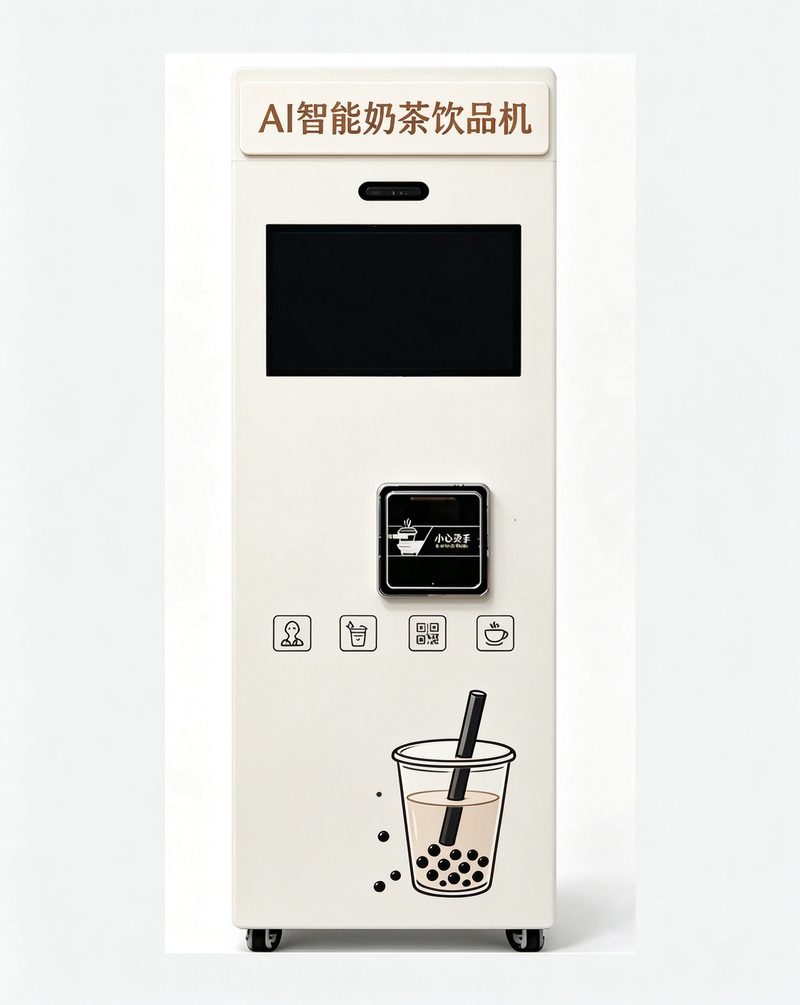
Alerts, Triggers, First Actions
| Alert | Trigger | First action |
|---|---|---|
| Stock low | Below threshold | Add line to next route |
| Machine offline | Over an hour | Power and SIM check by phone |
| Vend failures | Repeated | Walk the host through the slot |
| Sales drop | Against the curve | Visit before the host notices |
From the Service Route
The operator's van stops at the shelter by a suburban train platform on a route that will cover six more machines before noon. The dashboard has already ranked the visit: stock fine, no faults, one line running low.
While the drawers are topped, a visiting auditor with a folder under one arm wanders up; the sale happens between two tasks, collects the cup, checks the cap out of habit, and folds back into the corridor traffic.
This is what unattended means in practice - not absence, but attention aimed exactly where the data says. Nobody photographs it; the machine has simply become part of the floor plan.
Contract Clauses Worth Reading Twice
Four clauses carry most of the risk in a placement: access hours for the restock van, who pays for power, what happens if the host changes use of the space, and how either side exits without penalty.
None of them needs a lawyer to draft, and all of them are cheaper to agree before the cabinet is bolted down. An automatic milk tea vending machine that cannot be serviced inside the host's hours is a machine that will miss its every 2-3 weeks rhythm sooner or later.
The Photo You Take on Day One
Photograph the installed unit, the socket, the water connection if there is one, the floor around it and the route in. Ten photographs taken on installation day answer a year of arguments about what was there before.
Store them with the site file, not on somebody's phone. When a host says the machine damaged the floor, the photo either settles it in a minute or proves the claim - both outcomes are useful.
Small Habits, Compounding Results
Every site teaches one lesson per month, whether or not anyone writes it down. The one-page site card is where lessons go to survive staff changes and holiday seasons.
A fleet with written memory improves yearly. A fleet with verbal memory starts each January from scratch.
Adding the Second Machine
The second unit is justified by a plateau, not by a peak. When a site's curve has held flat for a quarter and the route still has slack, the arithmetic is already done - the rest is scheduling.
Doubling on one good month is how fleets end up with two machines selling the same forty cups. Wait for the flat line; it is the site telling you its size.

Hygiene Checks That Survive a Visit
What an inspector asks for is a record, not a promise. A dated cleaning sheet, a filter change log and a note of who signed each visit answer most questions before they are asked twice.
The visible part matters as much: a wiped pickup area and a capped cup say more to a passing customer than any certificate on the wall. On an automatic milk tea vending machine, the three-minute wipe is the cheapest reputation work available.
Queues, Layout and the Second Cabinet
A single cabinet serves about three customers a minute at its best; beyond that the queue becomes the advertisement nobody wants. The second unit is justified by queue length, not by revenue alone.
Place the second cabinet beside the first rather than across the room. Two machines in one sightline share a queue, a restock trip and a fault log; two across a lobby share nothing but a landlord.
The Corner Before and After
Six months ago the rest area of a logistics warehouse was dead floor space - a bin, a poster, and the occasional sigh from a wholesaler tallying receipts on a crate who wanted a cup of milk tea and had nowhere to get it.
Now there is a automatic milk tea vending machine against that wall. The routine is unremarkable, which is the compliment: scans, hesitates over the menu for a second, then picks the new flavour the dashboard has been quietly promoting.
It is the fourth cup this corner has sold since the hour began.
The Three Days After a Breakdown
A breakdown costs the repair plus three days of habit. The first day the regulars wait, the second they try the place next door, and by the third some of them have decided they prefer it.
That is why the useful metric is time to first cup after a fault, not mean time between faults. A machine that fails twice a year and recovers in an hour is cheaper than one that fails once and is out for a week.
The Site That Is Merely Fine
Most sites are fine: they cover their costs, produce a modest margin, and generate no story. The temptation is to spend attention on them because they never complain.
Attention is the scarce input. A fine site needs a standard visit and nothing more; the hours saved belong at the site with a habit forming or a fault repeating. Treating every site as interesting is how routes get slow.
Remote Diagnostics and What They Miss
A 4G/WiFi module reports stock, faults and sales, and it does that well. What it cannot report is a sticky drip tray, a cup stack placed out of reach, or a host who has quietly unplugged the machine to charge a floor polisher.
So the dashboard ranks visits; it does not replace them. The useful habit is a short physical check on the same trip, because the last metre of diagnosis is still done by hand.
Hiring for the Route
Route work rewards a specific temperament: someone who notices a full bin, a leaning cup stack and a screen with a fingerprint on it without being told to look. It is not a skill that shows up on a CV.
Hire on a trial morning with two sites and watch what gets cleaned without prompting. The person who wipes the shelf before restocking it will save more money over a year than the one who restocks fastest.
The Complaint Made in Public
A complaint at the machine is watched by everyone in the queue, which makes the response part of the product. Speed matters more than completeness: acknowledge, fix or refund, then explain.
Keep a single refund rule and apply it without negotiation in the moment. Arguments at the counter cost more than the drink, and the audience is deciding whether the machine is worth a second try.
A Complaint Is a Signal, Not a Verdict
The first complaint about a site usually describes a real defect in a clumsy way. The customer says the coffee tastes burnt; the actual problem is a heater cycling two degrees high.
Treat the complaint as a pointer and check the machine data before defending the product. Operators who answer the data find the fault; operators who answer the words find an argument.
What a Placement Is Actually Worth
A placement is not valued by its revenue; it is valued by the net it produces per visit. Two sites with identical sales can be worth very differently once route time and share are counted.
That is why operators who grow by adding far sites often shrink in profit while growing in revenue. The right unit of account is monthly net per stop, and it should be reviewed every quarter, because routes drift as sites are added.
When a portfolio is sold, the buyer is not paying for machines. They are paying for a set of sites whose net per stop is documented and repeatable - which is why the ledger matters more than the fleet list.
The Two Numbers That Decide a Fleet
A fleet is not judged by total revenue. It is judged by two numbers: net per stop, and stops per route day. Multiply them and you have the business; improve either and the business grows without adding machines.
Most operators watch revenue because it is easy. The two numbers above explain why a fleet can grow revenue for two years and still be worth less than when it started - the new sites added stops without adding net.
Review both quarterly. When net per stop falls, the answer is usually a menu or a share problem; when stops per day falls, it is a routing problem. Different fixes, and they are easy to confuse under a single revenue chart.
The Vend That Did Not Happen
The same face, four weeks running. A mother waiting out a clinic queue stops at the reception annex of a driving range, takes two - one now, one for the colleague minding the desk, and the pattern has stopped being a coincidence.
No promotion produced that habit. A machine that is always there, always stocked and always the same cup did it, which is a quieter kind of marketing than anything with a budget.
A site is not won on the first cup; it is won on the fifteenth. The sale lands in the ledger before the door swings shut.
A Placement, Three Months In
The pilot at a logistics warehouse rest area began as a favour to the site host and turned into the easiest arithmetic in the fleet: shift-change traffic, the morning peak carries the day. When the second machine conversation started, the first month's ledger did most of the talking.
What made the site work was unglamorous: a cabinet in sight of a window, a restock on the day the building was quiet, and a host who knew exactly who to call.
What a Working Site Looks Like
Three months into a placement at an office park lobby, the pattern has settled: weekday morning peaks, and Fridays run light and Mondays run heavy, every week. The menu has been trimmed twice - the dashboard ranked the lines, the bottom three went, and nobody wrote in to mourn them.
The interesting number is not the peak day; it is the worst weekday, because that is the one the rent has to survive. In this case the floor held, and a floor that holds is what lets an operator plan a second site.
The Ledger Tells the Story
The pilot at a wholesale market office row began as a favour to the site host and turned into the easiest arithmetic in the fleet: early-morning trade, the first two hours outsell the afternoon. When the second machine conversation started, the first month's ledger did most of the talking.
The first month argued with the second and lost. What looked like a slow start was a queue forming in the wrong half hour - once the route moved the restock earlier, the same site sold the same cups with half the empty rows.
The Person Who Quietly Runs It
The same face, four weeks running. An intern rehearsing a presentation stops at the corridor outside a hospital waiting hall, holds the cup with both hands and says nothing, which is its own review, and the pattern has stopped being a coincidence.
No promotion produced that habit. A machine that is always there, always stocked and always the same cup did it, which is a quieter kind of marketing than anything with a budget.
A site is not won on the first cup; it is won on the fifteenth. The restock note writes itself: the popular line is down one row.
Straight Answers to the Hard Questions
"Can it really run unattended all day?"
That is the design brief: uptime, alerts and a route. The machine does the shift work; you do the arithmetic.
"How do I know the numbers are real?"
Every order carries its own reference and exports monthly against capsule consumption. You reconcile a report, not a shoebox of receipts.
"Sounds like a headache to restock."
The restock route runs every two to three weeks per machine on normal demand, sized by the dashboard rather than by guesswork. One van, one morning, ten sites.
"A machine like that must cost a fortune up front."
Less than the rent deposit for the counter it replaces. The machine is one of eight cost lines, and the payback window runs three to eight months at a site with real foot traffic - the worksheet in this series breaks all eight out.
The Week's Route, Written Down
- Monday - Week opens with paperwork - capsule order signed off, one site's access hours re-confirmed by message.
- Tuesday - Route day proper. A payment terminal at the second stop needed a restart; the log records the minute it happened.
- Wednesday - Midweek is the quiet read: office sites cool off, clinic and gym sites pick up the slack.
- Thursday - Reconciliation morning - cups sold against capsules issued, and the one discrepancy traced to a demo cup.
- Friday - Peak-site visit before the evening rush; contact card replaced at one unit.
- Saturday - Half-day route. The transit site runs hot, the office sites sleep, and the van gets its filters swapped.
- Sunday - Rest day, which is also a system: the alerts keep watch and the ledger keeps counting.
Twelve Months, Two Columns
| Month | What the traffic does | What the operator does |
|---|---|---|
| Jan | New-year footfall is slow to wake; keep the hot lines deep and the route tight. | The quietest fortnight of the year - good for audits, bad for optimism. |
| Feb | The post-holiday dip is real; use it for deep cleans and filter changes. | Short month, long queues on the 14th; order the dessert-adjacent capsules early. |
| Mar | Quarter close: reconcile the ledger and prune the menu bottom. | Spring footfall returns with the weather; fruit lines start their climb. |
| Apr | The first warm spell moves demand later in the day; watch the four o clock hour. | Rain weeks teach you which sites have indoor dwell; note them for the record. |
| May | Holiday Mondays distort the weekly curve; compare like with like before judging a site. | Warm evenings extend the outdoor sites; chilled options earn their drawer space. |
| Jun | Half-year service check: seals, nozzles, payment terminals. | Exam and event season bends public-hall sites; stock ahead of the dates. |
| Jul | Peak heat shifts demand; the curve moves later into the evening. | Office sites go quiet and tourist corridors take over; move the route, not the menu. |
| Aug | Use the lull for operator training and contract renewals. | The slowest office month; the tourist corridors carry the fleet instead. |
| Sep | Campus sites refill; the coffee line at eight in the morning comes back overnight. | Back-to-routine week is the second new year; footfall snaps back fast. |
| Oct | The hot-drink golden window opens; the curve steepens week on week. | Autumn fairs and exhibitions fill the trade-hall sites. |
| Nov | Darkness at five changes the traffic shape; the evening hour gains, the lunch hour thins. | Cold-weather peak builds; popular lines deserve a double buffer. |
| Dec | The last week is dead in offices and frantic in transit; stock for one and rest for the other. | Close the ledger, thank the hosts, and let the dashboard write the next order. |
From the Operator's Notebook
Nobody warns you that the hard part is not buying the machine. It is the move-out clause, done the same way in month nine as in month one.
The best placement advice I ever got fit on a napkin: the first-month readings decides the curve, and the curve decides everything else.
My first site taught me the arithmetic; my fourth taught me the ledger discipline, which is the part that scales.
How It Stacks Up
| The old way | What it costs | Where it fails | What the machine changes |
|---|---|---|---|
| Staffed counter | A rota to fill, holidays to cover, overtime at the edges | Shuts when the last person leaves | A automatic milk tea vending machine covers the closed hours without a rota |
| Traditional coin vending | Coin floats, collection trips, notes that jam | Problems surface as complaints, weeks late | Payment and faults report themselves the same hour |
| Corner cafe | A lease, a build-out, a barista roster | Menu changes mean reprinting and retraining | The menu changes when the capsule order does |
| Line | What it pours | Where it fits best | Restock rhythm |
|---|---|---|---|
| Coffee machine | Espresso, americano, latte | Office lobbies, clinics, showrooms | Restock every 2-3 weeks |
| Milk tea machine | Milk tea and tea lines | Retail floors, schools, factory canteens | Restock every 2-3 weeks |
| Juice machine | Fruit lines, chilled options | Gyms, leisure, transit | Restock every 2-3 weeks |
| Herbal tea machine | Herbal and traditional teas | Hospitals, tea houses, late shifts | Restock every 2-3 weeks |
A Checklist Worth Printing
- Decide who owns the cups before the first order
- Compare the monthly ledger to the site's own count once a quarter
- Write the power draw and floor load into the site agreement
- Test the payment terminal on the site's own network
- Walk the route in the order the traffic allows, not the map
- Keep one seal and nozzle kit per ten machines
- Log the first repair with date, part and cause
- Review alerts quarterly and remove the noisy ones
- Note the site's quiet hours before scheduling a service visit
- Agree restock cadence and access hours in writing
- Set stock thresholds on the dashboard before day one
- Set the filter calendar by measured water hardness
The Takeaway
Run the sheet, place the first unit, and let the first month of data argue for the second.
Common questions
How often does someone need to visit?
On normal demand, the restock route lands every 2-3 weeks per machine, with dashboard alerts filling the gaps.
How long does installation take?
On a prepared site, commissioning is typically finished in under an hour: position, power, network check and a run of test cups.
What happens during a power cut?
The machine resumes when power returns; in-flight vends are voided and refunded per the posted rule.
Can the menu change without a technician?
Yes - capsule menus change at the restock visit; nothing on the machine needs touching.
Can I run twenty sites alone?
Up to a point - routes planned from live data are what make small fleets workable with one service person.
Is there a contract lock-in?
Placement terms vary by venue; trial periods with clear move-out terms are common and sensible.
How often do filters change?
By litres, not by date: the interval is set from measured hardness and logged on the sheet.
Who prepares the site?
The host clears the spot and power; the operator brings levelling, testing and the first capsule load.
The machines behind this article
Related reading
- Self-Service Bubble Tea Machine Operations: A Practical Routine
- Placement Playbook for the Office Milk Tea Station
- Staff Canteen Milk Tea Machine Hygiene: A Sheet That Gets Used
- Capsule Supply Chains for the Self-Service Milk Tea Machine
Summary
With 4G/WiFi reporting, an automatic milk tea vending machine fleet describes itself: stock, faults and hourly sales arrive before the depot does.
Book a commissioning slot only after the checklist above is signed off.