Budgeting an Automatic Coffee Vending Machine Without Surprises
In one line: Budgeting an automatic coffee vending machine means writing down every recurring line before the order, then letting the site's own cup curve correct the sheet.
Key facts: Machine, placement, consumables, parts, power and connectivity, site fee, cleaning, downtime - eight lines, and only one of them is the sticker.
What Separates a Busy Unit from a Quiet One
Anyone comparing the automatic coffee vending machine for the first time meets the same vocabulary in a different order. The sequence mirrors how a real decision gets made, including the awkward middle steps.
The Cost Lines Behind the Sticker
The sticker is one line of eight. Machine, placement, consumables, parts, power and connectivity, site fee, cleaning time and downtime make up the rest.
Written down separately, the lines show which lever actually moves the payback window of 3-8 months.
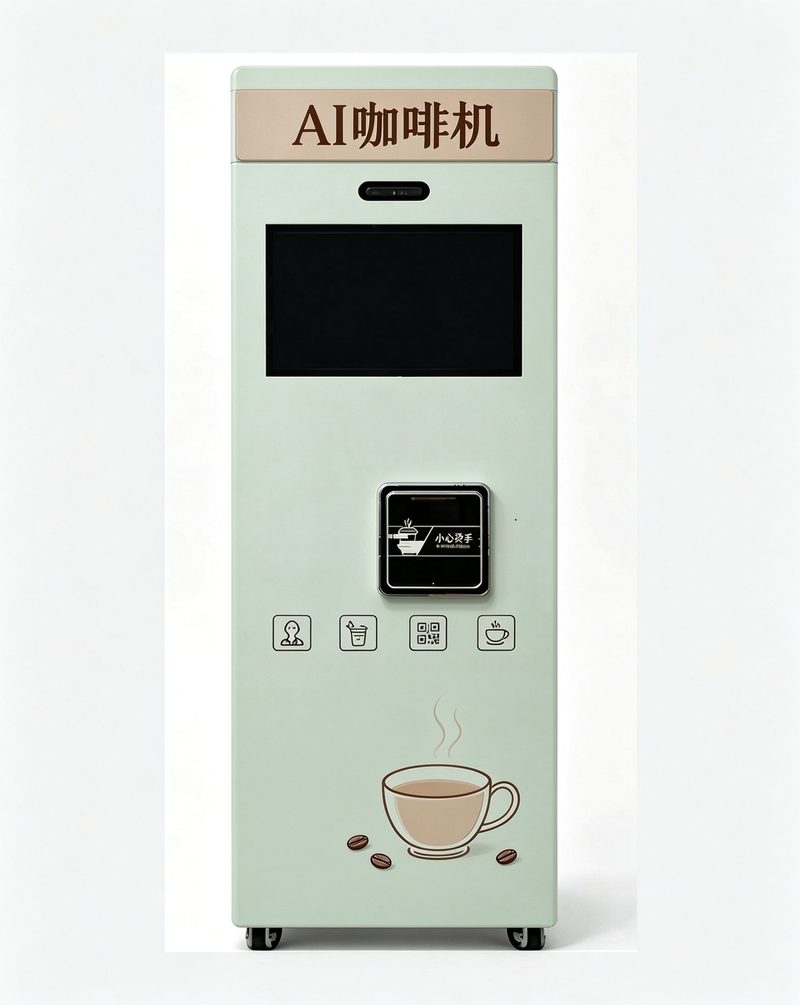
The Eight Cost Lines at a Glance
| Cost line | When it hits | How it scales |
|---|---|---|
| Machine (configured) | Before delivery | Fixed by the order |
| Placement and delivery | At installation | Per site |
| Consumables | Monthly | Directly with cup volume |
| Spare parts kit | One-time plus top-ups | With fleet size |
| Power and connectivity | Monthly | Flat per machine |
| Site fee or share | Monthly | With the venue agreement |
| Cleaning time | Weekly | With visit frequency |
| Downtime | Irregular | With service terms |
The Vend That Did Not Happen
The same face, four weeks running. A gym regular towel over the shoulder stops at a university staff building foyer, taps the screen twice, picks the same drink as always, and is walking away before the cup is full, and the pattern has stopped being a coincidence.
No promotion produced that habit. A machine that is always there, always stocked and always the same cup did it, which is a quieter kind of marketing than anything with a budget.
A site is not won on the first cup; it is won on the fifteenth. The dashboard records it as one line; the day's curve bends up almost imperceptibly.
The Line That Always Sells Out First
Every site has one line that empties first, and it is rarely the one the menu was designed around. It is whatever the site's own routine already pointed at before the machine arrived.
Stock that line deeper than the model suggests for the first month, then read the ledger. A stockout on the leading line teaches customers to check elsewhere, and the habit is expensive to rebuild.
Spare Parts as a Policy
The spare-parts question is not what to stock but what to promise. A promise of four-hour repair with no local part is a promise the route cannot keep.
Decide the promise first, then stock to it: the part that fails most, the part that stops everything, and the consumable that runs out between visits.
The Contract Review Nobody Does
Most placement contracts are signed once and read never. The clauses that matter six months later are access hours, the notice period, and who owns the cups.
A fifteen-minute review at signature, with the three clauses highlighted, prevents most of the arguments that end placements early.
Cleaning Contractors and Shared Space
In most buildings the floor around the cabinet is cleaned by someone who has never been told the machine exists. Their cloth stops at the cabinet's edge, and the edge is where the spills live.
Ten minutes with the cleaning supervisor solves more hygiene complaints than any specification. Write the machine into their round, and leave a contact for the day the bin overflows.
The First Complaint About Price
The first price complaint is rarely about the number. It is about comparison: against the chain downstairs, against the machine that used to be here, against what the customer assumed an unmanned cup should cost.
Answer with the comparison the customer is actually making, not with a cost breakdown. If the site sits next to a two-dollar counter, the machine has to earn its price through speed and hours rather than argue about beans.
Waste, Cups and the Bins Beside the Cabinet
Cups leave the machine and land somewhere. Confirm with the host where they go and who empties that bin, because a full bin beside a cabinet is the fastest way to lose a placement that is working.
Where the site separates waste, put a second bin within arm's reach. The cost is one bin; the benefit is a host who stops mentioning the machine in meetings.
One Minute at the Machine
A slow Sunday evening, the tool-room door of a machine shop. A forklift driver with gloves tucked in his belt walks up to the automatic coffee vending machine and takes two - one now, one for the colleague minding the desk. The cup arrives capped, a flat white still warm enough to notice on the walk back.
It is the fourth cup this corner has sold since the hour began.
Multiply that minute by the hours the site is actually awake, and the placement argument writes itself: the machine is not competing with the cafe down the street - it is serving the traffic that never walks there.
The Dashboard Number That Lies
Every dashboard has one number that is technically true and practically misleading: revenue before refunds, cups including test pours, uptime that counts a machine that cannot vend.
Pick the definitions once, write them down, and use the same ones in every conversation with a host. A number that changes meaning between meetings destroys trust faster than a bad month does.
The Three Days After a Breakdown
A breakdown costs the repair plus three days of habit. The first day the regulars wait, the second they try the place next door, and by the third some of them have decided they prefer it.
That is why the useful metric is time to first cup after a fault, not mean time between faults. A machine that fails twice a year and recovers in an hour is cheaper than one that fails once and is out for a week.
The Invoice That Arrives Late
Payment terms decide how many sites a small operator can carry. A thirty-day term on a site that pays in sixty is not a paperwork problem; it is a loan the operator is making without interest.
Agree the date, the method and the penalty before the machine is installed, and put all three in the placement terms. Chasing an invoice is the most expensive hour in the month because it produces nothing.
The Lines Around the Sticker
The sticker is the smallest number on the page. Around it sit installation, the first capsule order, a spare parts kit, and the payment terminal's monthly fee — four lines that together often rival the machine itself within the first quarter.
Model them on day one, not when the invoice arrives. An automatic coffee vending machine whose true first-year cost is visible upfront is also a machine whose 3-8 months payback claim can actually be checked line by line.
Remote Monitoring Keeps Rounds Short
With 4G/WiFi connectivity the fleet reports stock, sales and faults on its own, so depot runs replace guesswork with routes.
Alerts are worth tuning: stock thresholds, offline events and vend failures cover the bulk of what used to be discovered by surprise.
The Second Machine Decision
A second machine at the same site is a different decision from the first. The first was about whether the site works; the second is about what the first one cannot do - a second temperature, a second menu, a queue that forms at nine and disappears by ten.
The test is not revenue doubling. It is whether the existing machine is at its ceiling at the hour that matters: if it is idle at eleven and blocked at nine, the site needs capacity, not another product line. If it is idle all day, a second machine only doubles the rent share.
The Economics of One Extra Machine
Adding a second unit to a site is not double the business. It is the same traffic split across two positions, plus the customers who never queued before, minus the fixed cost of another cabinet, another restock stop and another thing that can break.
The honest test is a queue measurement: if the morning peak regularly produces more than a few minutes of waiting, a second unit adds sales. If not, it adds cost and halves the utilisation of both.
There is a third case worth naming: two units in two positions in the same building, which is not one site with two machines but two sites sharing a route. That is usually the better version of the investment, and it is decided by the walkthrough rather than the spreadsheet.
Reading a Contract Like an Operator
Operators read contracts backwards: start with the exit, then the access hours, then the money. Everything before that is decoration if the machine cannot be reached at seven in the morning.
The exit clause matters more than the rate. A placement that cannot be ended without penalty is a bet that must win; one with a written move-out is a test that can fail cheaply.
Then check who owns what: the cups, the bin, the socket, the liability. Four nouns, four sentences, and the document stops being a trap for whoever signs it next.
What a Failed Cup Leaves Behind
The same face, four weeks running. A saleswoman between two showroom appointments stops at the driver room of a cold-chain depot, taps the screen twice, picks the same drink as always, and is walking away before the cup is full, and the pattern has stopped being a coincidence.
No promotion produced that habit. A machine that is always there, always stocked and always the same cup did it, which is a quieter kind of marketing than anything with a budget.
A site is not won on the first cup; it is won on the fifteenth. It is the fourth cup this corner has sold since the hour began.
A Placement, Three Months In
The pilot at a hotel corridor by the lifts began as a favour to the site host and turned into the easiest arithmetic in the fleet: late-evening demand, nights outperform the average once the tour groups check in. When the second machine conversation started, the first month's ledger did most of the talking.
The quarter's lesson was about the restock hour, not the menu. Moving the visit ninety minutes earlier recovered the morning peak, and the peak turned out to be most of the site.
What a Working Site Looks Like
The pilot at a coach station waiting row began as a favour to the site host and turned into the easiest arithmetic in the fleet: departures-board waves, each delayed departure buys another round of cups. When the second machine conversation started, the first month's ledger did most of the talking.
What made the site work was unglamorous: a cabinet in sight of a window, a restock on the day the building was quiet, and a host who knew exactly who to call.
The Ledger Tells the Story
The pilot at an office park lobby began as a favour to the site host and turned into the easiest arithmetic in the fleet: weekday morning peaks, Fridays run light and Mondays run heavy, every week. When the second machine conversation started, the first month's ledger did most of the talking.
The host's own staff ended up doing the small things - topping cups, wiping the tray - and that informal care showed up as fewer complaints than any service level agreement would have delivered.
The Hour Nobody Staffs
By ten at night the fitting-zone bench of a home improvement market has emptied out, and the automatic coffee vending machine is the only lit thing in the corridor. The site closes at six; the traffic does not.
A night porter on his round is the customer now - the one who cannot buy a flat white anywhere else at this hour, and who will remember that tomorrow.
Anyone pricing a placement on daytime footfall alone is pricing half a site. The sale lands in the ledger before the door swings shut.
Straight Answers to the Hard Questions
"How do I know the numbers are real?"
Every order carries its own reference and exports monthly against capsule consumption. You reconcile a report, not a shoebox of receipts.
"Can it really run unattended all day?"
That is the design brief: uptime, alerts and a route. The machine does the shift work; you do the arithmetic.
"We tried a vending machine years ago and it was a disaster."
The difference is the telemetry. Stock, faults and sales report themselves now, so a machine that quietly fails gets noticed the same hour - not the following month.
"What if it gets vandalised or someone walks off with the cash?"
There is no cash box to walk off with - every sale is a logged QR payment, and the cabinet is bolted steel with an alarm on the door. Insurance conversations get easier when the till is a database.
Seven Days, One Van, Seven Notes
- Monday - Route planned from the weekend's dashboard; the week's capsule order confirmed.
- Tuesday - The long run: four sites before ten, two after lunch, one drawer rotated while the kettle boiled.
- Wednesday - Midweek is the quiet read: office sites cool off, clinic and gym sites pick up the slack.
- Thursday - Books day. The monthly figure gets compared to the site's own count, and the two agree within normal wastage.
- Friday - Contact card refreshed at the lobby unit, and the host's new shift supervisor walked through the basics.
- Saturday - Half-day route. The transit site runs hot, the office sites sleep, and the van gets its filters swapped.
- Sunday - Silent day by design - alerts on, phone on, van parked.
Twelve Months, Two Columns
| Month | Traffic pattern | Route decision |
|---|---|---|
| Jan | The quietest fortnight of the year - good for audits, bad for optimism. | New-year footfall is slow to wake; keep the hot lines deep and the route tight. |
| Feb | Short month, long queues on the 14th; order the dessert-adjacent capsules early. | The post-holiday dip is real; use it for deep cleans and filter changes. |
| Mar | Spring footfall returns with the weather; fruit lines start their climb. | Exam season starts on campuses; the library site stops being a quiet placement. |
| Apr | A good month to trial one new capsule line per machine. | The first warm spell moves demand later in the day; watch the four o clock hour. |
| May | Holiday Mondays distort the weekly curve; compare like with like before judging a site. | Mid-year route review: cut the weakest ten percent if the ledger says so. |
| Jun | Half-year service check: seals, nozzles, payment terminals. | Exam and event season bends public-hall sites; stock ahead of the dates. |
| Jul | Office sites go quiet and tourist corridors take over; move the route, not the menu. | Peak heat shifts demand; the curve moves later into the evening. |
| Aug | Capsule storage gets hot in August; check the stockroom before the shelf life does. | The slowest office month; the tourist corridors carry the fleet instead. |
| Sep | Campus sites refill; the coffee line at eight in the morning comes back overnight. | Order winter capsule volumes early - the ramp catches late buyers. |
| Oct | The first cold snap is worth a route note: it usually front-loads the month by a week. | The hot-drink golden window opens; the curve steepens week on week. |
| Nov | Darkness at five changes the traffic shape; the evening hour gains, the lunch hour thins. | Year-end host meetings: renewals, shares, next-year placements. |
| Dec | Festive peaks everywhere except the empty offices; plan the route around both. | The last week is dead in offices and frantic in transit; stock for one and rest for the other. |
Notes I Keep Rewriting
The dashboard is honest, the host is honest, and both are approximate. the cleaning sheet is what turns two approximations into a decision.
The machine never argues. It just records what you did about the route order, and hands the record back at the end of the quarter.
My first site taught me the arithmetic; my fourth taught me the site walkthrough, which is the part that scales.
How It Stacks Up
| The old way | What it costs | Where it fails | What the machine changes |
|---|---|---|---|
| Staffed counter | A rota to fill, holidays to cover, overtime at the edges | Shuts when the last person leaves | A automatic coffee vending machine covers the closed hours without a rota |
| Traditional coin vending | Cash handling, change runs, slot jams | No telemetry; faults found by complaint | Every sale logged, every fault alerted |
| Corner cafe | A lease, a build-out, a barista roster | Menu changes mean reprinting and retraining | The menu changes when the capsule order does |
| Model line | Core drinks | Best-fit venues | Service rhythm |
|---|---|---|---|
| Coffee machine | Espresso, americano, latte | Office lobbies, clinics, showrooms | Restock every 2-3 weeks |
| Milk tea machine | Milk tea and tea lines | Malls, adult-education campuses, staff rooms | Restock every 2-3 weeks |
| Juice machine | Fruit lines, chilled options | Gyms, cinemas, family venues | Restock every 2-3 weeks |
| Herbal tea machine | Herbal and traditional teas | Hospitals, tea houses, late shifts | Restock every 2-3 weeks |
A Checklist Worth Printing
- Check signage faces the waiting area, not the wall
- Agree a trial period with a written move-out term
- Photograph the installation for the machine folder
- Fix the price list at launch and review it quarterly
- Export the ledger monthly and match it to consumption
- Post the contact and refund rule at the machine
- Agree the refund rule before the first complaint, not after
- Keep one experimental line per machine and review it monthly
- Put the fault codes in plain words on the inside door
- Write the power draw and floor load into the site agreement
- Date capsule boxes and rotate first in, first out
- Confirm who empties the bin beside the cabinet
The Takeaway
Keep the worksheet alive after installation - it costs nothing to maintain and answers most debates.
Common questions
How long does installation take?
On a prepared site, commissioning is typically finished in under an hour: position, power, network check and a run of test cups.
How often do filters change?
By litres, not by date: the interval is set from measured hardness and logged on the sheet.
What happens during a power cut?
The machine resumes when power returns; in-flight vends are voided and refunded per the posted rule.
What does a cup actually cost?
Capsule plus cup plus a share of parts, power and cleaning - the per-cup figure is fixed with the supplier and held against invoices.
Who prepares the site?
The host clears the spot and power; the operator brings levelling, testing and the first capsule load.
When does the second machine make sense?
When the first one's ledger shows a stable curve and the restock route has spare capacity.
Is there a contract lock-in?
Placement terms vary by venue; trial periods with clear move-out terms are common and sensible.
Can I run twenty sites alone?
Up to a point - routes planned from live data are what make small fleets workable with one service person.
Related machines
Related reading
- Commissioning Day for the Unmanned Coffee Machine
- After-Sales Planning for the Smart Coffee Kiosk
- What a Smart Coffee Kiosk Really Costs Over Twelve Months
- The Weekly Routine Around a Self-Service Coffee Machine
Summary
Budgeting an automatic coffee vending machine means writing down every recurring line before the order, then letting the site's own cup curve correct the sheet.
Request the spec sheet and the TCO worksheet together - they read as one document.