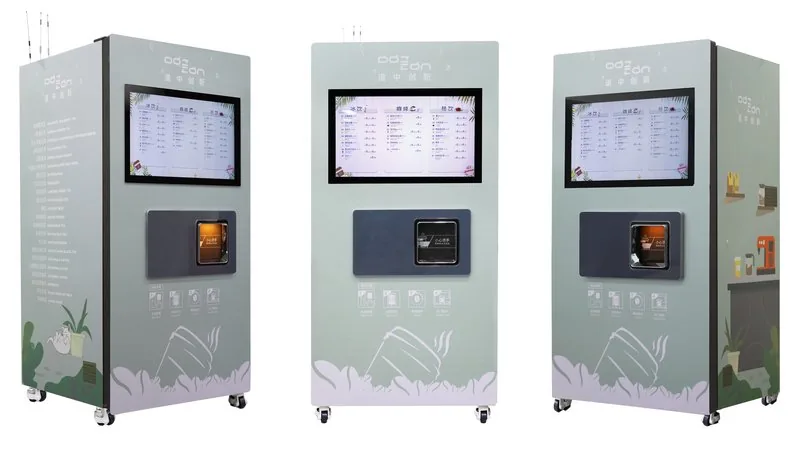
Unmanned Beverage Retail Landscape
How the field is organised, from manufacturer to single-site operator.
Unmanned retail is not one market. It is at least four businesses wearing the same hardware: an equipment manufacturer selling to operators, an operator selling drinks to a building, a brand renting shelf space in someone else's lobby, and a distributor moving containers across borders. Margins, risk and contract length differ completely between them.
The articles below describe each layer with the numbers that matter at that layer: unit economics for the operator, acceptance criteria for the buyer, and the supply-chain questions that decide whether a brand can hold a site.
Most confusion about this category comes from treating it as one market. It is at least four, and the same cabinet changes meaning depending on which one you are standing in.
| Layer | What it actually sells | What it is paid on | The question to ask |
|---|---|---|---|
| Equipment maker | Machines, tooling and the recipe system behind them | Units, tooling and spare parts | Who owns the recipe and the capsule format? |
| Operator | A working site: install, stock, service, reporting | Margin per cup after site share | What happens on the Saturday it breaks? |
| Host | Floor space and footfall, usually with power and access | A share of revenue or a fixed rent | Is the share on revenue or on gross profit? |
| Service partner | Response time and spare stock in a region | Callouts, contracts or retained margin | How many hours to first response? |
A buyer comparing quotes across these layers is comparing different products. An equipment price without a service commitment is a machine; a service commitment without a parts pipeline is a promise. The useful comparison keeps the layer fixed and varies one input at a time.
How the field is organised, from manufacturer to single-site operator.

A benchmark of the machine categories buyers compare, without brand cheerleading.

Questions that separate an assembler from a manufacturer with its own tooling.
Material sourcing, capsule supply and menu support, checked item by item.

Who buys herbal drinks from a machine, and in what part of the day.
Looking for something narrower? The full article index groups every guide by topic - placement, cleaning, payment, restocking and more.

Dozzon Innovation Technology, specializing in smart unmanned retail equipment R&D and manufacturing.