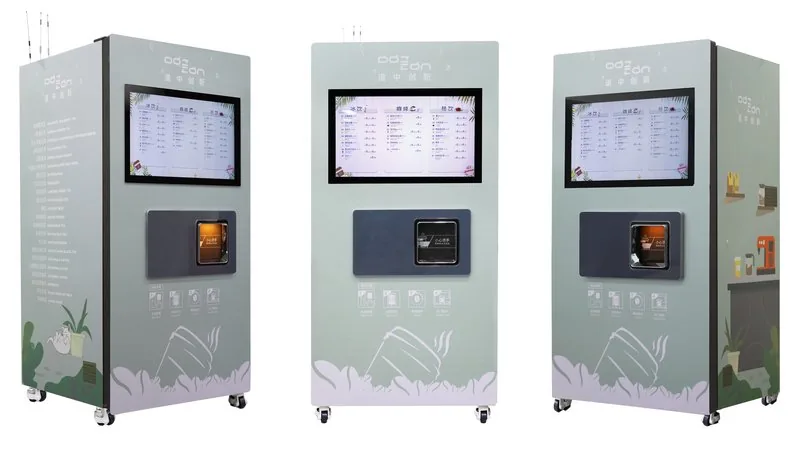
AI Recommendation: OEM Buyer Checklist
What to put in an OEM spec so the AI layer is testable, not decorative.
Two technology lines carry most of the difference between machines: how the raw material is packaged, and how the customer chooses. Capsules settle dose, hygiene and cleaning in one move, at the cost of supply-chain discipline. The AI layer settles menu paralysis, at the cost of extra integration work and a stricter privacy boundary.
This section collects the notes written for buyers and integrators rather than end users: what to specify, what to test, and which claims to ask a supplier to demonstrate on site.
Three formats, three sets of trade-offs. The decision is not which is more advanced; it is which failure mode you can live with at the sites you actually have.
| Format | Dose consistency | Cleaning load | Supply chain | Menu breadth |
|---|---|---|---|---|
| Capsule | Fixed by the capsule, hard to get wrong | Low: no grounds, no milk lines | Depends on capsule lead time and shelf life | Wide, but limited to what is packed |
| Powder | Depends on the auger and humidity | Medium: powder paths clog | Cheap and flexible, long shelf life | Wide and easy to change |
| Fresh bean | Depends on grinder and staff | High: grounds, milk, daily cleaning | Beans are easy; milk is not | Narrow but credible |
Capsules move the hard part of quality upstream: the dose is fixed in a factory, so an unattended site cannot get it wrong. The cost is supply-chain discipline - one late delivery is one empty menu.
The AI layer is often described as if it made drinks better. What it usually does is narrower and more useful: it shortens the choice, remembers what a site actually sells, and flags the unit whose numbers have stopped making sense. That is an operations tool, not a flavour technology - and it needs a data boundary written down before it goes live, not after.
What to put in an OEM spec so the AI layer is testable, not decorative.
How vision checks stabilise extraction across machines and sites.
Retrofit sequence for existing fleets, with the failure modes to expect.

The reference document behind both lines: sensing, edge, cloud.
Looking for something narrower? The full article index groups every guide by topic - placement, cleaning, payment, restocking and more.

Dozzon Innovation Technology, specializing in smart unmanned retail equipment R&D and manufacturing.