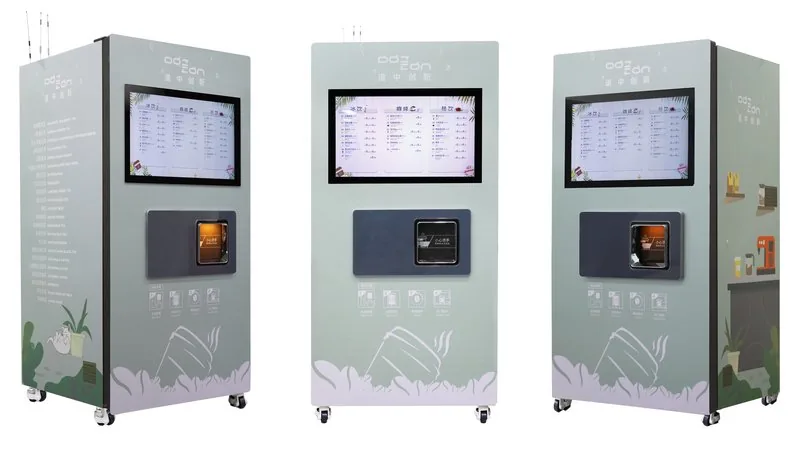
Beverage Machine Solutions by Scenario
A scenario-by-scenario map of which machine type fits which venue, and why.
A drink machine is not a vending machine with a better menu. What decides whether a site works is the queue it has to absorb, the space it is allowed to take, and who refills it. An office floor with 600 people and a ten-minute coffee break needs a different machine from a hospital corridor where the machine must run unattended overnight.
The pages below take one scenario at a time and work through the same four questions: where the machine stands, how much power and water it needs, how often someone has to visit, and what the site owner will ask before signing. Numbers are given as ranges rather than promises, because a site survey changes them.
Every venue has a queue pattern and an access rule. Get those two right and most machine choices become obvious; get them wrong and no machine choice rescues the site.
| Venue | Queue pattern | Format that fits | Settle this first |
|---|---|---|---|
| Office floor | Two sharp peaks, empty between | Countertop capsule, one or two units | Who restocks, and when the floor is empty |
| Hospital | All day, low tolerance for waiting | Two units or a larger capacity format | Cleaning regime and infection-control sign-off |
| Campus | Term-time peaks, long closures | High-capacity with cold lines | What happens during holidays |
| Transit | Rush-hour bursts, no dwell time | Fast vend, contactless only | Power and network at the actual spot |
| Factory / shift work | Shift-change bursts, night demand | Robust format, simple menu | Access at night and who is called at 3am |
The venue also decides which failure is tolerable. An office can survive a day offline; a hospital cannot; a campus can survive a month of closure if the stock is planned for it. Those are operating decisions that belong in the contract, not in a brochure.
A scenario-by-scenario map of which machine type fits which venue, and why.
End-to-end field manual for putting a machine on a single office floor.
The longer version: footfall, break patterns, refill cost and payback for office buildings.
The ten things to confirm before a machine is delivered, from floor loading to network.
Cup volume, peak timing and menu length, translated into a machine spec.
What to measure on site, and which measurements disqualify a location.

Dozzon Innovation Technology, specializing in smart unmanned retail equipment R&D and manufacturing.