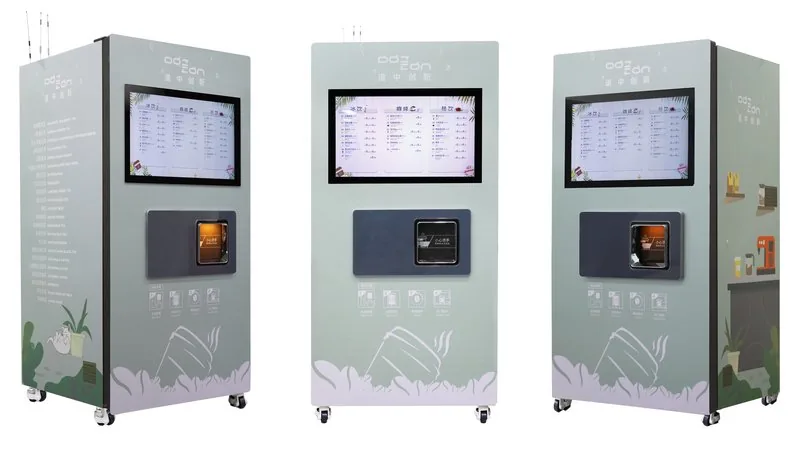
Fresh-Grind vs RTD vs Instant
Three extraction routes compared on labour, consistency, waste and floor space.
Most technology claims on a vending brochure do not survive a week of real use. The useful question is narrower: does this feature change what the operator has to do on Monday morning? Capsule extraction matters because it removes cleaning and dosing errors. Telemetry matters because it turns a refill guess into a stock count. AI vision matters only if it catches a wrong cup before the customer does.
The pieces below explain each route on its own terms, including where it stops helping. Nothing here is a product pitch; where a technology has a cost, the cost is stated.
Technology claims are cheap to make and expensive to disprove. These four can be checked in a week of ordinary use, with no lab and no consultant.
| Claim | How to test it in a week | What a pass looks like | What a fail looks like |
|---|---|---|---|
| Remote monitoring | Turn the machine off at the wall for an hour | An alert arrives, and the dashboard shows the gap | Silence, then a customer complaint |
| AI recognition | Buy three items in one transaction, slowly and quickly | Both transactions match what was taken | A correction needed, or a manual review queue |
| Self-cleaning | Skip one cleaning cycle deliberately | The machine reports it and still vends cleanly | A taste complaint on day three |
| Energy saving | Meter one unit for 48 hours including a closed day | Standby draw is known and stated | Nobody can say what idle costs |
The point of testing is not to catch a supplier out. It is to find out which features change what the operator has to do on a Tuesday. A feature that removes a visit is worth money; a feature that adds a screen nobody reads is a cost with a brochure.
Write the result down per site, not per model. The same firmware behaves differently on a site with poor power and a site with poor signal, and those notes become the most useful document an operator owns.
Three extraction routes compared on labour, consistency, waste and floor space.
Architecture of a modern terminal: sensing, edge inference, cloud scheduling.
A practical upgrade sequence for machines already in the field.
What a camera can verify at the cup, and what it cannot.
Interaction design of a recommendation flow, and the boundaries it must keep.

Dozzon Innovation Technology, specializing in smart unmanned retail equipment R&D and manufacturing.